PM Modi CCS Meeting: India's Role in West Asia Crisis
International Affairs • April 02, 2026 • Global Edition

In an era of escalating global tensions, India's approach to international crises stands out for its balance of pragmatism, compassion, and strategic foresight. On April 1, 2026, Prime Minister Narendra Modi chaired a high-level meeting of the Cabinet Committee on Security (CCS) to address the ongoing West Asia conflict. This gathering, the second in recent weeks, underscored India's commitment to safeguarding national interests amid disruptions in energy supplies, trade routes, and regional stability.
The West Asia crisis, marked by intensifying confrontations involving Iran, Israel, and the United States since late February 2026, has ripple effects across the globe. For India, with its deep economic ties to the region, the stakes are particularly high. Over 85% of India's crude oil imports and significant liquefied natural gas (LNG) supplies pass through critical chokepoints like the Strait of Hormuz. Yet, rather than reacting passively, India has adopted a multi-pronged strategy: providing humanitarian aid to war-affected populations, strengthening partnerships with Gulf nations, and prioritizing energy security through diversification and proactive governance.
This article delves into India's multifaceted role—from sending relief to Gaza and supporting evacuations in conflict zones to fostering energy resilience and diplomatic dialogue. Drawing on recent developments, including PM Modi's CCS meetings and parliamentary addresses, it highlights how India positions itself as a responsible global player committed to peace, people, and prosperity.
Background: The West Asia Crisis and Its Implications for India
West Asia has long been a region of strategic importance for India, serving as a vital source of energy, a home to millions of Indian expatriates, and a key partner in trade and investment. The current escalation, triggered by direct confrontations and disruptions in maritime routes, has raised concerns over fuel prices, supply chains, and the safety of Indian nationals.
PM Modi, in his March 2026 addresses to Parliament, described the situation as "concerning" and emphasized the need for dialogue and diplomacy. He noted that the conflict's effects could be prolonged, impacting global energy markets and livelihoods. India, he assured, remains vigilant, with strategic petroleum reserves exceeding 53 lakh metric tonnes and refineries operating at over 100% capacity to maintain domestic supplies.
The crisis has also spotlighted India's large diaspora in the Gulf—over one crore Indians living and working in countries like the UAE, Saudi Arabia, Kuwait, and Oman. PM Modi has publicly thanked these nations for their support in ensuring the welfare of Indian citizens, even as evacuation efforts continue. Since late February, more than 4.26 lakh Indians have returned home via coordinated flights.
India's response is rooted in its long-standing policy of non-alignment and multi-alignment. It advocates for a two-state solution in the Israel-Palestine context, condemns terrorism in all forms, and prioritizes humanitarian considerations without taking sides in geopolitical rivalries.
PM Modi's Recent CCS Meetings: Leadership in Action
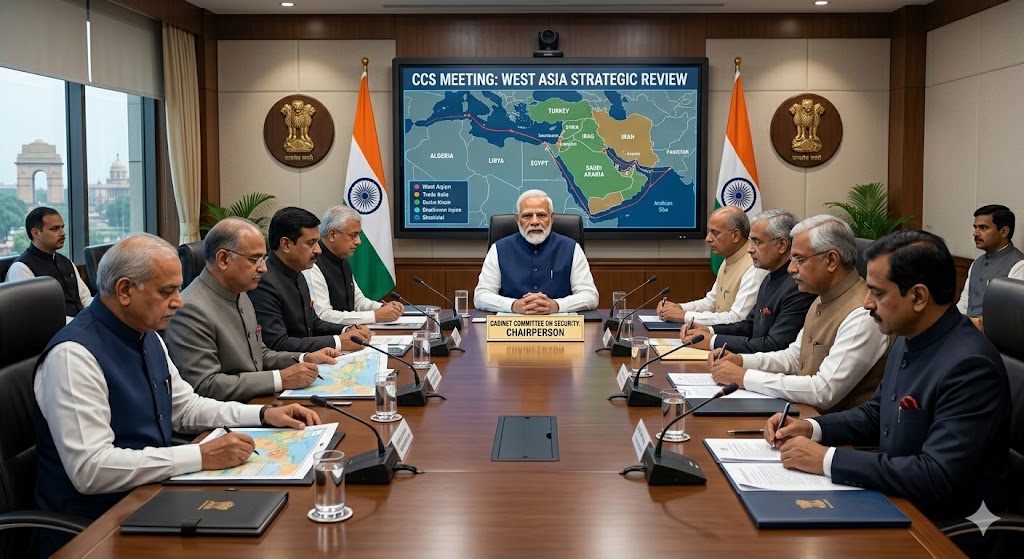
The Cabinet Committee on Security (CCS) meetings chaired by PM Modi on April 1, 2026, and earlier sessions represent a proactive governance model. Attended by key ministers including Defence Minister Rajnath Singh, Home Minister Amit Shah, Finance Minister Nirmala Sitharaman, and External Affairs Minister S. Jaishankar, these discussions focused on real-time assessments of the conflict's impact.
In the latest CCS meet, PM Modi reviewed steps taken by various ministries to ensure uninterrupted supplies of petroleum products, LNG, LPG, fertilizers, and power. He directed officials to adopt a multi-pronged approach, including supply diversification, fuel duty adjustments, and price monitoring to shield citizens from inflation or shortages. Price control rooms were established, and efforts to bolster agriculture, shipping, aviation, and MSMEs were examined.
PM Modi stressed that "all efforts must be made to safeguard the citizens from the impact of this conflict." He called for authentic information dissemination to counter misinformation and urged states to protect vulnerable groups and prevent black marketing. These meetings build on earlier parliamentary briefings where the Prime Minister highlighted India's effective management of the situation through strong foreign policy and national unity.
Such leadership reflects a shift from crisis management to strategic preparedness. By convening CCS sessions promptly, PM Modi has ensured coordinated action across sectors, minimizing disruptions while reinforcing India's image as a stable, forward-looking nation.
India's Humanitarian Aid to War-Torn Countries
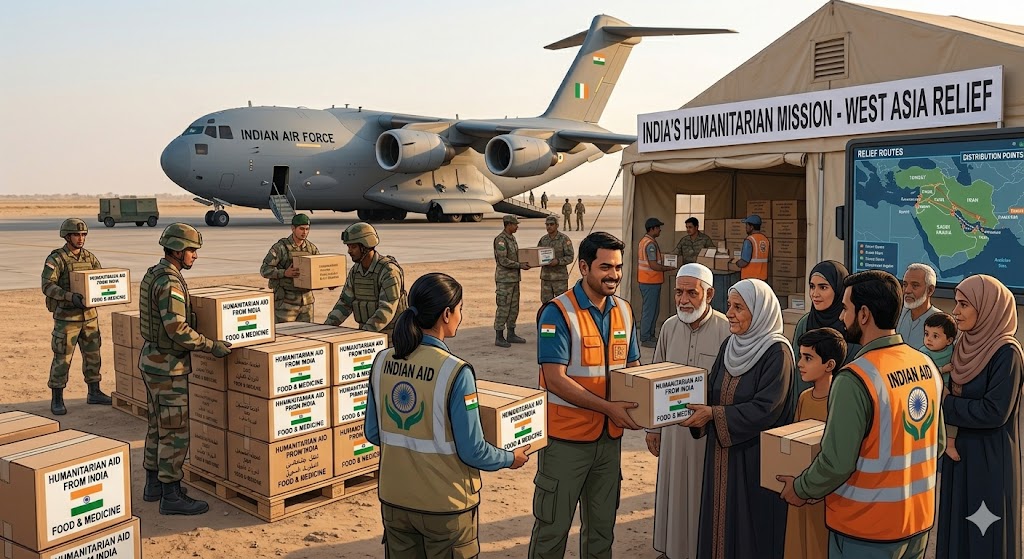
India's compassion in times of conflict is well-documented. In the Israel-Hamas war and subsequent Gaza crisis, New Delhi acted swiftly. In October 2023, an Indian Air Force C-17 Globemaster delivered nearly 6.5 tonnes of medical aid and 32 tonnes of disaster relief material to El-Arish in Egypt for onward distribution to Palestine. This was among the first international aid shipments after the Rafah border opened.
India maintains an annual commitment of US$5 million to the UNRWA (United Nations Relief and Works Agency for Palestine Refugees), with contributions supporting education, health, and emergency relief. During the 2025-26 fiscal year, an initial US$2.5 million was disbursed. Palestinian officials have praised India's consistent support for development projects in the West Bank and its role in reconstruction efforts.
Beyond Gaza, India's humanitarian record extends to other war zones. During the 2022 Russia-Ukraine conflict, Operation Ganga evacuated approximately 25,000 Indian nationals, primarily students, from neighboring countries. India also dispatched relief supplies, including medical aid, tents, blankets, and solar lamps, demonstrating solidarity with affected populations.
In Syria, Yemen, and other conflict areas, India has contributed through multilateral channels, focusing on food security, healthcare, and infrastructure rebuilding. These efforts align with India's philosophy: aid without strings, driven by shared humanity rather than strategic leverage.
Strong Partnerships with Gulf Countries: Energy and Beyond
While Gulf nations are not typically "war countries," their stability is intertwined with regional security. India maintains robust ties with the UAE, Saudi Arabia, Qatar, and others, viewing them as pillars of energy security and economic cooperation.
Over 10 million Indians reside in the Gulf, contributing remittances and expertise. During the current West Asia crisis, PM Modi has lauded these countries for assisting Indian nationals with logistics, visas, and safe passage. Alternative routes via Saudi Arabia and additional flights from the UAE, Oman, and Qatar have facilitated returns.
Energy cooperation remains central. India sources nearly half its oil imports from Iraq, Saudi Arabia, the UAE, and Kuwait. To counter disruptions, the government has diversified suppliers to include the United States, Russia, Latin America, and Africa. Strategic reserves and high refinery utilization ensure domestic fuel availability.
Bilateral initiatives like the India-Middle East-Europe Economic Corridor (IMEC) and I2U2 grouping further deepen ties, focusing on infrastructure, renewable energy, and food security. During crises, these partnerships enable joint maritime security patrols and information sharing, safeguarding sea lanes critical for global trade.
India has also extended aid during natural disasters in the Gulf, such as floods in the UAE, reinforcing mutual support. In return, Gulf investments in Indian ports, refineries, and technology sectors exceed billions, creating win-win outcomes.
India's Broader Diplomatic Role in Global Conflicts
India's engagement in West Asia exemplifies its "multi-alignment" doctrine. It engages all stakeholders—calling for de-escalation through dialogue while maintaining defence and tech ties with Israel and strong energy links with Arab nations and Iran.
In parliamentary sessions, PM Modi reiterated that "terror and talks cannot go together" and advocated a united global voice for peace. India has participated in UK-hosted meetings on maritime security and energy concerns, emphasizing the need for diplomatic solutions.
This balanced approach has earned India credibility. It abstained from certain UN resolutions on Gaza while consistently supporting humanitarian ceasefires and reconstruction. Potential involvement in Gaza's post-conflict rebuilding—leveraging expertise in infrastructure and desalination—positions India as a constructive partner.
Similar principles guided India's response to Ukraine: evacuation without condemnation, aid to civilians, and continued engagement with both sides for peace.
Energy Security Measures Amid the Crisis
Energy security is non-negotiable for India's growth ambitions. The CCS meetings highlighted diversification as a key pillar. Imports now span 41 countries, reducing over-reliance on any single route. Power sector contingencies, fertilizer stockpiles, and logistics enhancements ensure resilience.
Long-term strategies include ramping up domestic exploration, renewable energy capacity (targeting global leadership), and strategic reserves. PM Modi has assured citizens that India has managed the situation effectively, preventing queues at fuel stations despite global price spikes.
These measures not only mitigate immediate risks but also strengthen India's negotiating position in global energy markets.
Challenges, Opportunities, and the Road Ahead
Challenges persist: potential freight cost hikes, insurance premiums, and diaspora safety. Yet, opportunities abound—enhanced Gulf cooperation, reconstruction contracts in Gaza, and accelerated green energy transitions.
PM Modi's leadership in CCS meetings and public communications fosters national unity. By involving chief ministers and opposition parties in briefings, the government has built political consensus.
Looking forward, India's role will likely expand in peace-building, economic integration, and humanitarian leadership. As a voice of the Global South, it champions equitable solutions that prioritize people over politics.
Conclusion
India's response to the West Asia crisis—exemplified by PM Modi's decisive CCS meetings, generous aid to war-torn areas like Gaza, steadfast Gulf partnerships, and unwavering focus on energy security—reflects a mature, humane foreign policy. In providing relief to conflict zones, ensuring citizen welfare, and promoting dialogue, India not only protects its interests but also contributes to global stability.
As PM Modi has often stated, India stands ready to face challenges united and prepared. This crisis tests resilience but also showcases India's growing stature as a reliable partner and beacon of hope in turbulent times. Through continued diplomacy and compassion, India will navigate the path toward lasting peace and prosperity for all.
Frequently Asked Questions
What is the primary significance of PM Modi CCS Meeting: India's Role in West Asia Crisis?
In an era of escalating global tensions, India's approach to international crises stands out for its balance of pragmatism, compassion, and strategic foresight. On April 1, 2026, Prime Minister Narendra Modi chaired a high-level meeting of the Cabinet Committee on Security (CCS) to address the ongoing West Asia conflict.
How does this development impact International Affairs?
This gathering, the second in recent weeks, underscored India's commitment to safeguarding national interests amid disruptions in energy supplies, trade routes, and regional stability.The West Asia crisis, marked by intensifying confrontations involving Iran, Israel, and the United States since late February 2026, has ripple effects across the globe. For India, with its deep economic ties to the region, the stakes are particularly high.
What are the key future projections to monitor?
Over 85% of India's crude oil imports and significant liquefied natural gas (LNG) supplies pass through critical chokepoints like the Strait of Hormuz.