UK to Host Global Summit on Hormuz Security Amid US Iran war
International Affairs • April 02, 2026 • Global Edition

The Strategic Importance of the Strait of Hormuz in 2026
The maritime corridors of the Middle East have long been the lifeblood of the global economy. At the center of this geopolitical chessboard lies the Strait of Hormuz, a narrow waterway through which approximately one-fifth of the world's total oil consumption passes. As of early 2026, the region is witnessing a significant surge in maritime instability, prompting the uk to host hormuz security talks in London. This initiative comes at a critical juncture. With rising concerns over iran war escalation, the United Kingdom has stepped forward to lead a coalition of nations dedicated to ensuring the freedom of navigation.
The Strait of Hormuz is not merely a geographical feature; it is a choke point that defines the energy security of nations from London to Tokyo. Measuring only 21 miles wide at its narrowest point, the shipping lanes are even narrower, making vessels vulnerable to surface-to-sea missiles, limpet mines, and swarming drone attacks. The uk-led talks hormuz seek to address these asymmetric threats. By convening this summit, Britain is asserting its role as a global maritime power, capable of coordinating a sophisticated response to state-sponsored disruption.
The UK-Led Talks: Securing the Global Shipping Corridor
The uk international meeting iran war concerns is not merely a diplomatic formality; it is a strategic necessity. Following a series of iran attacks on commercial tankers and the seizure of foreign-flagged vessels, the British government has invited defense ministers, maritime experts, and intelligence chiefs from over 30 nations to discuss a unified response. The uk hosts global talks shipping corridor iran attacks to ensure that energy prices remain stable and that the international law of the sea is upheld.
A primary objective of the summit is the implementation of a new maritime security framework. This involves enhanced surveillance, where the coalition would deploy high-altitude long-endurance drones and satellite constellations to provide a real-time picture of every movement in the Persian Gulf. Furthermore, escort protocols are being redesigned. Instead of individual nations protecting their own ships, the uk-led talks hormuz propose a rotational system for naval destroyers. This shared burden would allow for a persistent presence without overextending any single navy’s resources.
The Geopolitical Context: Iran, Israel, and the Threat of Escalation
The current iran war debate uk is inseparable from the broader conflict involving Israel and regional proxies. Iran israel war updates suggest that the shadow war between Jerusalem and Tehran has moved decisively into the maritime domain. For Britain, the risk of being pulled into a wider theater of operations is a subject of intense parliamentary discussion. The debate centers on whether the UK should act as a mediator or a combatant if a full-scale uk war with iran were to erupt.
The rhetoric from Tehran has grown increasingly hostile as sanctions continue to bite. Iranian officials have frequently threatened to close the Strait of Hormuz entirely if their own oil exports are blocked. Such a move would be seen as an act of war by the international community. The breaking news uk iran war fears often dominate the media, but the primary focus of the london summit is deterrence. By forming a "Mega-Coalition," the UK hopes to show that any aggression in the Strait will be met with a multi-national response, thereby lowering the probability of an actual kinetic engagement.
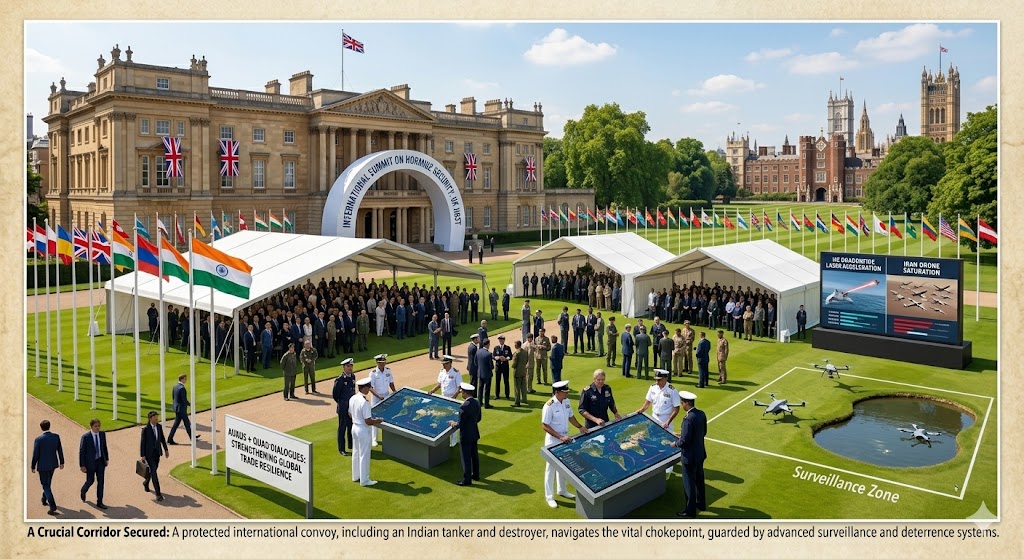
India Joins Hormuz Talks: A Shift in Global Alliances
A significant development in this summit is that india joins hormuz talks uk summit. As one of the world's fastest-growing economies, India has a massive stake in Middle Eastern stability. Traditionally, New Delhi has maintained a policy of non-alignment, but the sheer volume of its energy imports passing through Hormuz has necessitated a shift. The participation of the Indian Navy, which has been increasingly active in anti-piracy and escort missions in the Arabian Sea, adds significant weight to the UK-led initiative.
India’s involvement provides a unique diplomatic advantage. Unlike many Western nations, India maintains a functional relationship with Tehran. During the us iran talks and the broader international talks, India can act as a bridge, conveying the message that maritime disruption hurts the Global South as much as it hurts the West. This multi-polar approach is essential for the legitimacy of the security corridor.
The Shadow of the North: Russia-UK War and NATO Tensions
While the Middle East simmers, the specter of the russia uk war continues to influence British foreign policy. There is a growing concern among intelligence circles that a nato war with russia could be triggered by "gray-zone" tactics—cyberattacks or the sabotage of undersea data cables. The uk war with russia is currently a conflict of intelligence, economic sanctions, and proxy support in Eastern Europe, but the potential for a uk iran war adds a layer of extreme complexity.
Analysts suggest that Moscow may be actively encouraging iranian assertiveness to distract Western resources away from the European theater. If the Royal Navy is tied down in the Persian Gulf, its capacity to monitor the North Atlantic and the Baltic Sea is diminished. Consequently, the uk international meeting iran war themes must also account for Russian influence. The possibility of a coordinated two-front challenge—one in the freezing plains of Ukraine and another in the sweltering heat of the Hormuz—is a nightmare scenario for NATO planners.
Economic Impact: Iran War Impact UK
The iran war impact uk would be felt primarily at the kitchen table. The British economy is highly sensitive to maritime disruptions. If the Strait of Hormuz were closed for even a week, global oil prices could surge past 150 dollars per barrel. This would lead to an immediate spike in inflation, affecting everything from logistics and transport to the price of imported food.
The summit in London is, in many ways, an exercise in economic defense. By securing the shipping lanes, the UK is protecting its own domestic stability. The britain at war rhetoric is often used by politicians to emphasize the gravity of the situation. It is not just about soldiers and ships; it is about the resilience of the national infrastructure. The government is also looking at government-backed indemnity schemes for shipping companies, ensuring that vessels continue to sail despite the high risks.
Current Status: Are We Moving Toward a US Iran War?
Despite the diplomatic efforts, the us iran war latest reports indicate that both sides remain on high alert. The talks are seen by some as the last exit ramp before a significant escalation. The iran war escalation is fueled by advancements in drone technology and the proliferation of ballistic missiles. The United States has increased its carrier strike group presence in the region, a move that Iran views as a direct provocation.
However, the global talks in London emphasize that a britain at war stance is a last resort. The UK’s "tilt" towards the Indo-Pacific and Middle East is designed to prevent war through overwhelming presence rather than provocation. The us iran talks have reached a stalemate over nuclear enrichment and regional interference, leaving maritime security as the most immediate "hot" zone where miscalculation could lead to disaster.
The Role of NATO and Regional Allies
The security of the Strait of Hormuz is not a task for the UK alone. While the uk hosts global talks shipping corridor iran attacks, it does so within the framework of wider alliances. NATO’s role in maritime security has expanded, with several European members contributing frigates and maritime patrol aircraft. Furthermore, regional allies like the UAE and Saudi Arabia are integral to the success of the mission.
The uk-led talks hormuz are also focusing on the legal aspects of maritime intervention. What are the rules of engagement if an unmarked drone approaches a tanker? How does the coalition handle the boarding of ships in international waters? These are the granular details being hammered out in the committee rooms of London. Clear protocols are the best way to prevent an accidental iran war escalation.
Conclusion: The Path Forward for Global Security
The uk to host hormuz security talks represents a bold step in post-Brexit diplomacy. By navigating the treacherous waters of international talks and balancing the threats of a uk war with russia versus an iran war, the UK is positioning itself as the central coordinator for maritime law. The success of this summit will be measured not by the number of signed documents, but by the safe passage of the next thousand tankers through the narrow gates of Hormuz.
As the summit concludes, the world watches to see if these uk-led talks hormuz can truly secure the corridor or if the iran war escalation will continue unabated. For now, the focus remains on the "Three Cs": Coordination, Communication, and Contingency. The message from London is clear: the global commons must remain open, and the price of disruption will be higher than any aggressor can afford to pay.
The Future of Maritime Warfare and Technology
One of the most discussed topics during the uk international meeting iran war is the changing nature of maritime warfare. We are moving away from traditional ship-to-ship engagements and entering an era of "unmanned" conflict. Iran has become a pioneer in the use of low-cost, high-impact suicide drones. These systems can be launched from small, inconspicuous fishing vessels, making them incredibly difficult to detect before they strike.
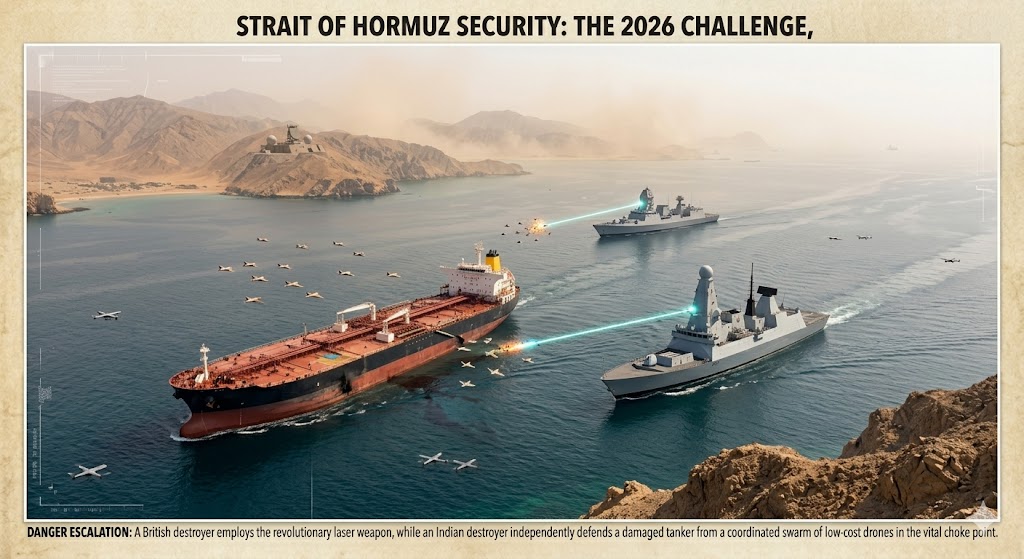
The uk-led talks hormuz are exploring the deployment of directed-energy weapons—lasers—on naval vessels. These systems offer a "cost-per-shot" that is significantly lower than traditional missiles, making them ideal for countering swarms of cheap drones. This technological edge is what the UK and its allies hope will provide the necessary deterrence to prevent an iran war escalation. If the cost of attacking a ship becomes prohibitively high in terms of lost assets for zero gain, the incentive for such attacks diminishes.
The Human Element and Diplomacy
Beyond the hardware, the london summit is a testament to the power of human diplomacy. The iran war debate uk often focuses on the military aspect, but the diplomats in the room are working just as hard to find a political solution. The us iran talks, though currently stalled, remain the ultimate goal. No one truly wants a britain at war scenario or a us iran war. The human cost, the environmental disaster of an oil spill in the Gulf, and the global economic collapse are deterrents in themselves.
The uk hosts global talks shipping corridor iran attacks with the hope that by bringing all stakeholders—including those from the Global South like India—to the table, a consensus can be reached. The Strait of Hormuz belongs to the world, and its security is a collective responsibility. Whether this 2026 summit will be remembered as the moment that peace was secured or as a final footnote before a major conflict remains to be seen.
Analysis of Potential Military Scenarios
If the uk-led talks hormuz fail to achieve a diplomatic breakthrough, military analysts have outlined several "flashpoint" scenarios. The first is the "mine-laying" scenario. If Iran were to covertly drop magnetic mines in the shipping lanes, it would bring traffic to a standstill. Mine-clearing operations are slow and dangerous, requiring specialized vessels that the UK and US currently have stationed in Bahrain.
The second scenario is the "saturation attack." This involves hundreds of drones and fast-attack craft launched simultaneously against a carrier strike group or a convoy of tankers. The uk war with iran debate often highlights that while the coalition has superior technology, sheer numbers can sometimes overwhelm defensive systems. This is why the india joins hormuz talks uk summit development is so vital; more ships mean a more robust defensive "umbrella."
The third and most dangerous scenario is a direct strike on land-based infrastructure. If an iran war escalation leads to strikes on Iranian coastal miss
Frequently Asked Questions
What is the primary significance of UK to Host Global Summit on Hormuz Security Amid US Iran war?
The Strategic Importance of the Strait of Hormuz in 2026The maritime corridors of the Middle East have long been the lifeblood of the global economy. At the center of this geopolitical chessboard lies the Strait of Hormuz, a narrow waterway through which approximately one-fifth of the world's total oil consumption passes.
How does this development impact International Affairs?
As of early 2026, the region is witnessing a significant surge in maritime instability, prompting the uk to host hormuz security talks in London. This initiative comes at a critical juncture.
What are the key future projections to monitor?
With rising concerns over iran war escalation, the United Kingdom has stepped forward to lead a coalition of nations dedicated to ensuring the freedom of navigation.The Strait of Hormuz is not merely a geographical feature; it is a choke point that defines the energy security of nations from London to Tokyo.
Discussion & Reader Insights (0)
No comments yet. Share your thoughts first!