"Amit Shah Lok Sabha Naxalism historic Speech Triumph"
Current Affairs• April 01, 2026• Global Edition
In the hallowed halls of the Lok Sabha, where the echoes of India's democratic spirit resonate across generations, Union Home Minister Amit Shah delivered a speech that will be etched in the annals of national security history. His Amit Shah speech on Naxalism , delivered on March 30, 2026, during a crucial debate on efforts to free the country from Left-Wing Extremism, was nothing short of transformative. Lasting nearly 84 minutes, it combined unyielding resolve with meticulous detail, historical insight, and a clarion call for a Naxal-free India. This was no ordinary parliamentary address; it was a masterclass in statesmanship, blending facts, figures, and fervent patriotism to announce what many once deemed impossible: the near-total eradication of the Maoist menace that had plagued the nation for decades.
As the Home Minister rose to reply, the chamber hung on every word. In this Amit Shah speech on Naxalism, he painted a vivid picture of victory—not through rhetoric alone, but through tangible results forged under the visionary leadership of Prime Minister Narendra Modi. With the government's self-imposed deadline of March 31, 2026, looming just hours away, Amit Shah on Naxalism left no doubt: the shadow of the "Red Terror" had been lifted. India, he proclaimed with quiet confidence, stood on the threshold of becoming truly Naxal-mukt. This Amit Shah Naxalism speech was not merely a political statement; it was a testament to a decade of relentless strategy, sacrifice, and seamless integration of security with sustainable development.
The debate under Rule 193 in the Lok Sabha, focused on India's decisive fight against Naxalism, provided the perfect stage. For years, the Red Corridor—spanning 12 states and affecting vast swathes of tribal heartlands—had symbolized a parallel power structure where violence trumped governance. Maoist insurgents, cloaked in the garb of ideology, had held millions hostage to fear, extortion, and underdevelopment. Yet, as Amit Shah on Naxalism in Parliament unfolded, it became clear that the narrative had irrevocably shifted.
Amit Shah's address came at a pivotal moment. Just days before the deadline, it served as both closure and commencement—a closure to the era of unchecked extremism and the dawn of holistic prosperity in once-forgotten regions. Drawing from exhaustive intelligence, operational data, and on-ground transformations, the Home Minister dismantled myths perpetuated by critics while celebrating the sacrifices of jawans, civilians, and strategists alike. His words resonated far beyond the House, amplified by Prime Minister Modi's immediate endorsement on social media, where he hailed it as an "outstanding speech" brimming with facts, history, and a detailed chronicle of governmental resolve.
Unraveling the Roots: Ideology, Not Deprivation
Central to Amit Shah's Naxalism speech was a profound ideological dissection. Far from being a cry for development born of poverty, Naxalism, he asserted, was a calculated doctrine of armed revolution designed to seize power. Tracing its origins to the formation of the Communist Party of India (Marxist-Leninist) in the 1920s, influenced by global communist currents, the Home Minister illustrated how it mutated into a tool for exploitation under the guise of tribal upliftment.
In a particularly incisive segment of the Amit Shah speech on Naxalism , he reminded the House that the ideology gained traction not through genuine grievances but through opportunistic alliances. He pointed to the 1970s, when certain political maneuvers embraced Leftist support, allowing the contagion to spread across the Red Corridor. "The root cause of Naxalism is not the demand for development. It is an ideology," declared Amit Shah on Naxalism, underscoring how insurgents deliberately sabotaged schools, banks, and health centers to keep tribal communities isolated and dependent.
This historical clarity in the Amit Shah Lok Sabha speech on Naxalism dismantled long-standing opposition narratives. It exposed how previous regimes had allowed the menace to fester, costing over 20,000 lives and stunting the progress of 12 crore people across affected districts. By reframing Naxalism as an imported power grab rather than an indigenous uprising, Amit Shah on Naxalism in Lok Sabha elevated the discourse from sympathy to accountability.
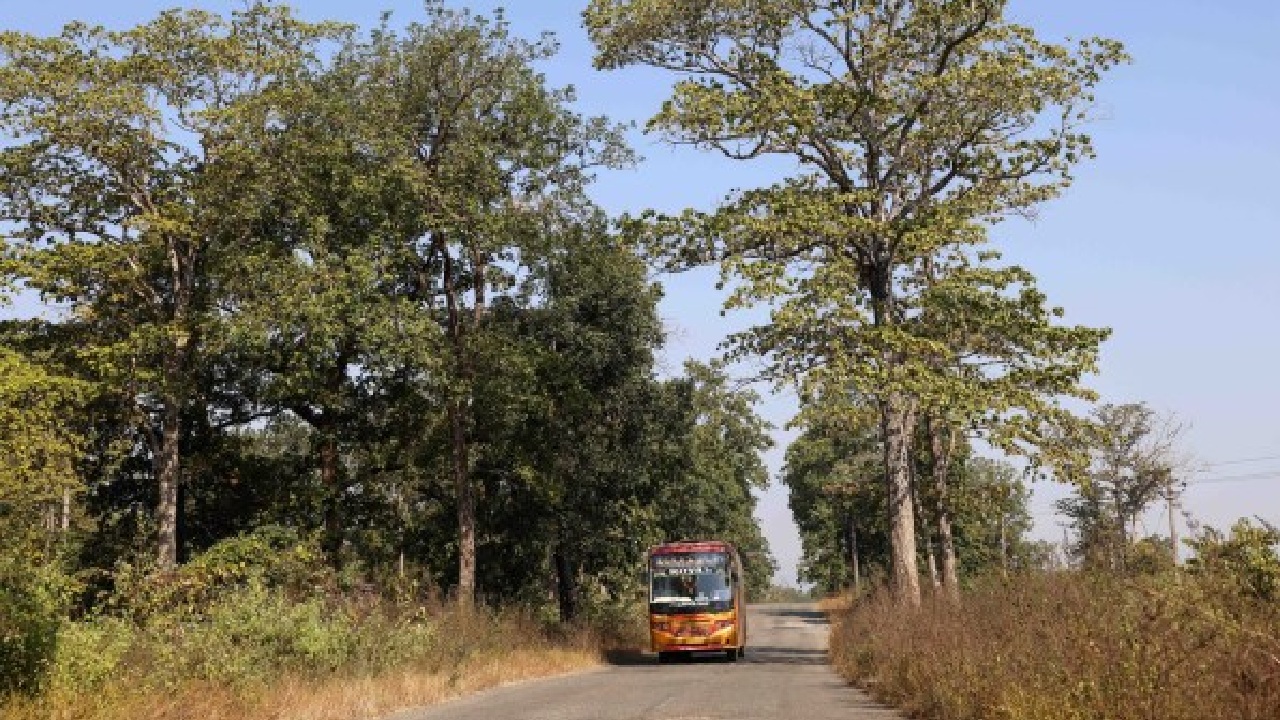
Bastar’s remarkable transformation — from a region gripped by Red Terror to a landscape of hope, with new roads, schools, and infrastructure ushering in peace and prosperity under the government’s integrated strategy against Naxalism.
A Decade of Unparalleled Action: Statistics That Speak Volumes
No Amit Shah speech on Naxalism would be complete without irrefutable data, and this address overflowed with it. Naxal-affected districts had plummeted from 126 in 2014 to a mere two by 2026. Most-affected zones dropped from 35 to zero. Police stations registering Naxal-related complaints shrank dramatically from 350 to just seven—a testament to the shrinking footprint of extremism.
Between 2024 and March 2026 alone, security forces neutralized 706 Naxalites in encounters, arrested 2,218, and facilitated the surrender of a staggering 4,839. Central Committee members, Politburo figures, and state-level leaders were systematically dismantled. In the Dandakaranya region—the Maoist stronghold— all 37 state committee members were either eliminated, captured, or had laid down arms. In Telangana, only one absconder remained.
Amit Shah on Naxalism in Parliament meticulously outlined landmark operations—Op Black Force along the Telangana-Chhattisgarh border, Octopus in Bihar, Double Boot and Thunderstorm in Jharkhand, and others—that dismantled entire networks, including IED factories and extortion rackets yielding hundreds of crores. These were not random strikes but a coordinated symphony of intelligence, Central Armed Police Forces synergy, and state police resolve, all orchestrated under the Modi government's zero-tolerance doctrine.
Bastar Reborn: From Red Terror to Rays of Hope
Perhaps the most poignant chapter in Amit Shah's Naxalism speech concerned Bastar in Chhattisgarh, once the epicenter of Maoist dominance. "Today, Naxalism has been almost eradicated from Bastar," proclaimed the Home Minister, his voice carrying the weight of transformation. A shadow that had stifled progress for generations had lifted, allowing development to flood in like a monsoon after drought.
Under visionary initiatives, every village in Bastar now boasts a school. Ration shops dot the landscape, ensuring food security. Primary and Community Health Centres serve every tehsil and panchayat. Aadhaar and ration cards have empowered the marginalized, while five kilograms of subsidized food grains reach doorsteps. Roads spanning thousands of kilometers, mobile towers, bank branches, and even a 240-bed super-specialty hospital in Jagdalpur have reshaped the region. Eklavya Model Residential Schools and infrastructure worth thousands of crores have turned former battlegrounds into hubs of aspiration.
In the Amit Shah speech on Naxalism, these achievements were not mere statistics but human stories—of girls in rehabilitation camps learning skills for the first time, of tribal youth embracing education, and of entire communities reclaiming their future from the clutches of fear.
A Clear Warning and Compassionate Offer: Surrender or Face Consequences
True leadership, as evidenced in Amit Shah on Naxalism, balances firmness with humanity. The Home Minister issued an unequivocal warning to remaining Naxals and their sympathizers: "Lay down your arms, and the government will ensure your rehabilitation. Those who choose violence will be met with a firm response." He reiterated this message delivered repeatedly in Bastar itself, rejecting calls for unconditional dialogue while opening doors wide for those ready to renounce arms.
"Urban Naxals" and armchair ideologues were urged to visit rehabilitation camps and witness the human cost of extremism firsthand. Sympathizers, he noted pointedly, share equal culpability with those wielding guns. This stance in the Amit Shah Naxalism Lok Sabha speech was not vengeful but principled—rooted in justice for the thousands of civilians and security personnel slain by Left-Wing Extremism.
Holding Past Regimes Accountable: A Scathing Yet Substantive Critique
Amit Shah's address did not shy away from political accountability. He squarely blamed Congress's six decades in power for nurturing the ecosystem that allowed Naxalism to thrive. From alleged shielding of insurgents in Chhattisgarh (2018-2023) to historical linkages with Maoist sympathizers in advisory roles, the critique was unflinching. Specific references to figures and events—including stage-sharing incidents and judgments perceived as ideologically driven—underscored how political patronage had prolonged the suffering.
Yet, even in critique, the Amit Shah speech on Naxalism remained constructive, contrasting past inertia with the current government's proactive governance that filled administrative vacuums and delivered welfare directly to the grassroots.
National Resonance: PM Modi's Praise and a Collective Triumph
Prime Minister Narendra Modi's swift praise amplified the speech's impact. Sharing the address widely, he described it as filled with "important facts, historical context, and the efforts of our Government in the last decade." This bipartisan validation—crossing party lines in spirit—cemented the Amit Shah on Naxalism in Lok Sabha as a unifying milestone.
Conclusion: Toward a Naxal-Free, Prosperous Bharat
As the curtains drew on this historic Amit Shah Lok Sabha speech on Naxalism, one truth stood resplendent: India has turned the page. The Amit Shah speech on Naxalism was more than words; it was the culmination of sacrifice, strategy, and sagacity that has liberated vast territories and restored dignity to millions. From the dense forests of Bastar to the corridors of power in Delhi, the message is clear—violence has no place in a democracy built on constitutional ideals.
The road ahead demands vigilance, continued development, and inclusive growth to ensure the gains are irreversible. Yet, as Amit Shah on Naxalism powerfully demonstrated, the foundation is rock-solid. A Naxal-free India is no longer a distant dream but a living reality, forged in the fires of determination and illuminated by the light of progress. In the words and deeds immortalized in this parliamentary triumph, Bharat stands taller, prouder, and united against any force that seeks to divide or destroy.
This Amit Shah speech on Naxalism will inspire generations, reminding us that with resolute leadership and collective will, even the most entrenched threats can be vanquished. As the nation marches forward, the legacy of this address endures: a beacon of hope for a secure, developed, and harmonious India.
Frequently Asked Questions
What is the primary significance of "Amit Shah Lok Sabha Naxalism historic Speech Triumph"?
In the hallowed halls of the Lok Sabha, where the echoes of India's democratic spirit resonate across generations, Union Home Minister Amit Shah delivered a speech that will be etched in the annals of national security history. His Amit Shah speech on Naxalism , delivered on March 30, 2026, during a crucial debate on efforts to free the country from Left-Wing Extremism, was nothing short of transformative.
How does this development impact Current Affairs?
Lasting nearly 84 minutes, it combined unyielding resolve with meticulous detail, historical insight, and a clarion call for a Naxal-free India. This was no ordinary parliamentary address; it was a masterclass in statesmanship, blending facts, figures, and fervent patriotism to announce what many once deemed impossible: the near-total eradication of the Maoist menace that had plagued the nation for decades.As the Home Minister rose to reply, the chamber hung on every word.
What are the key future projections to monitor?
In this Amit Shah speech on Naxalism, he painted a vivid picture of victory—not through rhetoric alone, but through tangible results forged under the visionary leadership of Prime Minister Narendra Modi.