Iran Ready to Repel US Attack as Trump Meets Xi in China
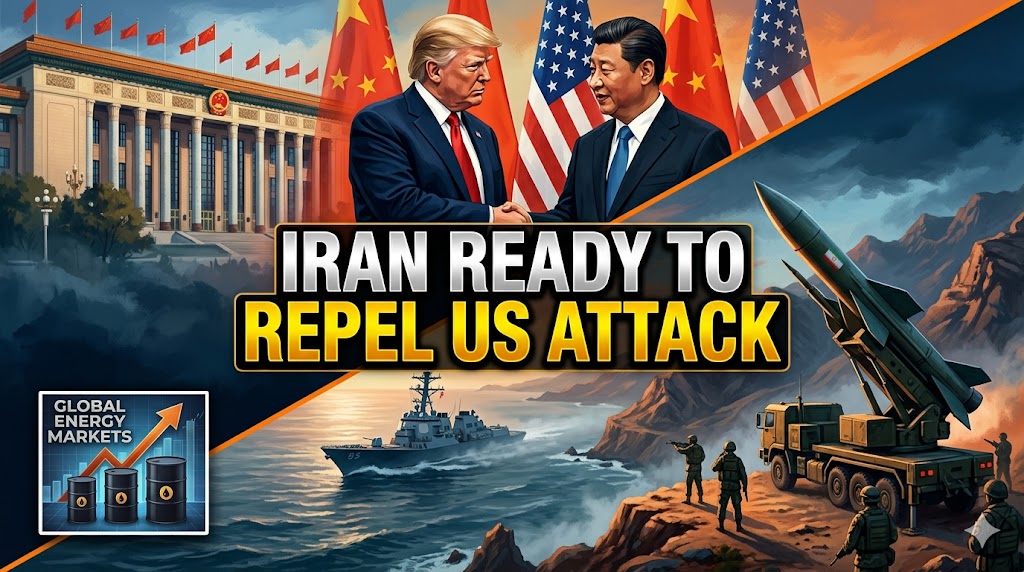
Tensions between Iran and the United States remain high as diplomatic efforts falter and military posturing continues on both sides. Iranian officials have recently signaled strong preparedness to counter any renewed American aggression, even as peace negotiations appear stalled. This development coincides with President Donald Trump's arrival in Beijing for critical talks with Chinese President Xi Jinping, where the Iran situation is expected to feature prominently alongside trade and security issues.
The current impasse highlights the complex interplay of military deterrence, economic pressures, and international diplomacy shaping the Middle East and beyond. With a fragile ceasefire in place following earlier escalations, the coming days could prove decisive in determining whether the region slides back into open conflict or finds a path toward de-escalation.
The roots of the present crisis trace back to longstanding disagreements over Iran's nuclear program, regional influence, and support for proxy groups. In early 2026, after failed negotiations, U.S. and Israeli forces conducted extensive strikes on Iranian military targets, nuclear facilities, and infrastructure. Iran responded with missile attacks and disruptions in the Strait of Hormuz, a vital chokepoint for global energy supplies.
A tentative ceasefire was brokered with international involvement, including mediation efforts by Pakistan and China. However, implementation has been uneven. The United States imposed a naval blockade on Iranian ports, aiming to pressure Tehran into concessions, while Iran maintained influence over shipping lanes and continued to assert its defensive capabilities.
Global energy markets have felt the strain, with oil prices surging and supply chain disruptions affecting economies worldwide. The human and economic costs on all sides have been significant, prompting urgent calls for a sustainable resolution.
Iran's Declaration of Readiness
Iranian military commanders have emphasized their forces' high level of preparedness in recent statements. Military drills near Tehran and other strategic locations demonstrate the Islamic Republic's ability to respond to potential threats "at any place and at any time." Officials, including parliament speaker Mohammad Bagher Ghalibaf, have warned that any aggression would lead to severe consequences for the aggressors.
This posture reflects Iran's strategy of deterrence through asymmetric capabilities, including ballistic missiles, drones, and naval forces suited for operations in the Persian Gulf. Despite damage from prior strikes, Iranian leaders insist their defensive systems remain robust and that the nation will not yield to external pressure.
Such statements serve both domestic and international audiences, reinforcing national resolve while signaling to Washington and its allies that renewed conflict would carry high costs.
Stalled Peace Talks and Key Sticking Points
Negotiations, conducted indirectly and through intermediaries, have hit significant roadblocks. The U.S. has demanded substantial rollbacks on Iran's nuclear activities, restrictions on regional proxies, and guarantees for safe passage through the Strait of Hormuz. Iran, in turn, has sought sanctions relief, an end to the naval blockade, war reparations, and recognition of its sovereignty concerns.
Recent Iranian proposals, including a 14-point plan, were deemed "totally unacceptable" by President Trump. Disagreements persist over the sequencing of steps—whether nuclear issues should be addressed first or if immediate economic relief and de-escalation in the Gulf should take priority.
Pakistan has played a notable mediating role, hosting talks, while China has proposed its own four-point peace framework for the broader Middle East. Despite these efforts, trust remains low, and mutual accusations of bad faith continue to hinder progress.
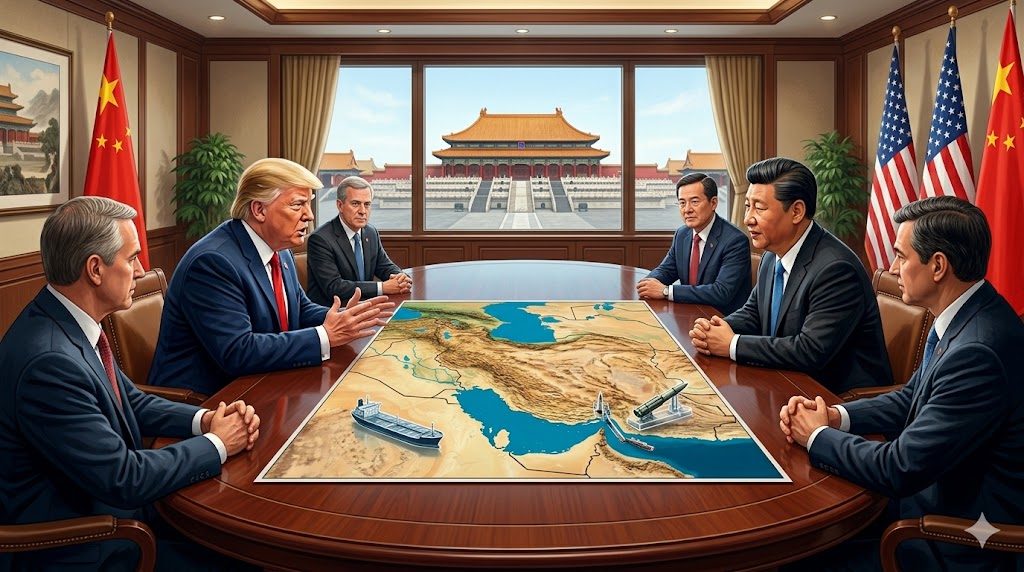
President Trump meets with President Xi Jinping in Beijing for high-stakes talks, where the ongoing Iran conflict and its impact on global energy security are central to the agenda.
Trump's Arrival in China: Diplomacy on Multiple Fronts
President Trump's state visit to Beijing, arriving on May 13, 2026, comes at a pivotal moment. The agenda includes trade relations, technology competition, Taiwan arms sales, and the ongoing Iran situation. Trump has indicated he will press Xi Jinping to use China's economic leverage— as a major buyer of Iranian oil — to encourage Tehran toward compromise.
Chinese officials have hosted Iranian counterparts in recent weeks and positioned themselves as potential guarantors for any future agreement. Beijing has an interest in stabilizing energy markets and avoiding further escalation that could disrupt global trade. Trump, however, has downplayed the need for Chinese assistance on Iran while acknowledging the importance of the bilateral relationship.
The summit reflects the intricate web of great-power politics influencing regional conflicts. Outcomes in Beijing could shape not only the trajectory of US-Iran relations but also broader US-China dynamics for years to come.
The Fragile Ceasefire and Military Realities
The current ceasefire, described by Trump as being on "life support," has faced repeated tests through exchanges of fire and incidents in the Strait of Hormuz. While full-scale operations have not resumed, the risk of miscalculation remains elevated.
U.S. forces maintain a strong presence in the region, with naval assets enforcing the blockade and monitoring Iranian movements. Iran has bolstered its air defenses and invested in preparations for prolonged conflict. Both sides claim readiness, yet neither appears eager for an immediate return to major hostilities given the potential for wider regional involvement and economic fallout.
Analysts note that the conflict has already incurred substantial costs, with estimates of billions in U.S. expenditures alone, alongside broader impacts on global energy security.
Regional and Global Implications
The standoff carries far-reaching consequences. Gulf states monitor developments closely, concerned about spillover effects and threats to shipping. Israel remains a key player, with its security interests tied to limiting Iran's capabilities. European nations and others worry about energy prices and migration risks from further instability.
On the global stage, the crisis underscores challenges in managing proliferation risks and great-power competition. Success or failure in resolving the current impasse could influence future diplomatic efforts on nuclear issues and regional security architectures.
Potential Paths Forward
Several scenarios could unfold in the near term. Renewed direct or indirect talks might yield incremental agreements on de-escalation measures, such as easing the blockade in exchange for assured safe passage and initial nuclear confidence-building steps. China and other actors could play constructive roles in bridging gaps.
Conversely, prolonged stalemate risks accidental escalation or hardened positions that make compromise more difficult. Domestic politics in both the U.S. and Iran add another layer of complexity, with leaders balancing firmness and pragmatism.
Experts suggest that sustainable progress requires addressing core security concerns on all sides while incorporating economic incentives and multilateral guarantees. Transparency in implementation and phased approaches may help build the necessary trust.
The Human and Economic Toll
Beyond headlines of military readiness and diplomatic maneuvering, the conflict has affected ordinary people. Iranian civilians face economic hardships from sanctions and disruptions, while regional populations deal with uncertainty and higher living costs. Global consumers feel the pinch through elevated fuel prices.
Longer-term reconstruction and reconciliation efforts will demand significant resources and political will if a lasting peace is achieved.
Strategic Considerations for Stakeholders
For the United States, balancing pressure with diplomacy remains central to preventing nuclear proliferation and protecting allies. Iran seeks to preserve its sovereignty and regional standing while alleviating economic strain. China aims to protect its interests without becoming overly entangled in Middle Eastern disputes.
Other nations, from Gulf monarchies to European powers, have roles in supporting de-escalation and fostering dialogue. International organizations may provide frameworks for verification and sanctions relief.
Looking Ahead
As President Trump engages with President Xi in Beijing, the world watches closely for signals of progress or further deadlock. Iran's assertions of defensive readiness serve as a reminder of the high stakes involved. The coming weeks will test the ability of major powers to navigate competing interests and prevent a return to full-scale conflict.
Resolution will likely require patience, creative diplomacy, and willingness to make difficult compromises. The alternative — prolonged tension or renewed warfare — carries risks too great for the region and the global community to ignore.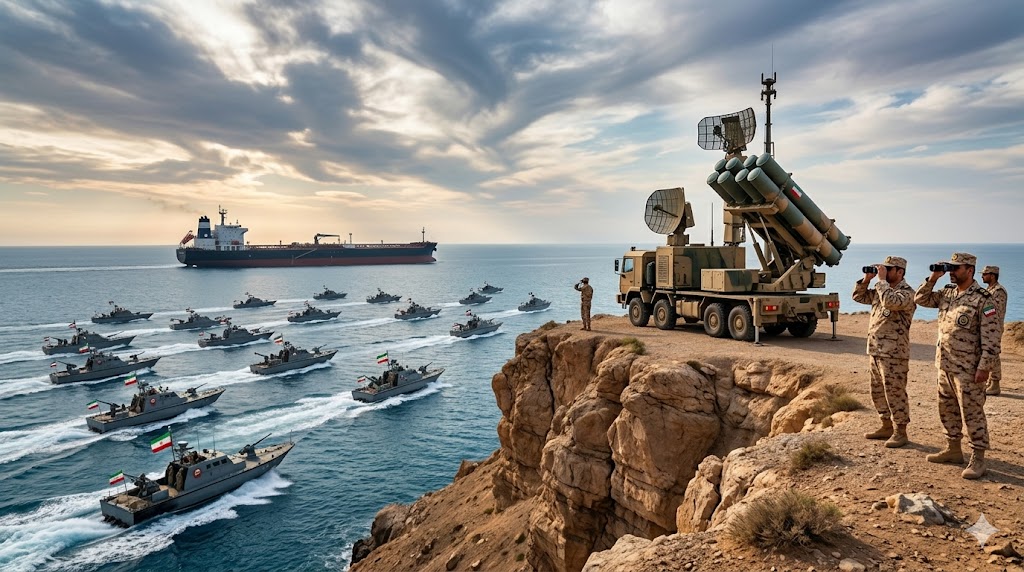
Iranian naval forces and air defense batteries maintain a high state of readiness along the strategic rugged coastline of the Strait of Hormuz, emphasizing Tehran's commitment to deterring any renewed US blockade.
Conclusion
The current chapter in US-Iran relations exemplifies the challenges of achieving peace in a geopolitically charged environment. With Iran prepared to defend itself and peace talks stalled, President Trump's meetings in China represent a critical diplomatic opportunity. Success depends on bridging deep divides through pragmatic engagement and mutual recognition of legitimate security needs.
Stakeholders across the international community have a vested interest in supporting efforts toward stability. The path forward remains uncertain, but the costs of failure underscore the urgent need for constructive dialogue and de-escalation. As events unfold, careful management of this crisis could pave the way for broader regional security improvements in the months and years ahead.