Hantavirus Cruise Ship Outbreak 2026: MV Hondius Cases
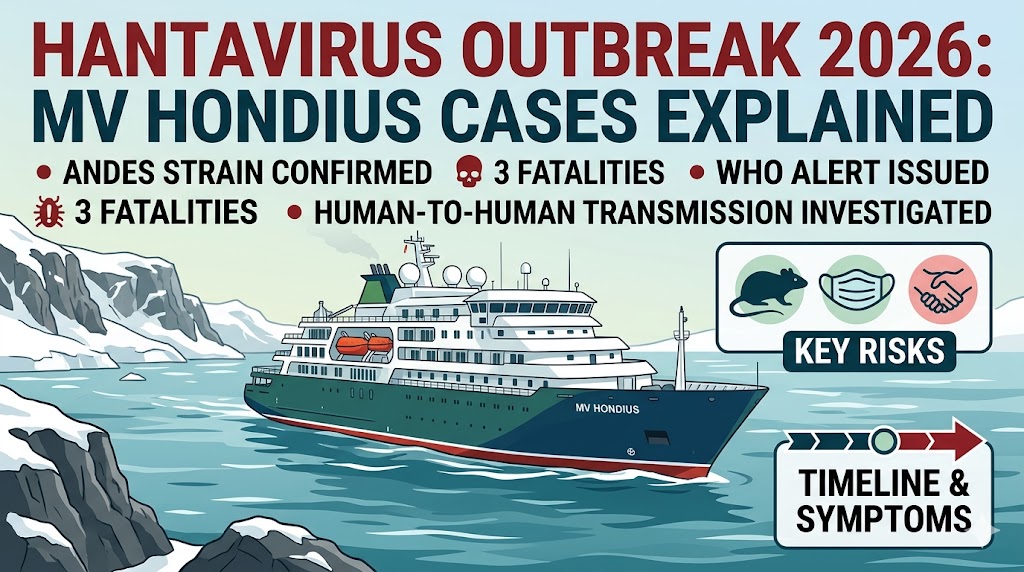
A rare but serious hantavirus outbreak aboard the MV Hondius expedition cruise ship has captured international attention in May 2026. What began as a luxury Antarctic voyage from Argentina turned into a significant public health event, with multiple confirmed and suspected cases, including three fatalities linked to the Andes strain of the virus.
Health authorities, including the World Health Organization (WHO), have emphasized that the risk to the general public remains low. However, the incident highlights vulnerabilities in confined travel settings and the unique characteristics of this rodent-borne pathogen, particularly its rare ability for limited human-to-human transmission in the Andes variant.
This comprehensive article examines the outbreak details, background on hantavirus, the ship's journey, official responses, and important lessons for travelers and the cruise industry.
Hantaviruses are a family of viruses primarily carried by rodents. Humans typically become infected through contact with rodent urine, droppings, or saliva—often when these materials are disturbed and become airborne as dust.
There are different strains with varying geographic distributions and effects:
Old World hantaviruses (common in Europe and Asia) often cause hemorrhagic fever with renal syndrome (HFRS).
New World hantaviruses (found in the Americas), such as the Andes virus, can lead to hantavirus pulmonary syndrome (HPS), a severe respiratory illness.
The Andes virus stands out as the only known hantavirus strain with documented cases of person-to-person transmission, typically among close contacts. This feature has made the MV Hondius outbreak particularly noteworthy for investigators.
Symptoms usually appear 1 to 8 weeks after exposure and begin with flu-like signs: fever, fatigue, muscle aches, headaches, dizziness, and gastrointestinal issues. In severe cases, the illness progresses rapidly to coughing, shortness of breath, and fluid buildup in the lungs, which can become life-threatening without intensive medical care. Early supportive treatment in hospitals improves outcomes significantly.
The MV Hondius: Ship Details and Voyage Overview
The MV Hondius is a Dutch-flagged expedition vessel operated by Oceanwide Expeditions, designed for polar and remote adventures with a capacity for around 170 passengers and crew, though this voyage carried approximately 147-150 people from more than 20 countries.
The 33-day journey departed from Ushuaia, Argentina, on April 1, 2026. It included visits to remote locations such as:
Antarctic mainland and surrounding areas
South Georgia Island
Tristan da Cunha and other South Atlantic islands
Stops near Saint Helena and Ascension Island
The ship was en route toward the Canary Islands when health concerns escalated. No widespread rodent infestation was reported onboard, pointing to initial exposure likely occurring during pre-cruise or early shore excursions in hantavirus-endemic regions of South America.
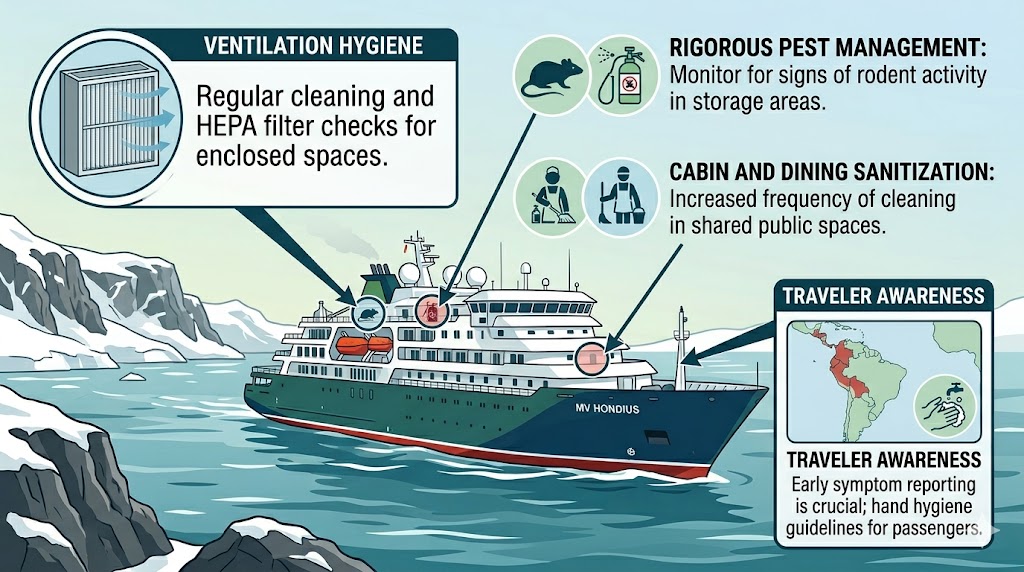
Industry Standards for Cruise Hygiene: This illustration details enhanced biosecurity protocols for expedition vessels, emphasizing ventilation hygiene and pest control in remote voyages
Detailed Timeline of the Hantavirus Outbreak
Early April 2026: The ship leaves Ushuaia. First symptoms appear around April 6 in some passengers, possibly linked to earlier land activities in Argentina or Chile.
April 11: A 70-year-old Dutch man becomes the first reported fatality onboard. His wife later succumbs as well.
Late April: Additional passengers develop severe respiratory symptoms. A German woman is among the early deaths.
May 2: The United Kingdom notifies WHO via the International Health Regulations system about a cluster of severe illnesses. Two deaths and one critically ill patient are initially reported.
May 4: WHO issues a Disease Outbreak News alert. Seven cases total (two lab-confirmed hantavirus, five suspected), with three deaths. The Andes strain is identified through testing in South Africa.
May 6-7: An eighth case is confirmed. Three seriously ill passengers are evacuated for treatment. The ship, previously anchored off Cape Verde after being denied port access elsewhere, proceeds toward Tenerife in Spain's Canary Islands.
May 10 onward: The vessel arrives in the Canary Islands. Passengers and crew undergo careful disembarkation with testing, isolation protocols, and repatriation arrangements. Many return home under monitoring by national health authorities.
As of mid-May 2026, the total stands at around eight to eleven associated cases, with three confirmed deaths. Investigations continue to determine the full scope and exact transmission dynamics.
Official Responses and Containment Measures
The WHO, ECDC, national governments, and the cruise operator have coordinated a measured response:
Medical evacuations for critical patients to facilities in South Africa and elsewhere.
Quarantine and monitoring protocols for contacts, with recommendations for up to 42 days of follow-up in some cases.
Repatriation using dedicated transport with strict infection prevention controls—no public mixing during transfers.
Laboratory confirmation and genomic sequencing to verify the Andes strain and track chains of transmission.
Public communications reassuring that this is not a pandemic threat and that the community spread outside the ship has not been detected.
Spain's authorities managed the ship's arrival in Tenerife professionally, using sealed transport and offshore testing. Countries with returning passengers, including the United States, Switzerland, and the Netherlands, have activated contact tracing and health surveillance.
The cruise industry and expedition operators are reviewing biosecurity protocols for remote voyages in light of this event.
Human-to-Human Transmission and Why This Case Matters
Most hantavirus infections stem from rodent exposure, but the Andes strain's limited person-to-person spread—often requiring close, prolonged contact—appears to have played a role onboard the confined ship environment. This marks one of the few documented instances of such transmission on a maritime vessel.
Experts note that factors like shared dining areas, cabins, and social activities may have facilitated spread among close contacts. However, the virus does not transmit easily through casual interactions or airborne routes like many respiratory viruses, which limits broader outbreak potential.
This event provides valuable data for researchers studying hantavirus behavior in group settings and underscores the importance of rapid diagnostics during travel.
Impact on Passengers, Crew, and Families
The outbreak has caused profound distress for those aboard. Many passengers, including birdwatchers and nature enthusiasts on an adventure of a lifetime, faced weeks of uncertainty while the ship was effectively stranded at sea. Families of the deceased are grieving, and survivors are coping with both physical recovery and the emotional toll.
Surviving passengers are now returning home with health monitoring instructions. Authorities stress that prompt medical attention for any flu-like symptoms post-exposure can be lifesaving.
Lessons for Cruise Travelers and Industry Standards
This incident, though rare, offers several takeaways:
Pre-travel awareness of regional disease risks, especially in rodent-active areas.
Ship hygiene remains crucial, including pest control and ventilation.
Rapid response protocolsfor unusual symptom clusters during voyages.
Traveler vigilance — report illnesses early and follow isolation guidance when needed.
The broader cruise sector, already experienced with norovirus and other outbreaks, will likely incorporate enhanced hantavirus preparedness for South American and polar itineraries.
Global Health Perspective and Future Outlook
WHO officials have repeatedly stated that the risk of widespread transmission in the community is very low. No secondary cases outside the ship contacts have been reported as of the latest updates.
Ongoing investigations will clarify the precise index case source and any contributing factors. This outbreak also renews focus on hantavirus research, surveillance in endemic areas, and preparedness for emerging zoonotic threats.
For the public, it serves as a reminder of the interconnectedness of travel and health without causing unnecessary alarm. Hantavirus remains uncommon, and simple precautions around rodents and cleanliness in nature go a long way toward prevention.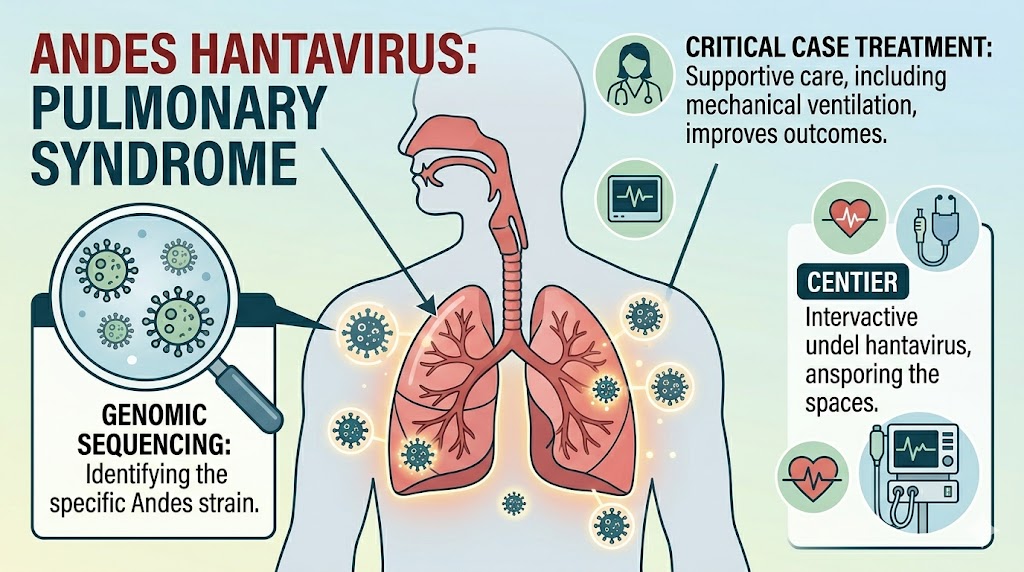
Understanding the Andes Strain: A clinical visual explaining the severe hantavirus pulmonary syndrome (HPS) caused by the Andes virus and the critical role of genomic sequencing in identifying transmission.
Conclusion
The hantavirus outbreak on the MV Hondius cruise ship in 2026 is a sobering but contained event. It has claimed three lives and affected a small group of passengers on a remote expedition, yet swift international cooperation has helped prevent wider consequences. As passengers complete their journeys home under monitoring, the focus shifts to learning from the experience to make future travels safer.
Travelers planning similar adventures should consult official health advisories, while the cruise industry continues refining protocols for such rare but impactful incidents. Authorities will provide further updates as the investigation progresses.
Staying informed through credible sources like the WHO and national health agencies remains the best approach. With proper management, this outbreak is expected to conclude without evolving into a larger public health concern.