Alexander the Great: Conquests and Enduring Legacy
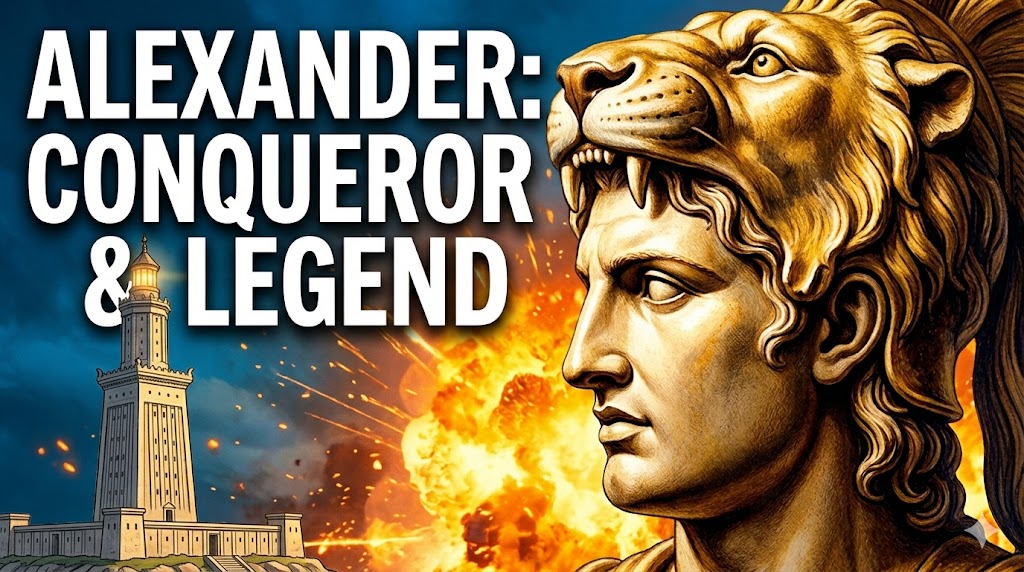
The history of Alexander the Great stands as one of the most remarkable chapters in human civilization. Rising from the throne of a small kingdom in northern Greece, this young Macedonian king forged one of the largest empires the ancient world had ever seen in little more than a decade. His military genius, bold vision, and cultural ambitions reshaped the known world, spreading Greek language, ideas, and customs from the Balkans to the banks of the Indus River.
Alexander the Great history continues to fascinate historians, military strategists, and enthusiasts more than 2,300 years after his death. His conquests not only toppled the mighty Persian Empire but also created the conditions for the Hellenistic Age, a period of cultural fusion that influenced everything from art and philosophy to science and governance. Yet his story is also one of complexity—marked by brilliance and brutality, ambition and hubris, triumph and tragedy.
This comprehensive article examines the full arc of Alexander the Great’s life, his extraordinary military campaigns, administrative innovations, personal character, and the enduring legacy that continues to shape our understanding of leadership and empire-building.
Early Life and Education Under Aristotle
Alexander the Great was born in July 356 BCE in Pella, the capital of Macedonia, to King Philip II and Queen Olympias. From birth, his life was steeped in both royal privilege and the rugged warrior culture of Macedonia. Philip II, a transformative figure himself, had modernized the Macedonian army and expanded the kingdom’s influence, laying the foundation upon which his son would build an empire.
The young prince received an education befitting a future ruler. At the age of 13, Alexander was tutored by the renowned philosopher Aristotle, who had been invited by Philip II to the royal court. Under Aristotle’s guidance, Alexander studied literature, philosophy, science, medicine, and ethics. He developed a deep appreciation for Homer’s *Iliad*, carrying a copy of the epic throughout his campaigns and drawing inspiration from the hero Achilles.
This intellectual formation, combined with rigorous military training from an early age, produced a leader who blended strategic brilliance with cultural sophistication. Alexander’s early experiences, including taming the legendary horse Bucephalus as a teenager, revealed his exceptional courage and determination—qualities that would define his later achievements.
Ascension to the Throne and Consolidation of Power
The assassination of Philip II in 336 BCE thrust the 20-year-old Alexander onto the throne under dramatic circumstances. Facing immediate threats from rival claimants, rebellious tribes, and uneasy Greek city-states, Alexander moved swiftly to secure his position.
He eliminated potential rivals within the court and launched rapid campaigns to subdue unrest in the Balkans. His decisive actions against the Thracians, Illyrians, and Thebans demonstrated both military prowess and political ruthlessness. The destruction of Thebes served as a harsh warning to other Greek states, ensuring their nominal allegiance to the League of Corinth, which Philip had established.
By 335 BCE, Alexander the Great had stabilized Macedonia and Greece, allowing him to turn his attention to the grand project his father had envisioned: the invasion of the Persian Empire. This decision would launch one of history’s most audacious military adventures.
Launching the Persian Campaign: Crossing into Asia
In 334 BCE, Alexander crossed the Hellespont into Asia Minor with an army of approximately 40,000 infantry and 5,000 cavalry. Though outnumbered by the vast resources of the Achaemenid Persian Empire under Darius III, Alexander possessed superior training, tactics, and leadership.
The history of Alexander the Great conquests truly begins with the Battle of the Granicus River in May 334 BCE. Against the advice of some generals, Alexander led a daring cavalry charge across the river, securing a decisive victory that opened the way into Persian territory. This battle set the pattern for his approach: bold offensive action, personal leadership from the front, and exploitation of the Macedonian phalanx combined with heavy cavalry.
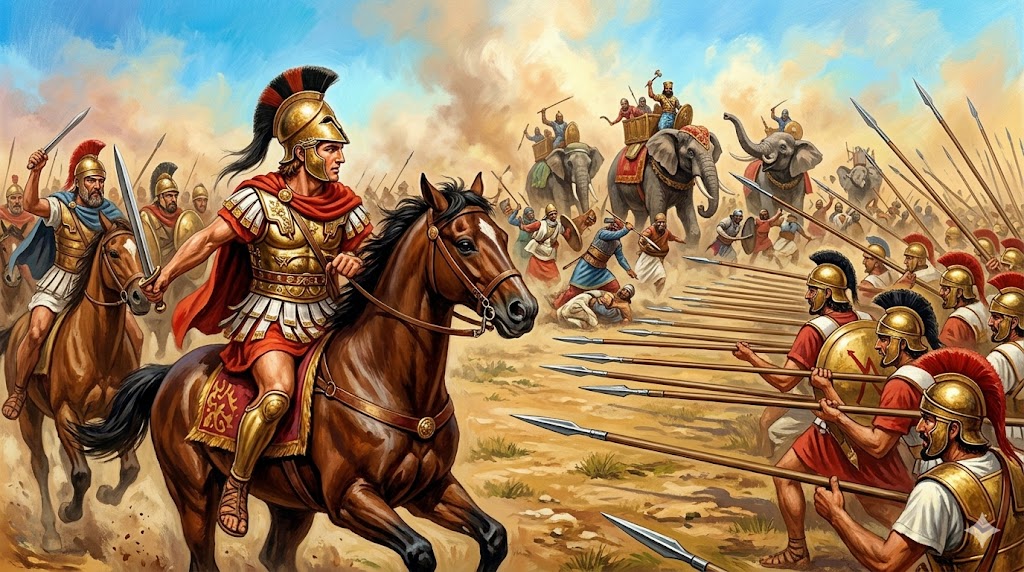
The Persian campaign
Major Victories and the Fall of Persian Power
Alexander’s campaign through Asia Minor was methodical. He liberated Greek cities along the coast while securing strategic ports. The decisive confrontation came at the Battle of Issus in 333 BCE, where Alexander’s forces defeated a larger Persian army and forced Darius III to flee, abandoning his family.
Rather than pursuing Darius immediately, Alexander turned south to secure the Mediterranean coast. The siege of Tyre in 332 BCE stands as one of his greatest military achievements. After a seven-month operation involving innovative engineering and naval support, the island city fell, followed by the swift capture of Gaza.
Egypt welcomed Alexander as a liberator from Persian rule. In 332-331 BCE, he founded the city of Alexandria, which would become one of the greatest centers of learning in the ancient world. He visited the oracle of Amun at Siwa, where he was proclaimed the son of the god—an event that bolstered his divine status among followers.
The climax of the Persian campaign occurred at the Battle of Gaugamela in 331 BCE. Facing overwhelming numerical superiority, Alexander used brilliant tactics to rout Darius once again. Babylon, Susa, and Persepolis fell in succession. The burning of Persepolis, whether intentional or accidental, symbolized the end of Achaemenid dominance.
The Push Eastward: Central Asia and India
With Persia largely subdued, Alexander the Great continued eastward into the provinces of Bactria and Sogdiana (modern Afghanistan and Central Asia). These campaigns proved particularly challenging due to rugged terrain, fierce resistance from local tribes, and logistical difficulties.
He married Roxana, daughter of a Bactrian noble, as part of efforts to integrate local elites. The founding of numerous cities named Alexandria across his empire served both military and cultural purposes, acting as garrisons and centers of Hellenistic influence.
The Indian campaign beginning in 327 BCE represented the easternmost reach of Alexander’s ambitions. After crossing the Hindu Kush, he faced King Porus at the Battle of the Hydaspes River in 326 BCE. Despite difficult monsoon conditions and war elephants, Alexander secured victory through superior tactics. Impressed by Porus’s courage, he restored the king to his throne as an ally.
Exhausted by years of campaigning and facing resistance from his troops at the Hyphasis River, Alexander reluctantly turned back. The decision to return marked the beginning of the end of his active conquests.
Return Journey, Administration, and Reforms
The return march through the Gedrosian Desert proved one of the most grueling episodes in Alexander the Great history. Severe losses from heat, thirst, and starvation tested the army’s endurance. Upon reaching Susa in 324 BCE, Alexander focused on consolidating his vast empire.
He implemented ambitious policies of cultural fusion, encouraging marriages between Macedonians and Persians, integrating local troops into his army, and adopting elements of Persian court protocol. These measures aimed to create a stable, unified empire but created resentment among some Macedonian veterans.
Alexander also planned further expeditions, including campaigns into Arabia and possibly the western Mediterranean, demonstrating that his ambitions remained boundless.
Death in Babylon and the Struggle for Succession
In June 323 BCE, Alexander the Great died in Babylon at the age of 32. The cause remains debated—possible typhoid fever, malaria, poisoning, or complications from old wounds have all been proposed. His sudden death without a clear successor plunged the empire into decades of conflict among his generals, known as the Diadochi.
The Partition of Babylon and subsequent wars eventually fragmented the empire into Hellenistic kingdoms ruled by Ptolemy in Egypt, Seleucus in Asia, and Antigonus and his descendants in Macedonia and Greece. Yet the cultural impact endured far beyond political boundaries.
Military Innovations and Leadership Style
Alexander the Great’s success rested on revolutionary military reforms inherited and enhanced from his father. The Macedonian phalanx, equipped with the long sarissa spear, provided a formidable defensive anchor, while companion cavalry delivered decisive shock attacks. Combined arms tactics, intelligence gathering, and rapid mobility characterized his approach.
What truly set Alexander apart was his personal leadership. Fighting at the forefront, sharing hardships with his troops, and demonstrating tactical flexibility on the battlefield inspired extraordinary loyalty. His ability to adapt to diverse enemies—from Persian heavy cavalry to Indian elephants—highlighted his genius.
Cultural Legacy and the Birth of the Hellenistic World
The most profound aspect of Alexander the Great legacy lies in cultural transformation. The Hellenistic Age that followed his conquests witnessed unprecedented exchange between Greek and Eastern civilizations. Greek became the lingua franca across much of the known world. Cities founded by Alexander became centers of art, science, and philosophy.
Alexandria in Egypt, with its famous library and lighthouse, exemplified this fusion. Advances in mathematics, astronomy, medicine, and engineering flourished. Buddhism, too, spread westward while Greek artistic influences reached India, visible in Gandharan sculpture.
Historical Debates and Modern Interpretations
Scholars continue to debate Alexander’s character and motivations. Was he a visionary unifier or a ruthless conqueror? A cultural bridge-builder or destroyer of traditions? Modern interpretations range from romantic admiration to critical assessments of the human cost of his campaigns, including destruction of cities and loss of life on a massive scale.
Archaeological discoveries, newly translated texts, and advanced historical analysis continue to enrich our understanding of this complex figure.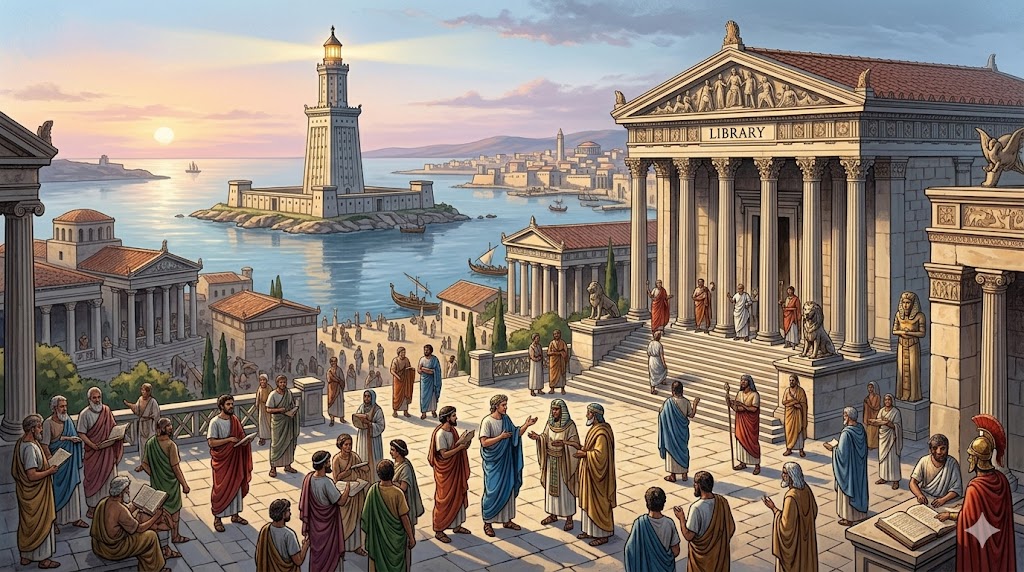
cultural legacy
Conclusion: The Timeless Appeal of Alexander the Great
More than two millennia after his death, the history of Alexander the Great continues to captivate because it embodies fundamental human themes: the drive for glory, the pursuit of knowledge, the clash of cultures, and the fleeting nature of power. His conquests redrew the map of the ancient world and accelerated processes of globalization that resonate in our own era.
Alexander the Great did not merely conquer territory—he accelerated the exchange of ideas that helped shape Western civilization. His story reminds us that extraordinary leadership can transform the world, for better and for worse, in a single generation.
As we study the life of Alexander the Great, we gain insights not only into the ancient past but also into enduring questions of leadership, ambition, cultural interaction, and the complex legacy that conquerors leave behind. His name remains synonymous with daring achievement, ensuring that the history of Alexander the Great will continue to inspire and provoke reflection for generations to come.