Archimedes: Father of Mathematics and His Inventions Legacy
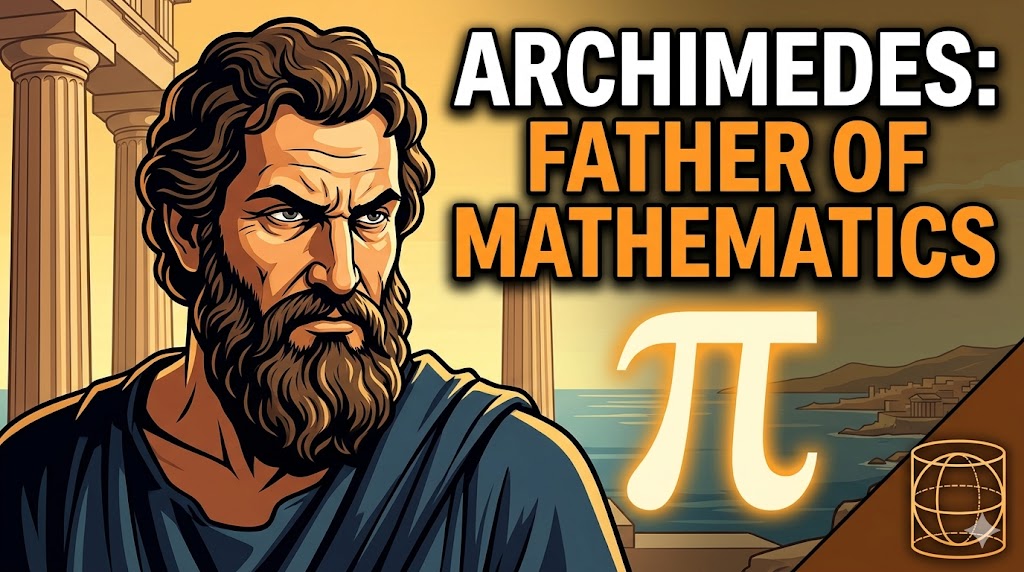
Archimedes of Syracuse stands as one of the towering figures in the history of human intellect. Often hailed as the Father of Mathematics, this ancient Greek scholar made contributions that spanned pure mathematics, physics, engineering, and astronomy. Living in the 3rd century BCE, Archimedes developed methods and principles that anticipated modern calculus, laid foundations for mathematical physics, and created practical inventions still relevant today.
His work exemplifies the power of rigorous reasoning combined with creative insight. From calculating the value of pi with remarkable accuracy to formulating the principle of buoyancy, Archimedes transformed how humanity understands the physical world through mathematical lenses. His story continues to inspire mathematicians, scientists, and students more than 2,200 years after his death.
This comprehensive article delves into the life of Archimedes, his major achievements, the context of his work in ancient Greece, and his lasting impact on the development of mathematics and science.
Early Life and Education in Syracuse
Archimedes was born around 287 BCE in the city-state of Syracuse on the island of Sicily. At the time, Syracuse was a prosperous Greek colony with strong cultural and intellectual ties to mainland Greece and Alexandria in Egypt.
Little is known about his early years, but historians believe he received an excellent education, likely traveling to Alexandria, the great center of learning in the Hellenistic world. There, he would have had access to the famous Library of Alexandria and interacted with leading scholars of the era.
This environment nurtured his exceptional talents. Archimedes showed an early passion for mathematics and mechanics, developing a reputation for solving complex problems with elegant solutions. His lifelong connection to King Hiero II of Syracuse provided both patronage and practical challenges that spurred many of his inventions.
Major Mathematical Contributions
Archimedes’ work in pure mathematics was revolutionary. He excelled in geometry, developing techniques that came remarkably close to integral calculus centuries before its formal invention.
One of his most celebrated achievements was determining the value of π (pi) with unprecedented precision. Using the method of exhaustion, he calculated bounds for pi between 3 10/71 and 3 1/7, a level of accuracy that stood for generations. He also computed the area and volume of spheres, cylinders, and other complex shapes with remarkable ingenuity.
His treatise The Method of Mechanical Theorems reveals how he used mechanical intuitions to discover mathematical truths, effectively blending physics and mathematics. This approach foreshadowed many modern scientific methods.
Archimedes also made significant advances in number theory and combinatorics. In The Sand Reckoner, he developed a system for expressing extremely large numbers, demonstrating that the universe’s scale could be quantified mathematically.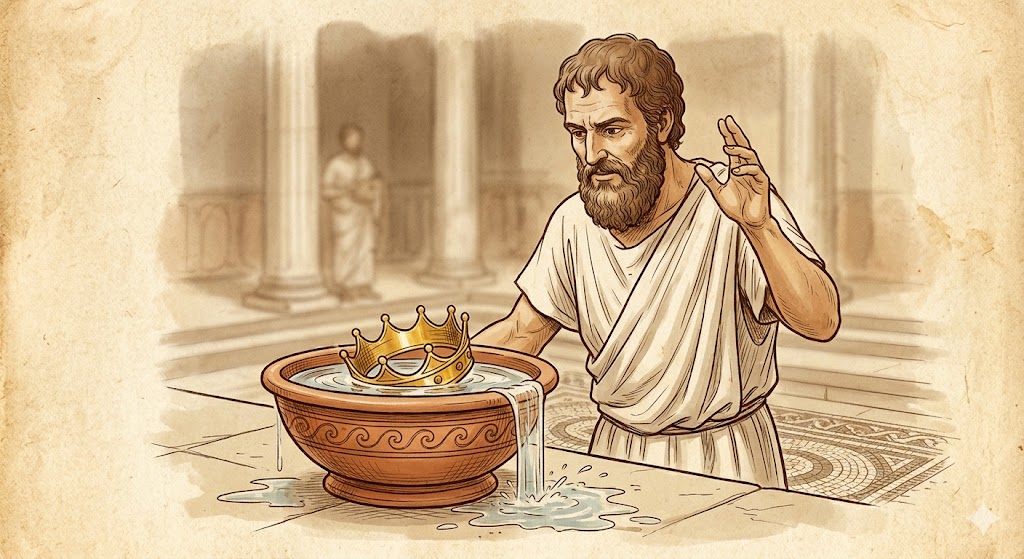
Archimedes’ Principle in action: The legendary moment the scholar grasped the concept of buoyancy while observing water displacement in a Syracuse bath
Groundbreaking Inventions and Engineering Feats
Beyond theoretical mathematics, Archimedes applied his genius to practical problems. The Archimedes screw, a device for raising water, remains in use today in irrigation and industrial applications. This helical pump efficiently lifts large volumes of water with minimal effort.
During the Roman siege of Syracuse, Archimedes reportedly designed powerful war machines, including catapults and the legendary “Claw of Archimedes,” a crane-like device said to lift and capsize enemy ships. While some accounts border on legend, they reflect his extraordinary mechanical insight.
His most famous practical discovery came in the bathhouse, leading to Archimedes’ Principle: an object immersed in fluid experiences an upward buoyant force equal to the weight of the fluid it displaces. This principle, used to test the purity of King Hiero’s crown, remains fundamental in hydrostatics and naval architecture.
The Archimedes Principle and Scientific Method
The story of Archimedes running naked through the streets shouting “Eureka!” (I have found it!) after solving the crown the problem captures the joy of scientific discovery. More importantly, it illustrates his empirical approach—combining observation, experimentation, and mathematical rigor.
This integration of theory and practice distinguishes Archimedes. He did not merely contemplate abstract ideas but tested them against physical reality, establishing a model for future scientists like Galileo and Newton.
Philosophical Context and the Hellenistic World
Archimedes lived during the Hellenistic period, following Alexander the Great’s conquests. This era saw the spread of Greek culture and intense intellectual activity across the Mediterranean and Near East.
Unlike many philosophers who separated pure thought from manual labor, Archimedes embraced both. His work bridged the gap between abstract mathematics and engineering applications, challenging the social prejudices of his time that often looked down upon practical crafts.
His writings, though only a fraction survive, influenced later scholars in both the Islamic Golden Age and Renaissance Europe. Scholars like Leonardo da Vinci and Galileo studied his methods with great admiration.
Legacy and Influence on Modern Mathematics
The title Father of Mathematics is well-deserved given Archimedes’ profound and wide-ranging impact. His methods of exhaustion anticipated the development of calculus by Newton and Leibniz. His work on centers of gravity and equilibrium laid groundwork for classical mechanics.
In the modern era, Archimedes continues to inspire. Fields ranging from computer science (algorithmic thinking) to civil engineering (statics and dynamics) trace intellectual roots to his discoveries. The Archimedes Palimpsest, rediscovered in the early 20th century, revealed previously unknown works and deepened appreciation for his genius.
Educational institutions worldwide teach his principles, using them to introduce students to rigorous problem-solving and creative thinking. His life demonstrates that mathematics is not merely calculation but a powerful tool for understanding and shaping the world.
Challenges in Studying Archimedes Today
Much of what we know about Archimedes comes from later accounts by Plutarch, Cicero, and his own surviving treatises. The loss of many original works creates gaps in our understanding. Additionally, separating historical fact from legendary embellishment remains an ongoing scholarly endeavor.
Modern technology, including advanced imaging of ancient manuscripts, continues to uncover new insights into his methods and thought processes.
Archimedes in Popular Culture and Education
Archimedes’ story captivates beyond academic circles. Documentaries, books, and educational programs frequently highlight his life, making complex mathematical ideas accessible to general audiences. His emphasis on curiosity and perseverance offers valuable lessons for students facing challenging problems.
In popular imagination, he represents the archetype of the brilliant inventor whose mind operates on a different plane, yet remains deeply connected to practical human needs.
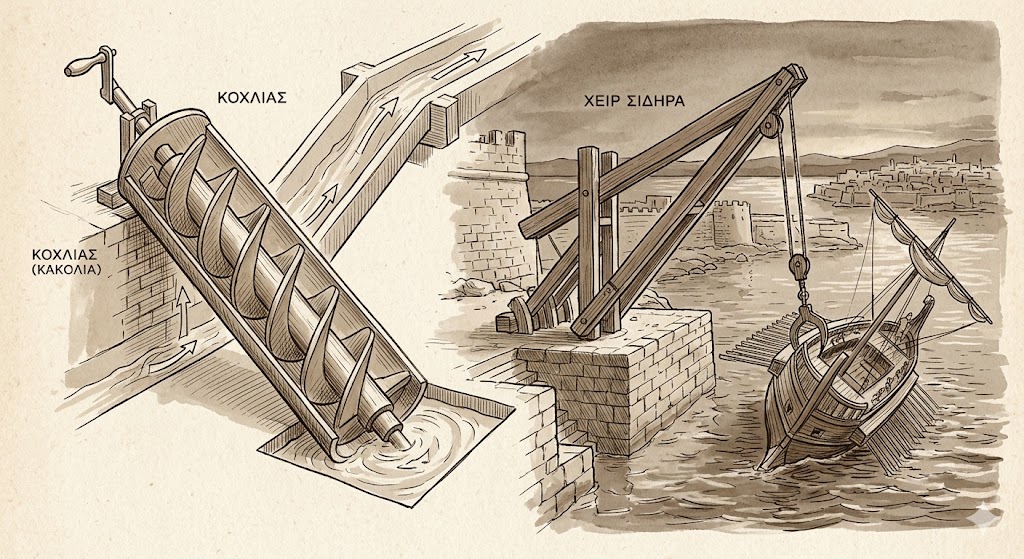
Engineering Marvels of Syracuse: A technical illustration showcasing the practical genius of Archimedes, featuring the water-lifting screw (left) and the defensive "Claw" mechanism (right) used against Roman ships.
Conclusion: The Timeless Genius of the Father of Mathematics
Archimedes exemplifies the pinnacle of human intellectual achievement. As the Father of Mathematics, he demonstrated how logical reasoning, creative insight, and practical application could unlock the secrets of the universe. His contributions to geometry, physics, and engineering created ripples that continue to influence our world today.
From calculating pi to understanding buoyancy, Archimedes showed that mathematics is both beautiful in its abstraction and powerful in its utility. His legacy reminds us that curiosity, combined with disciplined thought, can overcome even the most daunting challenges.
As we face complex problems in the 21st century—from climate modeling to space exploration—Archimedes’ spirit of inquiry and innovation remains as relevant as ever. The Father of Mathematics not only shaped the discipline but also embodied the enduring human quest to understand our place in the cosmos through the language of numbers and shapes.
His life encourages every generation to approach problems with the same blend of rigor, creativity, and wonder that defined his extraordinary career.