PM Modi Urges WFH, Fuel Savings, Less Gold Buys Amid Crisis
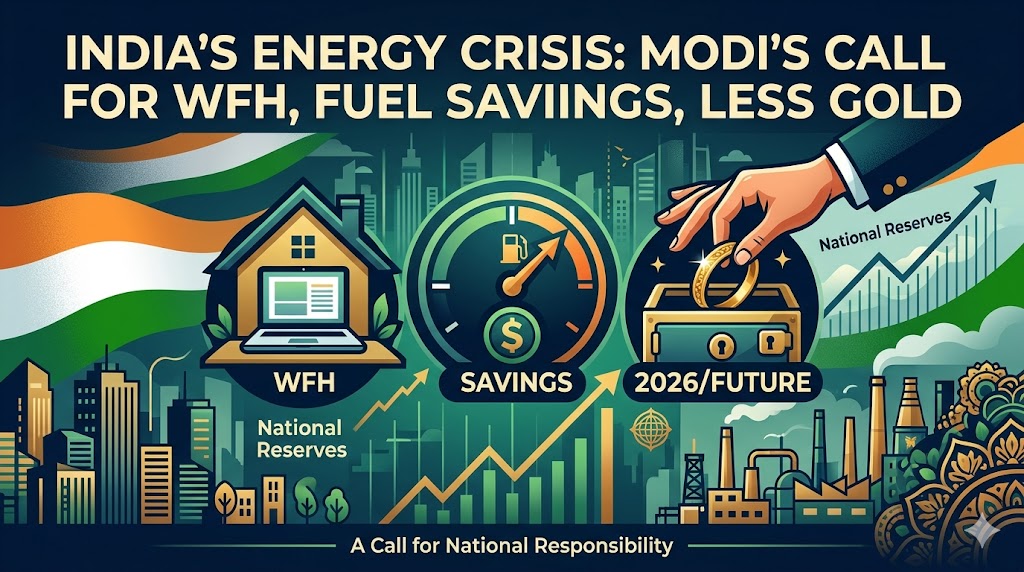
In a significant address that has sparked nationwide discussion, Prime Minister Narendra Modi urged Indians to adopt simple yet impactful lifestyle changes to navigate the challenges posed by rising global energy costs. Speaking in Secunderabad, Telangana, on May 10, 2026, the Prime Minister highlighted work-from-home arrangements, fuel conservation, and a temporary pause on non-essential gold purchases as acts of national responsibility.
This appeal comes at a time when the ongoing conflict in West Asia has disrupted oil supplies, pushing crude prices significantly higher and putting pressure on India's import-dependent economy. With nearly 90% of its crude oil requirements met through imports, India faces a delicate balancing act between maintaining economic growth and protecting foreign exchange reserves.
The Prime Minister's message resonates with the spirit of collective responsibility that has defined India's response to past crises. Far from being mere suggestions, these measures represent a call to patriotism in everyday actions. This article delves deep into the context, details, and broader implications of PM Modi's address, offering practical insights for individuals, businesses, and communities.
The Global Context: Why This Appeal Now?
The world is witnessing heightened volatility in energy markets due to prolonged instability in the Middle East. Disruptions in key shipping routes, particularly around critical choke point, have led to sharp increases in crude oil prices. Analysts note that prices have climbed substantially, affecting economies worldwide.
For India, a major importer, this translates into higher costs for petrol, diesel, and related products. The government has so far cushioned consumers through various mechanisms, but the strain on foreign exchange is evident. PM Modi emphasized that saving every drop of fuel and every unit of foreign currency is crucial in these times.
He drew parallels with the COVID-19 period, when India successfully adapted to new ways of working and living. "During the Corona period, we adopted work from home, online meetings, video conferences and developed many such systems," the Prime Minister recalled. "The need of the hour is to restart those practices."
This is not about panic or austerity for its own sake but about strategic resilience. By reducing unnecessary consumption, India can mitigate the impact of global shocks and emerge stronger.
Breaking Down PM Modi's Key Appeals
1. Reviving Work-from-Home (WFH) Culture
One of the central pillars of the address is encouraging organizations and employees to prioritize work-from-home wherever feasible. This directly cuts commuting, which accounts for a substantial portion of daily fuel consumption in urban areas.
Practical Benefits:
Reduced traffic congestion and lower emissions.
Savings on petrol and diesel for individuals and the nation.
Improved work-life balance when implemented thoughtfully.
Continued productivity through virtual tools that many mastered during the pandemic.
Businesses can review roles suitable for remote work, such as IT, administration, consulting, and certain back-office functions. Hybrid models could also strike a balance. The Prime Minister noted that these systems were developed successfully before and should be given priority again in the national interest.
2. Fuel Conservation Measures
PM Modi stressed using petrol and diesel sparingly. "A big resolution is to use petrol and diesel sparingly," he said, framing it as a patriotic duty.
Actionable Steps for Citizens:
Opt for public transport like metros, buses, and trains
Practice carpooling with colleagues or neighbors.
Combine errands to minimize trips.
Consider electric vehicles or bicycles for short distances.
Support goods movement through railways where possible.
These small changes, when scaled across millions, can lead to meaningful savings in fuel imports.
3. Reducing Gold Purchases for a Year
The appeal to pause non-essential gold buying, especially for weddings, stands out for its boldness. Gold imports significantly impact India's current account. By deferring purchases, families can help ease pressure on foreign reserves.
The Prime Minister suggested resolving not to buy gold for a year, regardless of traditions. This does not mean abandoning cultural practices entirely but rethinking timing and scale. Many families are already exploring alternatives like lightweight jewelry or focusing on other meaningful wedding elements.
4. Additional Measures for Broader Impact
The address covered more ground:
Limiting non-essential foreign travel and preferring domestic destinations.
Reducing edible oil consumption for both economic and health benefits.
Transitioning towards natural farming and cutting chemical fertilizer use.
Promoting Swadeshi (indigenous) products to boost local economies.
Each suggestion ties back to conserving foreign exchange while fostering self-reliance.
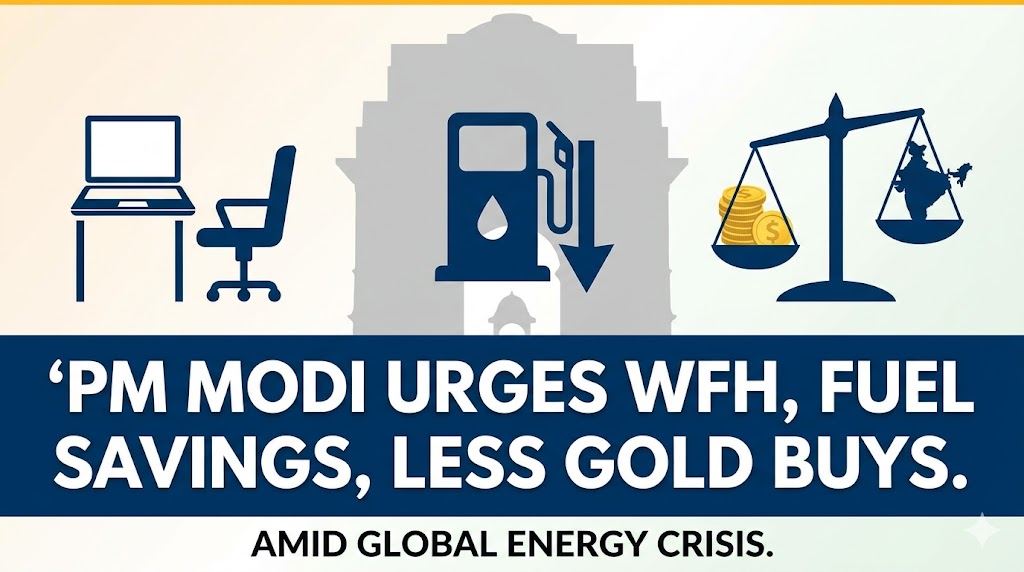
PM Modi's urges to nation
Economic Implications for India
India's economy has shown remarkable resilience, but external shocks test this strength. High energy costs can influence inflation, transportation expenses, and manufacturing costs. By encouraging behavioral changes, the government aims to share the responsibility beyond policy measures.
Potential Outcomes:
Stabilized foreign exchange reserves.
Lower import bills in key sectors.
Boost to domestic industries through increased preference for local goods.
Enhanced awareness of energy security among citizens.
Experts view this as a proactive approach rather than reactive panic. It complements government efforts like diversifying import sources and pushing renewable energy.
How Individuals and Families Can Contribute
Making these changes practical requires planning:
Daily Routine Adjustments:
Start with tracking fuel use. Simple apps or vehicle logs help identify savings. Families can designate "no-car days" or explore cycling/walking routes.
Wedding and Festival Planning:
Discuss with relatives early. Focus on memorable experiences over lavish spending. Many communities are already adopting simpler, more sustainable celebrations.
Workplace Conversations:
Employees can initiate discussions about flexible working. Employers might find productivity gains and talent retention benefits.
Health and Sustainability Angle:
Reducing edible oil and shifting to natural practices align with wellness goals. Home gardening or community farming initiatives can be rewarding.
Business and Corporate Response
Corporates, especially in the services sectors, have the opportunity to lead. Tech companies that thrived on remote models during COVID can revisit policies. Real estate firms might see shifts in office space demand, while transport and fuel companies could innovate in efficiency.
Government departments and PSUs can set examples by implementing WFH guidelines where suitable.
Challenges and Balanced Perspectives
While the appeal is well-intentioned, implementation varies. Not all jobs suit remote work. Rural and informal sector workers may face different realities. Gold holds deep cultural and investment significance in India.
The key is voluntary participation and flexibility. This is an appeal to conscience, not enforcement. Success depends on collective buy-in and supportive policies, such as better public transport infrastructure.
Some critics question the timing or scope, but most acknowledge the underlying economic logic given global conditions.
Long-Term Vision: Atmanirbhar Bharat in Action
PM Modi's message aligns with the broader vision of self-reliant India. Energy security, reduced import dependence, and sustainable practices form the foundation for future growth.
Investments in renewables, domestic oil exploration, and green technologies will complement citizen-level actions. Public awareness campaigns can sustain momentum beyond the immediate crisis.
Community and Societal Impact
Schools and colleges can incorporate lessons on resource conservation. NGOs and resident associations might organize carpool networks or awareness drives. Social media can amplify positive stories of families and organizations contributing.
When citizens see their actions as part of a national effort, motivation increases. Past examples, like during the pandemic or Swachh Bharat, show the power of collective will.
Expert Insights and Data Points
Economists note that even a 5-10% reduction in fuel consumption through behavioral changes can yield substantial savings. Gold imports have historically fluctuated with prices and festivals. Timing purchases thoughtfully can benefit both individuals and the macroeconomy.
Public transport utilization data from major cities indicates scope for higher adoption with improved services.
Conclusion: A Call to Shared Responsibility
Prime Minister Narendra Modi's address serves as a timely reminder that national strength lies in unity and mindful actions. By embracing work-from-home where possible, saving fuel diligently, and reconsidering gold purchases temporarily, every Indian can contribute to weathering global storms.
This is not about sacrifice alone but about smart choices that secure a better future. As the Prime Minister implied, living responsibly for the country is the highest form of patriotism.
In these challenging times, small steps by millions can create a powerful impact. Let us respond with understanding, creativity, and resolve. India's journey towards greater self-reliance continues, one conscious decision at a time.