National Technology Day: India's Journey of Innovation
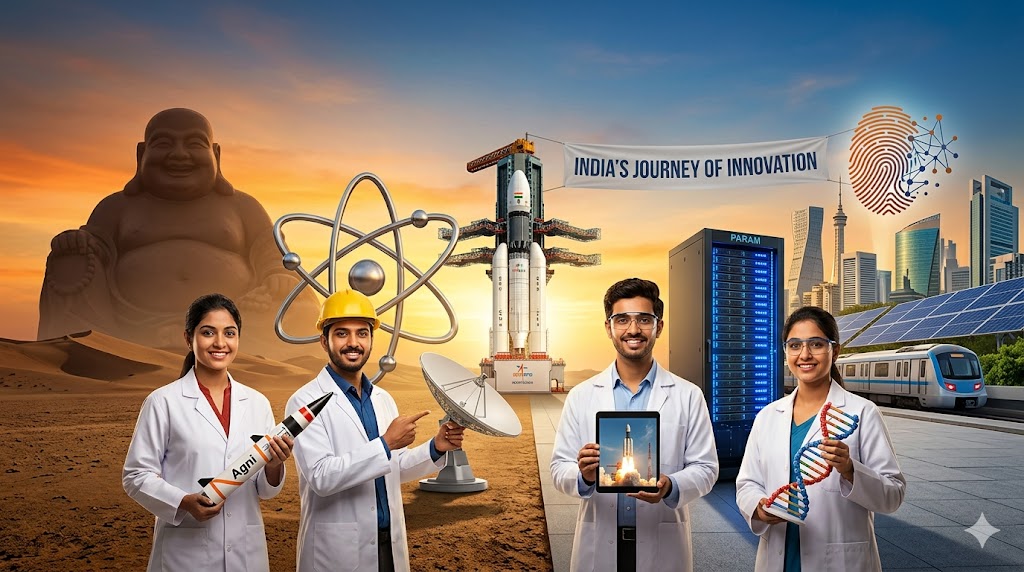
Every year on May 11, India observes National Technology Day with a sense of pride and reflection. This day stands as a powerful reminder of the country's remarkable achievements in science and technology. It specifically commemorates the successful nuclear tests conducted at Pokhran in 1998, which not only demonstrated India's technical prowess but also marked a defining moment in its journey toward self-reliance.
National Technology Day India goes beyond a single event. It honors the countless scientists, engineers, and innovators who have contributed to building a stronger, more independent nation. From defense capabilities to space exploration and digital transformation, the day celebrates the spirit of ingenuity that continues to drive progress in every sector.
In 2026, as India marks another year of this observance, the focus remains on responsible innovation for inclusive growth. This theme underscores how technology can bridge gaps, empower communities, and ensure sustainable development for all citizens.
The significance of this day lies in its ability to inspire younger generations. It reminds us that challenges, whether geopolitical or developmental, can be overcome through determination, research, and indigenous capabilities. As we delve deeper into its history and impact, we see how National Technology Day reflects the very essence of India's growth story.
The Historical Background of National Technology Day
The roots of National Technology Day trace back to May 11, 1998. On that historic day, India conducted a series of underground nuclear tests at the Pokhran Test Range in the Rajasthan desert. Codenamed Operation Shakti, these tests included three detonations on May 11 and two more on May 13. Prime Minister Atal Bihari Vajpayee later declared India a full-fledged nuclear state.
This was not India's first nuclear test. In 1974, under the codename Smiling Buddha (Pokhran-I), the country had conducted its initial peaceful nuclear explosion. However, the 1998 tests (Pokhran-II) were more comprehensive, showcasing advanced weapon designs and establishing India's credibility as a responsible nuclear power.
The decision to conduct these tests came amid complex regional and international dynamics. Scientists and engineers, led by figures like Dr. APJ Abdul Kalam, worked tirelessly under the leadership of the Defence Research and Development Organisation (DRDO) and the Department of Atomic Energy. Their efforts ensured that India could assert its sovereignty while maintaining a policy of no-first-use and credible minimum deterrence.
Following the tests, India faced international sanctions. Yet, these challenges only strengthened the resolve to develop indigenous technologies. The government officially declared May 11 as National Technology Day in 1999, on the first anniversary of the Pokhran tests, to honor not just the nuclear achievement but all strides in science and technology.
On the same day in 1998, India also achieved other milestones. The National Aerospace Laboratories successfully test-flew the Hansa-3, India's first indigenous light aircraft. Additionally, the Trishul missile, part of the Integrated Guided Missile Development Programme, was tested. These events collectively symbolized a new era of technological confidence.
Significance of National Technology Day
National Technology Day holds profound importance in India's national calendar. It serves multiple purposes:
- Recognition of Scientific Excellence: The day pays tribute to the brilliant minds behind groundbreaking inventions and discoveries.
Promotion of Self-Reliance: It aligns perfectly with the Atmanirbhar Bharat initiative, emphasizing indigenous development.
Inspiration for Future Generations:Educational institutions and organizations use this occasion to motivate students toward careers in STEM fields.
Global Assertion: It highlights India's emergence as a key player in advanced technologies, from nuclear science to information technology.
The Pokhran nuclear tests 1998, in particular, transformed India's strategic position. They demonstrated that a developing nation could master complex technologies despite limited resources and external pressures. This success laid the foundation for further advancements in missiles, space, and defense systems.
Beyond defense, National Technology Day reminds us of technology's role in addressing everyday challenges like healthcare, agriculture, education, and climate change. It encourages a balanced approach where innovation serves humanity while respecting ethical boundaries.
Key Events on May 11, 1998
The day was packed with achievements that showcased India's multifaceted capabilities:
1. Operation Shakti Nuclear Tests: Three devices were detonated successfully, including a thermonuclear device. The tests confirmed India's ability to design and build sophisticated nuclear weapons.
2. Hansa-3 Aircraft Test Flight:This all-composite light aircraft took to the skies, marking a step forward in civil aviation technology. Designed by NAL in Bengaluru, it has since been used for training and research.
3. Trishul Missile Test: The short-range surface-to-air missile added to India's air defense capabilities.
These synchronized successes were no coincidence. They reflected years of dedicated research across multiple organizations working in synergy.
Evolution of India's Technology Landscape Post-1998
Since the Pokhran tests, India has made giant leaps in various technological domains. The experience gained strengthened institutions and fostered a culture of innovation.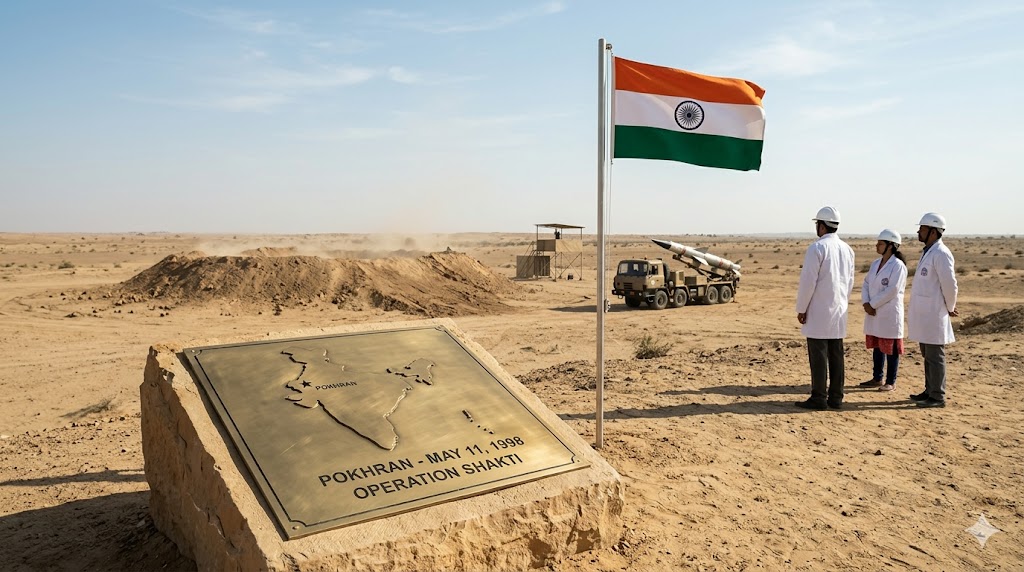
The Foundation
Defense and Strategic Technologies
DRDO has been at the forefront, developing systems like the Agni series of missiles, Tejas fighter aircraft, and the BrahMos supersonic cruise missile (in collaboration with Russia). Recent achievements include anti-satellite (ASAT) capabilities under Mission Shakti and advancements in hypersonic technology.
The successful testing of advanced Agni missiles with MIRV technology further cements India's deterrence capabilities. Indigenous aircraft carriers like INS Vikrant and nuclear submarines like INS Arihant highlight self-reliance in critical platforms.
Space Achievements by ISRO
The Indian Space Research Organisation (ISRO) has earned global acclaim with cost-effective missions. Chandrayaan-1 (2008) discovered water on the Moon, while Mangalyaan (Mars Orbiter Mission) made India the first nation to reach Mars orbit in its maiden attempt. Chandrayaan-3's successful soft landing on the lunar south pole in 2023 was another proud moment.
Gaganyaan, India's human spaceflight program, aims to send astronauts to low Earth orbit. Reusable launch vehicles and private sector participation through IN-SPACe are opening new frontiers.
Information Technology and Digital India
From Y2K to becoming the world's back office, India's IT sector has grown exponentially. Initiatives like Digital India, Aadhaar, UPI, and ONDC have revolutionized governance and financial inclusion. The country now leads in fintech, edtech, and healthtech startups.
Emerging Technologies
Artificial Intelligence, quantum computing, semiconductors, green hydrogen, and biotechnology are current focus areas. Policies like Production Linked Incentive (PLI) schemes encourage manufacturing in these sectors.
Celebrations and Observances of National Technology Day
Across India, National Technology Day is marked with enthusiasm:
Government Events:The Ministry of Science and Technology organizes national-level functions where awards are conferred for outstanding contributions. The Technology Development Board plays a key role.
Educational Institutions:Schools and colleges hold seminars, science fairs, exhibitions, and innovation challenges. Students present projects on themes like sustainable technology.
Corporate and Research Organizations: DRDO labs, ISRO centers, and private firms host open houses and webinars.
Public Awareness: Media campaigns, social media drives, and cultural programs highlight the day's importance. Prime Minister Narendra Modi and other leaders often address the nation, praising scientists and outlining future visions.
In 2026, celebrations emphasize responsible innovation, AI ethics, and inclusive growth, with events showcasing startups and deep-tech solutions.
Challenges and the Road Ahead
While celebrating achievements, it is important to acknowledge ongoing challenges. These include bridging the urban-rural technology divide, addressing skill gaps, ensuring data privacy, and managing environmental impacts of rapid industrialization.
India's response involves investing heavily in research and development (R&D), fostering public-private partnerships, and integrating technology with traditional knowledge systems. The National Education Policy 2020 gives impetus to multidisciplinary learning and innovation.
Global collaborations, while maintaining strategic autonomy, will be crucial. Areas like climate technology, pandemic preparedness, and space diplomacy offer opportunities for leadership.
Dr. APJ Abdul Kalam, often called the Missile Man of India, played a pivotal role in both the nuclear and missile programs. His vision extended to societal development through technology.
Other luminaries include Dr. Vikram Sarabhai (father of the Indian space program), Homi Bhabha (atomic energy pioneer), and countless unsung heroes in laboratories across the country.
Modern innovators in startups and research institutions continue this legacy, solving local problems with global-standard solutions.
Technology Day in the Context of Atmanirbhar Bharat
National Technology Day perfectly complements the vision of a self-reliant India. From mobile phone manufacturing to vaccine development during COVID-19, the country has shown resilience and capability.
Future goals include becoming a semiconductor hub, leading in 6G and quantum technologies, achieving net-zero emissions through green tech, and expanding space economy participation.
The Future
Conclusion: A Day to Inspire and Innovate
National Technology Day is more than an anniversary. It is a celebration of the human spirit's quest for knowledge and progress. The Pokhran nuclear tests of 1998 opened doors that once seemed closed, proving that determination combined with scientific temper can achieve the extraordinary.
As India marches toward its centenary of independence and beyond, this day reminds us to nurture curiosity, invest in education, support research, and use technology wisely for the greater good.
Let us use National Technology Day not just to look back with pride but to look forward with hope and commitment. Every citizen, in their own way, can contribute to this technological renaissance – whether as a student experimenting in a lab, a professional developing new software, or a policymaker creating enabling frameworks.
The future belongs to those who innovate responsibly, and India is well-positioned to lead in that journey. On this National Technology Day, let us reaffirm our faith in science, technology, and the power of human ingenuity to build a better, more inclusive world.