West Bengal Power Shift: Suvendu Adhikari Becomes CM
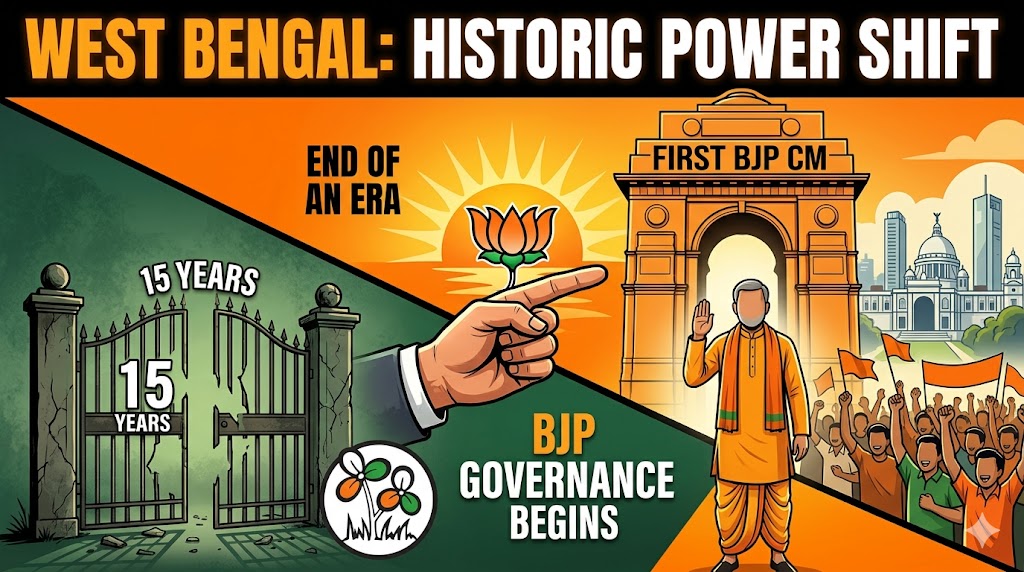
In a landmark moment for Indian politics, Suvendu Adhikari was sworn in as the Chief Minister of West Bengal on May 9, 2026, becoming the first leader from the Bharatiya Janata Party (BJP) to hold the position in the state’s history. The grand ceremony at Kolkata’s historic Brigade Parade Ground marked the definitive end of the Trinamool Congress (TMC)’s 15-year dominance under Mamata Banerjee.
This power shift represents more than a change in government; it signals a profound transformation in West Bengal’s political landscape. After years of intense rivalry, the BJP secured a decisive mandate in the 2026 Assembly elections, winning approximately 207 seats in the 294-member house. The TMC, which had governed since 2011, was reduced to around 80 seats.
The swearing-in, administered by Governor R.N. Ravi in the presence of Prime Minister Narendra Modi and senior BJP leaders, carried both symbolic and substantive weight. For supporters of the new government, it heralds a new era of development and governance. For observers, it raises questions about the challenges ahead in a state known for its complex social dynamics and strong political traditions.
This comprehensive article examines the background of this historic transition, the election campaign, key personalities, immediate priorities for the new administration, and the broader implications for West Bengal and Indian politics.
The event at Brigade Parade Ground unfolded with traditional pomp and political significance. Suvendu Adhikari, dressed in a saffron kurta and dhoti, took the oath of office and secrecy amid cheers from thousands of supporters. Several newly appointed ministers, including prominent BJP figures like Dilip Ghosh, were also sworn in.
Prime Minister Narendra Modi’s attendance underscored the national importance of this victory. Union ministers such as Amit Shah and other senior leaders joined the celebration, turning the occasion into a display of BJP’s expanding footprint in eastern India. Speeches emphasized themes of “Sonar Bangla” – a golden Bengal – focusing on development, industrial growth, and good governance.
The choice of venue carried historical resonance. Brigade Parade Ground has witnessed many pivotal moments in Bengal’s modern history, and hosting this ceremony there reinforced the narrative of a new chapter beginning.
Background: From TMC Stronghold to BJP Breakthrough
West Bengal’s politics have long been dominated by strong regional identities and ideological battles. The Left Front ruled for over three decades until 2011, when Mamata Banerjee’s TMC swept to power on promises of change and paribortan (transformation). For 15 years, the TMC maintained control through a mix of populist policies, grassroots mobilization, and administrative strategies.
However, over time, challenges emerged. Issues such as alleged corruption, political violence, industrial stagnation, and concerns over governance created space for opposition growth. The BJP, which had limited presence earlier, began expanding its base, particularly after the 2019 Lok Sabha elections where it won several seats.
Suvendu Adhikari’s journey forms a crucial part of this story. Once a close aide and minister in the Mamata Banerjee government, he parted ways amid ideological and personal differences. His defection to the BJP and subsequent rise as Leader of Opposition highlighted the shifting loyalties and intense factionalism within Bengal politics. Adhikari retained his Nandigram seat and notably defeated Mamata Banerjee in Bhabanipur, adding a personal dimension to the political upheaval.
The Transition of Governance
The 2026 Assembly Elections: A Decisive Mandate
The elections, held in phases in April 2026, saw intense campaigning. The BJP focused on development, law and order, industrial revival, and cultural issues. It positioned itself as an alternative to what it described as years of “misrule and appeasement politics.” The TMC, on the other hand, highlighted its welfare schemes and warned against central interference.
When results were declared around May 4-5, the BJP’s victory was emphatic. Securing over 45% of the vote share and 207 seats, the party crossed the majority mark comfortably. The TMC’s tally dropped sharply, and several senior leaders, including many ministers, lost their seats. Mamata Banerjee’s loss in her traditional stronghold was particularly symbolic.
Analysts point to several factors: widespread anti-incumbency, effective BJP organizational efforts, consolidation of certain vote banks, and dissatisfaction among sections of the population over economic opportunities and security concerns. The campaign was marked by high polarization, with both sides trading sharp accusations.
Suvendu Adhikari: The Man at the Helm
Suvendu Adhikari brings a unique profile to the Chief Minister’s office. Born into a political family in East Midnapore, he has deep roots in Bengal’s grassroots politics. His experience as a TMC minister gave him administrative insight, while his time in the BJP honed his role as a vocal opposition leader.
Known for his organizational skills and connect with rural and semi-urban voters, Adhikari has pledged to focus on industrialization, employment generation, infrastructure development, and restoring law and order. In his early statements, he emphasized unity and development for all sections of society, invoking the vision of a prosperous Sonar Bangla.
His leadership style is seen as assertive yet pragmatic by supporters, while critics question his ability to manage the diverse interests within the state and the party.
End of an Era: The TMC’s 15-Year Rule
Mamata Banerjee’s tenure as Chief Minister from 2011 to 2026 transformed many aspects of West Bengal. Her government introduced several welfare schemes targeting women, minorities, and rural populations. Initiatives in health, education, and social security left a lasting impact, even as controversies over implementation and governance persisted.
The period also saw significant challenges, including accusations of political violence, slowdown in industrial investment post-Singur and Nandigram controversies, and debates over demographic changes. As the TMC’s influence waned, internal dynamics and external pressures contributed to the eventual defeat.
Mamata Banerjee’s reaction to the results included initial refusal to resign and allegations about the electoral process, though the transition eventually proceeded through constitutional channels.
Immediate Priorities for the New Government
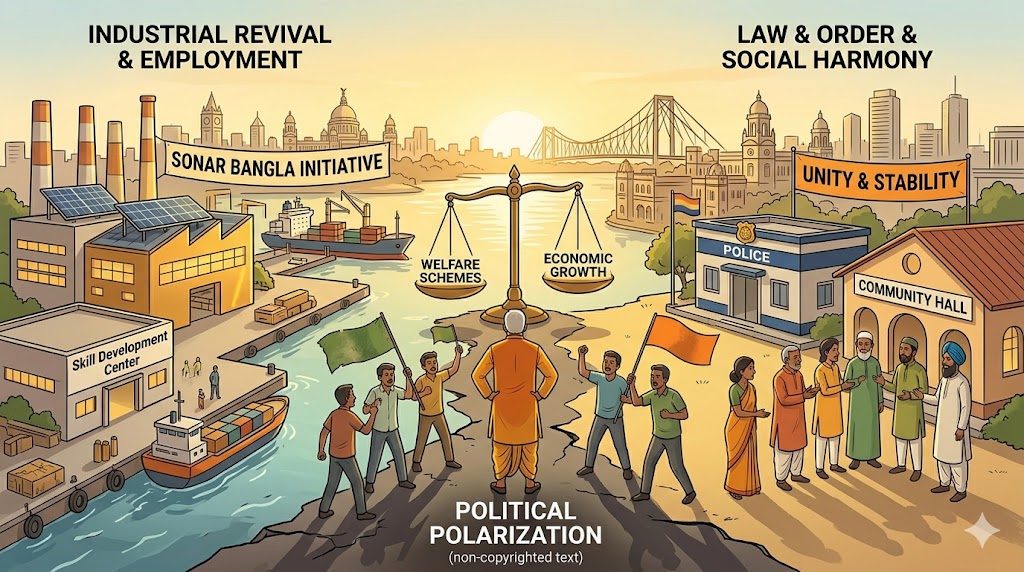
The Adhikari government faces a full agenda. Key areas likely to receive early attention include:
Law and Order: Addressing political violence and ensuring safety for all citizens.
Industrial Revival: Attracting investment and reviving sectors that have lagged.
Employment and Skill Development: Creating opportunities for the state’s large youth population.
Infrastructure: Improving roads, power supply, and urban development.
Agriculture and Rural Economy: Supporting farmers and modernizing practices.
Social Harmony: Managing diverse communities and reducing polarization.
The new cabinet composition will be watched closely for balance between experienced leaders and fresh faces.
Challenges Ahead
Governing West Bengal is no easy task. The state has deep-rooted socio-economic issues, including poverty in certain regions, urban congestion in Kolkata, and environmental concerns related to the Sunderbans and rivers. Political opposition, though weakened, remains vocal, and expectations from voters are high.
Federal relations with the central government will play a crucial role. While alignment with the BJP-led center may ease some fund flows, local sensitivities about autonomy must be navigated carefully. Administrative reforms and bureaucratic coordination will also test the new leadership.
Broader Implications for Indian Politics
The BJP’s success in West Bengal adds a significant eastern state to its growing list of governed territories. It strengthens the party’s national narrative and could influence future electoral battles in neighboring regions. For the opposition ecosystem, the defeat of a major regional force like the TMC prompts reflection on strategies and alliances.
The shift also highlights the fluidity of Indian politics, where strong regional leaders can be challenged through sustained grassroots efforts and changing public sentiments.
Public Reactions and Sentiments
Reactions have been sharply divided. BJP workers and supporters celebrated with processions, distribution of sweets, and rallies across the state. Many expressed hope for a new beginning free from alleged “syndicate raj” and violence.
In TMC strongholds, disappointment and anger were visible, with some leaders calling for introspection and reorganization. Sections of intellectuals and minority communities voiced concerns about potential policy shifts, while others welcomed the change as an opportunity for better governance.
Social media reflected this polarization, with hashtags celebrating the “power shift” trending alongside voices cautioning patience.
Looking to the Future of West Bengal
As Suvendu Adhikari’s government begins its tenure, the focus remains on delivery. The coming months will reveal the direction and effectiveness of policies. Success in addressing unemployment, healthcare, education, and infrastructure could consolidate the BJP’s position. Shortcomings might provide opposition parties renewed energy.
For the people of West Bengal, this transition offers both hope and uncertainty. The state, with its rich cultural heritage, intellectual tradition, and resilient population, has the potential to emerge stronger if political stability combines with inclusive development.
The road ahead will require wisdom, inclusiveness, and hard work from all stakeholders. Bengal’s history is filled with reinventions, and this latest chapter may prove transformative.
The New Administration's Focus
Conclusion
The swearing-in of Suvendu Adhikari as West Bengal’s first BJP Chief Minister on May 9, 2026, stands as a watershed moment in the state’s post-independence politics. It brings to a close the TMC’s long reign and opens a new phase under saffron governance.
While celebrations continue for some and introspection for others, the real test lies in governance outcomes. As the new administration settles in, West Bengal watches closely, hoping for progress, stability, and prosperity that benefits every resident.
This political earthquake has reshaped the map of Indian federalism. Its long-term effects will unfold gradually, but the immediate message is clear: no political fortress is impregnable when public sentiment shifts decisively.