Kurma Purana: Lord Vishnu’s Tortoise Avatar Wisdom
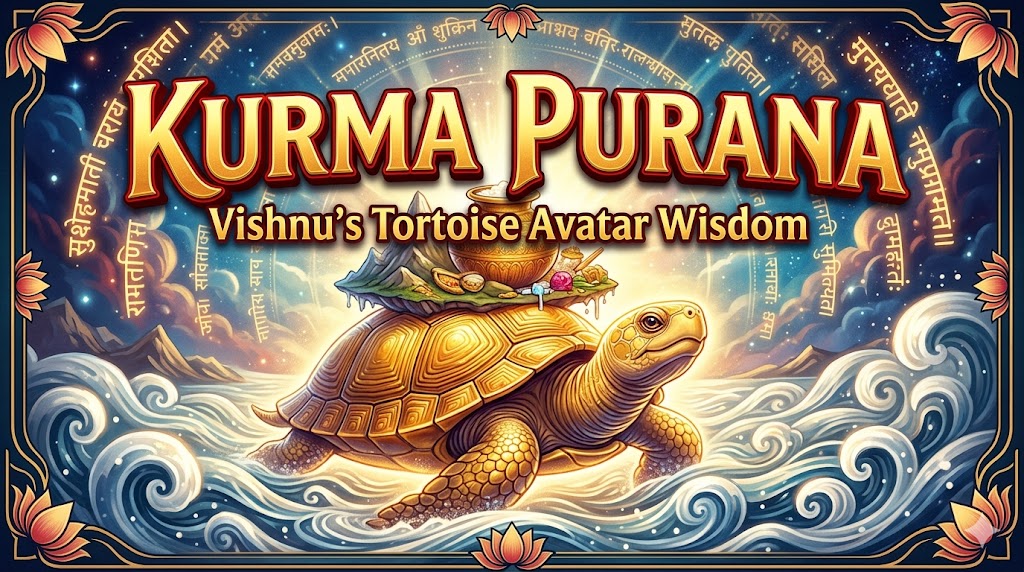
The Kurma Purana occupies a revered position among the eighteen Mahapuranas of Hinduism. Named after Kurma, the divine tortoise incarnation of Lord Vishnu, this sacred text is traditionally understood to have been narrated by Vishnu himself in his tortoise form. It beautifully intertwines profound mythological narratives, cosmological insights, and practical guidance on dharma, devotion, and righteous living.
Central to the Kurma Purana is the great churning of the ocean (Samudra Manthan), an event of cosmic significance where Vishnu assumes the form of a tortoise to provide stability to Mount Mandara. Through this and other narratives, the Purana explores themes of cooperation between gods and demons, the pursuit of immortality, and the maintenance of universal balance. This article offers a comprehensive examination of the Kurma Purana’s origins, key stories, philosophical teachings, and enduring spiritual value for devotees and scholars alike.
The Kurma Purana is believed to have been composed between the 7th and 10th centuries CE, though its core material draws from much older traditions. Like other Puranas, it is attributed to the sage Vyasa, with the text evolving through oral and written transmissions across centuries. It contains approximately 18,000 verses divided into two main parts — Purvabhaga and Uttarabhaga — covering a wide range of subjects.
The Purana exhibits a balanced approach, incorporating both Vaishnava and Shaiva perspectives while emphasizing the supremacy of Vishnu. Its literary style combines engaging storytelling with detailed doctrinal explanations, making it accessible to both learned scholars and general devotees. The text’s emphasis on the Kurma avatar connects it directly to one of Hinduism’s most iconic cosmic events.
The Divine Tortoise Avatar: Context and Purpose
In Hindu cosmology, Lord Vishnu incarnates whenever dharma declines and cosmic equilibrium is threatened. The Kurma avatar emerged during a critical period when the gods, weakened by a curse, sought to regain their strength through the churning of the cosmic ocean. Vishnu assumed the form of a massive tortoise to support the mountain used as a churning rod, preventing it from sinking into the ocean floor.
This incarnation symbolizes stability, endurance, and selfless service. The tortoise form teaches the virtue of remaining grounded amid turbulence while supporting grand cosmic endeavors. Unlike more warrior-oriented avatars, the Kurma avatar highlights quiet strength and the importance of foundational support in achieving great outcomes.
The Great Churning of the Ocean (Samudra Manthan)
The most celebrated narrative in the Kurma Purana is the detailed account of the Samudra Manthan. Following the loss of their power, the devas (gods) sought the help of the asuras (demons) for a joint effort to churn the ocean of milk (Kshira Sagara) in search of amrita, the nectar of immortality.
Mount Mandara was chosen as the churning rod and the serpent Vasuki as the rope. However, the mountain began to sink without a firm base. At this juncture, Vishnu manifested as Kurma, diving into the ocean and providing a stable platform for the mountain. With gods and demons pulling from opposite ends, the churning produced numerous divine treasures, including the goddess Lakshmi, the wish-fulfilling tree Kalpaga, the moon, poison (halahala), and ultimately the pot of amrita.
The Purana describes these events vividly, highlighting moments of cooperation, conflict, and divine intervention. When the asuras attempted to seize the nectar, Vishnu appeared as Mohini, the enchanting enchantress, to ensure the devas received it, restoring cosmic order.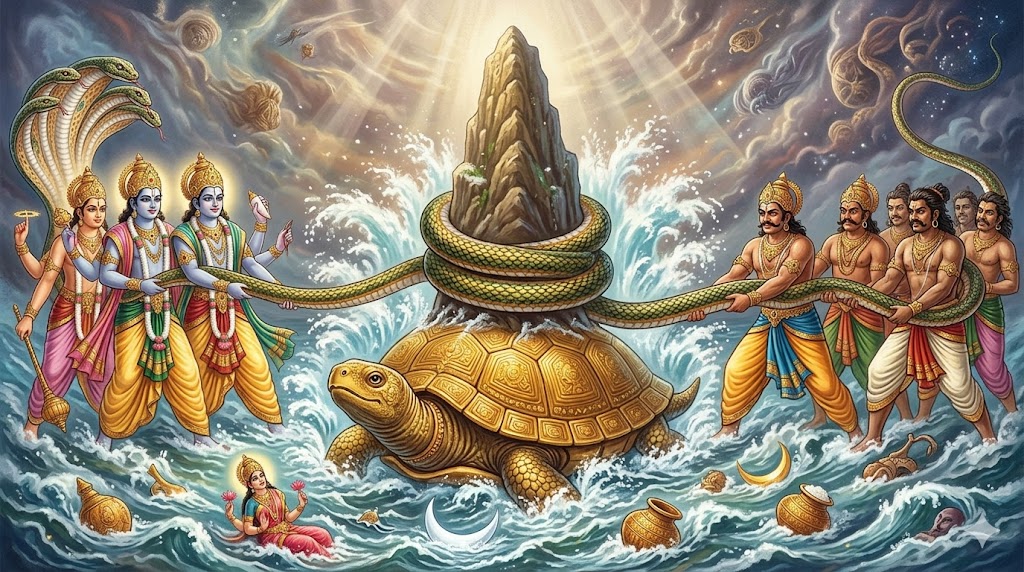
The Epic Samudra Manthan Churning
Philosophical and Cosmological Insights
The Kurma Purana goes far beyond the churning story to present a rich cosmological framework. It describes the creation of the universe, the structure of the fourteen worlds, the cycles of time (yugas), and the roles of various deities in maintaining universal harmony.
The text emphasizes the interconnectedness of all existence and the importance of balance between opposing forces — as illustrated by the collaborative yet competitive churning process. It teaches that true strength lies in dharma, cooperation when needed, and surrender to the divine will. The Purana also discusses the nature of the soul, karma, and the paths to liberation through knowledge, action, and devotion.
Teachings on Dharma and Ethical Living
A significant portion of the Kurma Purana is dedicated to dharma — the righteous way of living. It outlines duties appropriate to different stages of life (ashramas) and social orders (varnas), stressing the importance of truth, non-violence, charity, and self-discipline.
Through various parables and dialogues, the text illustrates how adherence to dharma leads to prosperity and spiritual growth, while deviation invites chaos. The Purana presents bhakti (devotion) as a particularly accessible path in the current age, encouraging sincere worship of Vishnu and other deities.
Temple Architecture, Rituals, and Pilgrimage
The Kurma Purana contains valuable sections on temple construction, iconography, and ritual practices. It provides guidelines for building sacred spaces, consecrating deities, and performing various ceremonies. These instructions have influenced Hindu temple traditions across regions.
Additionally, the Purana glorifies numerous tirthas (pilgrimage sites), describing the spiritual benefits of visiting holy rivers, mountains, and shrines. It functions as both a spiritual manual and an ancient guide to sacred geography, encouraging devotees to undertake pilgrimages as acts of purification and devotion.
Other Important Narratives and Legends
Beyond the central Samudra Manthan episode, the Kurma Purana includes stories of various avatars of Vishnu, genealogies of kings and sages, and moral tales that reinforce ethical values. It also features detailed discussions on yoga, meditation, and the worship of Shiva, reflecting its inclusive theological approach.
These narratives enrich the text, providing multiple entry points for readers seeking inspiration, knowledge, or practical spiritual guidance.
Literary Style and Structure
The Kurma Purana is organized systematically, moving from cosmological foundations to specific avatar stories, ethical teachings, and practical instructions. Its language is poetic and engaging, with dialogues that bring ancient wisdom to life. This structure makes the Purana both a valuable scriptural text and an enjoyable literary work.
Relevance in Contemporary Times
The teachings of the Kurma Purana remain remarkably relevant today. The Samudra Manthan story offers insights into collaboration across differences, the pursuit of higher goals, and the importance of stable foundations in any endeavor. In an era of rapid change and uncertainty, the tortoise avatar’s message of patience, endurance, and steadfast support resonates deeply.
The Purana’s emphasis on environmental harmony — reflected in its ocean cosmology — also speaks to modern ecological concerns, reminding humanity of our interconnectedness with nature.
Comparative Perspective with Other Puranas
While sharing common themes with texts like the Vishnu Purana and Bhagavata Purana, the kurma Purana stands out for its detailed treatment of the tortoise avatar and the churning episode. Its balanced Shaiva-Vaishnava perspective and practical sections on rituals and architecture make it a distinctive contribution to Puranic literature.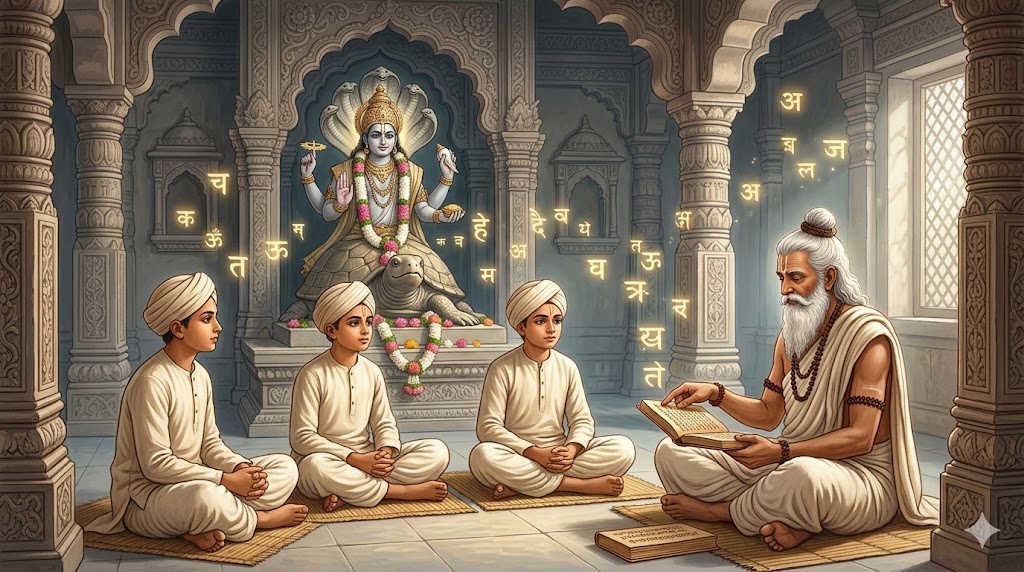
Kurma Avatar Statue and Spiritual Learning
Conclusion
The Kurma Purana, narrated by Lord Vishnu in his glorious tortoise form, continues to inspire and guide seekers through its profound narratives and timeless wisdom. The story of the Samudra Manthan, with Kurma providing essential stability, beautifully illustrates divine compassion, cosmic balance, and the triumph of dharma.
Through its comprehensive coverage of cosmology, ethics, devotion, and practical spirituality, this sacred text offers a complete framework for righteous living and spiritual growth. As devotees study its verses, visit the sacred sites it glorifies, and reflect on its teachings, the Kurma Purana reinforces faith in the eternal principles of harmony, endurance, and surrender to the divine.
In a world often marked by turbulence, the steady wisdom of the Kurma avatar and the rich teachings of this Purana provide a firm foundation for navigating life’s challenges with grace, purpose, and devotion. Its message endures as a beacon of light for humanity across generations.