Vamana Purana: The Story of Lord Vishnu’s Dwarf Avatar
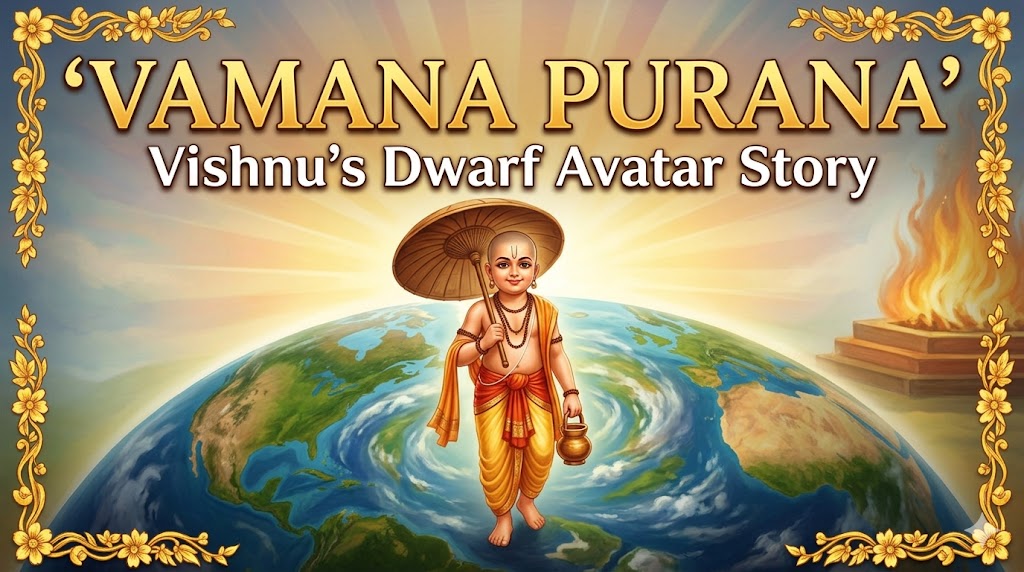
The Vamana Purana holds a distinguished place among the eighteen Mahapuranas of Hinduism. Dedicated primarily to the glorious deeds of Lord Vishnu in his fifth incarnation as Vamana, the dwarf Brahmin, this sacred text beautifully narrates one of the most profound episodes in Vaishnava mythology. Through the story of how a modest young boy of diminutive stature outwitted the mighty demon king Bali and reclaimed the three worlds for the gods, the Purana imparts timeless lessons on humility, dharma, devotion, and the divine play (lila) of the Supreme Lord.
Comprising approximately 10,000 verses, the Vamana Purana serves not only as a mythological treasure but also as a guide to sacred geography, rituals, and ethical living. It highlights the importance of surrender to the divine and the ultimate triumph of righteousness. This article delves deeply into the structure, key narratives, philosophical insights, and enduring relevance of the Vamana Purana for modern readers and devotees.
Historical and Literary Context of the Vamana Purana
Traditionally attributed to the sage Vyasa, the Vamana Purana is believed to have taken shape between the 4th and 11th centuries CE, with later interpolations reflecting evolving regional traditions. It belongs to the Vaishnava category of Puranas while maintaining respectful references to Shiva and other deities, showcasing the harmonious nature of Hindu theology.
The text exists in several recensions, with the most widely studied version divided into two main parts: Purvabhaga and Uttarabhaga. Its style combines engaging storytelling with detailed descriptions of cosmology, genealogies, and the glorification of holy sites (tirthas). Unlike some larger Puranas, the Vamana Purana maintains a relatively concise yet comprehensive approach, making it accessible to both scholars and lay devotees.
The Central Legend: Birth and Purpose of the Vamana Avatar
The heart of the Vamana Purana revolves around the circumstances leading to Vishnu’s incarnation as Vamana. Following the defeat of the gods by the righteous yet ambitious demon king Mahabali (Bali), son of Virochana and grandson of Prahlada, the asuras had gained control over the three worlds. Bali’s rule was marked by prosperity and justice, yet it disrupted the cosmic balance established by the divine order.
The gods, led by Indra, approached Lord Vishnu for assistance. Vishnu promised to restore their rightful place through a clever and non-violent strategy. He chose to incarnate in the household of the sage Kashyapa and his wife Aditi as a dwarf Brahmin boy. This incarnation was unique because, unlike previous avatars focused on physical combat, the Vamana avatar would rely on intellect, humility, and divine grace.
The Famous Encounter with King Bali
The most celebrated episode in the Vamana Purana describes Vamana’s visit to Bali during the grand Ashvamedha sacrifice performed by the demon king. Appearing as a charming young Brahmin boy, Vamana approached the generous ruler and requested a modest gift of land—merely three paces as measured by his own small feet.
Bali, known for his unparalleled charity, readily agreed despite warnings from his guru Shukracharya, who recognized the divine presence. As soon as Bali granted the boon, Vamana began to expand into the colossal Trivikrama form. With his first step, he covered the entire earth. With the second, he spanned the heavens. For the third step, there was no place left, prompting Bali to humbly offer his own head.
Vishnu placed his foot on Bali’s head, pushing him down to the netherworld (Patala) while granting him immortality and lordship over that realm. This act restored the three worlds to the gods while rewarding Bali’s devotion and generosity. The story beautifully illustrates that true devotion and surrender to the divine transcend worldly power and status.
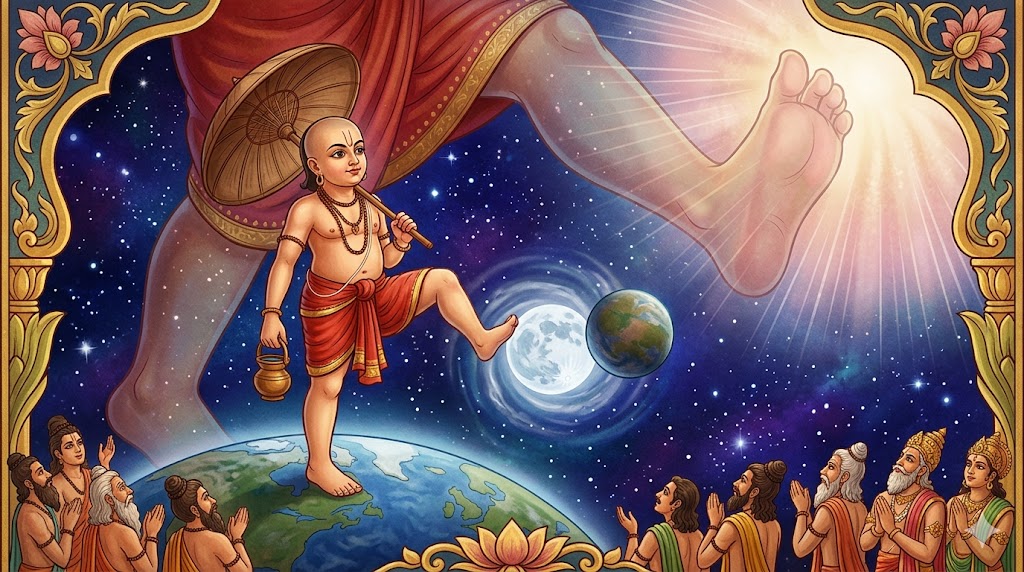
Vamana Takes the Cosmic Steps
Detailed Narratives and Supporting Stories
Beyond the central Vamana avatar story, the Vamana Purana contains numerous subsidiary legends that enrich its spiritual framework. It recounts the earlier lives of key characters, including Prahlada’s unwavering devotion to Vishnu and the conflicts between gods and demons.
Significant sections describe the creation of the universe, the roles of various deities, and moral tales emphasizing virtues such as truthfulness, compassion, and detachment. The Purana also includes detailed accounts of various yugas (ages) and the cyclical nature of time, reinforcing Hindu cosmological views.
Glorification of Sacred Places and Pilgrimages
Like many Puranas, the Vamana Purana dedicates substantial portions to the mahatmya (glorification) of holy tirthas. It provides vivid descriptions of sacred sites across India, explaining the spiritual benefits of bathing in particular rivers, visiting temples, and performing rituals at these locations.
Notable mentions include Pushkara, Kurukshetra, and various shrines associated with Vishnu’s deeds. The text explains how visiting these places with pure intention can cleanse sins accumulated over lifetimes and bring one closer to liberation (moksha). This emphasis on pilgrimage makes the Vamana Purana a practical spiritual handbook for devotees seeking tangible ways to practice their faith.
Philosophical Teachings and Dharma
The Vamana Purana goes beyond storytelling to deliver profound philosophical insights. It stresses the supremacy of bhakti (devotion) while acknowledging the validity of other paths such as jnana (knowledge) and karma (righteous action). The humility displayed by Vamana teaches that the divine can manifest in the most unassuming forms, urging devotees to look beyond external appearances.
King Bali’s character offers a nuanced lesson: even a virtuous ruler must recognize the limits of worldly authority and surrender to the divine will. The Purana repeatedly emphasizes that dharma ultimately prevails, not through brute force alone, but through wisdom, compassion, and alignment with cosmic order.
Rituals, Festivals, and Worship
The text outlines various rituals associated with Vishnu worship, including specific mantras, offerings, and observances. It highlights festivals like Onam in Kerala, which commemorates King Bali’s annual visit to his people, and other regional celebrations honoring the Vamana avatar. These de traditions keep the teachings of the Purana alive in cultural practices across India.
Structure and Literary Style
The Vamana Purana is organized systematically, moving from cosmological descriptions to genealogies, avatar stories, and geographical glorifications. Its language is poetic yet accessible, with dialogues that bring characters to life. This blend of narrative charm and doctrinal depth has ensured its popularity through the centuries.
Relevance in Contemporary Times
In today’s world, the messages of the Vamana Purana remain remarkably relevant. The story encourages humility in the face of success, generosity tempered with wisdom, and recognition of divine presence in everyday life. As societies grapple with issues of power, inequality, and environmental balance, the lessons of cosmic order and righteous living offer valuable guidance.
The Purana’s emphasis on inner transformation through devotion provides solace amid modern stresses, while its pilgrimage traditions promote cultural heritage preservation and spiritual tourism.
Comparative Study with Other Puranas
While sharing common themes with texts like the Bhagavata Purana and Matsya Purana, the Vamana Purana stands out for its focused treatment of the dwarf avatar and detailed tirtha descriptions. Its balanced approach to Vaishnava theology makes it an important bridge between different Hindu traditions.
Glorification of Sacred Tirthas
Conclusion
The Vamana Purana continues to inspire millions through its enchanting portrayal of Lord Vishnu’s Vamana avatar. The story of the humble dwarf who humbled a mighty king and restored universal harmony encapsulates the essence of divine grace and the victory of dharma. Through its rich narratives, philosophical depth, and practical guidance on pilgrimage and devotion, this sacred text offers a complete spiritual roadmap for seekers.
Whether approached as scripture, literature, or cultural heritage, the Vamana Purana reminds us that true greatness lies in surrender to the divine, humility before higher truth, and living in accordance with cosmic principles. As devotees continue to recite its verses and visit the sacred sites it glorifies, the eternal wisdom of this Purana remains a guiding light for humanity across generations.