Skanda Purana: Life of Kartikeya and Sacred Pilgrimages
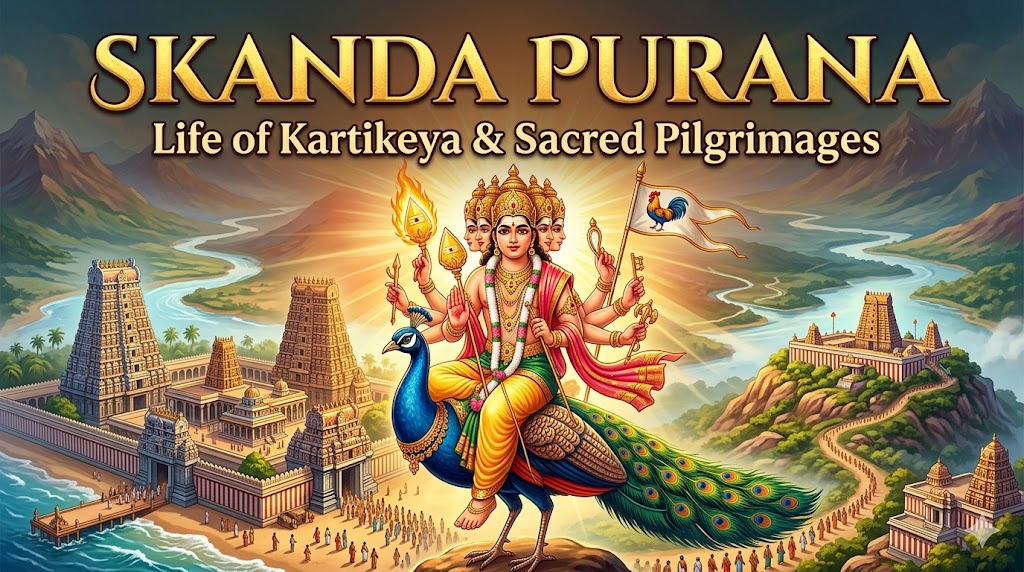
The Skanda Purana stands as one of the most extensive and revered texts in Hindu literature. As the largest among the eighteen Mahapuranas, it comprises over 81,000 verses and serves as a profound encyclopedia of Shaivite traditions, mythology, dharma, and sacred geography. Named after Skanda—also known as Kartikeya or Murugan, the valorous son of Lord Shiva and Parvati—this Purana intricately weaves the divine life story of the god of war with comprehensive guides to pilgrimage sites across the Indian subcontinent.
For millions of devotees, particularly in South India where Kartikeya is worshipped as Murugan, the Skanda Purana offers not only spiritual wisdom but also practical directions for tirtha yatra (pilgrimage). Its narratives emphasize themes of duty, courage, knowledge, and devotion while highlighting the transformative power of visiting holy places. This article explores the structure, key stories, the life of Lord Kartikeya, and the rich tradition of pilgrimages associated with the text, providing devotees and scholars alike with deeper insight into this timeless scripture.
Historical and Literary Context of the Skanda Purana
Attributed traditionally to the sage Vyasa, the Skanda Purana has evolved through various recensions over centuries. Scholars date its core material to the early centuries of the Common Era, with later additions reflecting regional traditions. The text exists in multiple versions, including northern and southern recensions, each emphasizing different aspects while maintaining the central focus on Skanda.
Structurally, the Purana is divided into several Khandas (sections) such as Maheshvara Khanda, Vaishnava Khanda, Brahma Khanda, Kashi Khanda, Avantya Khanda, and others. These sections cover cosmology, genealogies, legends of deities, and especially detailed mahatmyas (glorifications) of sacred sites. Unlike some Puranas that focus predominantly on Vishnu or Shiva alone, the Skanda Purana balances Shaivite devotion with broader Hindu dharma, making it a valuable resource for understanding medieval Indian religious and cultural life.
Its encyclopedic nature includes hymns, parables, ethical teachings, and geographical descriptions that function as ancient travel guides. This emphasis on pilgrimage distinguishes it as a practical spiritual manual for devotees seeking merit through tirtha.
The Divine Birth of Lord Kartikeya (Skanda)
One of the most captivating narratives in the Skanda Purana is the extraordinary birth of Kartikeya. According to the text, the demon Tarakasura had received a boon that only a son of Shiva could slay him. This created a crisis for the gods, as Shiva was deep in meditation following the loss of Sati.
Through divine intervention and the efforts of the gods, Shiva’s energy manifested in a unique manner. Sparks or semen from Shiva were carried by Agni (fire god) and deposited into the River Ganga. Unable to bear the intensity, Ganga placed the divine essence on reeds in the Sharavana forest (forest of reeds). There, six divine infants emerged, nurtured by the Krittika sisters (Pleiades constellation). Parvati later embraced the six children, merging them into one six-faced deity—hence the name Shanmukha (six-faced).
This birth story symbolizes the union of cosmic forces: Shiva’s ascetic power, Parvati’s nurturing Shakti, Agni’s transformative energy, and Ganga’s purifying flow. The Skanda Purana presents this event with rich philosophical undertones, portraying Kartikeya as the embodiment of valor, wisdom, and leadership.
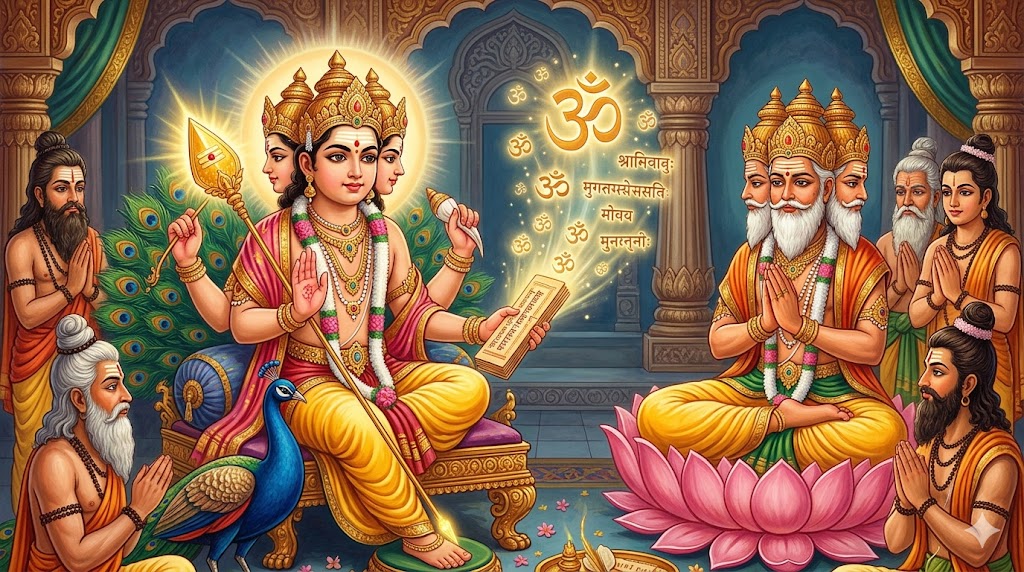
Lord Kartikeya Instructing Lord Brahma
Kartikeya’s Childhood and Acquisition of Knowledge
The Purana beautifully narrates young Kartikeya’s precocious nature. In one famous episode, he questioned Lord Brahma about the meaning of the Pranava (Om). When Brahma could not satisfy him adequately, Kartikeya imprisoned the creator god, asserting superior understanding. Shiva intervened, highlighting the importance of humility and proper transmission of knowledge.
This story underscores Kartikeya’s role as a teacher of profound wisdom. As Subrahmanya or Murugan, he is revered as the embodiment of gnana (knowledge) and often depicted with the Vel (spear), symbolizing penetrating insight that destroys ignorance.
Epic Battles and Victory Over Evil
The central heroic narrative revolves around Kartikeya’s battle against Tarakasura and his brothers. Armed with the divine Vel bestowed by Parvati, the young warrior led the celestial army as its commander-in-chief. The Skanda Purana describes these conflicts in vivid detail, portraying cosmic battles where dharma triumphs over adharma.
A particularly significant event is the slaying of Surapadman, who transformed into a mango tree. Kartikeya split the tree with his spear, turning the two halves into a peacock (his vehicle) and a rooster (his banner). This victory is celebrated in South Indian traditions during festivals like Thaipusam and Skanda Shashti.
These stories emphasize themes of righteous warfare, strategic brilliance, and compassion. Even in victory, Kartikeya shows mercy and integrates former adversaries, reflecting mature dharma.
Kartikeya’s Marriages and Family Life
The Purana recounts Kartikeya’s two divine consorts: Devasena (daughter of Indra) and Valli (a tribal huntress). Their marriages symbolize the union of celestial and earthly realms. The six abodes of Murugan in Tamil Nadu are closely linked to different phases of his life, including these marital events.
Emphasis on Pilgrimage and Tirtha Mahatmya
A defining feature of the Skanda Purana is its exhaustive coverage of tirthas (pilgrimage sites). It functions as an ancient guidebook, detailing the location, legends, rituals, and spiritual benefits of visiting holy places across India, Nepal, and beyond. Chapters glorify sites like Kashi (Varanasi), Badrinath, and numerous regional shrines.
The text teaches that in the Kali Yuga, pilgrimage becomes an accessible path to salvation. Visiting these sites with devotion washes away sins, grants boons, and brings one closer to the divine. The Purana links many tirthas directly to events in Kartikeya’s life, making them especially sacred for his devotees.
The Six Abodes of Murugan (Arupadai Veedu)
In Tamil tradition, heavily influenced by the Skanda Purana and related texts, the six sacred abodes hold paramount importance:
Thiruparankundram: Site of Kartikeya’s marriage to Devasena.
Tiruchendur: Commemorates victory over Surapadman.
Palani: Where Kartikeya, in the form of a renunciant, held the staff (Danda).
Swamimalai: Place where he taught the meaning of Om to Shiva.
Thiruthani: Site of his marriage to Valli and attainment of peace.
Pazhamudircholai: Known for its natural abundance and divine presence.
These temples attract millions of pilgrims annually, especially during festivals. The Skanda Purana provides the mythological foundation that elevates their sanctity.
Other Important Pilgrimage Sites
Beyond the six abodes, the Purana highlights numerous other locations associated with Kartikeya, including temples in North India, hill shrines, and sites linked to his battles or teachings. It also glorifies sacred rivers, mountains, and forests connected to his birth and exploits. Devotees are encouraged to undertake yatras with purity of mind and body for maximum spiritual benefit.
Teachings and Philosophical Insights
While rich in stories, the Skanda Purana imparts timeless wisdom on dharma, bhakti (devotion), and the importance of righteous action. It portrays Kartikeya as a perfect blend of warrior and yogi—active in the world yet rooted in divine knowledge. The text encourages readers to emulate his courage in facing inner demons and his devotion to parents and dharma.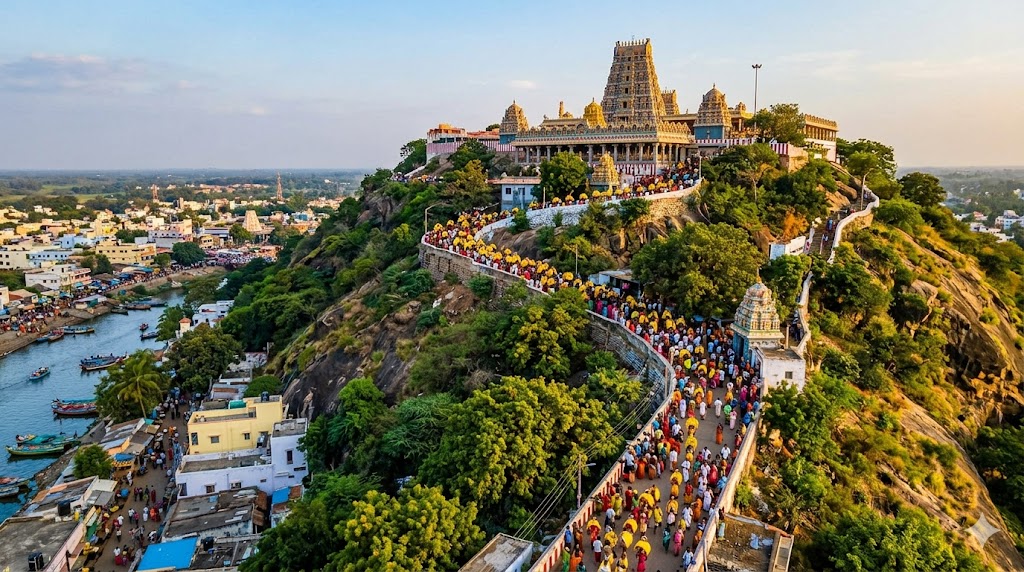
Pilgrimage to Palani Hill Temple
Relevance in Contemporary Times
In modern India and the global Hindu diaspora, the Skanda Purana continues to inspire. Festivals honoring Murugan draw massive participation, while digital resources and pilgrimages make its teachings accessible. The emphasis on environmental protection—many tirthas being natural sites—resonates with contemporary ecological concerns.
Conclusion
The Skanda Purana remains a living testament to the rich tapestry of Hindu spirituality. Through the inspiring life of Lord Kartikeya—from his miraculous birth and heroic deeds to his role as a beacon of wisdom—it offers guidance for navigating life’s challenges with courage and devotion. Its detailed pilgrimage sections invite seekers to experience divinity through sacred journeys, reinforcing the eternal truth that sincere effort on the spiritual path leads to liberation.
Whether studied for scholarly insight, recited for devotion, or followed for pilgrimage, the Skanda Purana continues to illuminate the path for devotees of Lord Murugan across generations. Its message of dharma’s ultimate victory and the accessibility of divine grace through sincere effort holds profound relevance for humanity today.