Digital India Literacy Mission 2026: Empowering a nation
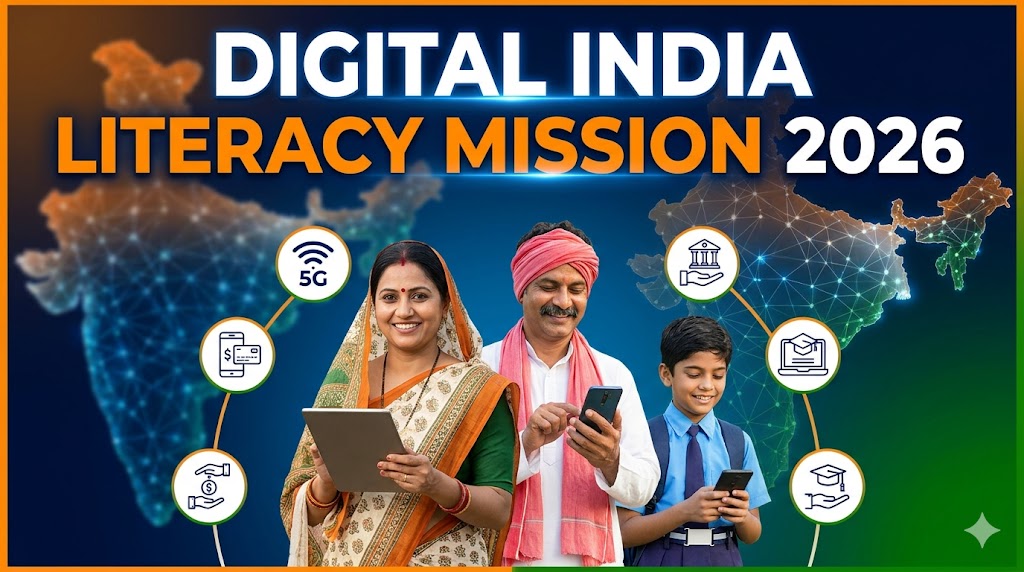
In a landmark step toward inclusive digital transformation, the Government of India has rolled out the Digital India Literacy Mission 2026. This ambitious initiative aims to equip millions of citizens, particularly in rural and underserved areas, with essential digital skills needed to thrive in an increasingly technology-driven society. Building upon the foundation laid by earlier programs like Pradhan Mantri Gramin Digital Saksharta Abhiyan (PMGDISHA) and the New India Literacy Programme (NILP), the mission seeks to accelerate digital inclusion and bridge the persistent digital divide.
Launched amid rapid advancements in artificial intelligence, digital public infrastructure, and online governance, the Digital India Literacy Mission 2026 represents a renewed commitment to ensuring no citizen is left behind in India’s digital journey. This article provides a comprehensive overview of the mission’s background, objectives, implementation strategy, expected outcomes, and broader significance for India’s development.
India’s pursuit of digital literacy gained momentum with the launch of the Digital India programme in July 2015. The vision was clear: transform the country into a digitally empowered society and knowledge economy. Early efforts included the National Digital Literacy Mission (NDLM) and Digital Saksharta Abhiyan (DISHA), which trained millions in basic computer and internet skills.
A major milestone came with PMGDISHA in 2017, targeting one person from each of six crore rural households. By March 2024, the scheme had trained over 6.39 crore individuals, making it one of the world’s largest digital literacy drives. The New India Literacy Programme (NILP), approved for 2022-2027, further integrated digital literacy with foundational literacy, numeracy, and critical life skills.
Despite these successes, challenges such as uneven regional progress, gender gaps, and the need for advanced skills in areas like cybersecurity, AI awareness, and digital financial services prompted the formulation of a more comprehensive national mission in 2026.
Objectives of the Digital India Literacy Mission 2026
The core aim of the Digital India Literacy Mission 2026 is to achieve near-universal digital literacy among adults aged 15 and above, with special focus on marginalized communities. Key objectives include:
Imparting foundational digital skills to remaining non-literate populations while upgrading skills of those already trained.
Promoting advanced competencies such as safe internet usage, data privacy, AI tools, and digital entrepreneurship.
Integrating digital literacy with livelihood opportunities, financial inclusion, and access to government services.
Ensuring inclusive coverage across gender, caste, geography, and disability parameters.
Leveraging technology platforms like DIKSHA for scalable, multilingual training delivery.
The mission aligns with broader goals of Viksit Bharat @2047 by fostering a digitally confident citizenry capable of participating fully in the digital economy.
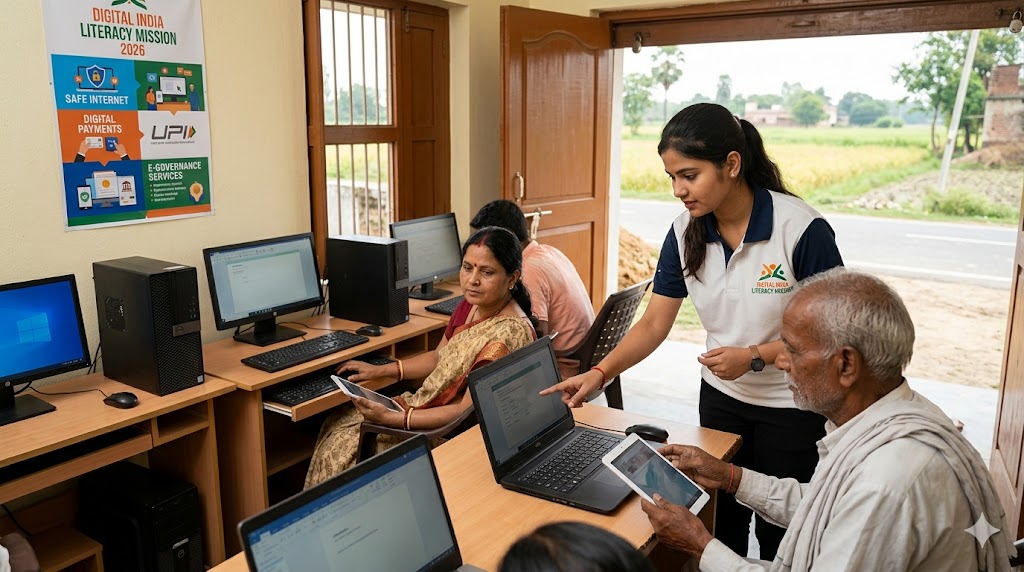
Digital Training in Action
Key Features and Training Modules
The Digital India Literacy Mission 2026 introduces a modular, outcome-based training framework. Basic modules cover device operation, internet navigation, email, and government portals. Intermediate levels address digital payments, e-commerce, and cybersecurity awareness. Advanced tracks introduce productivity tools, content creation, and basic coding concepts tailored for rural youth and women.
Training is delivered through a hybrid model combining Common Service Centres (CSCs), community volunteers, self-help groups, and online platforms. Partnerships with private sector entities, NGOs, and educational institutions enhance reach and quality. Certification upon completion provides formal recognition, aiding employment and further learning opportunities.
Special emphasis has been placed on vernacular languages, accessibility features for persons with disabilities, and contextually relevant content that addresses local needs such as agricultural apps or health information systems.
Implementation Strategy and Governance
The mission operates as a centrally sponsored scheme with strong state-level coordination. District administrations, panchayati raj institutions, and urban local bodies play pivotal roles in grassroots execution. A robust monitoring dashboard tracks enrollment, completion rates, and learning outcomes in real time.
Funding combines central assistance, state contributions, and corporate social responsibility (CSR) support. Technology integration, including AI-driven personalized learning paths and mobile micro-learning modules, ensures flexibility for working adults and remote learners.
Awareness campaigns through radio, television, and social media complement on-ground mobilization efforts, targeting hard-to-reach populations in aspirational districts and northeastern states.
Targets and Expected Reach
The Digital India Literacy Mission 2026 sets an ambitious target of training an additional 10-12 crore citizens over the next few years, building on previous achievements. Priority groups include rural women, senior citizens, farmers, artisans, and youth not in formal education. By focusing on quality alongside quantity, the mission aims for sustainable skill retention and application rather than mere certification.
Early phases in 2026 prioritize states with lower literacy rates while scaling successful models from high-performing regions like Kerala, which achieved full digital literacy status earlier.
Impact on Rural India and Digital Inclusion
Rural transformation lies at the heart of this mission. Equipped with digital skills, farmers can access real-time market information, weather forecasts, and government subsidies through mobile applications. Artisans and micro-entrepreneurs gain platforms to sell products nationally and globally. Women, often disproportionately affected by the digital divide, find new avenues for financial independence and social participation.
The initiative strengthens digital public infrastructure by increasing uptake of services like Aadhaar-enabled payments, Ayushman Bharat, and PM-KISAN. It also reduces dependency on intermediaries, promoting transparency and efficiency in governance.
Challenges and Mitigation Measures
Significant challenges remain, including infrastructure gaps in remote areas, low awareness, language barriers, and rapid technological evolution that demands continuous upskilling. The mission addresses these through infrastructure augmentation via BharatNet, dedicated training-of-trainers programs, and adaptive curriculum updates.
Cybersecurity education forms a critical component to protect vulnerable users from online frauds. Continuous evaluation and feedback mechanisms help refine approaches based on ground realities.
Synergies with Broader Digital India Ecosystem
The Digital India Literacy Mission 2026 complements other pillars of the Digital India programme, including high-speed internet connectivity, digital service delivery, and electronics manufacturing. It supports initiatives like ONDC, UPI expansion, and India Stack by creating a demand-side pull through skilled users.
Integration with skill development missions such as Skill India and education reforms under NEP 2020 ensures a holistic ecosystem for lifelong learning in the digital age.
Success Stories and Early Outcomes
Initial rollouts in pilot districts have yielded encouraging results. Participants report greater confidence in using digital services, leading to improved access to banking, healthcare information, and educational resources. Women-led self-help groups have leveraged training to establish digital enterprises, while youth have explored opportunities in data entry, digital marketing, and app-based services.
These early wins demonstrate the mission’s potential to drive inclusive growth and reduce regional disparities.
Global Context and India’s Leadership
India’s focused approach to digital literacy positions it as a model for other developing nations facing similar challenges. By scaling training to hundreds of millions, the country contributes valuable insights on technology adoption at the grassroots level. International partnerships and knowledge sharing can further amplify impact while attracting best practices from global leaders.
Future Roadmap Beyond 2026
Looking ahead, the mission envisions evolving into a continuous digital capability-building framework. Plans include deeper integration of emerging technologies like AI assistants, extended reality for training, and blockchain for credentialing. Long-term sustainability will depend on fostering a culture of self-directed learning and public-private collaboration.
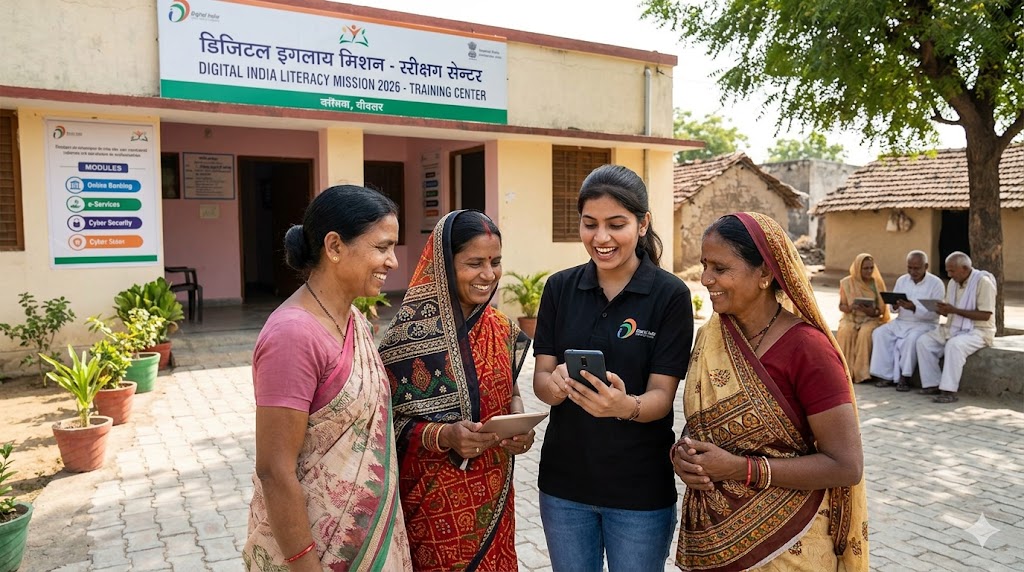
A focused digital literacy workshop in rural India, where an instructor uses tablets to train women and local community members, demonstrating the mission’s commitment to inclusive digital outreach.
Conclusion
The Digital India Literacy Mission 2026 launch marks a decisive step in India’s journey toward becoming a truly digitally inclusive nation. By addressing skill gaps comprehensively and inclusively, it empowers citizens to harness technology for personal and national progress. As the mission unfolds, its success will be measured not just in numbers trained but in tangible improvements to livelihoods, governance, and quality of life across the country.
In an era where digital proficiency increasingly determines opportunity, this initiative underscores India’s commitment to leaving no one behind. Sustained implementation, adaptive strategies, and stakeholder collaboration will be key to realizing its full transformative potential, paving the way for a more equitable and prosperous digital future.