AI-Powered Digital Airport Operations Control Centres
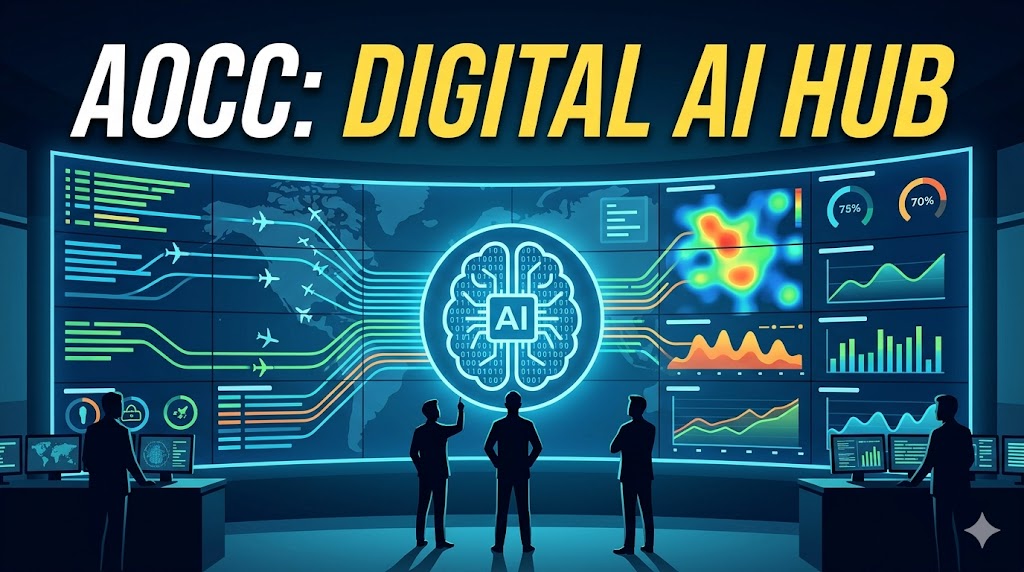
The aviation industry stands at the cusp of a technological revolution, where traditional airport management gives way to intelligent, data-driven ecosystems. At the heart of this transformation lies the Airport Operations Control Centre (AOCC), evolving from a reactive coordination hub into a sophisticated, AI-powered nerve centre. Digital-first AOCCs leverages artificial intelligence, real-time analytics, and integrated platforms to anticipate challenges, optimize resources, and deliver seamless experiences for millions of passengers daily.
Airports worldwide face mounting pressures: surging passenger volumes, complex operational interdependencies, stringent safety requirements, and the need for sustainability. Conventional manual processes can no longer keep pace. AI and digital technologies address these demands by providing predictive insights, automated responses, and unified visibility across airside and landside operations.
This article examines the rise of AI-enhanced AOCCs, their core components, implementation benefits, real-world examples, challenges, and the promising future ahead. As airports strive for operational excellence, understanding these advancements becomes essential for industry stakeholders, technology providers, and aviation enthusiasts alike.
Historically, the AOCC served as the central command post where representatives from various airport functions—airlines, ground handlers, security, maintenance, and air traffic control—converged to manage daily operations. Staff monitored multiple screens displaying flight data, weather updates, resource allocation, and security feeds, making decisions based on experience and limited real-time information.
While effective in simpler times, these centres often struggled with data silos, delayed information sharing, and reactive problem-solving. A minor delay in one area could cascade into widespread disruptions, affecting on-time performance, passenger satisfaction, and costs. The need for a more agile, intelligent system became evident as global air traffic recovered and grew post-pandemic.
Modern digital-first AOCCs represents a paradigm shift. They integrate disparate systems into a single, cohesive platform, augmented by AI algorithms that process vast datasets to offer actionable intelligence rather than raw information.
The Digital Transformation of AOCCs
Digitalization marks the foundation of next-generation AOCCs. Key enablers include:
Integrated Data Platforms: Cloud-based systems aggregate information from flight management, baggage handling, passenger flow sensors, IoT devices, and external sources like weather services.
Advanced Visualization: Large video walls, digital twins, and interactive dashboards provide comprehensive situational awareness.
Mobile and Collaborative Tools: Stakeholders access critical data on-the-go, fostering seamless coordination beyond the physical control room.
Adani Airports' Mumbai facility exemplifies this evolution. In May 2025, Chhatrapati Shivaji Maharaj International Airport (CSMIA) unveiled a state-of-the-art digital-first AOCC featuring a pioneering platform called aviio. This mobile-first, data-driven solution delivers real-time situational awareness and empowers decision-makers anytime, anywhere.
The new setup includes expansive 37-metre video walls streaming multi-source data, ergonomic workspaces with IoT lighting, and an integrated Aerodrome Emergency Control Centre. These upgrades enable proactive management of routine operations and crises alike.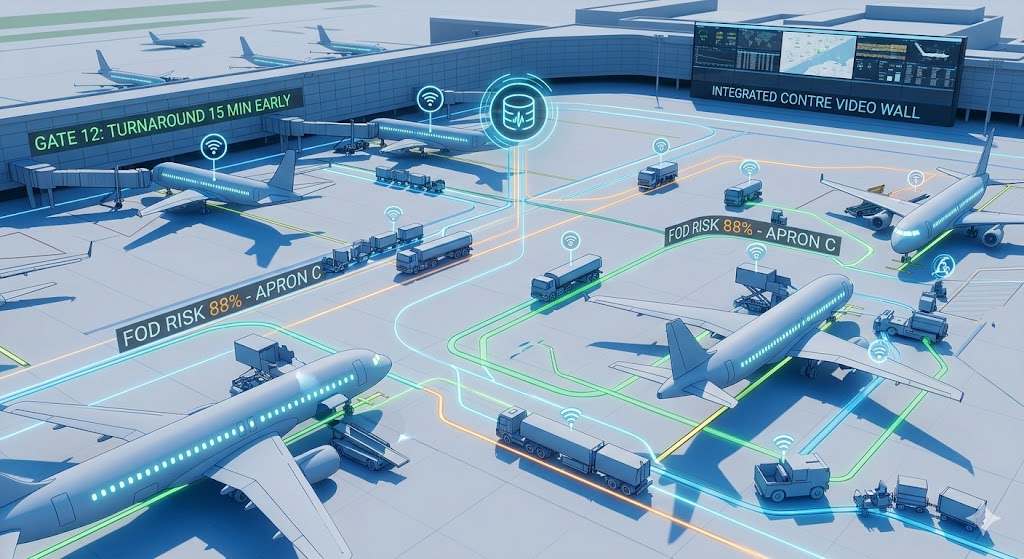
AI-Powered Predictive Turnaround Monitoring
Role of Artificial Intelligence in Modern AOCCs
AI elevates AOCC capabilities from monitoring to prediction and optimization. Machine learning models analyze historical and real-time data to forecast potential issues before they materialize.
Predictive Analytics: AI anticipates congestion at security checkpoints, gate availability conflicts, or maintenance needs by processing passenger flows, flight schedules, and equipment sensor data. This shifts operations from reactive to proactive.
Resource Optimization: Algorithms dynamically allocate ground staff, baggage handlers, and equipment, reducing idle time and improving turnaround efficiency. Agentic AI systems, with specialized agents for weather, crew, fuel, and maintenance, collaborate to generate adaptive plans.
Anomaly Detection and Security: Computer vision and AI-powered surveillance identify unusual patterns, foreign object debris (FOD) on runways, or security threats far more effectively than human monitoring alone.
Passenger Flow Management: AI models predict crowd densities and optimize staffing, queue management, and wayfinding to minimize wait times and enhance the overall journey.
Platforms like AirportCOCKPIT demonstrate these features through AI insights on airport health status, live maps, flight turnaround views, and incident management tools, all accessible via mobile applications.
Key Technologies Powering AI-Driven AOCCs
Several cutting-edge technologies converge in contemporary AOCCs:
1. Digital Twins: Virtual replicas of the entire airport ecosystem allow simulation of scenarios and testing of operational strategies without real-world risk.
2. Internet of Things (IoT): Sensors across terminals, aprons, and runways feed continuous data streams into the central system.
3. Big Data Analytics and Cloud Computing: Handle massive volumes of information with scalability and accessibility.
4. Biometrics and Computer Vision: Streamline passenger processing while enhancing security.
5. Multi-Agent AI Systems: Specialized intelligent agents work collaboratively under a central orchestrator for complex decision-making.
6. Edge Computing: Processes data locally for faster response times in critical areas.
These technologies create a resilient, interconnected environment where information flows freely and decisions happen at unprecedented speed.
Benefits of Implementing AI and Digital AOCCs
The advantages extend across operational, financial, and experiential dimensions:
Enhanced Efficiency: Reduced delays by 4-15% through better coordination and predictive interventions, as seen in various deployments.
Cost Savings: Optimized resource use lowers operational expenditures, with reports of 10-15% reductions in specific processes.
Improved Safety and Security: Proactive threat detection and FOD monitoring minimize risks.
Superior Passenger Experience: Shorter queues, real-time updates, and personalized services boost satisfaction and spending.
Sustainability Gains: Better fuel management, reduced ground delays, and optimized energy use contribute to lower emissions.
Resilience: Faster crisis response and scenario planning help airports recover swiftly from disruptions like weather events or technical issues.
For large hubs like Mumbai's CSMIA, these improvements translate into higher throughput, better stakeholder collaboration, and a stronger competitive position.
Case Studies: Leading Airports Embracing AI AOCCs
Mumbai CSMIA (India): The 2025 launch of the digital-first AOCC with aviio platform stands as a benchmark. It integrates AI/ML for data-driven decisions, mobile collaboration, and comprehensive visibility, setting new standards for Indian and global aviation.
Frankfurt Airport (Germany): Fraport's AI initiatives, including intelligent dispatching agents, optimize aircraft turnarounds in one of Europe's busiest hubs.
Rome Fiumicino and Other European Hubs: Deployments of AI turnaround monitoring and predictive systems have delivered measurable improvements in on-time performance.
U.S. Airports: Facilities like Dallas/Fort Worth leverage AI for gating, passenger flow, and resource allocation, yielding significant fuel savings and delay reductions.
Smaller airports also benefit from scalable solutions like AirportCOCKPIT, proving that innovation is not limited to mega-hubs.
Challenges and Considerations in AOCC Digitalization
Despite the promise, adoption faces hurdles:
High Initial Investment: Infrastructure upgrades, integration, and training require substantial capital.
Data Privacy and Cybersecurity: Handling sensitive passenger and operational data demands robust protection.
Integration with Legacy Systems: Many airports operate mixed old and new technologies, complicating seamless connectivity.
Workforce Adaptation: Staff must develop new skills to work alongside AI tools, emphasizing human-AI collaboration.
Regulatory Compliance: Aviation authorities require careful validation of AI-driven decisions affecting safety.
Successful implementations address these through phased rollouts, stakeholder engagement, and continuous training.
Future Trends in AI and Digital AOCCs
Looking ahead to 2026 and beyond, several trends will shape AOCC evolution:
Agentic AI: Autonomous agents handling complex, multi-step operations with minimal human intervention while keeping humans in the loop for oversight.
Advanced Digital Twins: Fully immersive simulations for training and real-time optimization.
Sustainability Integration: AI optimizing for net-zero goals through energy management and green operations.
Biometric Seamless Journeys: From curb to gate, reducing friction while enhancing security.
Collaborative Ecosystems: Deeper integration between airports, airlines, and ground handlers via shared platforms.
The convergence of AI with 5G, quantum computing potential, and advanced sensors will further amplify capabilities, making airports more intelligent, responsive, and passenger-centric.
Implementation Roadmap for Airports
Airports considering digital AOCC transformation should follow a structured approach:
1. Assessment: Evaluate current operations, pain points, and technology maturity.
2. Vision and Strategy: Define clear objectives aligned with business goals.
3. Technology Selection: Choose scalable, interoperable solutions with strong AI foundations.
4. Phased Deployment: Start with high-impact areas like passenger flow or resource management.
5. Training and Change Management: Invest in people to ensure smooth adoption.
6. Continuous Improvement: Use performance metrics and feedback to refine the system.
Partnerships with experienced providers can accelerate this journey while mitigating risks.
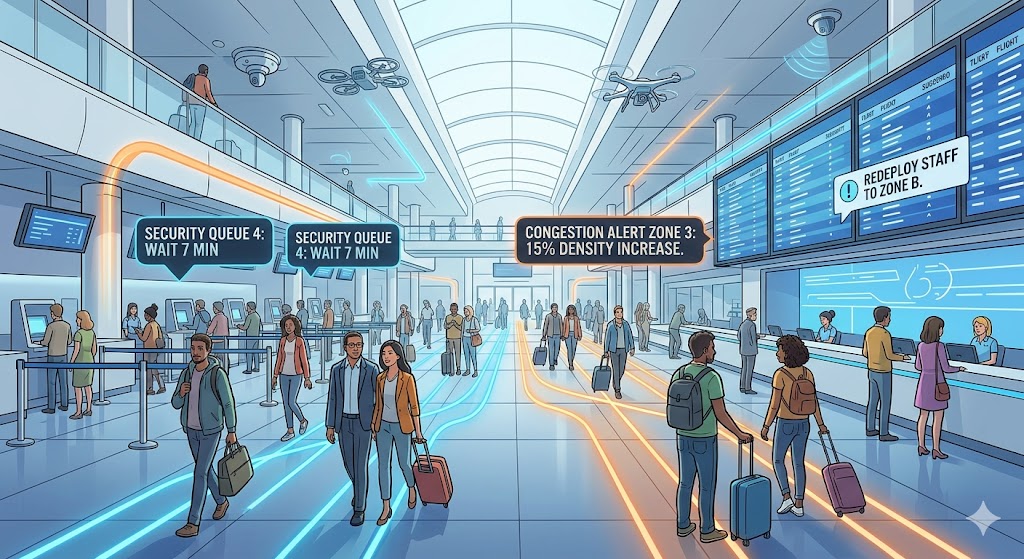
AI-Driven Passenger Flow and Queue Management (Landside
Conclusion
The integration of AI and digital technologies into Airport Operations Control Centres marks a pivotal advancement in aviation management. From Mumbai's groundbreaking aviio-powered AOCC to global innovations in predictive analytics and multi-agent systems, these developments are redefining what efficient, safe, and passenger-friendly airports look like.
As the industry navigates growing demands and evolving challenges, digital-first AOCCs offer a powerful pathway to resilience, sustainability, and excellence. Airports that embrace this transformation position themselves not only to handle today's complexities but to thrive in the future of air travel.
The journey toward fully intelligent airport operations is well underway. Stakeholders who invest thoughtfully in AI and digital capabilities today will lead the way in delivering exceptional experiences tomorrow. In an increasingly connected world, the AOCC stands as the intelligent heart of the modern airport—pulsing with data, guided by artificial intelligence, and driven by a commitment to human progress in aviation.