The Microsoft: From Humble Beginnings to Tech Giant
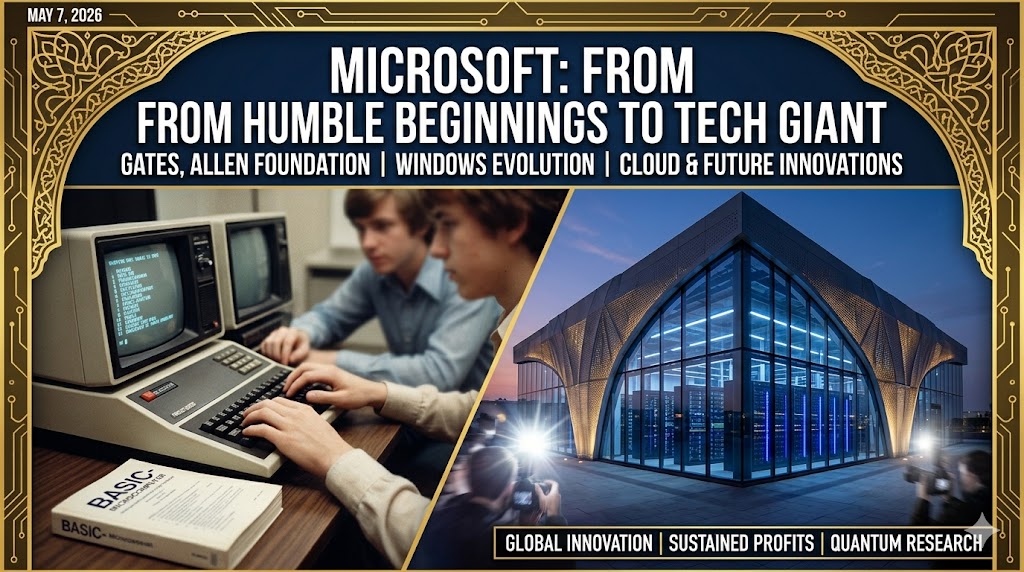
In the rapidly evolving landscape of technology, few companies have shaped the modern world as profoundly as Microsoft. From its modest origins in a small Albuquerque office to becoming one of the most valuable corporations on the planet, Microsoft's story is one of vision, perseverance, and relentless innovation. Founded by Bill Gates and Paul Allen, the company has not only revolutionized personal computing but also played a pivotal role in cloud services, artificial intelligence, quantum computing, and mixed reality.
This article delves deep into the foundation of Microsoft, the contributions of its visionary founders with a special focus on Bill Gates, the evolution of its flagship products like Windows, groundbreaking advancements in Azure, HoloLens, Surface, and how consistent profits and strategic financial growth have fueled its dominance. We will explore how Microsoft has consistently driven technological advancement, influenced global economies through investments, and maintained its relevance. Whether you're a tech enthusiast, student, or professional, understanding Microsoft's journey — including the financial engine behind its success — offers valuable insights into the forces powering today's digital age.
The Founding Vision: Bill Gates, Paul Allen, and the Birth of Microsoft
The story of Microsoft begins in the early 1970s with two bright young minds from Seattle: Bill Gates and Paul Allen. Born in 1955 and 1953 respectively, Gates and Allen bonded over their shared passion for computers while attending Lakeside School. At a time when computing was largely confined to large mainframes, they foresaw a future where personal computers would become ubiquitous.
In 1975, after spotting an article about the Altair 8800 microcomputer in Popular Electronics, Allen convinced Gates to drop out of Harvard. They developed a BASIC interpreter for the Altair and moved to Albuquerque, New Mexico. On April 4, 1975, they officially founded Microsoft—originally hyphenated as "Micro-Soft." Paul Allen played a crucial visionary role, often credited with the company's name and early technical innovations. Bill Gates brought sharp business acumen, negotiating deals and scaling operations from the very beginning.
By 1979, Microsoft relocated to Bellevue, Washington. Early success came from licensing BASIC and other languages. The pivotal moment arrived in 1980 with the IBM PC deal, leading to MS-DOS. This positioned Microsoft as an essential player and laid the groundwork for extraordinary financial success in the decades ahead.
Bill Gates: Visionary Leader, Strategic Mind, and Enduring Influence
Bill Gates stands as one of the most influential figures in technology history. As the primary business and technical leader in Microsoft's early years, Gates combined deep programming knowledge with exceptional negotiation skills and long-term strategic thinking. He famously negotiated the landmark IBM contract that propelled Microsoft into the mainstream, ensuring the company retained rights to license MS-DOS to other manufacturers — a decision that generated massive recurring revenue streams.
Gates served as CEO until 2000, when he transitioned to Chief Software Architect before stepping back further in 2008 to focus on philanthropy. He remained chairman of the board until 2014 and a technology advisor to subsequent leadership, including current CEO Satya Nadella. Even after resigning from the board in 2020, Gates continues to contribute through product reviews, AI strategy discussions, and technical guidance, reflecting his deep personal connection to the company he co-founded.
What truly sets Gates apart is his ability to anticipate industry shifts. Under his leadership, Microsoft invested heavily in research and development, fostering a culture of innovation that persists today. His post-Microsoft focus through the Bill & Melinda Gates Foundation has amplified his legacy, tackling global health, education, and climate issues, often leveraging insights and resources tied to his success at Microsoft.
Gates' personal financial journey is closely intertwined with the company. After the 1986 IPO, he became one of the youngest billionaires. While he has sold shares over the years to diversify and donate, he still holds a meaningful stake in Microsoft, and the foundation trust continues to benefit from the company's strong performance.
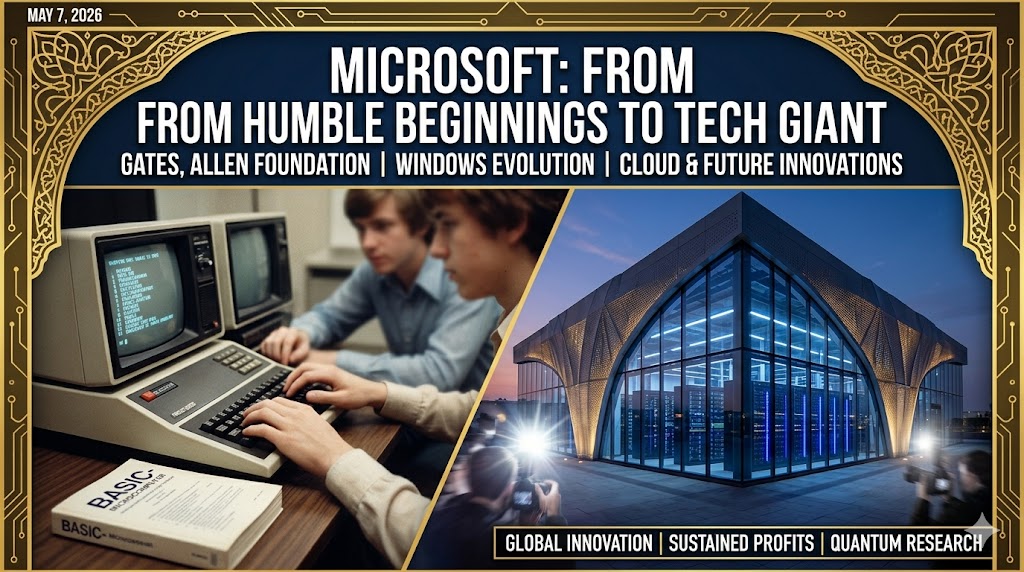
Microsoft from beginning to great achievement
The Rise to Prominence: MS-DOS, IPO, Global Fame, and Explosive Profits
Microsoft's fame skyrocketed in the 1980s. MS-DOS became the standard operating system for IBM-compatible PCs. The 1986 initial public offering (IPO) made Gates and Allen billionaires and turned many employees into millionaires. This event marked the beginning of Microsoft's transformation into a financial powerhouse.
What made Microsoft famous was its focus on software accessibility and standardization. While hardware competitors rose and fell, Microsoft provided the unifying platform that delivered consistent profits through licensing. By the late 1980s, the company was expanding internationally with growing revenue streams.
Microsoft's financial performance has been remarkable over the decades. The company has delivered steady revenue and profit growth, particularly accelerating in the cloud era. In fiscal year 2025, Microsoft reported record revenue of approximately $281.7 billion, with strong operating income and net profits reflecting the success of its diversified portfolio. Quarterly results frequently show double-digit growth, driven by Azure, Microsoft 365, and intelligent cloud services. For instance, recent quarters have seen revenue exceeding $80 billion with net income rising significantly year-over-year.
This consistent profitability has enabled massive shareholder returns through dividends and share repurchases — often totaling billions per quarter. Microsoft's stock has been a standout performer, rewarding long-term investors and reflecting confidence in its innovation pipeline. The financial strength has also funded ambitious investments in AI, data centers, quantum research, and acquisitions, creating a virtuous cycle of growth.
Evolution of Microsoft Windows: From GUI Shell to Modern OS
Microsoft Azure: Powering the Cloud Revolution and Profit Growth
Launched as Windows Azure in 2010, Azure has been a major driver of Microsoft's recent profit surge. It offers comprehensive cloud services and has grown rapidly, contributing substantially to the company's intelligent cloud segment. Azure's revenue has expanded at impressive rates, often in the 30%+ range in recent periods, boosting overall operating margins and net profits.
The shift to cloud has not only diversified revenue but also delivered higher recurring income, enhancing financial predictability and supporting sustained profitability even amid economic fluctuations.
Innovations in Hardware: Surface, HoloLens, and Beyond
Microsoft Research, Quantum Computing, and Future Tech
Microsoft Events, Announcements, and Strategic Investments
Microsoft Build and other events showcase how profits are reinvested into future technologies. The company's capital expenditures, often in the tens of billions annually for cloud and AI infrastructure, demonstrate a commitment to long-term growth backed by current financial strength.
The intersection of Bill Gates' vision and Microsoft's financial success tells a compelling story of sustained value creation. Gates' early decisions created the foundation for billions in cumulative profits. Even as he reduced his operational role, the company under successive leaders has scaled to new heights, with annual revenues now exceeding $280 billion and robust profit margins that few tech giants can match.
Gates' wealth, largely derived from Microsoft, has enabled extraordinary philanthropy, yet the company continues to thrive independently. This separation highlights the robust systems and culture he helped build. Microsoft's ability to generate strong profits while investing in emerging fields like quantum computing (including Majorana research) and AI underscores its resilience.
Analysts often point to the company's financial discipline — balancing growth investments with shareholder returns — as a key factor in its enduring success. Stock performance remains closely watched, with profits from cloud and productivity segments frequently exceeding expectations and driving market capitalization higher.
Conclusion: A Legacy of Innovation and Financial Excellence
From Gates and Allen's beginnings to quantum breakthroughs and AI ubiquity, Microsoft's history is a testament to bold vision, adaptation, and smart financial management. Products like Windows, Azure, Surface, and HoloLens continue shaping how we work and connect, while consistent profits provide the fuel for ongoing advancement.
The company's story, deeply linked to Bill Gates' contributions, inspires entrepreneurs worldwide: great ideas, executed with determination and supported by sound business strategy, can transform the world and generate lasting value. As Microsoft looks to the future, its foundation of innovation and profitability ensures it will remain a pillar of technological progress for generations to come.