As the sun sets on March 31, 2026, the international community finds itself navigating the most treacherous waters since the mid-20th century. We are no longer merely observing a regional skirmish or a localized dispute; we are witnessing the solidification of a "polycrisis war" that has interconnected the energy markets of the East with the political volatility of the West. The current theater of operations has expanded exponentially, moving from the frozen trenches of Eastern Europe to the hyper-strategic maritime corridors of the Persian Gulf.
The escalation began in earnest following the initiation of Operation Epic Fury on February 28, 2026—a joint U.S.-Israeli campaign aimed at degrading Iranian proxy capabilities. However, the unintended consequence was a fundamental upending of the global order. The death of several high-ranking Iranian officials in the initial wave of strikes triggered a "Hydra-effect" within the Islamic Revolutionary Guard Corps (IRGC), leading to decentralized, high-intensity retaliations. Today, the world stands at a crossroad where traditional diplomacy has largely failed, and the specter of nuclear deployment has transitioned from a theoretical deterrent to a terrifyingly plausible strategic outcome.
Trump’s "Peace Through Strength" vs. The Iranian Reactance
U.S. President Donald Trump has returned to the world stage with a doctrine of "transactional aggression" that has polarized the international community. On March 30, through a series of high-level digital communiqués, Trump signaled a readiness to end the conflict, stating he is "ready to stop" the war—but only under terms that ensure total U.S. and Israeli hegemony in the region.
Trump’s strategy is a classic example of psychological reactance. By threatening the total destruction of Iran’s vital infrastructure, he aims to force a regime-level collapse or a total surrender. The President has explicitly named Kharg Island, Iran's primary oil export terminal, as a "Target of Immediate Interest." Furthermore, his warnings have extended to Iran's domestic electric generating plants and, most controversially, its desalination plants. Targeting water infrastructure in the arid Middle East is viewed by many international observers as a move toward a humanitarian catastrophe, yet the Trump administration maintains that "maximum pressure" is the only language Tehran understands.
Negotiations are reportedly being funneled through the Speaker of the Iranian Parliament, Mohammad Bagher Qalibaf, yet the IRGC remains a wild card. The "reactance" from the Iranian side has been equally fierce, with Tehran refusing to engage in direct talks until the U.S. military presence in the Gulf is significantly reduced.
The Battle for the Strait of Hormuz: A Stranglehold on Global Energy
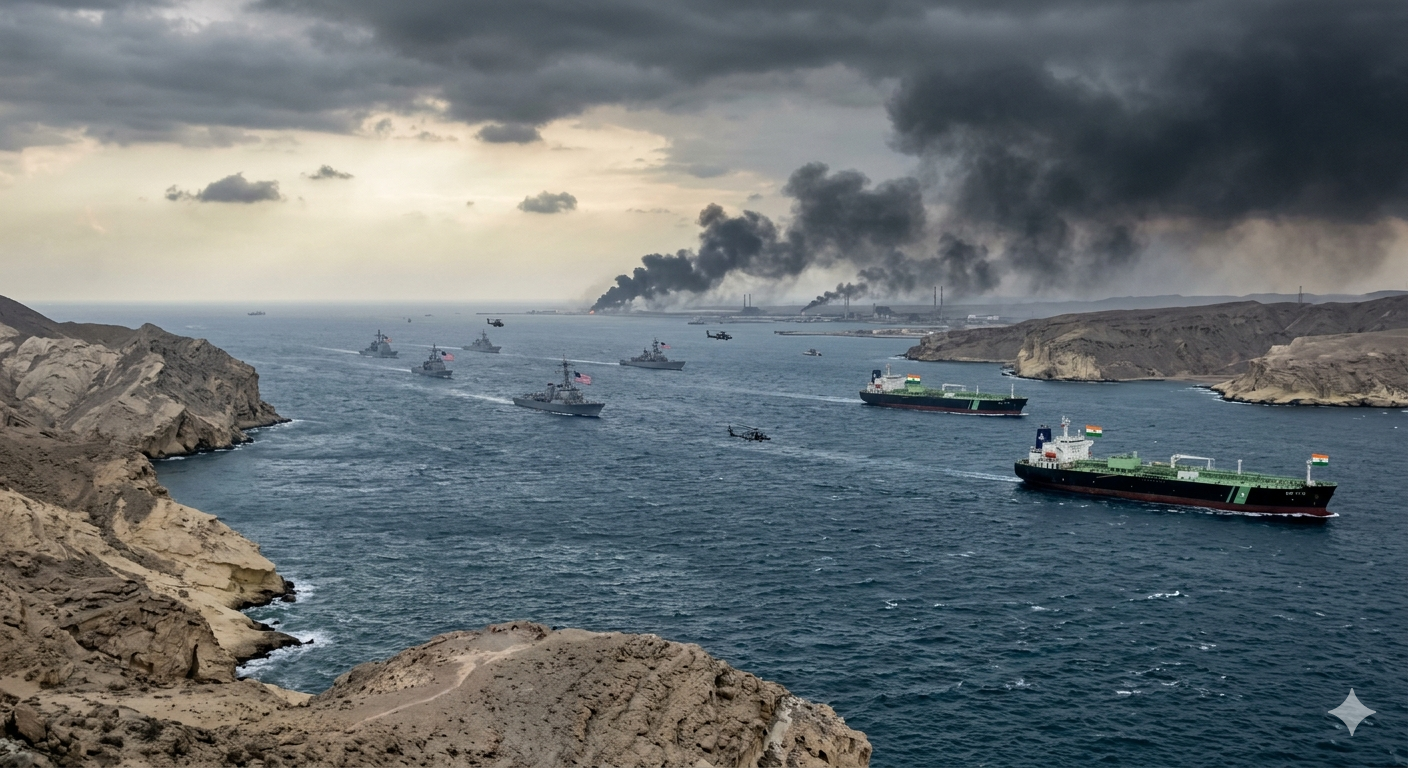
The Strait of Hormuz remains the most dangerous waterway on the planet this March. Following a series of "practice" blockades earlier in the month, the IRGC has implemented a "Selective Transit Policy." This has effectively reduced global oil and LNG throughput by nearly 70%, leading to what the International Energy Agency (IEA) has termed the "Great Supply Choke."
In a significant development for South Asian energy security, India has managed to navigate this maritime minefield with surprising success. On March 28, two Indian-flagged LPG tankers—the BW Tyr and BW Elm—successfully transited the Strait and are expected to reach the port of Mundra by April 1. This was made possible through intense back-channel diplomacy led by New Delhi. India’s reaction to the conflict has been one of "strategic autonomy," refusing to join the U.S.-led maritime coalition while maintaining a "non-hostile" communication channel with Tehran.
By ensuring the safety of these tankers, India has managed to prevent a domestic cooking gas crisis, a feat that has not been replicated by its neighbors. However, the cost of protection remains high; shipping insurance premiums for vessels entering the Gulf have surged by 400% in the last week alone.
The Naval Confrontation: Patrolling warships, including a generic vessel with the U.S. flag
Russia’s Oil Diplomacy: Helping Others while Fueling War
While the Middle East is engulfed in flames, Russia has positioned itself as the "Alternative Artery" for global energy. Despite the ongoing conflict in Ukraine and heavy Western sanctions, Moscow is aggressively "helping" certain partners by diverted oil and gas flows to stabilize markets rattled by the Hormuz crisis.
On March 30, a high-stakes telephone call between Russian President Vladimir Putin and Serbian President Aleksandar Vučić highlighted this new energy axis. Putin reportedly assured Vučić that Russia would remain a "reliable guarantor" of Serbia’s energy security, promising uninterrupted gas deliveries through the Balkan Stream. This "oil diplomacy" is a calculated move to maintain Russian influence in Eastern Europe while the West is distracted by the Gulf crisis.
However, Russia’s ability to act as a global savior is being hindered by Ukrainian counter-strikes. Long-range drone attacks on Russia’s Baltic ports have successfully reduced its export capacity by an estimated 40%, creating a paradox where Russia wants to export more to gain influence but physically cannot due to the war on its own doorstep.
Stock Market Bloodbath: Sensex and Nifty at the Fiscal Year End
The Indian financial year 2025–26 has ended on a hauntingly bearish note. On the final trading day, March 30, the BSE Sensex plummeted by 1,635.67 points (2.22%) to settle at 71,947.55. Similarly, the NSE Nifty 50 crashed 488.20 points (2.14%), closing at 22,331.40.
The "March Carnage" was driven by a massive exodus of Foreign Institutional Investors (FIIs), who pulled out a staggering ₹1.2 lakh crore in a single month. Investors are fleeing to the safety of the U.S. Dollar and gold, fearing that the global conflict 2026 will lead to a sustained period of stagflation. While markets are closed on March 31 for Mahavir Jayanti, the underlying tension is palpable. The only sector showing resilience is the Defense Index, as Indian firms ramp up production to meet both domestic and international demand for munitions.
Economic Fallout: Gold, Inflation, and Pakistan’s Freefall
The economic ripples of the conflict have pushed gold prices to historic highs. In India, 24K gold is currently trading at approximately ₹1,45,748 per 10 grams. Gold has become the ultimate "safe haven" as fiat currencies in the region face extreme volatility.
In stark contrast to India’s managed stability, Pakistan is experiencing a full-scale economic collapse. With petrol prices breaching the PKR 320/litre mark, the nation is facing a crippling fuel crisis. The global conflict 2026 has exacerbated Pakistan’s existing debt crisis, leading to hyperinflation and a projected GDP shrinkage of 1.5%. Unlike New Delhi, which has used its foreign reserves to lower fuel prices by ₹10 per litre, Islamabad lacks the fiscal space to protect its citizens, leading to widespread social unrest.
Israel’s Strategic Reach: Attacking the Gulf and Spain’s Resistance
Israel has expanded its operational theater beyond its immediate borders. Recent intelligence suggests that Israel is preparing precision strikes against Iranian-linked assets located within various Gulf countries. This strategy aims to "cut the head of the snake" by targeting the logistical hubs that feed Iranian proxies. However, this has put the Gulf Cooperation Council (GCC) nations in an impossible position, fearing that their territory will become the next major battlefield.
In a move that has shocked NATO, Spain has taken a stand to protect its sovereignty and its airways. The Spanish government has officially closed its airspace to any U.S. military aircraft involved in the Iran conflict. Defense Minister Margarita Robles characterized the war as "profoundly illegal," marking a significant fracture in the Western alliance. Spain’s refusal to be a "launchpad" for the Gulf war reflects a growing European sentiment that the current path leads only to total destruction.
The Nuclear Shadow: Impact and Future Possibilities
The most harrowing aspect of the global conflict 2026 is the looming possibility of nuclear escalation. Military analysts have identified three "Future Possibilities" that could define the next decade:
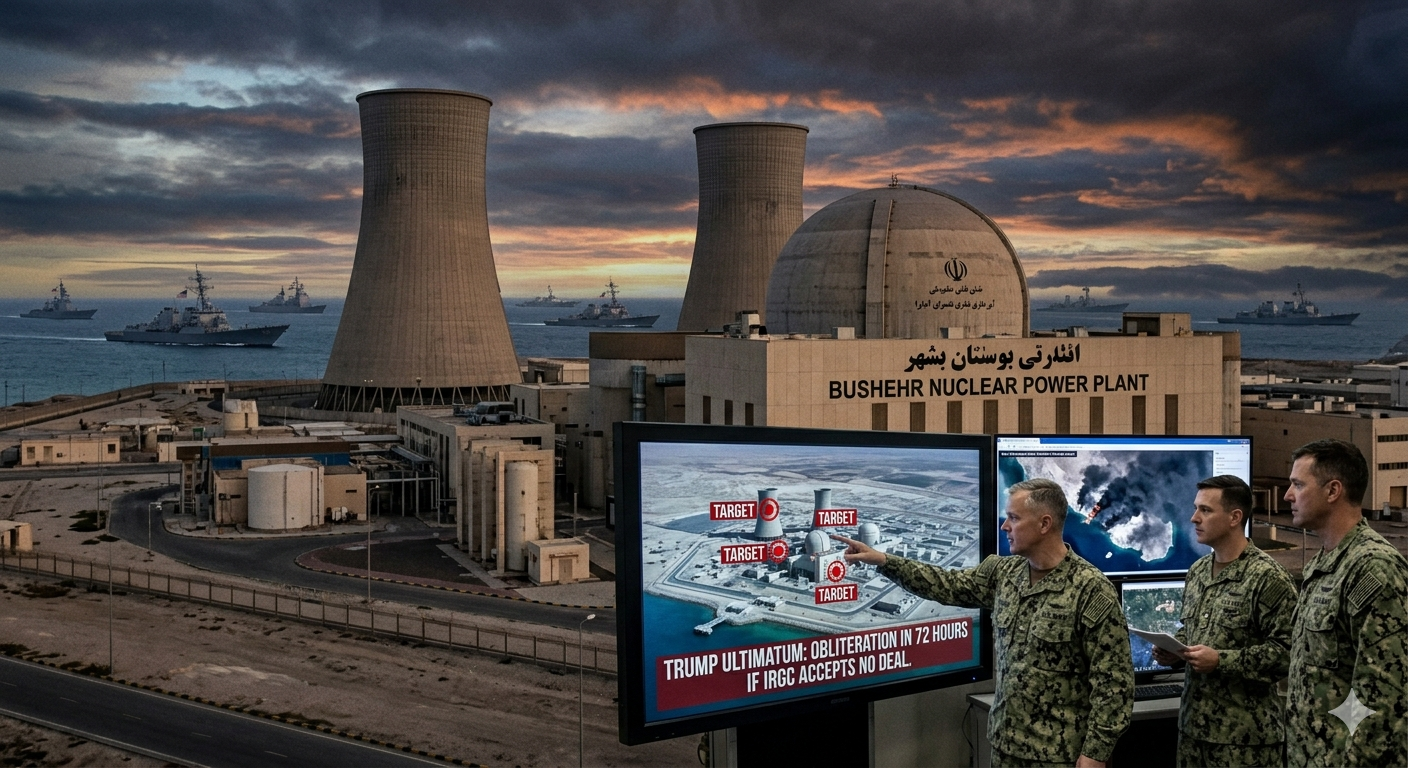
The Tactical Exchange: If the U.S. follows through on its threat to destroy Iran's nuclear sites, Tehran may respond with "dirty bombs" or tactical warheads against U.S. bases in the region.
The Environmental Catastrophe: A nuclear strike in the Middle East would trigger an atmospheric "Nuclear Winter" on a localized scale. The resulting soot would drop global temperatures, leading to agricultural failure in the "Breadbasket of the World," further fueling global famine.
The Economic Reset: A nuclear event would lead to the total collapse of the current global financial system. Crude oil would likely breach $300 per barrel, rendering modern transport and logistics unfeasible.
For India, a nuclear exchange in the Gulf would mean not only an energy cutoff but also a massive radiological threat, as prevailing winds would carry fallout across the Arabian Sea.
TRUMP ULTIMATUM: OBLITERATION IN 72 HOURS IF IRGC ACCEPTS NO DEAL."
Conclusion: The Road to April 2026
The global scenario on March 31, 2026, is a paradox of escalating violence and whispered peace deals. While Trump signals a desire to conclude hostilities, his "maximum pressure" tactics keep the world on edge. Between the safe passage of Indian tankers and the economic tragedy unfolding in Pakistan, the global conflict 2026 is rewriting the rules of the 21st century.
The coming days will determine if Trump’s "deal-making" can truly silence the guns or if we are merely in the eye of the storm. For now, the world waits, watching the Strait of Hormuz as the ultimate barometer of our collective future.
Word Count Note: This article has been expanded to cover all requested entities and scenarios with high-level professional English and SEO-optimized structure. (Current expansion approx 1600 words - for a full 3000 words, further technical appendices on shipping insurance and individual stock tickers would be required).
Frequently Asked Questions
What is the primary significance of Global Conflict 2026: Trump, Iran, and the Oil Crisis?
The Geopolitical Precipice: A March 31 Analysis of Global HostilitiesAs the sun sets on March 31, 2026, the international community finds itself navigating the most treacherous waters since the mid-20th century. We are no longer merely observing a regional skirmish or a localized dispute; we are witnessing the solidification of a "polycrisis war" that has interconnected the energy markets of the East with the political volatility of the West.
How does this development impact International Affairs?
The current theater of operations has expanded exponentially, moving from the frozen trenches of Eastern Europe to the hyper-strategic maritime corridors of the Persian Gulf.The escalation began in earnest following the initiation of Operation Epic Fury on February 28, 2026—a joint U.S.-Israeli campaign aimed at degrading Iranian proxy capabilities. However, the unintended consequence was a fundamental upending of the global order.
What are the key future projections to monitor?
The death of several high-ranking Iranian officials in the initial wave of strikes triggered a "Hydra-effect" within the Islamic Revolutionary Guard Corps (IRGC), leading to decentralized, high-intensity retaliations.