No Kings 2026: The Rise of Mass Protests & Iran Oil Crisis
International Affairs• March 31, 2026• Global Edition
A Nation at a Breaking Point
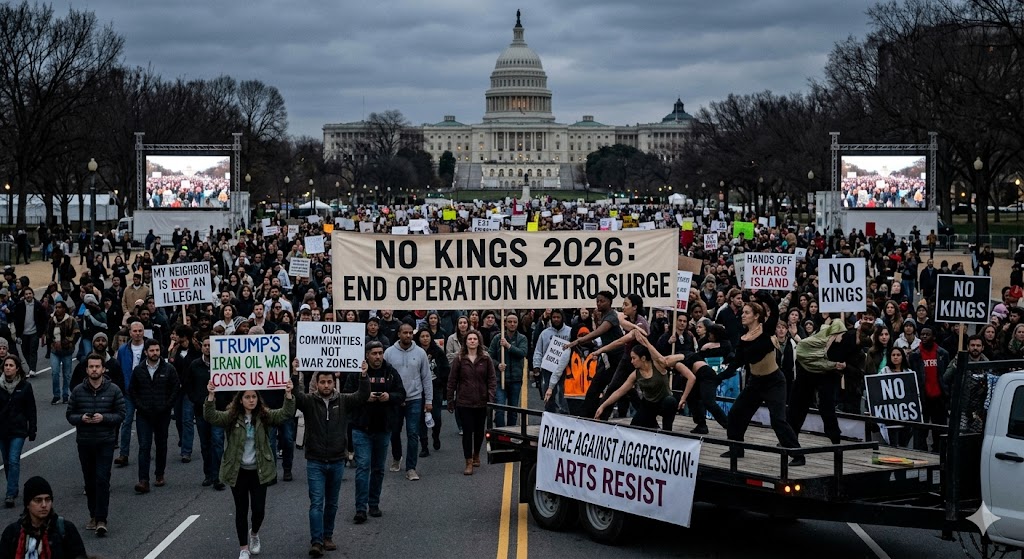
As of late March 2026, the United States is witnessing a level of civil unrest and political mobilization not seen in generations. Under the banner of the "No Kings" movement, an estimated 9 million Americans have taken to the streets in over 3,300 cities. What began as a localized response to immigration enforcement has evolved into a nationwide referendum on democratic norms, foreign intervention, and the limits of executive power.
The current scenario is defined by a "perfect storm" of domestic policy shifts and international aggression. From the deployment of federal agents in "Operation Metro Surge" to the high-stakes military gambit in the Persian Gulf, the administration’s actions have sparked a global conversation about the future of American democracy. This movement, often referred to as the No Kings uprising, is not merely a protest against a person, but a rejection of a specific governing philosophy that many believe threatens the very foundation of the Republic.
The "No Kings" Movement: Demands for Accountability
The "No Kings" moniker is a direct critique of what protesters describe as an "authoritarian" shift in the White House. The movement, which saw its largest turnout on March 28, 2026, is driven by a coalition of civil rights groups, labor unions, and anti-war activists. In the view of the participants, the United States was founded on the principle that no individual is above the law, a principle they feel is currently under siege.
Key Pillars of the Protest:
End to Operation Metro Surge: Protesters are calling for the immediate withdrawal of federal "strike teams" from sanctuary cities. The No Kings movement gained tragic momentum following the fatal shootings of Renee Nicole Good, Keith Porter, and Alex Pretti—U.S. citizens killed by federal immigration agents during raids in Minneapolis.
Restoration of Checks and Balances: The No Kings philosophy argues that the bypass of Congressional approval for military strikes in Iran and Venezuela constitutes a constitutional crisis.
Transparency in Governance: A significant demand involves the full release of the "Epstein Files," with protesters alleging that the administration is using executive privilege to suppress information involving high-ranking global figures.
Opposition to "Senseless War": Following the outbreak of the 2026 Iran War, the No Kings coalition expanded its platform to include a staunch anti-war message, demanding that American resources be used for domestic infrastructure rather than foreign intervention.
: The Current Scenario of Immigration Enforcement
The administration’s approach to immigration has been the primary catalyst for domestic fury. Central to this is a framework critics have dubbed the "No Kings" policy, characterized by unilateral executive orders that bypass traditional legislative debate.
NO KINGS 2026: MASS PROTESTS ERUPT OVER TRUMP IMMIGRATION & OIL POLICIES."
Operation Metro Surge and Urban Tensions
In early 2026, the administration launched "Operation Metro Surge," which involved the deployment of thousands of federal agents into cities like Minneapolis, Chicago, and Seattle. The goal was to expedite the removal of non-citizens, but the operation quickly drew fire for its "aggressive" and "unlawful" tactics. The No Kings protesters argue that these raids have turned American neighborhoods into war zones, leading to the accidental deaths of bystanders and the detention of legal residents.
The $100,000 H-1B Fee and Economic Fallout
In late 2025, the administration finalized a rule imposing a $100,000 fee for new H-1B visa petitions. This policy was designed to "protect American workers," but the current scenario tells a different story:
Tech Sector Brain Drain: Major firms have begun shifting large portions of their R&D departments to overseas hubs in India and Canada.
Medical Staffing Shortages: Rural hospitals, which rely heavily on international medical graduates, have reported a 40% drop in residency applications, leading to a healthcare crisis in the American Heartland. The No Kings movement has seized on these economic failures as proof that the administration's "isolationist" policies are harming the average citizen.
2: The Iran War: Trump’s Vision for Oil and Global Leverage
Parallel to the domestic unrest is a burgeoning conflict in the Middle East. President Trump’s current view on the Iran war is rooted in a transactional, resource-focused doctrine that many in the No Kings movement find dangerous.
"Take the Oil": The Siege of Kharg Island
In March 2026, Trump sharpened his focus on Iran’s energy infrastructure, specifically Kharg Island. This terminal handles roughly 90% of Iran’s crude oil exports.
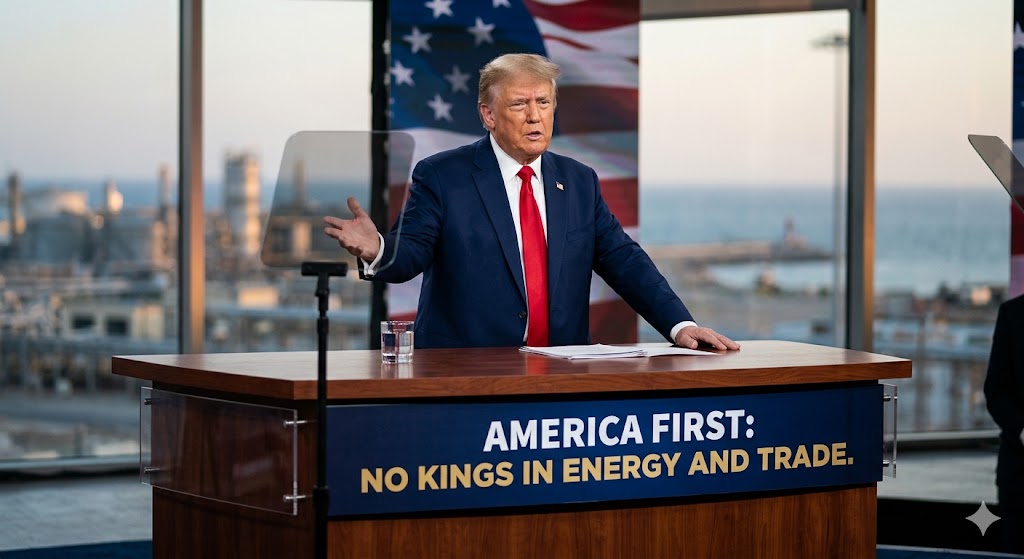
The Trump Doctrine: The President has suggested that "taking the oil" is the only way to ensure Iran remains at the negotiating table. He has openly suggested the possibility of seizing the terminal to reduce Iran's oil exports to zero.
Market Volatility: This rhetoric has pushed Brent crude prices to over $116 per barrel. While the administration argues that US domestic production will eventually lower prices, the current reality for Americans is soaring gas prices and increased transportation surcharges.
Oil as a Diplomatic Weapon
The administration is utilizing a blockade of Iranian exports to create a "vacuum" in the market. By offering "security-guaranteed" oil to allies like South Korea and India, the US is attempting to redraw the global energy map. The No Kings protesters see this as "resource imperialism" that distracts from the climate crisis and domestic instability.
3: The Economic Ripple Effects of "Energy First"
The administration's 2026 economic policy is inextricably linked to its military objectives. By prioritizing domestic energy dominance while simultaneously blockading foreign competitors, the White House has created a volatile "Energy First" environment that has split the American business community.
The Manufacturing Crisis
While the administration touts a "manufacturing renaissance," the reality for many mid-sized factories is grim. The No Kings protesters point to the rising cost of raw materials—driven by global supply chain disruptions from the Iran conflict—as a primary reason for recent layoffs. In the Midwest, where the No Kings movement has a strong presence, the cost of industrial power has risen by 18%, forcing small-scale manufacturers to choose between payroll and power bills.
The Rise of Mutual Aid Networks
A unique byproduct of the No Kings protests has been the rise of "Solidarity Hubs." In cities like Detroit and Philadelphia, protesters have established localized economies to bypass inflation. These hubs provide community-sourced food and medical supplies, creating a parallel support system that mirrors the No Kings demand for independence from centralized, federal control.
4: Impact of Aggression on the Arts and Dance World
One of the most unique aspects of the No Kings era is how political and military aggression—both from the administration and from actors like North Korea—has permeated the world of dance and performing arts.
Cultural Resistance and "Protest Choreography"
In the face of federal funding cuts, the dance community has moved from the theater to the streets.
The "Streets of Minneapolis" Movement: Dancers at No Kings rallies have developed a style of "resistance choreography." In the recent March 28 rallies, thousands of performers across the country utilized synchronized, fluid movements to symbolize the "breaking of chains."
Barricade Ballet: In Chicago, dancers have used movement to peacefully obstruct federal transport vehicles, a technique known as "Barricade Ballet." This has become a signature tactic of the No Kings movement, blending art with direct action.
The United States is at a historic crossroads. As of March 2026, the "No Kings" movement has mobilized millions to protest "Operation Metro Surge" and the administration’s hardline immigration fees. Simultaneously, the global landscape is shifting as the U.S. eyes Iran's oil infrastructure at Kharg Island.
The North Korean Factor and Arts Isolation
The constant threat of escalation from Pyongyang has led to a "bunker culture" in West Coast arts.
Cancellation of Festivals: Large-scale international dance festivals in Seattle and San Francisco have been replaced by "Pop-up Resistance" events in underground venues. This is a direct result of "North Korean aggression" in the Pacific, which has led the US to increase military drills and restrict international cultural visas.
A Loss of Diversity: The No Kings movement warns that by isolating the US from East Asian artists, the administration is narrowing the American cultural landscape and fostering a climate of xenophobia.
5: The Legal Battle for the Constitution
The legal landscape of 2026 is defined by a series of high-stakes challenges to executive orders. The No Kings legal team, a coalition of constitutional lawyers, has filed suits across multiple circuits to halt the "Metro Surge" operations.
The Unitary Executive Theory
At the heart of the conflict is the "Unitary Executive Theory," which the administration uses to justify bypassing traditional legislative oversight. Protesters argue that this theory effectively grants the President the powers of a monarch—the very concept the No Kings movement was founded to oppose.
The Supreme Court Stand-off
Legal scholars suggest that the 2026 Supreme Court term will be the most consequential in a century. The No Kings coalition is currently challenging whether the President can unilaterally redirect billions in defense funding toward domestic immigration enforcement. The outcome of these cases will determine if the "No Kings" mantra becomes a legal reality or remains a protest slogan.
6: International Response and 2027 Projections
The No Kings movement has gone global. On March 28, 2026, solidarity marches were held in London, Paris, and Berlin, as international allies grew wary of the U.S. administration's unilateral oil policies and military aggression.
The current scenario has significantly impacted America’s standing abroad. While some leaders in the "Global South" have welcomed the shift away from traditional sanctions toward "resource deals," the EU has remained critical of the No Kings era's disregard for international law.
The 2026 Midterm Outlook
As the November 2026 midterms approach, the No Kings movement is transitioning from protest to political organization. Polls show that the movement’s core demands—immigration reform, an end to the Iran war, and a return to the rule of law—are resonating with suburban voters. The administration’s fluctuating approval ratings suggest a significant shift in the balance of power may be imminent, provided the No Kings energy can be sustained through the election cycle.
Chapter 7: Summary of the "No Kings" Impact
To understand the current scenario, one must view the No Kings movement as a holistic response to a decade of polarization. It is not just about immigration or oil; it is about the fundamental definition of American citizenship.
| Sector | Impact of "No Kings" Scenario|
| Immigration | Nationwide resistance to Operation Metro Surge and "No Kings" policy fees|
| Foreign Policy| Opposition to the Iran War and the "Take the Oil" doctrine on Kharg Island. |
| Economy | Rise of mutual aid networks and inflation-driven Solidarity Hubs. |
| Culture | "Protest Choreography" and the decline of state-funded dance and arts. |
| Law | Major Supreme Court challenges to the Unitary Executive Theory.
Conclusion :The United States in 2026 is a nation in the midst of a profound identity crisis. The No Kings movement represents a collective refusal to accept the erosion of democratic norms and the "monarchial" reach of the executive branch. As the conflict over Iranian oil intensifies and domestic raids continue, the resilience of the American public will be tested. The cry of No Kings is no longer just a slogan; it is the blueprint for a nation fighting to reclaim its soul.
Frequently Asked Questions
What is the primary significance of No Kings 2026: The Rise of Mass Protests & Iran Oil Crisis?
A Nation at a Breaking PointAs of late March 2026, the United States is witnessing a level of civil unrest and political mobilization not seen in generations. Under the banner of the "No Kings" movement, an estimated 9 million Americans have taken to the streets in over 3,300 cities.
How does this development impact International Affairs?
What began as a localized response to immigration enforcement has evolved into a nationwide referendum on democratic norms, foreign intervention, and the limits of executive power. The current scenario is defined by a "perfect storm" of domestic policy shifts and international aggression. From the deployment of federal agents in "Operation Metro Surge" to the high-stakes military gambit in the Persian Gulf, the administration’s actions have sparked a global conversation about the future of American democracy.
What are the key future projections to monitor?
This movement, often referred to as the No Kings uprising, is not merely a protest against a person, but a rejection of a specific governing philosophy that many believe threatens the very foundation of the Republic.The "No Kings" Movement: Demands for AccountabilityThe "No Kings" moniker is a direct critique of what protesters describe as an "authoritarian" shift in the White House.