Shiva Lingam Purana: Eternal Symbol in Sanatan Dharma
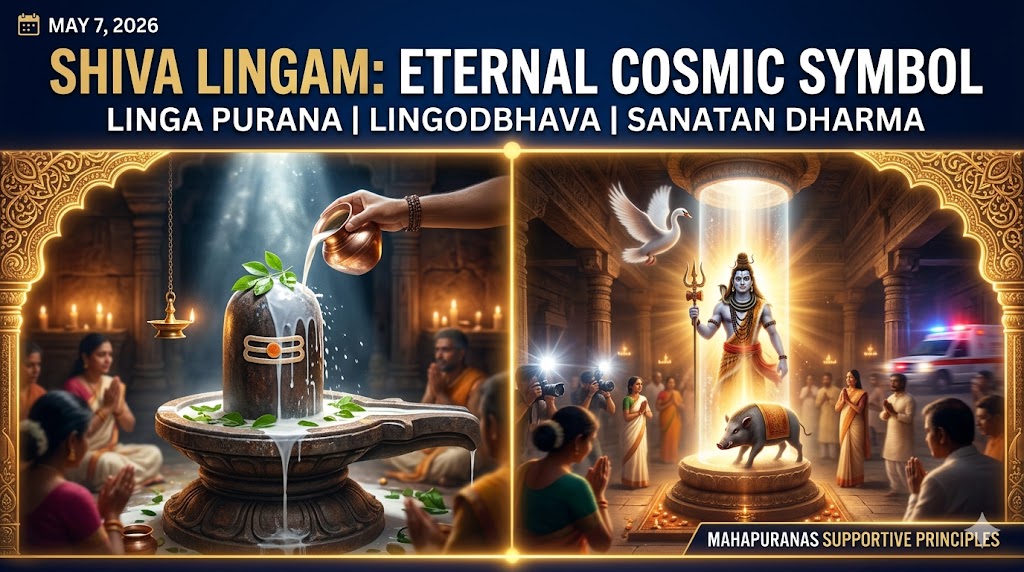
In the vast tapestry of Sanatan Dharma, few symbols hold as much spiritual depth and philosophical richness as the Shiva Lingam. Revered across centuries as the sacred emblem of Lord Shiva, the Shiva Lingam represents the formless, eternal, and all-pervading divine reality. Among the 18 Mahapuranas, the Linga Purana stands out for its dedicated exploration of this profound symbol, offering detailed insights into its origin, significance, and role in spiritual practice.
This article examines the divine connection of the Shiva Lingam as described in ancient scriptures, particularly the Linga Purana. It explores the Lingodbhava narrative, the eternal nature of Lord Shiva — who is neither born nor dies — and the major supportive principles that make the Shiva Lingam central to worship in Sanatan Dharma. Written for educational and devotional understanding, it highlights how this sacred symbol guides devotees toward realizing the infinite consciousness of Mahadev.
The 18 Mahapuranas and the Prominence of Linga Purana
Sanatan Dharma recognizes 18 major Puranas (Mahapuranas), ancient texts that preserve cosmology, mythology, dharma, and devotion. These include Brahma Purana, Vishnu Purana, Shiva Purana, and others, each illuminating aspects of the divine. The Linga Purana, one of these revered scriptures, holds special importance for Shaivites as it centers on the worship, symbolism, and glory of the Shiva Lingam.
Composed between the 5th and 10th centuries CE in its present form, the Linga Purana elaborates on Shiva as the supreme reality. It describes cosmology, festivals, yoga, and the proper consecration of Lingas. The text emphasizes that the Linga is not merely an icon but a profound representation of the unmanifest Brahman. It teaches that Shiva, as the ultimate principle, transcends form yet becomes accessible through the Lingam for the benefit of devotees.
Other Puranas like Shiva Purana, Skanda Purana, and Vayu Purana also reference the Lingam extensively, creating a consistent scriptural foundation across the Mahapuranas for its sanctity.
Lingodbhava: The Divine Emergence of the Shiva Lingam
One of the most significant narratives explaining the Shiva Lingam appears in multiple Puranas, including the Linga Purana, Shiva Purana, and Kurma Purana. This is the story of Lingodbhava — the emergence of the Linga.
At the dawn of creation, after a great dissolution, Brahma and Vishnu engaged in a debate over supremacy. As their argument intensified, a magnificent pillar of infinite fire — a Jyotirlinga — manifested between them. This radiant column had neither beginning nor end. Shiva challenged the two deities to find its limits: Brahma, taking the form of a swan, flew upward to seek its top, while Vishnu, as Varaha the boar, delved downward to find its base.
Neither succeeded despite immense efforts. Brahma falsely claimed victory with a ketaki flower as witness, while Vishnu humbly admitted defeat. Pleased by Vishnu’s honesty and displeased by Brahma’s deception, Shiva revealed his majestic form from the Linga. This event established Shiva’s supremacy as the eternal source beyond creation and preservation. The Lingodbhava story illustrates that the Shiva Lingam is the cosmic pillar of consciousness — limitless, beginningless, and endless.
This narrative is vividly depicted in temple architecture, often in the rear niche of Shiva sanctums, reminding devotees of the divine mystery.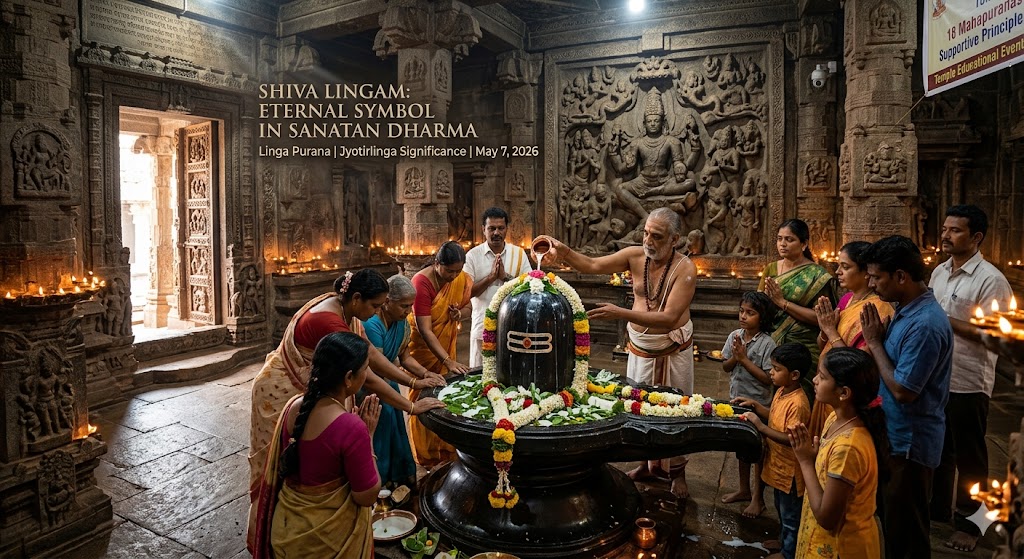
Shiva Lingam: The eternal symbol of spirituality
Symbolism of the Shiva Lingam in Sanatan Dharma
The word "Linga" means "sign," "mark," or "symbol." In Sanatan Dharma, the Shiva Lingam symbolizes the unmanifested divine principle. It represents Shiva’s formless (Nirguna) aspect while allowing devotees to connect through a tangible form (Saguna).
Key symbolic elements include:
Union of Energies: The Lingam and its base (often the Yoni) signify the merging of Purusha (consciousness) and Prakriti (primordial matter), embodying creation, preservation, and dissolution.
Infinite Pillar: As the Jyotirlinga, it denotes the axis of the universe — the cosmic support that sustains all existence.
Beyond Attributes: The smooth, cylindrical form points to Shiva’s transcendence of shape, color, taste, smell, and other qualities, as described in the Linga Purana.
Different types of Lingas exist — Daiva (installed by gods), Arsha (by sages), and Purana Lingas — each carrying unique spiritual potency. Worship of the Shiva Lingam is believed to bestow peace, prosperity, removal of obstacles, and ultimately liberation (Moksha).
Shiva: The Eternal God Without Birth or Death
Central to the understanding of the Shiva Lingam is the eternal nature of Lord Shiva. In Sanatan Dharma, Shiva is Svayambhu — self-manifested, without origin or end. He is Nitya (eternal), beyond the cycles of birth and death that govern ordinary beings.
The Puranas affirm that while Shiva assumes forms for cosmic functions — as destroyer in the Trimurti — his essential reality remains unchanging. The Lingodbhava story reinforces this: the infinite fire pillar has no beginning or end, mirroring Shiva’s timeless existence. He neither takes birth like ordinary souls nor experiences death; He is the witness and lord of all cycles.
This eternal aspect makes the Shiva Lingam a perfect focal point for meditation. Devotees contemplate the formless through the form, progressing toward realization of their own Atman as one with the supreme Brahman.
Major Supportive Principles and Worship in Sanatan Dharma
The significance of the Shiva Lingam receives strong support across scriptures and practices:
Scriptural Authority: Dedicated treatment in the Linga Purana and references in all major Mahapuranas establish its authenticity.
Philosophical Depth: It aligns with Advaita Vedanta, representing non-dual reality.
Ritual Efficacy: Abhishekam (pouring of sacred liquids), Bilva leaves, and Rudraksha enhance spiritual benefits.
Universal Accessibility: Suitable for all devotees regardless of caste or background, promoting equality in devotion.
Cosmic Harmony: Worship balances energies, aiding personal and universal well-being.
Temples housing ancient Jyotirlingas, such as those at Kedarnath, Varanasi, and Rameshwaram, serve as living testimonies to this tradition. The Linga’s presence in nearly every Shiva temple underscores its centrality in Sanatan Dharma.
Spiritual Benefits and Contemporary Relevance
Worship of the Shiva Lingam fosters concentration, inner peace, and detachment from material illusions. It is said to purify the mind, heal afflictions, and grant boons aligned with dharma. In today’s world, this ancient symbol offers a pathway to mindfulness and spiritual grounding amid modern complexities.
Scholars and practitioners continue to study these texts, finding relevance in the Lingam’s message of unity and transcendence.
Conclusion
The Shiva Lingam, illuminated beautifully in the Linga Purana and supported across the 18 Mahapuranas, stands as a timeless beacon of Sanatan Dharma. Through the Lingodbhava manifestation, it reveals Lord Shiva’s eternal, birthless, and deathless nature — the supreme consciousness that pervades all yet remains untouched.
As devotees offer their prayers to this sacred symbol, they connect with the infinite divine. The Shiva Lingam teaches humility before the unknowable, reverence for the formless, and faith in the eternal. In embracing its profound mystery, one moves closer to realizing the ultimate truth: Shiva is everything, and everything is in Shiva.
May the blessings of Mahadev guide all seekers toward peace, wisdom, and liberation.