Bhavishya Purana: Ancient Prophecies of the Future
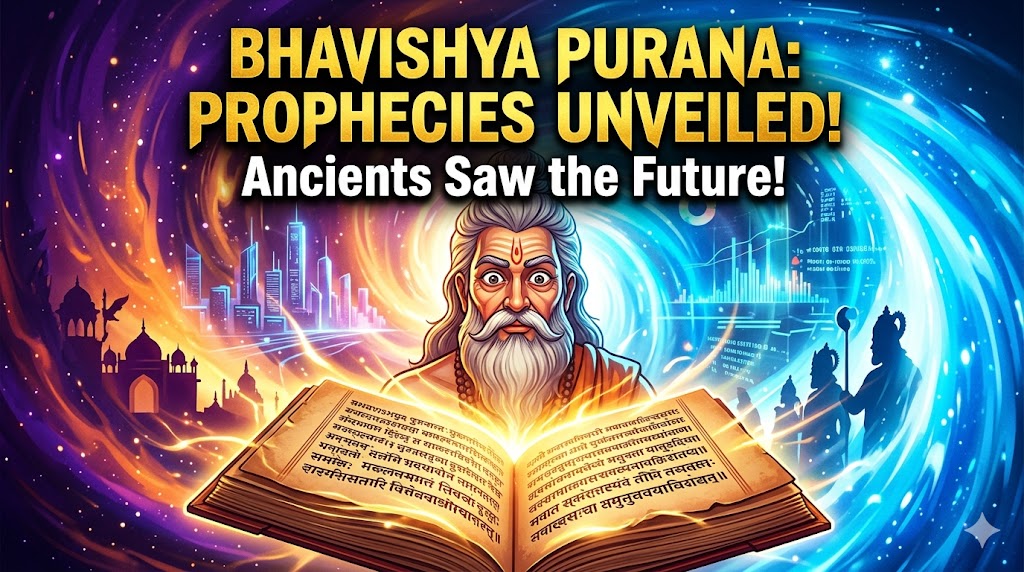
The Bhavishya Purana stands as one of the most intriguing texts in the vast corpus of Hindu scriptures. Its very name, derived from Sanskrit where "Bhavishya" means future and "Purana" refers to ancient lore or history, suggests a unique blend of recorded knowledge and visionary foresight. Unlike many other Puranas that primarily recount mythological tales of gods, sages, and cosmic creation from the distant past, this scripture extends its gaze forward, offering what it presents as prophecies about events yet to unfold.
Written in classical Sanskrit and attributed traditionally to the sage Vyasa, the compiler of the Vedas, the Bhavishya Purana has captivated scholars, devotees, and seekers for centuries. It is counted among the eighteen major Mahapuranas. While its core sections delve into dharma, rituals, and cosmology, the prophetic portions have drawn particular attention for their references to historical figures, foreign invasions, the rise of new religions, and the moral trajectory of humanity in the age of Kali Yuga.
In this comprehensive exploration, we will examine the text's structure, its historical and cultural context, notable prophecies, scholarly debates surrounding its authenticity, and its relevance in contemporary times. Whether approached as sacred revelation or a fascinating historical document that evolved over time, the Bhavishya Purana offers profound insights into how ancient Indian wisdom envisioned the unfolding of human destiny.
Historical Background and Origins
The origins of the Bhavishya Purana trace back to ancient oral traditions, with its written compilation often placed between the 8th and 10th centuries CE for its earlier layers, though later interpolations extend much further. Traditional accounts hold that Vyasa composed it thousands of years ago using his divine vision, allowing him to document events across time. Modern scholarship, however, views it as a living text that grew through successive additions by different authors across regions and eras.
This dynamic nature is not uncommon in Puranic literature. Texts were often updated to incorporate contemporary events, making them relevant to successive generations. The Bhavishya Purana, in particular, reflects interactions with various cultures, including references to mlecchas (foreigners or those outside Vedic society), which encompass Islamic rulers, European colonizers, and other influences.
Surviving manuscripts vary in content and length, typically comprising around 12,000 to 14,500 verses. Its evolution mirrors India's rich history of cultural exchanges, conquests, and spiritual movements. This adaptability has led to both reverence among traditionalists and skepticism from historians who see later additions as reflections of the periods in which they were composed rather than pure foresight.
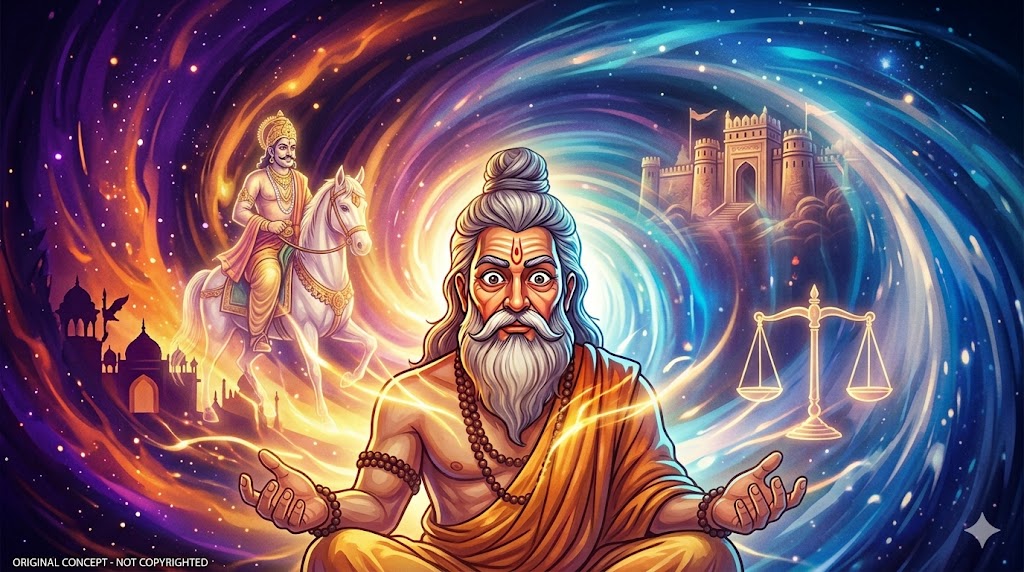
The Vision of the Sage
Structure of the Bhavishya Purana
The Bhavishya Purana is organized into four main sections, known as Parvas, each addressing distinct themes:
1. Brahma Parva: This is considered the oldest and most stable portion, with over 200 chapters. It focuses on foundational topics such as the worship of Surya (the Sun god), creation myths, duties of different varnas (social classes), the qualities of women, forms of marriage, and important mantras like the Gayatri. It draws from and influences other Dharmashastra texts, providing practical guidance on righteous living.
2. Madhyama Parva: Comprising around 62 chapters, this section leans toward Tantric practices. It explores advanced worship, rituals, and the esoteric nature of the divine. It includes descriptions of cosmic geography and astrological insights, serving as a bridge between devotional and mystical aspects of spirituality.
3. Pratisarga Parva: Often regarded as the heart of its prophetic content, this section spans about 100 chapters divided into four Khandas (sub-sections). It deals with genealogies of kings and sages, cyclical histories of the yugas, and detailed prophecies. The first two Khandas cover ancient times, while the latter ones extend into medieval and modern eras, discussing foreign invasions, the rise of new faiths, and the challenges of Kali Yuga. This is where much of the debate on authenticity arises due to specific historical references.
4. Uttara Parva (or Bhavishyottara): This concluding section elaborates on sins and virtues, additional rituals, and further prophecies. It reinforces moral teachings and outlines paths for spiritual redemption amid declining dharma.
This well-defined structure allows the text to function both as a repository of traditional knowledge and a guide for navigating future uncertainties.
Key Prophecies and Future Visions
The prophetic elements in the Bhavishya Purana are primarily found in the Pratisarga Parva. They paint a picture of moral, social, and political transformations, often framed within the decline and eventual renewal associated with Kali Yuga.
One notable passage describes the appearance of a figure among the mlecchas named Mahamad (interpreted by some as a reference to Prophet Muhammad). The text portrays him as a teacher who promotes a path suited to the people of his time, emphasizing certain ethical principles.
Another famous excerpt involves King Shalivahana encountering Isha Putra, described as the son of a virgin, who speaks of preaching to the degraded or irreligious. Scholars have linked this to Jesus Christ, though debates persist about whether it is an original composition or a later addition influenced by encounters with Christianity.
The text also alludes to various rulers and invaders, including details that align with Mughal emperors, the arrival of British rule (with mentions resembling Queen Victoria as Viktavati), and broader geopolitical shifts. Prophecies regarding the Kali Yuga often highlight increasing materialism, weakening of traditional values, environmental challenges, conflicts, and the rise of new languages and technologies.
In some interpretations, it foresees periods of great turmoil followed by spiritual revival, the eventual appearance of Kalki Avatar to restore dharma, and a transition toward a new golden age. References to wars, diseases, changes in social structures, and the survival of humanity through catastrophes appear in certain readings, though these are subject to varied translations and contexts.
These prophecies are not always presented as inevitable doom but as warnings and opportunities for righteous action. They encourage adherence to dharma even in challenging times.
Authenticity and Scholarly Perspectives
The Bhavishya Purana has sparked considerable academic discussion. Critics point to anachronisms, linguistic styles that suggest later composition, and specific references to events post-dating traditional authorship as evidence of interpolations. For instance, detailed accounts of British colonial presence or certain medieval figures indicate sections were added or revised over centuries.
Defenders argue that Puranas were never static documents but living traditions meant to be relevant. The ability to incorporate "future" events as they occurred reflects the visionary capacity attributed to sages like Vyasa. Some traditional scholars maintain that the core prophetic vision existed, with details filled in as time progressed.
Regardless of one's stance on its predictive accuracy, the text holds value as a window into how Indian society perceived and responded to historical changes, cultural encounters, and spiritual shifts. Its composite nature makes it a rich subject for comparative religion, history, and textual studies.
Relevance in the Modern World
In today's fast-paced, technology-driven era, the Bhavishya Purana continues to resonate. Its warnings about moral decay, environmental imbalance, and social fragmentation find echoes in current global challenges. Many readers turn to it for guidance on navigating uncertainty, seeking parallels between ancient descriptions and contemporary issues like pandemics, conflicts, and spiritual awakenings.
The emphasis on Surya worship, ethical conduct, and inner strength offers timeless tools for personal resilience. In an age of information overload, its call to discernment and dharma provides a grounded perspective. Devotees and spiritual practitioners often study its teachings alongside other scriptures to deepen their understanding of cyclical time and human potential.

Kali Yuga and Modernity (Key Prophecies)
Conclusion
The Bhavishya Purana remains a remarkable testament to the depth of ancient Indian thought. Through its blend of mythology, ritual, history, and prophecy, it invites us to reflect on the patterns of time, the consequences of our actions, and the enduring power of spiritual wisdom. While interpretations of its future visions may vary, its core message of upholding truth, compassion, and righteousness transcends any single era.
As humanity faces its own bhavishya – its future – the insights from this ancient text encourage mindful living and hope in renewal. Whether one approaches it with faith in its divine origins or curiosity about its historical layers, the Bhavishya Purana continues to inspire, challenge, and illuminate the path ahead.
By studying and reflecting on such scriptures, we connect with a profound tradition that views time not as linear and isolated but as part of a grand cosmic cycle, where every age carries lessons for the next.