Lord Nataraja: Shiva’s Cosmic Dance Over Ignorance
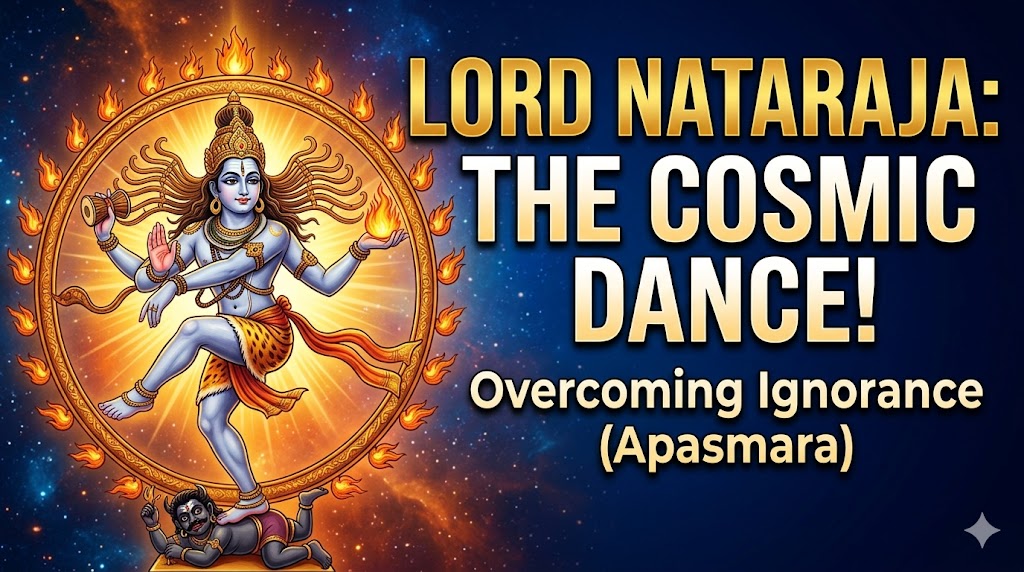
In the rich tapestry of Hindu iconography and philosophy, few images are as captivating and profound as that of Lord Nataraja. This form of Lord Shiva, the cosmic dancer, encapsulates the eternal rhythms of creation, preservation, and destruction. With one foot gracefully raised and the other firmly planted on a diminutive figure, Nataraja swirls within a ring of flames, embodying the dynamic energy that sustains the universe.
The legend behind this iconic representation reveals deep truths about human nature, spiritual ignorance, and divine grace. It tells of arrogant sages consumed by jealousy and greed for power, a demon born from sacred fire fueled by delusion, and Lord Shiva’s compassionate yet powerful response. Far from mere mythology, the story of Nataraja offers timeless wisdom on overcoming ignorance while celebrating the supreme beauty and divinity of Shiva. This article delves into the origins, symbolism, and spiritual significance of Lord Nataraja, inviting readers to appreciate this majestic form that continues to inspire millions.
The worship of Shiva in his dancing form has ancient roots, flourishing particularly in South India during the Chola dynasty (9th–13th centuries CE). Bronze sculptures of Nataraja from this period are masterpieces of art and devotion, now housed in museums worldwide. Texts like the Koyil Puranam and various Shaiva scriptures narrate the events leading to this divine manifestation, often set in the sacred Daruvana (Deodar forest).
Lord Shiva, as the destroyer in the Hindu trinity, is also the supreme ascetic and householder, the yogi and the dancer. His Tandava dance represents the cosmic process itself — the ceaseless flow of time, energy, and consciousness. In the Nataraja form, Shiva is not merely performing; he is the dance, the dancer, and the stage all in one. This portrayal highlights his role as the source of all movement and stillness in the universe.
The Legend of the Arrogant Sages and the Birth of Apasmara
The story begins in the Daruvana forest, where a group of rishis (sages) lived and performed intense Vedic rituals. Over time, these sages grew arrogant. Their mastery over mantras and fire sacrifices filled them with pride, leading them to believe their powers surpassed even the gods. Consumed by jealousy, delusion, and greed for greater control, they sought to challenge divine authority.
When Lord Shiva appeared in the forest in the form of a handsome, naked mendicant (Bhikshatana), accompanied by Vishnu as the enchanting Mohini, the sages’ wives were captivated by Shiva’s divine beauty. The sages themselves became furious, their jealousy igniting like wildfire. In their delusion and rage, they performed a special sacrificial ritual, invoking powers from the sacred Agni (fire).
From this fire emerged several formidable beings intended to destroy the intruder: first a fierce tiger, then a serpent, followed by other creatures. Finally, a grotesque dwarf demon arose — Apasmara (also known as Muyalaka or Apasmara Purusha). This demon embodied the very vices that had overtaken the sages: ignorance, forgetfulness, ego, confusion, and spiritual blindness. Apasmara personified the loss of true knowledge and the grip of materialism and pride.
Shiva’s Victorious Cosmic Dance
Lord Shiva, undeterred by these manifestations, effortlessly subdued each one. He wore the tiger’s skin as a garment, turned the serpent into an ornament around his neck, and continued his graceful presence. When Apasmara charged at him with ferocious intent, Shiva began his divine Ananda Tandava — the Dance of Bliss.
In this majestic performance, Shiva lifted his left leg in a rhythmic pose while pressing down with his right foot upon the demon. With four arms extended, he held the damaru (drum) symbolizing creation, the Agni (fire) representing destruction, and gestures of fearlessness and blessing. His matted locks flowed with the Ganges, a crescent moon, and serpents, while a ring of flames encircled him, denoting the cosmic cycle.
Crucially, Shiva did not completely destroy Apasmara. Instead, he kept the demon subdued eternally under his foot. By crushing but not annihilating ignorance, Shiva teaches that complete eradication of delusion might render knowledge meaningless. Ignorance serves as a contrast that makes the pursuit of wisdom valuable. Through his dance, Shiva maintains balance — suppressing ego and forgetfulness while allowing humanity the opportunity to strive for enlightenment.
This event is said to have occurred at Chidambaram, the sacred center revered as the heart of the universe, where the Nataraja temple stands today as a testament to this cosmic victory.
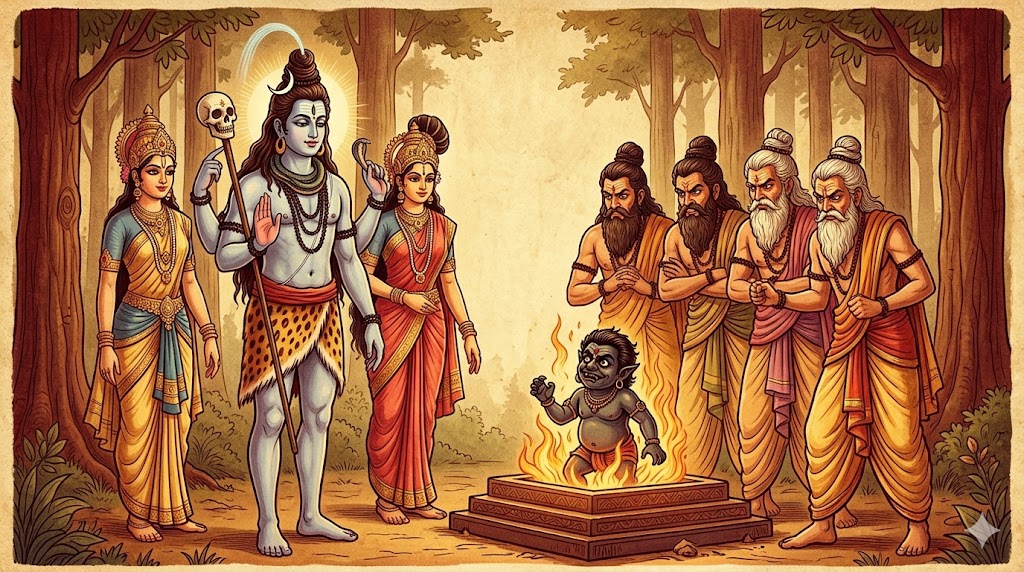
A traditional illustrative scene set in the Daruvana forest, depicting the moment the grotesque dwarf demon Apasmara is born from the sages’ fire sacrifice, emerging to challenge Lord Shiva (Bhikshatana) and Vishnu (Mohini).
Symbolism of the Nataraja Form
Every element in the Nataraja iconography carries profound meaning:
The Raised Leg: Represents liberation (moksha) and the release from the cycle of birth and death. It invites devotees to rise above worldly attachments.
The Foot on Apasmara: Symbolizes the triumph of knowledge over ignorance. The demon, with a child-like body and demonic face, reflects immaturity of the ego that forgets one’s true divine nature.
The Ring of Fire: Illustrates the cyclical nature of time — creation, sustenance, and dissolution — all sustained by Shiva’s energy.
The Drum (Damaru): The sound of creation, the primal rhythm from which the universe emerges.
The Flame: Destruction and transformation, burning away the old to make way for the new.
The Serene Face: Amidst the dynamic movement, Shiva’s expression remains calm and blissful, teaching equanimity in the midst of change.
This form beautifully integrates philosophy, art, and spirituality, making Lord Nataraja one of the most exported symbols of Indian culture.
The Divine Beauty and Grace of Lord Shiva
One often overlooked aspect is the extraordinary beauty of Shiva as Nataraja. Described as Sundara (beautiful), his form radiates an ethereal charm that transcends physical appearance. His well-proportioned body, flowing hair adorned with natural elements, and the gentle smile convey not austerity alone but harmonious perfection.
Even in the fierce Tandava, Shiva’s divinity shines through as compassionate and alluring. The sages’ wives were drawn to him not merely by illusion but by the magnetic pull of true spiritual beauty. This reminds us that divinity encompasses both terrifying power and enchanting grace. Lord Shiva as Nataraja is the ultimate artist, whose dance is both destructive and creative, fierce and tender.
In temples and homes, the Nataraja murti evokes awe and devotion, inspiring dancers, artists, and seekers alike. His beauty lies in the perfect balance of opposites — stillness and motion, destruction and creation, ignorance subdued and wisdom revealed.
Philosophical and Spiritual Significance
The legend of Nataraja extends beyond a single event to a universal truth. Apasmara represents the avidya (ignorance) that clouds human consciousness, leading to jealousy, greed, and delusion. Shiva’s dance teaches that through devotion, knowledge, and graceful action, one can subdue these inner demons without eliminating the very challenges that foster growth.
In modern times, this symbolism resonates deeply. In an age of information overload, distractions, and ego-driven pursuits, Nataraja reminds us to stay centered, to dance through life’s chaos with awareness, and to keep ignorance in check. The cosmic dance also aligns with scientific concepts of energy, cycles, and constant transformation, as noted by physicists who see parallels in quantum mechanics and cosmology.
Devotees meditate on Nataraja to attain inner harmony, overcome personal limitations, and experience the bliss of union with the divine.
Cultural Impact and Enduring Legacy
From ancient Chola bronzes to contemporary art, literature, and dance forms like Bharatanatyam, the Nataraja motif endures as a pinnacle of Indian artistic expression. The statue at CERN in Switzerland symbolizes the interplay between science and spirituality. Festivals, hymns, and temple rituals continue to celebrate this form, keeping the legend alive across generations.
By reflecting on this story, we honor not only Lord Shiva’s power but also the deeper message of humility, balance, and the eternal quest for truth.
Conclusion
Lord Nataraja stands as a magnificent embodiment of Shiva’s multifaceted divinity — the cosmic dancer who tames the demon of ignorance born from delusion and jealousy. Through his eternal dance upon Apasmara, Shiva neither fully destroys nor ignores the forces of forgetfulness but masterfully subdues them, offering humanity a path to wisdom and liberation.
His divine beauty, serene amidst dynamic motion, inspires us to embrace life’s rhythms with grace and awareness. In contemplating Nataraja, we connect with the profound truth that the universe itself is a divine dance, and within each of us resides the potential to overcome inner darkness through devotion and knowledge.
May the blessings of Lord Nataraja guide us toward greater harmony, dispelling ignorance and filling our lives with the bliss of spiritual awakening. In his form, we find not only the story of a god but a mirror to our own journey — one step at a time, dancing upon the shadows toward light.