Seven Chiranjeevis: Eternal Pillars of Sanatan Dharma
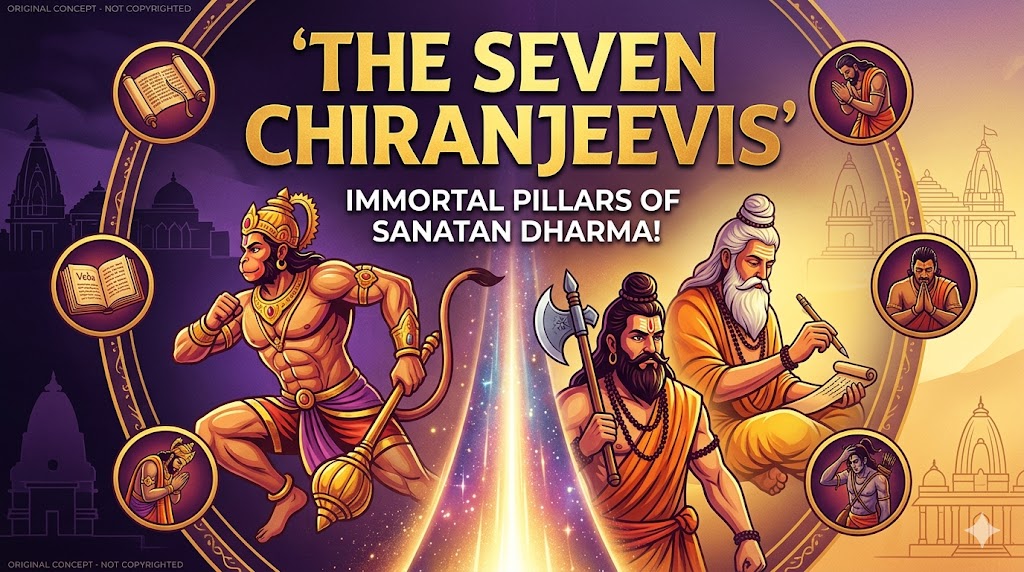
In the timeless wisdom of Sanatan Dharma, the concept of immortality is deeply intertwined with the preservation of dharma across cosmic cycles. The seven Chiranjeevis — eternal souls blessed to remain on Earth until the arrival of Lord Kalki at the end of Kali Yuga — stand as living testaments to the continuity of righteousness, devotion, knowledge, and justice. These immortal figures are not distant mythological characters but active witnesses and guardians of cosmic order, their lives intricately woven into the grand narrative of Hindu epics.
Far from existing in isolation, the Chiranjeevis share profound interconnections across different yugas, forming a divine network that links the Ramayana and Mahabharata eras. Their collective presence reassures devotees that even in the darkest age, dharma is never entirely abandoned. This article offers a comprehensive exploration of the seven Chiranjeevis, their individual divine journeys, the deep interconnections that bind them, and the exquisite manner in which Sanatan Dharma depicts their eternal roles.
The term “Chiranjeevi” combines “Chiram” (long-lasting) and “Jeevi” (living being), signifying those granted extended lifespans for divine purposes. Unlike gods who transcend worldly existence, these immortals remain embodied on Earth, observing, guiding, and occasionally intervening in human affairs.
Their immortality serves a higher cosmic function: to maintain the thread of dharma through time. A traditional Sanskrit shloka identifies them as: Ashwatthama, Bali (Mahabali), Vyasa, Hanuman, Vibhishana, Kripacharya, and Parashurama. Each embodies specific virtues while sharing subtle connections that unify the spiritual heritage of Sanatan Dharma.
The Seven Chiranjeevis: Lives, Virtues, and Interwoven Destinies
1. Ashwatthama
Ashwatthama, son of Guru Dronacharya, emerges as one of the most complex Chiranjeevis. A brilliant warrior trained alongside the Pandavas and Kauravas, his life took a tragic turn during the Mahabharata war. In a vengeful act after Drona’s death, he slaughtered the Pandavas’ sons in their sleep, leading to a curse from Krishna: immortality accompanied by eternal physical suffering and the loss of his divine forehead gem.
Ashwatthama’s story connects deeply with Kripacharya and Parashurama. As a student in the same gurukul tradition upheld by Kripa, and having received training influenced by Parashurama’s legacy of warrior-sages, his path reflects the consequences of misdirected martial prowess. His eternal wandering serves as a living cautionary tale, yet his survival ensures that even the gravest karmic burdens persist as reminders until the yuga’s end.
2. Mahabali (Bali)
King Mahabali, the devout Asura monarch and grandson of Prahlada, exemplifies generosity and humility. His legendary encounter with Lord Vishnu’s Vamana avatar resulted in his banishment to Patala, yet Vishnu granted him immortality and the annual privilege to visit his subjects during Onam.
Mahabali’s devotion links him spiritually to Vibhishana, another righteous ruler who chose dharma over kinship. Both represent the triumph of virtue across divine-asura divides, showing that Sanatan Dharma values character above birth. His annual return also echoes Hanuman’s eternal service, reinforcing themes of devotional surrender.
3. Ved Vyasa (Krishna Dvaipayana Vyasa)
Vyasa, the legendary compiler of the Vedas, author of the Mahabharata, and arranger of the Puranas, serves as the intellectual pillar among the Chiranjeevis. Present during the Mahabharata events, he narrated the epic and guided many characters, including those connected to Ashwatthama, Kripa, and Parashurama.
His role as chronicler creates the strongest narrative bridge between all Chiranjeevis. Vyasa documented the Ramayana-era figures indirectly through Puranic traditions and directly witnessed Mahabharata events involving Ashwatthama, Kripa, and Parashurama. It is believed he continues composing and guiding spiritual knowledge, ensuring the teachings that sustain Hanuman’s devotion and Vibhishana’s righteousness remain alive.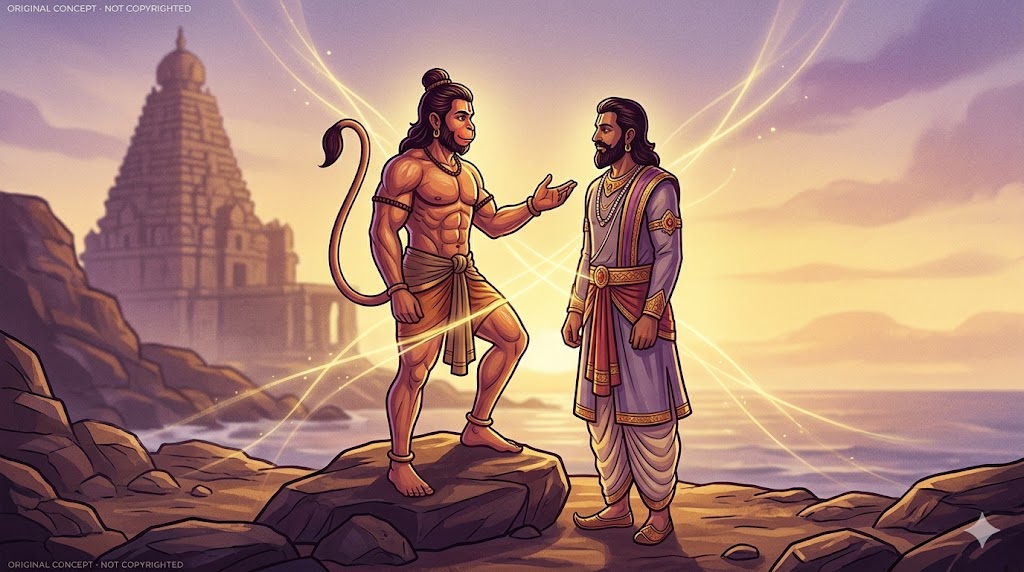
Interconnectedness of Devotion (Hanuman & Vibhishana)
4. Hanuman
Lord Hanuman, the embodiment of selfless bhakti, strength, and humility, is perhaps the most beloved Chiranjeevi. His monumental service to Lord Rama in the Ramayana — including his leap to Lanka and burning of the golden city — earned him immortality. He is said to remain on Earth, constantly chanting Rama’s name.
Hanuman’s presence deeply interconnects with Vibhishana, as both served Rama directly and received boons of longevity from him. His devotion also parallels Mahabali’s surrender to Vishnu, creating a thread of pure bhakti across avatars. In some traditions, Hanuman is said to have met later figures like Bhima in the Mahabharata, subtly linking Ramayana and Mahabharata timelines through the Chiranjeevis.
5. Vibhishana
Vibhishana, the noble brother of Ravana, chose righteousness over family loyalty by joining Lord Rama. For his integrity, Rama not only crowned him king of Lanka but granted him immortality. As an eternal guardian of Lanka, Vibhishana upholds dharma in governance.
His connection with Hanuman is direct and brotherly through their shared service to Rama. Vibhishana’s ethical stance also resonates with Mahabali’s integrity and provides contrast to Ashwatthama’s moral lapse, highlighting diverse responses to dharma’s call. Through Rama’s blessings, he forms a crucial link in the chain of Chiranjeevis who received direct boons from Vishnu’s avatars.
6. Kripacharya (Kripa)
Kripacharya, the compassionate guru of the Kuru princes, survived the Mahabharata war and was blessed with immortality. Born alongside his sister Kripi, he represented ethical warfare and the guru-shishya tradition. He taught both Pandavas and Kauravas, maintaining neutrality rooted in dharma.
Kripa’s life intersects closely with Ashwatthama (as fellow warriors and survivors) and Parashurama (through the lineage of martial knowledge). Along with Vyasa, he ensures the continuity of Vedic martial and spiritual education. His gentle presence balances the fiercer aspects of Parashurama and Ashwatthama.
7. Parashurama
Parashurama, the sixth avatar of Vishnu, wielded his axe to restore dharma by eliminating corrupt Kshatriya rulers. After his mission, he was granted immortality and is believed to train future warriors, including reportedly teaching Karna and influencing Bhishma. He awaits the arrival of Kalki.
Parashurama forms a vital bridge: as Vishnu’s avatar, he connects directly to other avatars’ blessings given to Hanuman, Vibhishana, and Mahabali. He trained warriors who fought in the Mahabharata alongside Ashwatthama and Kripa, creating a living martial tradition. His presence ensures that the knowledge of righteous warfare and cosmic balance persists.
Deep Interconnections Among the Chiranjeevis
The seven Chiranjeevis form a beautifully interconnected divine ecosystem rather than isolated immortals.
Narrative Bridges: Vyasa’s documentation preserves stories of all others. The Ramayana Chiranjeevis (Hanuman and Vibhishana) connect through direct service to Rama (Vishnu’s avatar), while the Mahabharata group (Ashwatthama, Kripa, Vyasa, Parashurama) shares the same historical epoch. Parashurama acts as a chronological and spiritual link, appearing in both eras.
Thematic Unity: Devotion binds Hanuman and Mahabali. Righteous governance connects Vibhishana and Mahabali. Martial dharma and its consequences link Parashurama, Kripa, and Ashwatthama. Knowledge preservation centers on Vyasa, sustaining all.
Karmic and Boonic Threads: Many received boons from Vishnu’s avatars — Parashurama himself being one. Rama’s blessings to Hanuman and Vibhishana parallel Vishnu’s grace to Mahabali. This creates a unified theme of divine grace sustaining dharma.
Cosmic Purpose: Collectively, they preserve different pillars of Sanatan Dharma: knowledge (Vyasa), devotion (Hanuman), governance (Vibhishana & Mahabali), martial ethics (Parashurama & Kripa), and karmic consequence (Ashwatthama). Together, they ensure no aspect of dharma is lost until Kalki’s arrival.
The Beautiful Depiction of Chiranjeevis in Sanatan Dharma
Hinduism and Sanatan Dharma portray the Chiranjeevis with extraordinary artistic and symbolic beauty. Temple murals, devotional poetry, and festival traditions bring them to life as radiant, timeless figures. Hanuman’s dynamic form inspires strength and humility, while Parashurama’s fierce yet composed stance evokes awe. These depictions are not decorative but serve as meditative tools, allowing devotees to internalize their virtues.
Through stories, bhajans, and rituals, Sanatan Dharma transforms these immortals into accessible spiritual companions, making the abstract concept of eternal dharma emotionally resonant and practically inspiring.
Enduring Relevance in the Modern World
In contemporary times, the Chiranjeevis offer powerful guidance. Their interconnected lives teach that individual actions ripple across time and influence collective dharma. Their eternal watch provides hope that righteousness persists even in challenging eras.
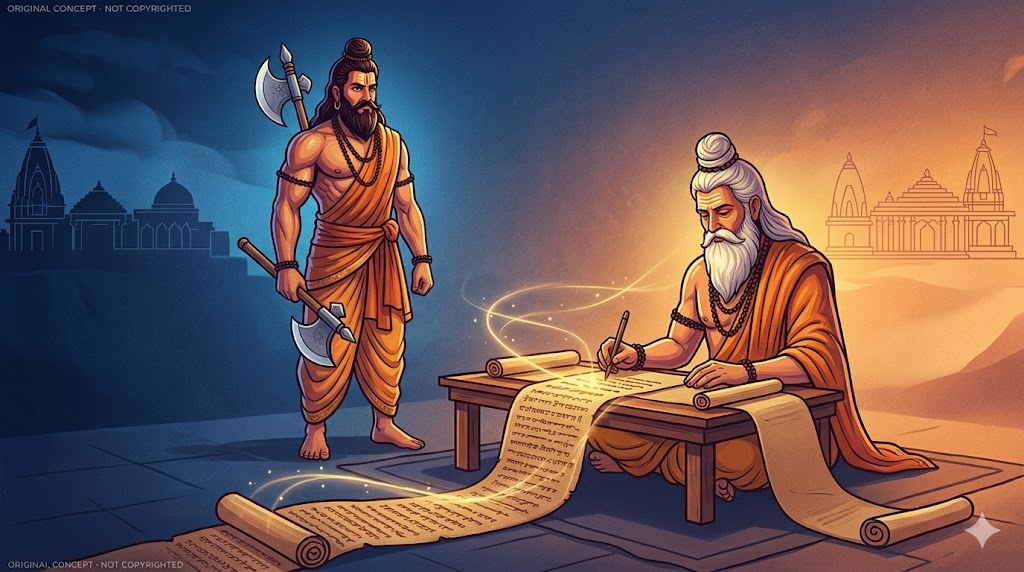
Bridges of Yugas (Parashurama & Vyasa)
Conclusion
The seven Chiranjeevis of Sanatan Dharma represent one of Hinduism’s most profound and beautiful concepts — living bridges of immortality that uphold eternal truths across yugas. Their deeply interconnected destinies, spanning Ramayana and Mahabharata, create a seamless spiritual continuum that enriches the entire framework of Sanatan Dharma.
From Hanuman’s pure devotion to Ashwatthama’s karmic journey, each figure contributes uniquely while supporting the whole. As witnesses and guardians, they embody hope, continuity, and the assurance that dharma ultimately prevails. Their presence reminds every seeker that the principles of righteousness, knowledge, and devotion are timeless.
May the blessings of these immortal beings inspire us to live with greater awareness, contributing our own thread to the eternal fabric of Sanatan Dharma.