Markandeya Purana: Devi Mahatmyam and Durga Saptashati
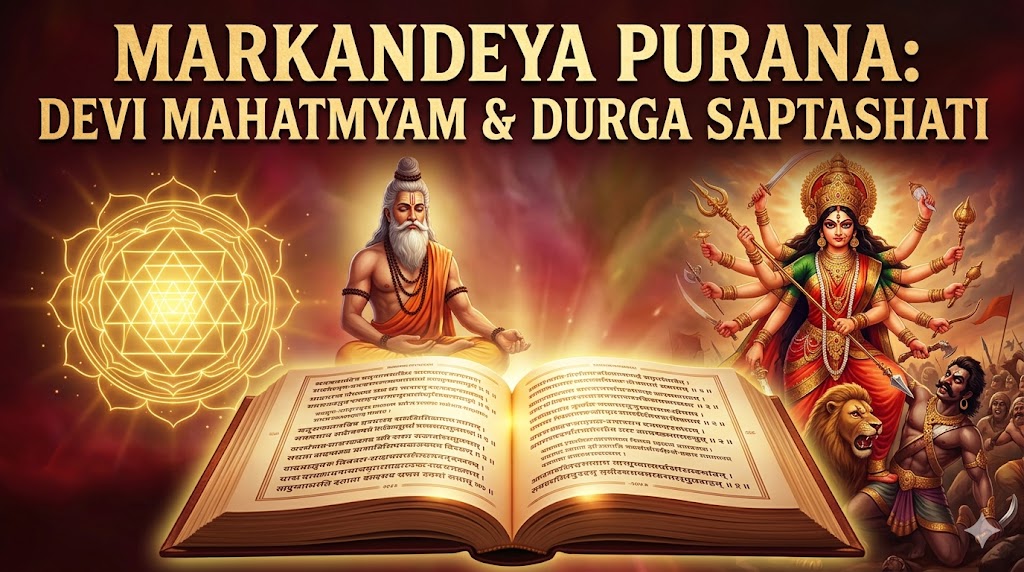
The Markandeya Purana occupies a distinguished place among the eighteen major Mahapuranas of Hinduism. While it encompasses diverse topics including cosmology, dharma, genealogies, and ethical teachings, it is most revered for containing the celebrated Devi Mahatmyam, also known as Durga Saptashati or Chandi Path. This section, spanning chapters 81 to 93, forms the devotional and philosophical core of the Purana and serves as a foundational text for the Shakta tradition.
Comprising approximately 700 verses, the Devi Mahatmyam narrates the glorious exploits of the Divine Mother in her various forms — Mahakali, Mahalakshmi, and Mahasaraswati — as she vanquishes powerful demons threatening the cosmic order. Its profound spiritual message, combined with poetic beauty and practical guidance for recitation, has made the Devi Saptashati Path an integral part of Hindu worship, especially during Navratri and other auspicious occasions.
This article provides a comprehensive exploration of the Markandeya Purana with special focus on the Devi Mahatmyam and the sacred practice of Devi Saptashati recitation. It examines the text’s historical context, structure, philosophical depth, ritual significance, and enduring relevance.
Historical Context and Composition of Markandeya Purana
The Markandeya Purana is considered one of the older Puranas, with estimates placing its origins around the 3rd to 5th century CE, though the Devi Mahatmyam section may have been integrated or composed slightly later. Attributed to the sage Markandeya, the text is narrated in a conversational style, often involving dialogues that convey deep wisdom.
Unlike some Puranas dominated by Vaishnava or Shaiva perspectives, the Markandeya Purana highlights the supremacy of the Goddess as the ultimate reality — Brahman in feminine form. It balances mythological narratives with teachings on dharma, karma, and liberation, making it accessible to both scholars and devotees. The Purana contains roughly 137 chapters and about 9,000 verses in total, with the Devi Mahatmyam standing out as its most influential portion.
Overall Structure of the Markandeya Purana
The Markandeya Purana covers a wide array of subjects. Early sections discuss creation myths, the cycles of time, genealogies of sages and kings, descriptions of geography (particularly western and central India), and ethical guidelines for individuals and rulers. It includes summaries of major epics and discussions on topics such as yoga, salvation, and the afterlife.
The text’s narrative framework often features sage Markandeya imparting knowledge to disciples or seekers. This instructional tone culminates powerfully in the Devi Mahatmyam, where cosmic stories illustrate the Goddess’s role in maintaining universal balance.
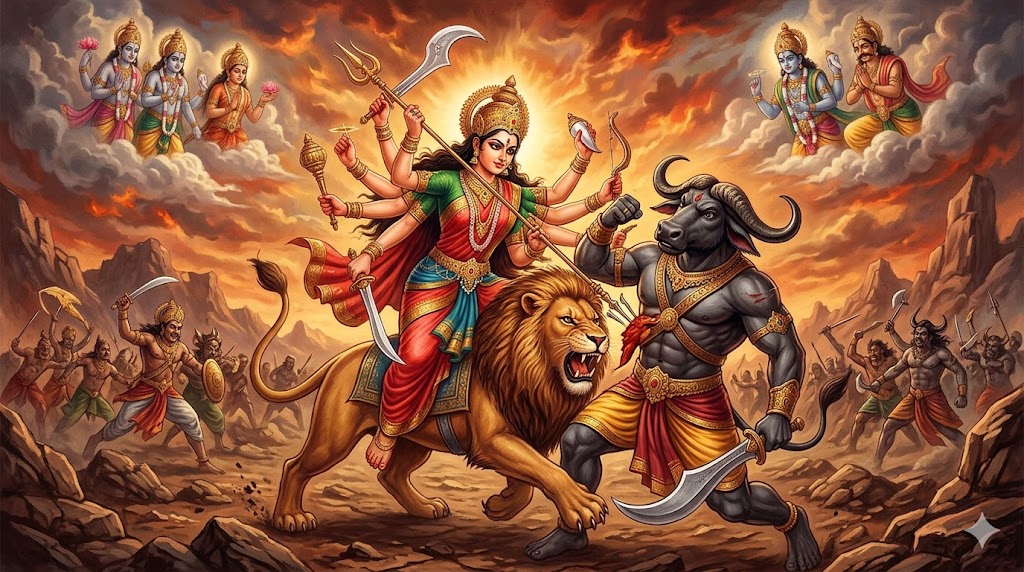
The Cosmic Battle of Madhyama Charitra
The Devi Mahatmyam: Core of the Markandeya Purana
The Devi Mahatmyam, embedded in chapters 81–93 of the Markandeya Purana, is the oldest known systematic treatise exalting the Goddess as the Supreme Power. Also called Durga Saptashati because of its 700 verses, it is recited as Chandi Path in many regions.
The text is framed within a story of two dispossessed individuals — King Suratha and merchant Samadhi — who approach sage Medha for guidance. The sage narrates the Devi’s glories to help them overcome attachment and ignorance, leading to spiritual awakening. This framing device makes the Devi Mahatmyam both a mythological epic and a practical manual for self-realization.
Three Charitras: Structure of Durga Saptashati
The Devi Mahatmyam is divided into three main episodes known as Charitras:
Prathama Charitra (Chapters 1): Focuses on Mahakali and the slaying of Madhu and Kaitabha. It describes how the Goddess, as Yoga Nidra, aids Vishnu and ultimately destroys these primordial demons born of cosmic delusion.
Madhyama Charitra (Chapters 2–4): Centers on Mahalakshmi’s battle against Mahishasura, the buffalo demon. This section glorifies Durga’s emergence from the combined energies of the gods and her triumphant victory, symbolizing the triumph of good over tamasic forces.
Uttara Charitra (Chapters 5–13): The longest portion, dedicated to Mahasaraswati, details battles against Shumbha, Nishumbha, and their generals including Chanda, Munda, and Raktabija. It culminates in the complete restoration of cosmic order.
Each Charitra begins with a dhyana (meditative visualization) of the Goddess in her respective form, creating a progressive spiritual journey from awakening to ultimate realization.
Key Narratives and Symbolic Significance
The stories in the Devi Mahatmyam are rich in allegory. Demons represent inner vices: Mahishasura symbolizes ego and inertia, Raktabija stands for desires that multiply uncontrollably, and others embody greed, ignorance, or arrogance. The Goddess’s weapons and forms illustrate different aspects of divine energy needed to overcome these obstacles.
Philosophically, the text affirms the Goddess as both transcendent and immanent — the source of all creation, preservation, and destruction. It integrates elements of Samkhya, Vedanta, and Tantra, presenting a holistic vision of Shakti as the dynamic power underlying the universe.
The Devi Saptashati Path: Recitation Methods and Rituals
The practice of reciting the Durga Saptashati, known as Chandi Path or Devi Saptashati Path, is a powerful sadhana in Shakta worship. It is typically preceded by auxiliary texts for complete efficacy:
Devi Kavacham (Armour of the Goddess) — for protection.
Argala Stotram — invocatory prayers seeking boons.
Devi Keelakam — to remove obstacles in recitation.
Recitation is often done during Navratri, with specific chapters assigned to each day. Daily or periodic reading follows strict purity guidelines, including sattvic diet, mental focus, and proper pronunciation. Many devotees perform it with offerings, lamps, and incense in front of a Durga idol or yantra.
Benefits of Devi Saptashati Recitation
The twelfth chapter (Phala Shruti) details the merits of recitation, promising protection from enemies, removal of obstacles, relief from planetary afflictions, prosperity, health, and spiritual growth. Devotees report enhanced courage, inner peace, and a tangible sense of divine presence.
Beyond material benefits, regular practice is believed to destroy negative tendencies, foster detachment, and lead toward self-realization, mirroring the transformation experienced by King Suratha and Samadhi in the text.
Ritual and Cultural Importance
The Devi Saptashati Path holds immense importance in temples and homes across India, particularly in Bengal, Odisha, and South India. It forms the basis for many Durga Puja rituals and inspires devotional music, dance, and artistic representations. Its verses are chanted for protection during challenging times and for celebrating the divine feminine.
Philosophical and Spiritual Depth
The Markandeya Purana through its Devi Mahatmyam presents the Goddess not merely as a warrior but as the ultimate reality. It teaches that true strength arises from surrender to divine will and recognition of the Shakti within. This message transcends sectarian boundaries, appealing to seekers across traditions.
Preservation, Translations, and Modern Relevance
Multiple Sanskrit manuscripts and commentaries exist, with translations in numerous Indian and foreign languages making the text accessible globally. In contemporary times, its emphasis on feminine divinity, empowerment, and ethical victory over adversity resonates strongly with modern audiences seeking balance and inner strength.
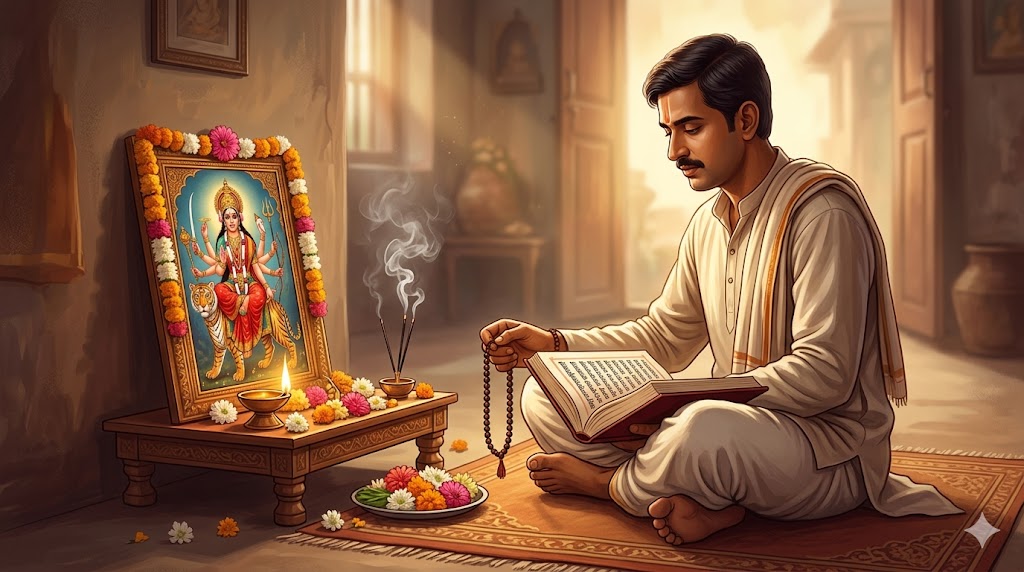
The Practice of Devi Saptashati Path
Conclusion
The Markandeya Purana, through the luminous jewel of the Devi Mahatmyam and Durga Saptashati, offers timeless wisdom on the power of the Divine Mother. Its 700 verses across thirteen chapters narrate cosmic battles that mirror our internal struggles, guiding devotees toward victory, peace, and liberation.
Whether studied for its mythological richness, recited for spiritual benefits, or contemplated for philosophical insights, the Devi Saptashati Path continues to inspire millions. In an age seeking harmony and strength, this ancient scripture from the Markandeya Purana remains a beacon of divine grace and enduring cultural heritage.