Agni Purana: Ancient Encyclopedia of Culture and Art.
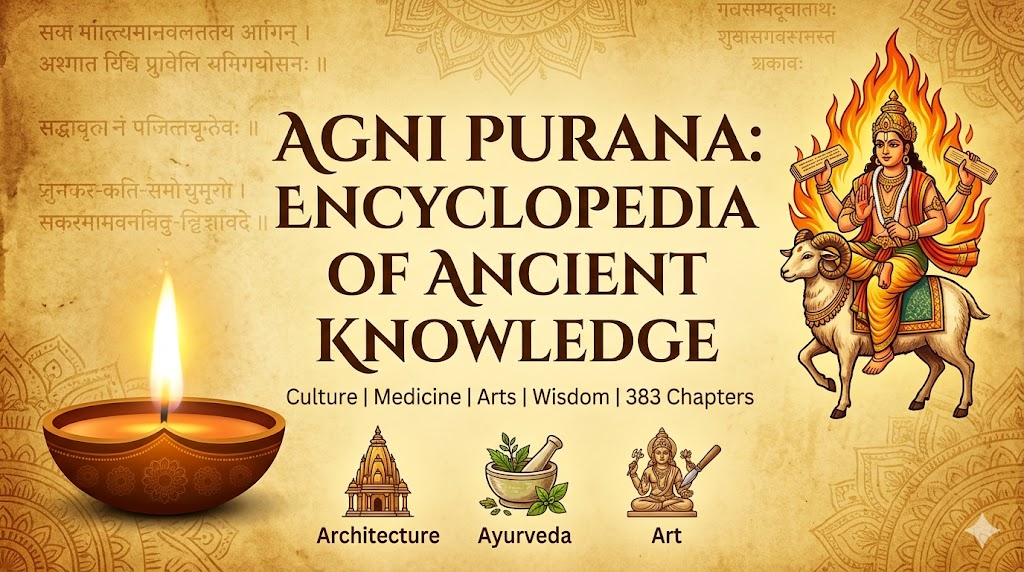
The Agni Purana stands as one of the most remarkable texts in the vast corpus of Hindu scriptures. Recognized as one of the eighteen Mahapuranas, it distinguishes itself through its encyclopedic scope, earning acclaim as a comprehensive repository of ancient Indian culture, knowledge, medicine, and art. Narrated by Agni, the fire god, to the sage Vashistha, this sacred work transcends simple mythological narratives to serve as a practical guide for life, governance, healing, creativity, and spiritual growth.
Comprising approximately 383 chapters and between 12,000 to 15,000 verses, the Agni Purana compiles wisdom from diverse fields. Scholars often describe it as a medieval-era encyclopedia that addresses "anything and everything" relevant to civilized society. Its contents reflect the holistic worldview of ancient India, where dharma, science, arts, and spirituality intertwine seamlessly.
This article delves deeply into the structure, historical context, and multifaceted contributions of the Agni Purana. We examine its treatment of cultural knowledge, medical sciences, artistic traditions, and other domains, highlighting why it continues to inspire researchers, practitioners, and spiritual seekers today.
The Agni Purana emerged during the medieval period, with its core likely composed after the 7th century but before the 11th century, as evidenced by references from scholars like Al-Biruni. Various versions exist, reflecting the dynamic nature of Puranic literature, which evolved through oral transmission and regional adaptations.
Traditional accounts attribute its compilation to Vyasa, with the fire god Agni revealing its essence to Vashistha, who then transmitted it further. This narrative framework positions the text within the broader Puranic tradition while emphasizing its divine origin. Classified sometimes as a Tamasika Purana, it maintains an impartial approach across Vaishnava, Shaiva, and Shakta traditions.
Unlike many Puranas dominated by storytelling, the Agni Purana adopts a more systematic, instructional tone. Its final chapters even include a list of fifty key topics covered, underscoring its self-conscious role as a compendium of knowledge.
Structure and Overall Framework
The Agni Purana organizes its extensive material into 382 or 383 adhyayas (chapters). Early sections focus on cosmology, mythology, and avatars of Vishnu, including detailed summaries of the Ramayana and Mahabharata. Subsequent portions branch into practical domains such as rituals, governance, sciences, and arts.
This progression mirrors the ancient Indian approach to knowledge: beginning with the cosmic and divine before addressing human affairs and specialized disciplines. The text flows naturally from spiritual foundations to applied wisdom, making it accessible yet profound.

The Transfer of Medical Wisdom
Cultural Knowledge and Dharma in Agni Purana
At its heart, the Agni Purana serves as a profound repository of ancient Indian culture. It elaborates on dharma — the righteous way of living — across personal, social, and royal contexts. Topics include duties of individuals according to varna and ashrama, ethical governance, taxation theories, diplomacy, and justice systems.
Readers find guidance on education, family law, public projects, and community welfare. Descriptions of geography, particularly the region of Mithila (modern Bihar and surroundings), provide valuable cultural and historical insights, including rivers, forests, towns, and local customs.
The text also addresses everyday aspects of life — food and agriculture, trees and plants, water distribution, and environmental harmony. These elements reveal a civilization deeply attuned to sustainable living and cultural preservation.
Medical Knowledge and Ayurveda
One of the most celebrated aspects of the Agni Purana is its extensive coverage of medicine. Chapters 279-300 and others detail Ayurvedic principles, anatomy, physiology, diagnostics, and treatments. The text discusses herbs, formulations, surgical techniques, and holistic approaches to health.
It covers materia medica, pharmacy, and treatments for various ailments. Notably, it includes veterinary sciences, with sections on the care of elephants (gaja chikitsa) and horses (ashwa chikitsa), reflecting the importance of these animals in ancient society.
The integration of mantras and spiritual practices with physical remedies highlights the mind-body-spirit connection central to Ayurveda. This encyclopedic approach to medicine positions the Agni Purana as a valuable historical source for understanding ancient Indian healthcare systems and their evolution.
Arts, Architecture, and Iconography
The Agni Purana dedicates significant portions to the arts, establishing it as a key text for students of Indian aesthetics and craftsmanship. Sections on Vastu Shastra provide detailed guidelines for temple architecture, city planning, house construction, and fortification.
Iconography receives meticulous attention, with instructions on sculpting deities, proportions, materials, and consecration rituals. These guidelines ensured artistic creations aligned with spiritual principles, maintaining the sacredness of temples and images.
Chapters on poetics, metrics (chhandas), grammar, dramaturgy, music, and dance offer insights into literary and performing arts. Summaries of schools of thought on poetry, acting techniques, sentiments (rasas), and even lexicons demonstrate the text’s depth in creative disciplines.
Gemology, painting, and other fine arts further enrich its coverage, painting a vivid picture of a culturally vibrant society.
Martial Arts, Warfare, and Governance
Practical governance and defense form another pillar of the Agni Purana. It outlines army organization, weapon-making, martial arts (including 32 types), strategies for war, and theories on just causes for conflict.
Diplomacy, taxation, local laws, and royal duties receive balanced treatment. The text advises kings on ideal conduct, selection of advisors, and administration, blending ethical principles with pragmatic statecraft.
These sections reveal ancient India’s sophisticated understanding of power, security, and leadership.
Spiritual and Ritual Dimensions
Despite its encyclopedic breadth, the Agni Purana remains deeply spiritual. It describes rituals, mantras, worship of various deities (Vishnu, Shiva, Devi, Surya, Ganesha), temple practices, pilgrimages, and paths to liberation through yoga and knowledge.
Cosmology, creation myths, genealogies, and philosophical discussions on Brahman provide the metaphysical foundation. Summaries of Vedic knowledge, Upanishads, and the Gita integrate seamlessly with practical advice.
Relevance in the Modern World
In contemporary times, the Agni Purana offers more than historical curiosity. Its holistic vision resonates with current interests in sustainable living, integrative medicine, cultural heritage, and ethical governance. Researchers in Ayurveda, Vastu, performing arts, and Indology continue to draw from its pages.
The text’s emphasis on balance — between material progress and spiritual growth, individual rights and social harmony — holds valuable lessons for today’s global challenges.
Comparative Perspective with Other Puranas
While all Mahapuranas share certain features, the Agni Purana’s systematic and wide-ranging coverage sets it apart. Its secular elements, combined with religious instruction, create a unique manual for civilization. Scholars note its impartiality across sectarian lines, making it accessible to diverse traditions.
Preservation and Translations
Multiple manuscripts and printed editions exist, with English translations making its wisdom available to global audiences. Efforts by scholars and institutions ensure this ancient encyclopedia remains a living resource for future generations.
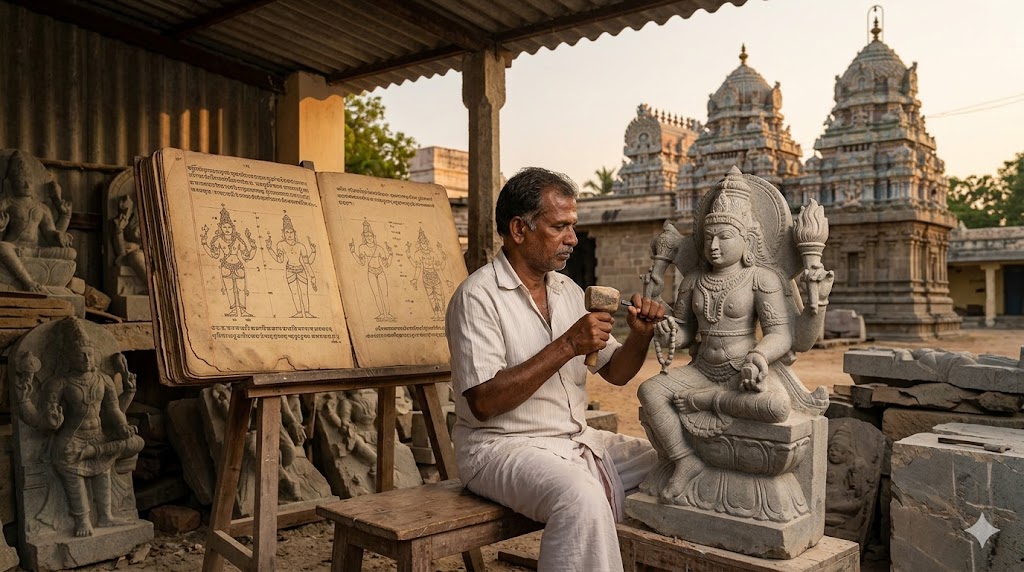
Art and Architecture According to Sacred Canon
Conclusion
The Agni Purana truly embodies the spirit of an ancient encyclopedia of culture, knowledge, medicine, and art. Its 383 chapters weave together mythology and medicine, governance and grammar, architecture and spirituality into a cohesive tapestry of Indian civilization. Far from being a relic, it continues to illuminate paths toward balanced, enlightened living.
As we navigate the complexities of the modern age, the timeless insights of the Agni Purana remind us of the enduring value of holistic wisdom. Whether exploring its medical treatises, artistic guidelines, or cultural teachings, readers discover not only the richness of the past but also practical guidance for a harmonious future.
This profound text invites continual study and reflection, affirming its status as a cornerstone of Sanatana Dharma and human knowledge.