Narada Purana: The Sixth Mahapurana of Sanatan Dharma
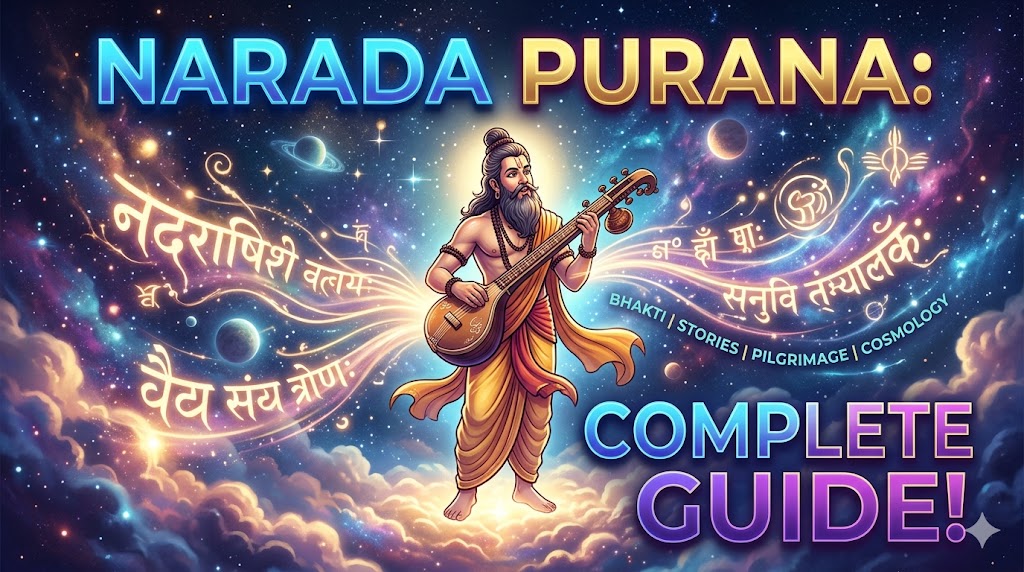
In the rich tapestry of Hindu scriptures that illuminate Sanatan Dharma, the Puranas serve as vital bridges between Vedic philosophy and everyday devotion. Among the 18 revered Mahapuranas, the Narada Purana, also known as Naradiya Purana or Narad Puran, holds a distinguished position as the sixth in traditional listings. This ancient text, attributed to the divine insights of Sage Narada, offers an encyclopedic yet deeply spiritual exploration of dharma, bhakti, cosmology, and practical guidance for spiritual aspirants.
With approximately 25,000 verses, the Narada Purana stands out for its emphasis on Vishnu bhakti while encompassing a wide array of topics. It is not just a scripture of stories but a living guide that addresses the complexities of life in Kali Yuga, offering pathways to both worldly fulfillment and ultimate liberation. Devotees and scholars alike turn to it for its summaries of other Puranas, detailed pilgrimage guides, and insightful dialogues featuring Narada Muni himself.
The text's origins trace back to ancient traditions, with its current form compiled likely between the 8th and 10th centuries CE, though its wisdom draws from far earlier oral transmissions. Structured primarily in dialogue form, it captures the essence of Sanatan Dharma's inclusive approach to spirituality.
The 18 Mahapuranas form the cornerstone of Puranic literature in Hinduism, each contributing unique perspectives on creation, preservation, and dissolution. Traditional lists often place the Narada Purana as the sixth, following texts like Brahma, Padma, Vishnu, Shiva (or Vayu), and Bhagavata Purana in varying enumerations.
Classified among the Sattvic Puranas due to its focus on Vishnu worship and ethical living, it complements other texts by providing balanced insights into pravritti (worldly engagement) and nivritti (renunciation). What makes Narad Puran particularly important is its meta-nature—it dedicates entire chapters to summarizing the contents of the other 17 Mahapuranas, serving as a valuable index and comparative tool for students of Hindu scriptures.
This comprehensive coverage underscores its role as a central text, helping seekers navigate the vast Puranic corpus without losing sight of the unifying thread of devotion and dharma.
The Central Role of Narada Muni in the Purana
No discussion of the Narada Purana is complete without understanding the pivotal figure after whom it is named—Devarshi Narada. Son of Brahma and a mind-born sage, Narada Muni is the eternal wanderer, musician, and messenger of the gods. He traverses the three worlds with his veena, spreading bhakti and resolving cosmic dilemmas through wisdom and timely interventions.
In the Narada Purana, Narada is both the inspired listener and the guiding voice. The text originates from teachings given by the four Kumaras (Sanaka, Sanandana, Sanatkumara, and Sanatana) to Narada, who then shares this knowledge. This dialogue format brings authenticity and depth, as readers witness profound discussions between sages on eternal truths.
Narada's own past lives feature prominently, illustrating the transformative power of devotion. In one celebrated account from related traditions echoed here, Narada was previously a Gandharva who, through sincere service and exposure to holy company, evolved into the great bhakta we revere today. These narratives remind us that spiritual progress is possible for all, regardless of one's starting point.
Structure of the Narada Purana: Purva and Uttara Bhaga
The Narada Purana is broadly divided into two main sections: the Purvabhaga (former part) and the Uttarabhaga (latter part). This division allows for a logical progression from foundational principles to advanced practices and pilgrimage guidance.
The Purvabhaga includes focused discussions on Vishnu worship, especially in its initial chapters that closely resemble the Brihannaradiya Purana. It covers bhakti yoga, rituals, and philosophical topics. Notably, chapters 92 to 109 provide concise summaries of all 18 Mahapuranas, making this section invaluable for overview and study.
The Uttarabhaga expands into encyclopedic territory, detailing the six Vedangas, moksha dharma, geography of sacred sites, vratas (religious observances and fasts), temple worship procedures, and mahatmyas (glories) of pilgrimage places along the Ganges and beyond. It includes practical guides on music, dance, ethics, and even secular knowledge like flora, fauna, and governance.
This well-organized structure ensures the text serves both beginners seeking inspiration and advanced practitioners desiring detailed sadhana.
Narada Purana: spiritual and Bhakti teaching
Key Teachings and Bhakti Yoga in Narada Purana
At its heart, the Narada Purana is a treatise on bhakti yoga—the path of loving devotion. It teaches that sincere surrender to Lord Vishnu transcends ritualistic barriers and grants both material prosperity and spiritual freedom. Narada Muni's dialogues emphasize nine forms of devotion, similar to those in other Vaishnava texts, highlighting shravana (listening), kirtana (chanting), and smarana (remembrance).
The text integrates discussions on dharma across varnas and ashramas, ethical living, and the importance of guru-shishya parampara. It addresses philosophical schools like Pashupata while ultimately pointing to Vishnu as the supreme reality. Teachings on moksha stress detachment, self-knowledge, and the grace of the divine.
Vratas and fasts receive extensive coverage, with tithi-wise and month-wise observances that promise specific benefits like health, wealth, and sin removal. These practical instructions make the Narada Purana a handbook for householders and ascetics alike.
Stories, Dialogues, and Past Birth Narratives
The Narada Purana comes alive through its rich collection of stories that convey moral and spiritual lessons. Dialogues between Narada and other sages form the backbone, discussing topics ranging from creation to the nuances of karma and reincarnation.
One prominent narrative is the Rukmangadacarita, the story of King Rukmangada, whose steadfast Vishnu bhakti is tested by the temptress Mohini (a form of Vishnu himself). This tale explores themes of dharma, temptation, and unwavering faith, later inspiring plays and performances.
Past birth stories, including those involving Narada himself, illustrate the continuity of the soul's journey. These accounts show how even minor acts of devotion in previous lives bear fruit, encouraging readers to cultivate piety regardless of current circumstances.
Sage-to-sage conversations delve into cosmology, the glories of sacred rivers, and the benefits of pilgrimage. Stories of gods, demons, and devotees highlight the triumph of good over evil and the accessibility of divine grace.
Pilgrimage, Temples, and Cultural Significance
A unique strength of the Narada Purana lies in its detailed mahatmyas—travel guides to holy places. It describes sites along the Ganges from Haridwar to Kashi and beyond, including Gaya, offering insights into rituals, histories, and spiritual rewards at each tirtha.
These sections blend geography, mythology, and devotion, making the text a practical companion for yatras. It also covers worship methods for various deities, including Ganesha, Narasimha, Rama, Krishna, Hanuman, and goddesses like Lakshmi and Devi, reflecting Sanatan Dharma's pluralistic yet focused approach.
In modern times, the Narada Purana continues to influence culture through discourses, kathas, and scholarly studies. Its summaries aid comparative religion, while its bhakti emphasis resonates in festivals and daily worship.
How to Study and Benefit from Narada Purana
Approaching the Narada Purana with sincerity yields immense spiritual merit. Begin with summaries or key stories, then progress to full readings. Translations in Hindi, English, Odia, Kannada, and other languages make it accessible. Listening to Narada Purana kathas or episodes enhances understanding, especially in devotional settings.
Scholars value it for exam notes or deeper research into Vedangas and Puranic interrelations. Regular study is said to destroy sins accumulated over lifetimes and guide one toward moksha.
Conclusion: The Timeless Wisdom of Narad Puran
The Narada Purana, as the sixth Mahapurana, enriches Sanatan Dharma with its blend of devotion, knowledge, and practical spirituality. Through the lens of Narada Muni's life and teachings, it reveals how dialogues among sages preserve eternal truths across generations. Its stories of past births, detailed vratas, and pilgrimage guides offer something for every seeker.
In embracing this sacred text, one not only gains intellectual insight but also cultivates a heart filled with bhakti. May the blessings of Narada Muni and Lord Vishnu inspire all who turn its pages toward a life of purpose, harmony, and ultimate liberation.