The Green Revolution: Transforming Global Agriculture
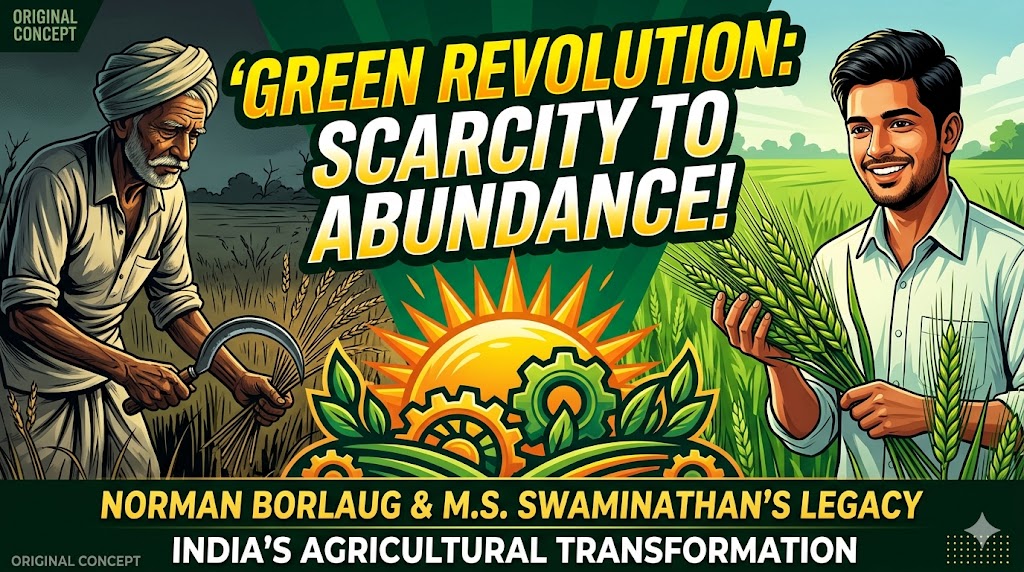
The Green Revolution stands as one of the most significant agricultural transformations in human history. Emerging in the mid-20th century, it dramatically increased food production in developing countries through the adoption of high-yielding variety seeds, chemical fertilizers, pesticides, and improved irrigation techniques. This movement not only helped avert widespread famines but also reshaped economies, societies, and environments across continents.
At a time when global populations were surging and traditional farming methods struggled to keep pace, the Green Revolution offered hope through scientific innovation. In India, where food shortages threatened national stability, it played a pivotal role in achieving self-sufficiency. Yet, its story is nuanced — marked by remarkable successes alongside unintended consequences that continue to influence agricultural policy today.
This article explores the origins, key contributors, implementation, multifaceted impacts, criticisms, and enduring legacy of the Green Revolution. By examining both its triumphs and limitations, we gain valuable insights for addressing contemporary challenges in food security and sustainable development.
Historical Background and Origins
The roots of the Green Revolution trace back to the 1940s, amid post-World War II concerns over global hunger. Traditional agriculture in many developing nations relied on indigenous seeds, rain-fed systems, and limited technology, resulting in low yields that could not match rapid population growth. Fears of Malthusian crises — where population outstripped food supply — prompted urgent action.
The term "Green Revolution" was coined in 1968 by William Gaud of the United States Agency for International Development (USAID). It described the surge in agricultural productivity driven by new technologies, distinguishing it from violent political revolutions while emphasizing its peaceful, growth-oriented nature.
The movement began in Mexico, where American scientist Norman Borlaug worked on wheat breeding programs in the 1940s and 1950s. Collaborating with local researchers, Borlaug developed semi-dwarf, disease-resistant wheat varieties that responded exceptionally well to fertilizers. These high-yielding varieties (HYV) prevented lodging — where tall plants collapse under heavy grain heads — and dramatically boosted output. Mexico transformed from a wheat importer to an exporter by the 1960s.
Borlaug's success inspired similar efforts worldwide. Organizations like the International Maize and Wheat Improvement Center (CIMMYT) and the International Rice Research Institute (IRRI) played crucial roles in developing improved crop strains suited to tropical conditions.
Key Figures Behind the Green Revolution
No discussion of the Green Revolution is complete without acknowledging its visionary leaders. Norman Borlaug, often called the "Father of the Green Revolution," received the Nobel Peace Prize in 1970 for his contributions to world peace through increased food supply. His work is credited with saving over a billion lives from starvation.
In India, the architect was Dr. M.S. Swaminathan, widely regarded as the "Father of the Green Revolution in India." A renowned agricultural scientist, Swaminathan collaborated with Borlaug and advocated for the adoption of HYV seeds. Supported by political leaders like Agriculture Minister Chidambaram Subramaniam, he helped adapt Mexican wheat varieties to Indian conditions and promoted modern farming practices.
Other notable contributors included scientists like Dilbagh Singh Athwal, who advanced wheat research, and institutions that facilitated technology transfer. Their combined efforts turned scientific breakthroughs into practical solutions for millions of farmers.
The Green Revolution in India: Implementation and Spread
India faced severe food crises in the 1960s, exacerbated by droughts in 1964-66 and dependence on imports, including PL-480 wheat from the United States. The government, determined to achieve self-reliance, embraced the new technologies. Punjab, Haryana, and western Uttar Pradesh — regions with better irrigation infrastructure — became the initial focal points.
In 1966, India imported 18,000 tons of Mexican wheat seeds. These HYV varieties, combined with chemical fertilizers, pesticides, and expanded irrigation, led to remarkable results. Wheat production surged from around 12 million tons in 1965 to 20 million tons by 1970. Rice yields also improved with varieties like IR-8 from IRRI. By 1971, India achieved self-sufficiency in food grains, and by the late 1970s, it had become one of the world's largest agricultural producers.
The package included not just seeds but a comprehensive system: assured irrigation, subsidized fertilizers, credit facilities, and government procurement at minimum support prices. This holistic approach encouraged farmers to invest in modern methods, leading to multiple cropping cycles per year and higher productivity per hectare.
The success in wheat and rice spread to other states over time, though unevenly. Regions with reliable water sources benefited most, while rain-fed areas lagged behind.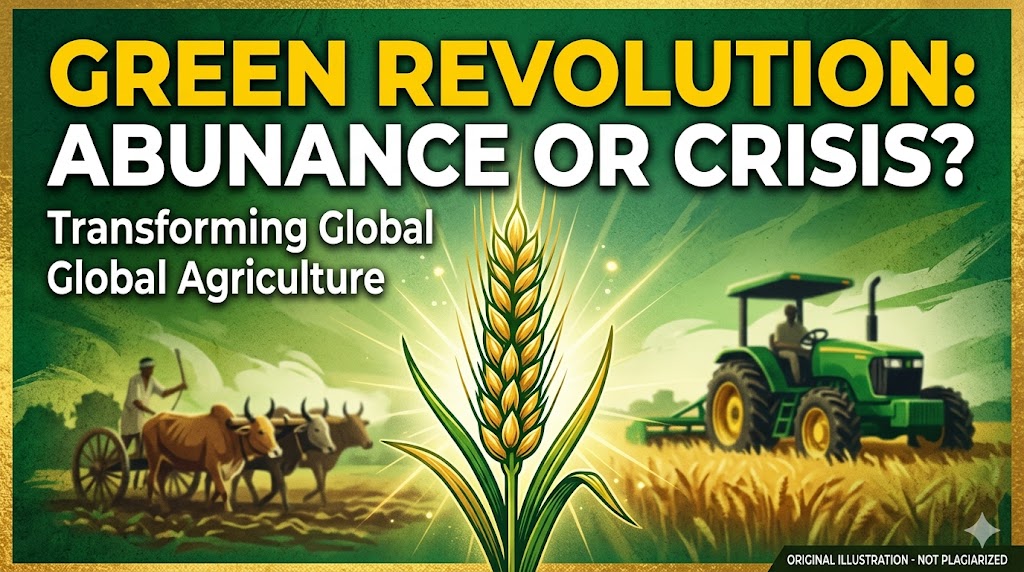
Visualizing the HYV Intervention and Transformation
Technological Components and Mechanisms
The Green Revolution relied on several interconnected innovations:
High-Yielding Variety Seeds: These semi-dwarf varieties were photo-insensitive, allowing cultivation regardless of day length, and matured faster, enabling two or three harvests annually.
Chemical Inputs: Synthetic fertilizers, particularly nitrogen-based, provided essential nutrients. Pesticides protected crops from pests and diseases.
Irrigation Infrastructure: Expansion of canals, tube wells, and dams ensured water availability beyond monsoon dependence.
Mechanization: Tractors, threshers, and other equipment improved efficiency and reduced labor dependency in some operations.
These elements worked synergistically. HYV seeds responded dramatically to fertilizers and water, producing far more grain than traditional varieties under optimal conditions.
Economic and Social Impacts
The Green Revolution delivered substantial benefits. It boosted rural incomes, created employment in input supply and processing industries, and contributed to broader economic growth. Food prices stabilized, reducing the burden on consumers and enabling surplus for export in later years.
In India, it helped avert famines and supported population growth without widespread hunger. Agricultural commercialization increased, with farmers shifting toward market-oriented production. Punjab, in particular, became a model of prosperity, often called the "breadbasket" of India.
However, benefits were not uniformly distributed. Wealthier farmers with larger landholdings and access to credit adopted the technologies more readily. Small and marginal farmers often faced challenges due to high input costs, leading to increased inequality in some regions. Regional disparities also widened, as irrigated areas advanced while others remained underdeveloped.
Environmental Consequences and Criticisms
While the Green Revolution achieved short-term gains in productivity, it introduced significant environmental challenges. Intensive fertilizer use led to soil degradation, nutrient imbalances, and reduced long-term fertility. Over-reliance on monocropping diminished biodiversity and made crops more vulnerable to new pests and diseases.
Groundwater depletion became a major issue due to excessive irrigation, particularly through tube wells. In states like Punjab and Haryana, water tables have fallen dramatically. Chemical runoff polluted rivers and groundwater, affecting ecosystems and human health. Pesticide residues raised concerns about food safety and biodiversity loss.
Critics argue that the focus on wheat and rice marginalized indigenous crops like millets and pulses, leading to nutritional imbalances and loss of genetic diversity. Some indigenous rice varieties numbering over a lakh were reportedly lost or sidelined.
Socially, the movement sometimes exacerbated debt among small farmers unable to sustain input costs during poor harvests. The environmental and social costs have prompted calls for a more balanced "Evergreen Revolution" emphasizing sustainability, as advocated by Dr. Swaminathan in later years.
Global Spread and Variations
Beyond India, the Green Revolution influenced countries in Asia, Latin America, and parts of Africa. Nations like Pakistan, the Philippines, and Mexico saw notable gains. However, outcomes varied based on local policies, infrastructure, and institutional support. In some African contexts, adoption was slower due to different agro-ecological conditions and limited irrigation.
The movement highlighted the importance of context-specific adaptations rather than one-size-fits-all solutions.
Legacy and the Path Forward
The Green Revolution's legacy is profound. It demonstrated the power of agricultural science to address hunger and drive development. Yet, it also taught that productivity gains must be balanced with sustainability.
Today, experts call for a Second or Evergreen Green Revolution incorporating climate-resilient crops, precision farming, organic inputs, crop diversification, and better water management. Advances in biotechnology, such as gene editing, offer new possibilities while learning from past lessons.
In India, initiatives focusing on sustainable practices, soil health cards, and organic farming reflect efforts to correct imbalances. Global challenges like climate change and population growth demand innovative approaches that build upon the Green Revolution's foundation without repeating its mistakes.
Conclusion
The Green Revolution remains a landmark chapter in humanity's quest for food security. Through the dedication of scientists like Norman Borlaug and M.S. Swaminathan, and the hard work of countless farmers, it transformed despair into hope for millions. Its achievements in increasing yields and reducing hunger are undeniable.
At the same time, the environmental degradation, social inequities, and resource strains it introduced serve as important cautions. As we face new pressures from climate variability and resource scarcity, the true value of the Green Revolution lies in the lessons it provides for future agricultural strategies.
By embracing sustainable intensification, inclusive policies, and technological innovation guided by ecological wisdom, we can honor the spirit of the Green Revolution while ensuring a resilient and equitable food system for generations to come. The journey from scarcity to abundance continues, calling for thoughtful stewardship of the land that sustains us all.