"Unsung Heroes of India's Independence Struggle"
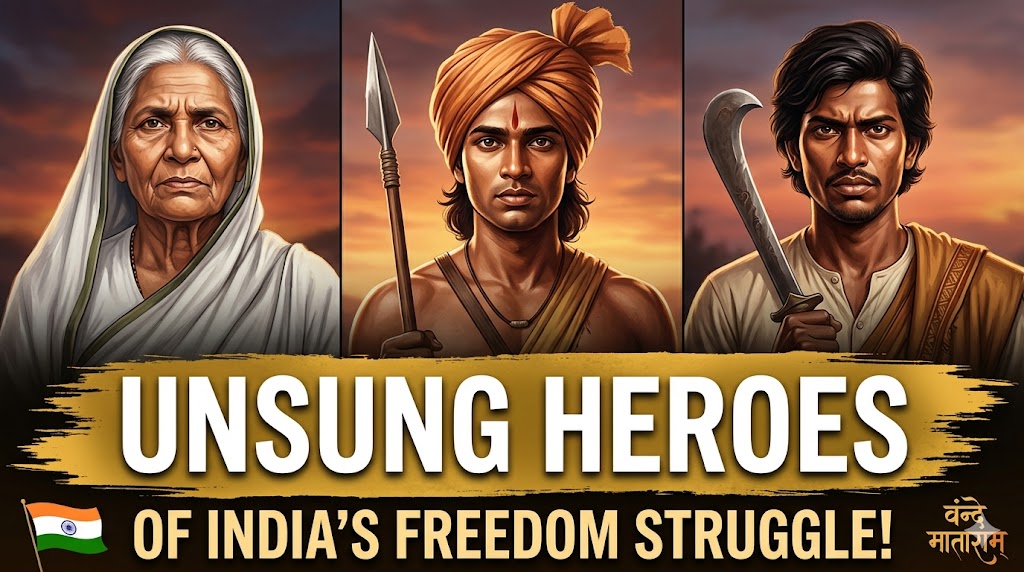
The story of India's independence is often told through the lives of towering figures like Mahatma Gandhi, Jawaharlal Nehru, Subhas Chandra Bose, and Bhagat Singh. Their contributions were undoubtedly monumental, lighting the path toward freedom from colonial rule. Yet, beneath these celebrated names lies a vast tapestry of countless individuals whose quiet courage, relentless determination, and ultimate sacrifices formed the true backbone of the freedom movement. These unsung heroes of India's freedom struggle came from every corner of the country — farmers, tribal leaders, housewives, students, and revolutionaries. They fought not for personal glory but for the dignity and self-rule of their motherland.
Their stories remind us that independence was not the achievement of a few but the collective triumph of millions. Many paid with their lives in obscurity, their names fading from textbooks even as their spirit echoes in the freedom we enjoy today. This article honors some of these forgotten freedom fighters, exploring their backgrounds, acts of bravery, and the lasting lessons their lives offer. By remembering the unsung heroes of Indian independence, we acknowledge the fuller, richer narrative of our nation's journey to sovereignty.
India's struggle against British rule spanned over two centuries and took many forms — non-violent satyagraha, armed rebellions, underground networks, and tribal uprisings. While the Indian National Congress provided a national platform, resistance often emerged locally, driven by ordinary people responding to specific injustices like exploitative land policies, forest restrictions, racial discrimination, and cultural suppression.
Women, tribals, and regional revolutionaries played especially vital roles that mainstream narratives sometimes underplay. From the jungles of Andhra to the streets of Bengal and the hills of the Northeast, these forgotten freedom fighters challenged the empire in ways that were innovative, fearless, and deeply rooted in their communities. Their contributions highlight the inclusive, pan-Indian nature of the movement.
Matangini Hazra: The Fearless Grandmother of the Nation
One of the most inspiring unsung heroes of India's freedom struggle was Matangini Hazra, affectionately known as "Gandhi Buri" or the Old Lady Gandhi. Born in 1869 in a small village in West Bengal, she became a widow early in life and dedicated herself to social service and the independence cause. Despite her advanced age, she actively participated in the Non-Cooperation Movement, Civil Disobedience, and Quit India Movement.
In 1942, at the age of 73, Matangini led a procession of thousands in Tamluk, Midnapore district, carrying the tricolor flag and chanting "Vande Mataram" and "Inquilab Zindabad." British police opened fire, and she was shot multiple times. Even as bullets struck her, she refused to let the flag fall, continuing to advance until her last breath. Her martyrdom became a rallying point in Bengal, symbolizing unyielding courage. Today, a statue stands in her honor in Kolkata, yet her name deserves far wider recognition as one of the bravest women freedom fighters India has produced.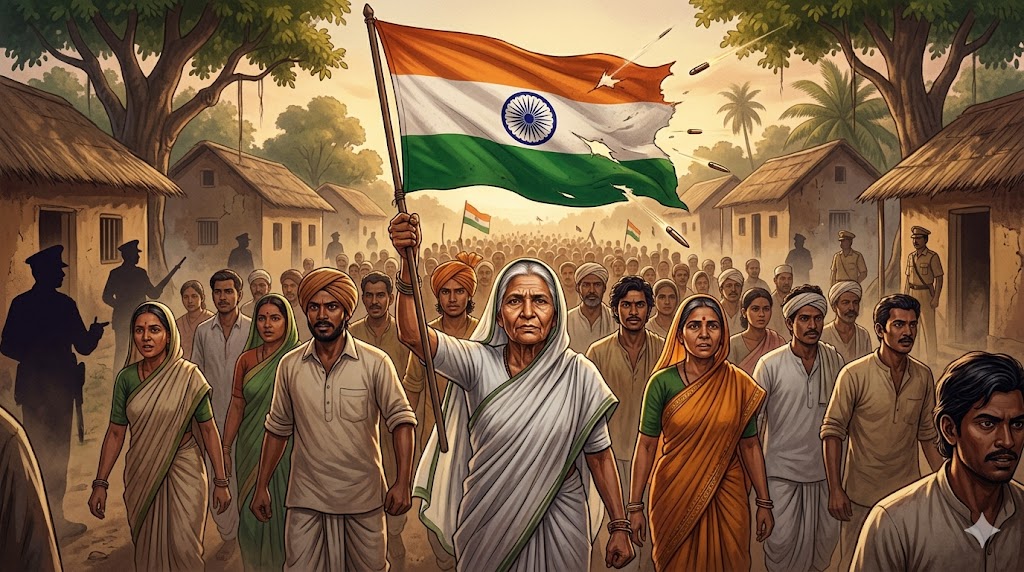
The Grandmother’s Unyielding Courage
Alluri Sitarama Raju: The Warrior of the Forests
In the Eastern Ghats of Andhra Pradesh, Alluri Sitarama Raju emerged as a legendary figure among tribal communities. A young man with deep knowledge of the forests and great physical prowess, he led the Rampa Rebellion (1922-1924) against British colonial forest laws that deprived tribals of their traditional rights.
Raju organized guerrilla warfare with tribal warriors, attacking police stations and symbolizing resistance against exploitation. His ability to mobilize vanvasi groups through personal charisma and a sense of justice made him a formidable opponent. Betrayed and captured, he was executed by firing squad in 1924 at the age of 27. Known locally as "Manyam Veerudu" (Hero of the Jungle), Alluri Sitarama Raju represents the often-overlooked tribal dimension of the freedom struggle. His legacy lives on in the hearts of people in Andhra and Telangana.
Birsa Munda: The Tribal Messiah
Birsa Munda, born in 1875 in present-day Jharkhand, is another towering yet under-celebrated personality. At just 25 years old, he led the Ulgulan (Great Rebellion) against British rule and missionary activities that threatened Munda tribal culture and land rights. He blended spiritual leadership with political resistance, promising an egalitarian society free from colonial oppression.
His movement combined traditional beliefs with modern anti-colonial ideas, inspiring thousands. Arrested and imprisoned, Birsa died in custody in 1900 under mysterious circumstances. Today, he is remembered as a symbol of indigenous pride and resistance. His contributions highlight how tribal communities across India were active participants in the fight against imperialism, not passive bystanders.
Women Warriors: Courage in the Shadows
Women formed an indispensable part of the unsung heroes of Indian independence. Beyond well-known names, many displayed extraordinary valor.
Uda Devi, from Lucknow, fought valiantly during the 1857 Revolt. She led a women's battalion under Begum Hazrat Mahal and is said to have killed numerous British soldiers from atop a tree before being martyred. Her story exemplifies the armed participation of women in the early phase of resistance.
Durga Bhabhi (Durgawati Devi) played a crucial role in the Hindustan Socialist Republican Association. She helped Bhagat Singh escape after the Saunders killing by disguising themselves as a couple. Involved in revolutionary activities including the Kakori conspiracy links, she represented the fearless spirit of young women revolutionaries.
Rani Gaidinliu, a Naga spiritual and political leader from Manipur, led a non-violent movement against British rule from a young age. Imprisoned for 14 years by the British, she was released after independence and continued working for her people's rights. Jawaharlal Nehru called her the "Daughter of the Hills."
Bhikaji Cama, a Parsi revolutionary, hoisted one of the earliest versions of the Indian flag in Germany in 1907 and worked tirelessly in exile for the cause. Her international advocacy was groundbreaking.
Tara Rani Srivastava from Bihar actively participated in the Quit India Movement alongside her husband, enduring imprisonment and continuing the fight even after his death.
These women freedom fighters India produced challenged both colonial rule and societal norms, often balancing domestic roles with revolutionary zeal.
Other Notable Forgotten Freedom Fighters
Surya Sen (Masterda) masterminded the Chittagong Armory Raid in 1930, one of the most daring acts of revolutionary resistance. His underground network inspired many, though he was eventually captured and executed.
Pingali Venkayya, though credited with designing the national flag, remains relatively under-discussed in popular discourse for his broader contributions to the freedom movement.
Revolutionaries like Anant Laxman Kanhere, who assassinated a British officer at a young age, and countless local leaders in different provinces added fuel to the fire of independence.
Challenges in Recognizing Unsung Heroes
Several factors contributed to these figures remaining forgotten. Colonial records often downplayed local resistances. Post-independence focus on national leaders and non-violence sometimes overshadowed armed struggles and regional movements. Oral histories in tribal and rural areas preserved many stories that never entered mainstream textbooks.
Efforts like the government's Unsung Heroes portal and various state initiatives are helping bring these names to light. However, more needs to be done through education, literature, and cultural representations to honor the full spectrum of sacrifices.
Lessons for Contemporary India
The lives of these unsung heroes teach invaluable lessons — patriotism knows no age, gender, or region; ordinary people can achieve extraordinary things through conviction; and unity in diversity was the real strength of the freedom struggle.
In today's India, their spirit calls us to uphold the values of justice, equality, and selfless service. Whether addressing social inequalities, environmental concerns, or national integration, the courage shown by forgotten freedom fighters remains a guiding light.
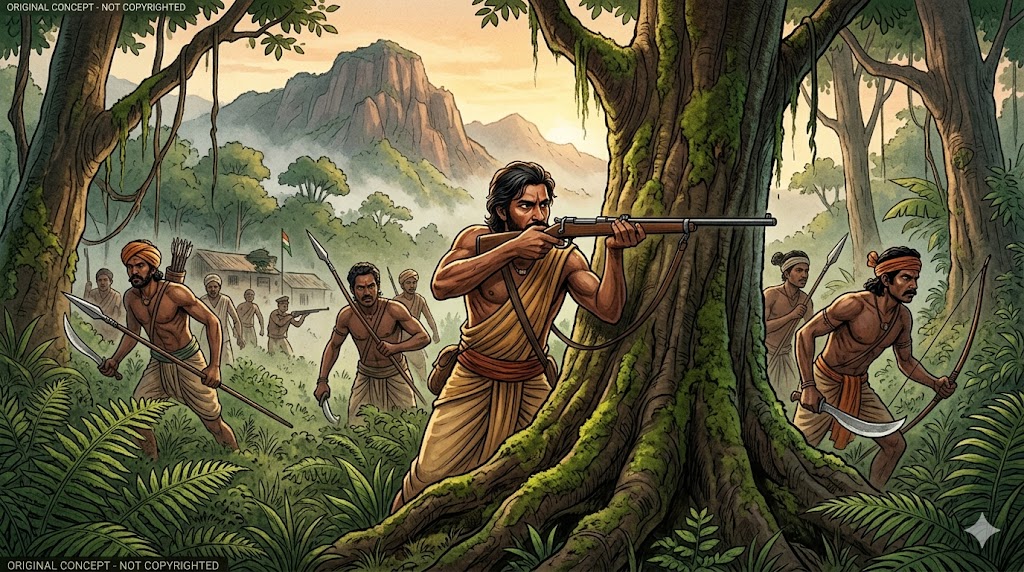
The Forest Warrior’s Guerilla Stand
Conclusion
The unsung heroes of India's freedom struggle may not have grand memorials in every city, but their blood, sweat, and tears are woven into the fabric of our nation. From Matangini Hazra holding the flag aloft to Alluri Raju fighting in the forests, from Birsa Munda's tribal vision to the quiet determination of countless women and men — each contributed uniquely to the dawn of August 15, 1947.
As we enjoy the fruits of their labor, let us commit to remembering and honoring them. True gratitude lies not just in words but in preserving their stories for future generations and living by the ideals they upheld. India’s independence was built on the sacrifices of millions. By shining light on the forgotten freedom fighters, we complete the narrative of our freedom and strengthen the foundations of our democracy.
May the legacy of these brave souls inspire us to be worthy citizens of a nation born from such profound courage and unity.