BJP's Historic Triumph in West Bengal: Ending TMC's Rule
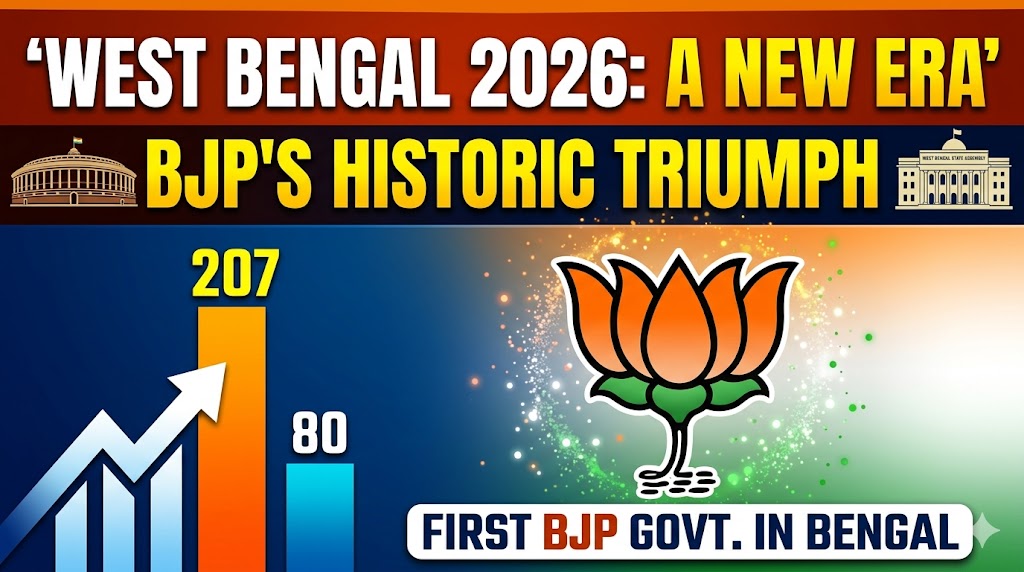
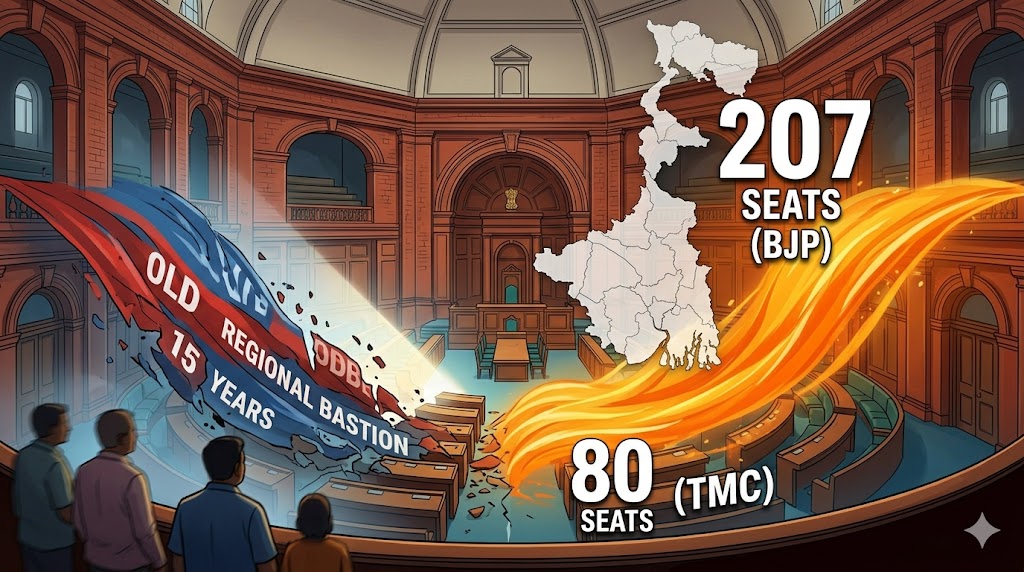
In one of the most significant political upheavals in India's recent history, the Bharatiya Janata Party (BJP) has achieved a decisive victory in the 2026 West Bengal Assembly elections. Winning 207 out of 294 seats, the party has not only crossed the majority mark comfortably but also scripted a new chapter by forming the state's first BJP government. This marks the end of the Trinamool Congress (TMC) regime under Mamata Banerjee, which had ruled Bengal for 15 consecutive years.
The verdict reflects a profound shift in the political landscape of a state long considered a bastion of regional forces. From grassroots mobilization to high-profile campaigns led by Prime Minister Narendra Modi, the BJP's strategy resonated deeply with voters seeking change after years of anti-incumbency. This article delves into how the BJP pulled off this historic win, the role of key figures, campaign dynamics, and the reasons behind the vanishing of Mamata Banerjee's prolonged government.
The Road to Victory: BJP's Breakthrough in Bengal
The 2026 elections were held in two phases on April 23 and 29, with an impressive voter turnout of over 92%. As counting progressed on May 4-5, the BJP surged ahead, eventually securing 207 seats compared to TMC's 80. This represents a massive jump from the 77 seats the party had won in 2021.
For the first time since assembly elections began in 1937, a right-of-centre party has come to power in West Bengal. The victory came after sustained efforts under the Modi government's national leadership, which provided both strategic guidance and momentum. BJP leaders emphasized development, governance reforms, and cultural connect, moving beyond earlier challenges in penetrating the state's unique socio-political fabric.
At the heart of BJP's success stands Suvendu Adhikari, a former TMC heavyweight who emerged as the party's most prominent face in Bengal. Once a close lieutenant of Mamata Banerjee—particularly during the 2007 Nandigram land agitation—Adhikari defected to the BJP in late 2020. His journey from TMC insider to fierce opponent symbolized the broader discontent within the ruling establishment.
Adhikari contested from two seats: his stronghold of Nandigram and the high-stakes Bhabanipur constituency, traditionally associated with Mamata Banerjee. In a stunning upset, he defeated the sitting Chief Minister in Bhabanipur by a significant margin, while also retaining Nandigram convincingly. This dual victory not only boosted BJP's morale but positioned Adhikari as a leading contender for the Chief Minister's post.
His deep organizational network, grassroots connect in rural and semi-urban areas, and sharp critiques of TMC's alleged "syndicate raj," corruption, and governance failures helped consolidate anti-incumbency votes. Adhikari's campaigns focused on local issues like jobs, women's safety, and ending political violence, striking a chord with Bengali voters across demographics.
The New Political Landscape
Modi's Government and the National Campaign Push
The BJP's win in Bengal is closely tied to the sustained support and visibility provided by Prime Minister Narendra Modi's government at the Centre. Modi addressed multiple rallies and roadshows across the state, blending national vision with local aspirations. His outreach—covering diverse districts and emphasizing industrial revival, youth employment, and cultural pride—helped shed the "outsider" perception.
Campaigning involved high-energy events, cultural sensitivity (such as respecting Bengal's traditions of fish and rice), and targeted welfare promises outlined in the 'Bhorosha Shopoth' manifesto. Promises like financial aid for unemployed youth, support for pregnant mothers, and farmer benefits addressed pressing local concerns. Union Home Minister Amit Shah and other central leaders complemented this with extensive booth-level interactions.
This central backing provided logistical strength, visibility, and a narrative of "double-engine" governance, contrasting with TMC's defensive stance.
Campaign Strategies: Booth-Level Mobilization and Cultural Connect
BJP's victory was not accidental but the result of meticulous planning. The party deployed around 8.8 lakh workers across nearly 70,000 booths, creating a robust ground network. This micro-level management ensured voter outreach, issue-based canvassing, and high turnout in favorable areas.
A mixture of strategies played a crucial role:
Data-driven targeting: Focused on anti-incumbency pockets, including areas affected by alleged scams, recruitment irregularities, and the aftermath of incidents like the RG Kar case that impacted perceptions on women's safety.
Hindu consolidation and broader outreach: While emphasizing cultural and developmental issues, the party made inroads even in diverse demographics, including some Muslim-dominated seats, signaling shifting loyalties.
Aggressive yet localized messaging: Leaders highlighted "cut money," political violence, and lack of development while promising good governance. Cultural events and respect for Bengali identity helped broaden appeal.
Alliance and candidate selection: Smart choice of candidates with local roots amplified the message.
The campaign blended Prime Minister Modi's charisma at the top with Suvendu Adhikari's organizational muscle on the ground, creating a potent combination that TMC struggled to counter.
The Decline of Mamata Banerjee's Prolonged Government
Mamata Banerjee's TMC had dominated Bengal since 2011, ending decades of Left Front rule. However, by 2026, prolonged incumbency had bred fatigue. Voters expressed frustration over issues like corruption allegations, "goonda raj," economic challenges, brain drain, and unemployment. High-handedness by local leaders and syndicate-style operations further eroded trust.
Banerjee herself faced a personal setback in Bhabanipur. Despite her fiery oratory and deep loyalty from core supporters, the anti-incumbency wave proved too strong. Post-results, she alleged irregularities and refused immediate resignation, but the electoral arithmetic was clear. Her 15-year tenure, once seen as a bulwark of Bengali pride, appeared to many as having run its course amid demands for fresh leadership and development.
Implications for Bengal's Future
BJP's victory opens doors for policy shifts focused on industrialization, infrastructure, education, and law and order. The new government, expected to take oath around May 9, will face the challenge of delivering on promises while navigating Bengal's complex social fabric.
This win strengthens the BJP's national footprint and signals voters' willingness to embrace alternatives when governance issues mount. For the opposition TMC, it marks a period of introspection and rebuilding.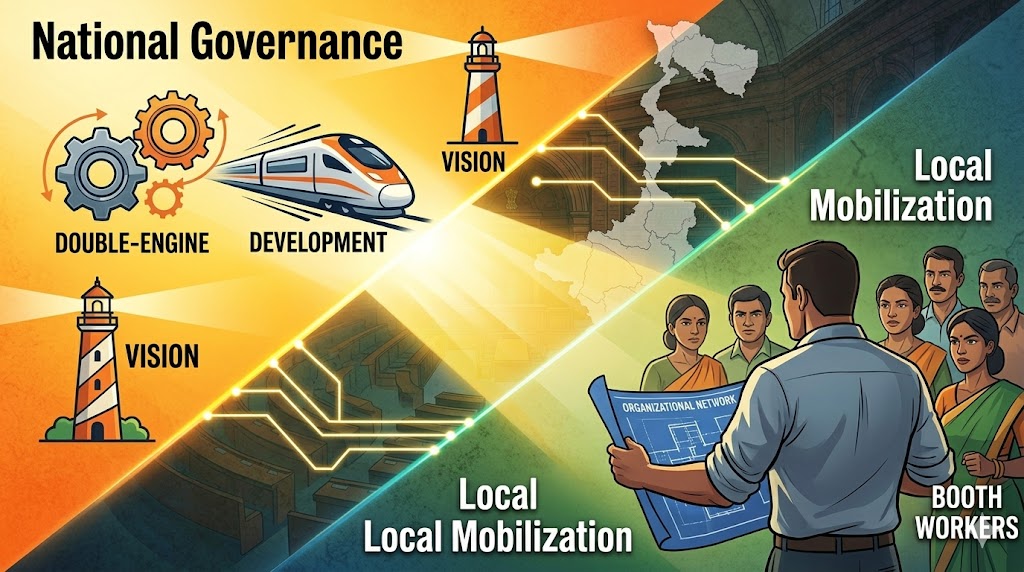
The Campaign Dynamics
Conclusion
The 2026 West Bengal Assembly elections will be remembered as a watershed moment. Through strategic campaigning, strong local leadership like Suvendu Adhikari, national momentum under Modi's government, and effective addressing of public grievances, the BJP has achieved what once seemed improbable: forming the government in Bengal for the first time.
As the state embarks on this new journey, the focus will remain on whether the saffron party can translate electoral success into tangible progress for the people of Bengal. The lotus has bloomed in what was long considered unfamiliar territory, heralding a new political era.