US Sinks 7 Iranian Boats as Iran Attacks UAE in Hormuz
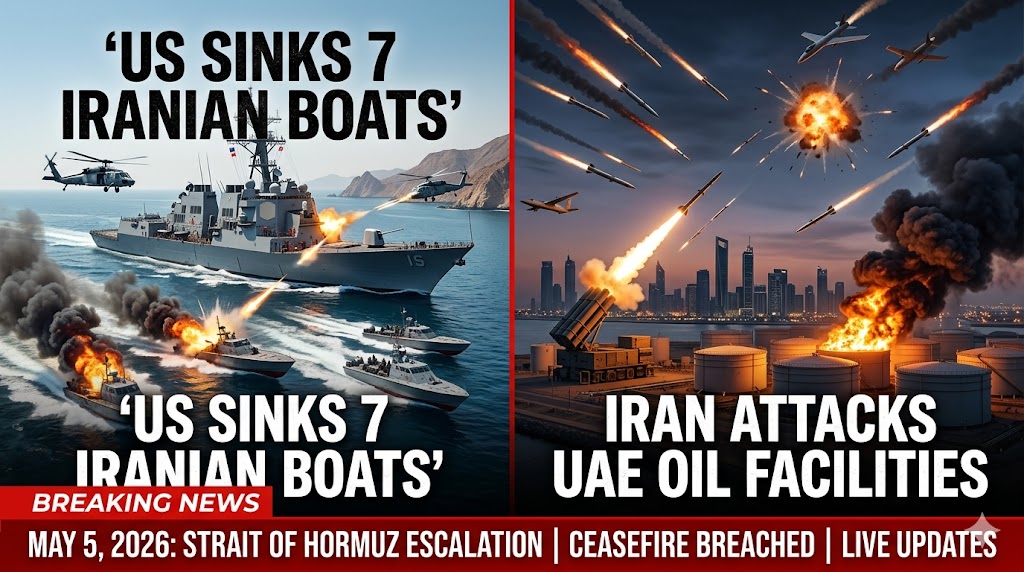
Tensions in the Persian Gulf reached a critical point on May 4, 2026, as Iranian forces launched missiles and drones toward the United Arab Emirates while US naval assets engaged and sank seven small Iranian boats in the Strait of Hormuz. This coordinated escalation marks the first significant breach of the fragile US-Iran ceasefire established in early April, raising fears of broader regional instability affecting global energy supplies.
The United Arab Emirates reported that its air defense systems successfully intercepted the majority of incoming threats, but a drone strike ignited a fire at the Fujairah Petroleum Industries Zone, injuring three Indian workers. Meanwhile, US Central Command confirmed operations under "Project Freedom" to escort commercial vessels through the vital waterway, during which American forces neutralized Iranian vessels threatening shipping.
Iran has denied direct responsibility for strikes on UAE territory and accused US forces of targeting civilian boats, adding layers of conflicting narratives to an already complex situation. This article delivers a detailed, structured overview of the day's events, background, implications, and expert insights based on the latest available reports as of May 5.
May 4, Morning Hours: UAE Ministry of Defence announces air defenses are engaging ballistic missiles, cruise missiles, and drones originating from Iran. Initial reports indicate approximately 12 ballistic missiles, 3-4 cruise missiles, and multiple drones. Most threats were neutralized, though debris and a direct drone hit caused a significant fire in Fujairah.
Midday: US Central Command reports a successful escort of two American-flagged merchant ships through the Strait of Hormuz under Project Freedom. Admiral Brad Cooper detailed encounters with Iranian small boats interfering with operations, leading to the sinking of seven vessels by US helicopters and naval assets.
Afternoon: Firefighting teams in Fujairah contain the blaze at the petroleum facility. Three Indian nationals sustain injuries and receive medical treatment. India issues a statement expressing concern for its citizens and urging restraint from all parties.
Evening: President Donald Trump addresses the incidents, warning Iran of severe consequences while emphasizing the importance of free navigation. Iranian state media counters by claiming US attacks on civilian vessels resulted in casualties, though independent verification remains limited.
May 5 Updates: Regional leaders, including from Saudi Arabia and Pakistan, call for immediate de-escalation. Oil prices fluctuate sharply, briefly surpassing $119 per barrel. Schools in parts of the UAE shift to remote learning as a precaution. Diplomatic channels, including those involving Oman and Pakistan, activate to prevent further breakdown of the ceasefire.
These rapid developments highlight the precarious nature of the truce and the strategic importance of the Strait of Hormuz, which handles roughly one-fifth of global oil trade.
Background Context Leading to the Escalation
The April 2026 ceasefire between the United States and Iran offered a temporary pause after months of heightened maritime confrontations and proxy conflicts. Mediated in part through backchannel efforts, the agreement aimed to reduce direct hostilities and allow safer passage for commercial shipping.
However, persistent disputes over the Strait of Hormuz undermined the peace. Iran had imposed restrictions and allegedly conducted mining activities, prompting the US to initiate Project Freedom—an operation to escort stranded vessels and reassert freedom of navigation.
The UAE, as a key US ally and major energy exporter with facilities like Fujairah designed to bypass the Strait, found itself caught in the crossfire. Past incidents of shipping attacks in the region had already elevated alert levels across Gulf Cooperation Council nations.
This latest flare-up appears directly linked to US efforts to clear the waterway, with Iranian actions interpreted by many analysts as a response to perceived provocations.
Iran attack on UAE
Detailed Account of Iranian Strikes on the UAE
According to UAE officials, the attacks involved a multi-pronged barrage of projectiles. Air defense systems, including advanced platforms, performed commendably, intercepting the bulk of threats before they could reach populated or sensitive areas.
The drone that impacted the Fujairah zone created a visible fire at the petroleum industries complex. Emergency services responded promptly, containing the incident and preventing widespread disruption to export operations. The injuries to three foreign workers underscore the human dimension of these technological conflicts.
Iranian statements have been cautious, with some outlets denying targeted strikes on Emirati soil while framing actions as defensive measures against US naval presence. This ambiguity is characteristic of asymmetric strategies often employed in the region, allowing plausible deniability while exerting pressure.
US Operations and Sinking of Iranian Boats in the Strait
Under Project Freedom, US forces focused on protecting commercial shipping from interference. Admiral Cooper reported that Iranian small boats approached escorted vessels aggressively, prompting defensive action. Seven boats were sunk using helicopter gunships and other assets, with no reported American casualties.
Two US-flagged ships successfully transited the Strait, marking an initial success for the operation. US officials described the engagements as necessary to counter immediate threats, including potential missile launches from the boats.
Iran has pushed back strongly, alleging that the targeted vessels included civilian craft and that US actions violated the ceasefire. These competing claims complicate international assessments and could fuel further diplomatic friction.
Humanitarian and Economic Impacts
The three injured Indian workers represent the primary human cost reported so far. Their situation has drawn attention to the large expatriate workforce in the UAE and the vulnerabilities faced by civilians in such escalations.
Economically, the incidents triggered immediate market reactions. Oil prices surged on fears of supply disruptions before moderating somewhat as containment efforts succeeded. Shipping insurance premiums for Gulf routes are anticipated to increase, potentially affecting global energy costs in the coming weeks.
Fujairah's role as an alternative export terminal makes the strike particularly symbolic, testing the resilience of diversified infrastructure.
Geopolitical Analysis and International Reactions
This breach tests the durability of the April ceasefire and broader regional alliances. Saudi Arabia and other Gulf states quickly expressed solidarity with the UAE, condemning the attacks.
European nations, including Germany, have urged restraint and a return to negotiations. China and Russia, with their own stakes in Iranian energy, have called for calm while monitoring developments closely.
The involvement of Pakistan as a potential mediator remains notable, given its past role in facilitating talks. Oman and Qatar also maintain channels that could prove useful for de-escalation.
For the United States, balancing support for allies like the UAE with the goal of avoiding full-scale conflict presents a delicate challenge. President Trump's strong rhetoric reflects a firm stance on navigation rights while leaving room for diplomacy.
Military and Strategic Perspectives
Experts highlight Iran's growing proficiency with drone and missile swarms, designed to overwhelm defenses through volume and low-cost attrition. The UAE's successful interceptions demonstrate the value of advanced systems like THAAD and Patriot batteries, though sustained campaigns could strain resources.
US naval tactics in the confined waters of the Strait emphasize rapid response and air superiority, as seen in the engagement with small boats. However, the risk of miscalculation remains high in such congested and strategically vital areas.
Longer-term, these events may accelerate efforts by importing nations to diversify energy sources and enhance maritime security partnerships.
Historical Parallels
The current situation echoes earlier crises in the region, including tanker attacks in 2019 and subsequent naval tensions. What distinguishes this episode is its occurrence shortly after a declared ceasefire, underscoring the challenges of enforcing fragile agreements amid deep-seated rivalries.
Lessons from prior de-escalations stress the need for robust verification mechanisms, clear communication protocols, and third-party involvement to manage incidents before they spiral.
Potential Pathways Forward
Several scenarios could unfold in the coming days. Diplomatic interventions might reinforce the ceasefire with additional protocols for Hormuz transit. Conversely, retaliatory cycles could draw in more actors, affecting stability across multiple fronts including Yemen and Lebanon.
Oil markets will continue to watch closely, with OPEC+ potentially adjusting production to stabilize supplies. For global consumers, higher energy prices could contribute to inflationary pressures if disruptions persist.
Ultimately, addressing root concerns—such as Iran's nuclear program, ballistic missile capabilities, and Gulf security guarantees—may be necessary for any lasting resolution, though mutual distrust poses significant hurdles.
Conclusion
The events of May 4, 2026, involving Iranian missile and drone attacks on the UAE alongside US actions sinking seven Iranian boats in the Strait of Hormuz, represent a serious challenge to regional peace efforts. While immediate damage was contained through effective defenses, the incidents have injured civilians, disrupted operations, and heightened global concerns over energy security.
As live developments continue to emerge, all parties face important decisions on whether to prioritize dialogue and restraint or allow tensions to drive further confrontation. The international community has a vested interest in supporting de-escalation measures that protect innocent lives and maintain vital trade routes.
Ongoing monitoring of diplomatic channels and market responses will be essential in assessing the trajectory of this latest Middle East crisis. Stakeholders across the globe will hope for swift resolution to prevent broader repercussions.