Iran Attacks UAE with Missiles and Drones in First Strike
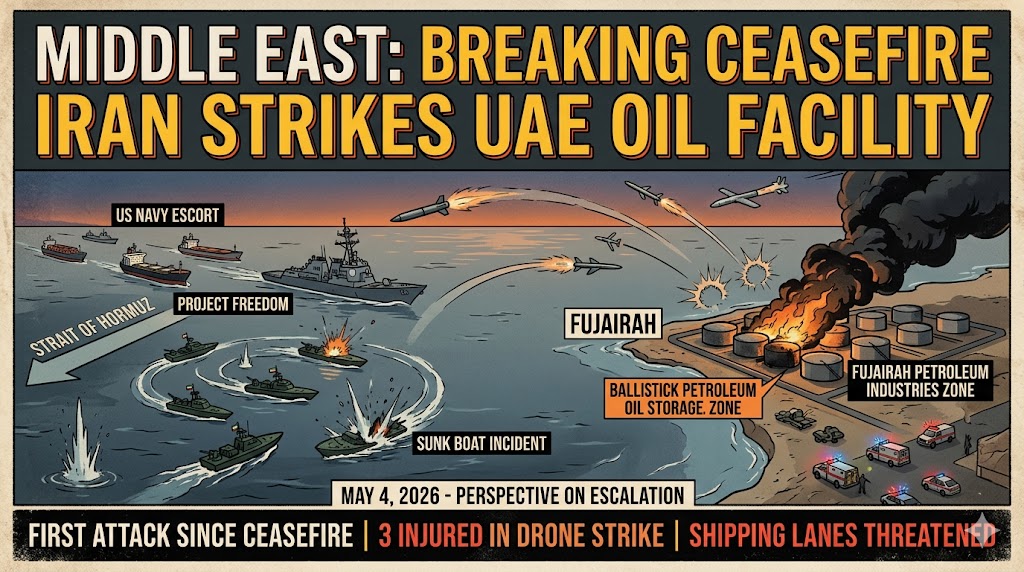
Tensions in the Middle East escalated sharply on May 4, 2026, as Iran fired missiles and drones toward the United Arab Emirates in what officials described as the first direct attack on a Gulf state since the fragile US-brokered ceasefire took effect in early April. The incident has raised serious concerns about the stability of regional security and the future of diplomatic efforts to de-escalate conflicts involving Iran, the United States, and their allies.
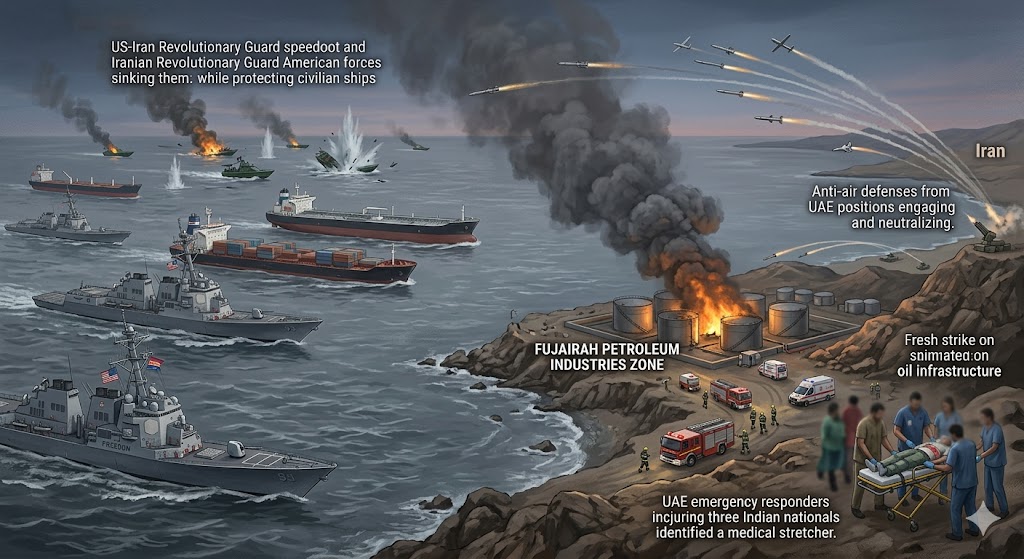
According to the UAE's Ministry of Defence, air defense systems successfully engaged multiple incoming threats, including ballistic missiles, cruise missiles, and drones. A drone strike reportedly sparked a significant fire at the Fujairah Petroleum Industries Zone, injuring three Indian nationals. This development comes as the US military conducted operations in the nearby Strait of Hormuz to protect civilian shipping, during which American forces sank several Iranian small boats.
Iran has pushed back against the narrative, claiming that US forces targeted civilian vessels in the strategic waterway. The conflicting accounts highlight the deep divisions and mutual suspicions that continue to fuel volatility in one of the world's most critical energy corridors.
This article provides a comprehensive, detailed examination of the events, their immediate consequences, broader geopolitical context, and potential implications for global energy markets and international relations.
Timeline of Events on May 4, 2026
The day unfolded with a series of rapid developments that tested the limits of the April ceasefire.
Early reports from UAE authorities indicated that air defenses were activated in response to incoming projectiles from Iran. The Ministry stated that systems engaged approximately 12 ballistic missiles, three cruise missiles, and four drones. Three of the cruise missiles were intercepted, while one fell into the sea. Additional threats were monitored and neutralized throughout the day.
Simultaneously, a drone attack struck the Fujairah oil industry zone on the UAE's eastern coast. This vital facility serves as a key export point for oil, bypassing the Strait of Hormuz. Firefighters worked to contain a major blaze, and three Indian workers sustained moderate injuries. Indian officials quickly condemned the incident and sought assurances for their citizens in the region.
In parallel, US Central Command announced operations under "Project Freedom," aimed at reopening safe passage through the Strait of Hormuz. Admiral Brad Cooper reported that US forces guided commercial vessels while facing interference from Iranian small boats and projectiles. American helicopters and naval assets responded by sinking six to seven Iranian vessels that were allegedly threatening civilian shipping.
Iranian state media and officials denied targeting the UAE directly and accused the US of striking civilian cargo boats traveling between Oman and Iran, resulting in civilian casualties according to Tehran. These competing claims have complicated efforts to verify the exact sequence and intent behind the actions.
By evening, regional leaders including Saudi Arabia expressed condemnation of the attacks on UAE facilities, while calls for restraint emerged from various diplomatic channels, including Pakistani mediators who had helped broker the original ceasefire.
Background: The Road to the Ceasefire and Renewed Tensions
To understand the significance of Monday's events, it is essential to look at the broader context. The US-Iran ceasefire, announced around April 8, 2026, followed a period of intense confrontations that had disrupted maritime traffic and raised fears of a wider regional war.
The agreement, facilitated in part through backchannel talks involving Pakistan, paused direct hostilities between American and Iranian forces. President Donald Trump had highlighted the truce as a potential stepping stone toward longer-term stability, emphasizing the need to secure vital shipping lanes.
However, underlying issues remained unresolved. The Strait of Hormuz, through which approximately one-fifth of global oil passes, had become a flashpoint. Iran's threats to disrupt shipping and reported mining activities prompted the US to launch protective escorts for commercial vessels.
The UAE, a close US partner and member of the Gulf Cooperation Council, had largely stayed out of direct confrontation but maintained heightened alert levels due to its proximity and economic ties. Previous incidents in the region, including attacks on shipping attributed to Iran in past years, had already strained relations.
Monday's strikes represent a significant breach of the relative calm, even if Iranian officials maintain they were not aimed at Emirati territory or claim limited scope. The involvement of the Fujairah facility adds an economic dimension, given its role in global energy supply chains.
Details of the Iranian Missile and Drone Assault
Reports vary slightly on the exact number of projectiles, but UAE statements consistently describe a coordinated barrage. Air defenses performed effectively, minimizing damage on the ground. The successful interceptions prevented what could have been more severe impacts on populated or industrial areas.
The drone that reached the Fujairah zone caused localized but visible disruption. Images and videos circulating from the area showed plumes of smoke rising from the petroleum industries site. Emergency responses were swift, and authorities assured the public that the situation was under control, with no immediate threat to broader infrastructure.
Iran has not officially claimed responsibility for strikes on UAE soil in many statements, instead framing its actions as defensive responses to US provocations in the Strait. This ambiguity allows room for diplomatic maneuvering while keeping pressure on adversaries.
Experts note that such hybrid attacks—combining missiles, drones, and potential naval elements—align with Iran's established military doctrine of asymmetric warfare, designed to project power without full-scale conventional engagement.
Incident at Fujairah and Naval Response
US Response in the Strait of Hormuz
The American side of the story centers on the protection of freedom of navigation. US officials described Iranian small boats as actively harassing or targeting commercial ships under American escort. In response, US forces engaged and neutralized the threats, sinking several vessels.
President Trump addressed the matter, downplaying Iran's capabilities while issuing warnings against further aggression. The operation reportedly cleared a path free of mines and ensured safe transit for at least two commercial vessels.
These actions underscore the US commitment to maintaining open sea lanes critical for global trade. However, they also risk further escalation if Iran perceives them as violations of the ceasefire spirit.
Iran's counter-claims about civilian boats add a humanitarian layer to the dispute. Independent verification remains challenging in the fog of such fast-moving events, but the allegations have been amplified through state-controlled media in Tehran.
Immediate Impacts and Casualties
The human cost, though limited so far, includes the three injured Indian nationals. This has drawn international attention, with India expressing strong concern and calling for the safety of its diaspora and maritime workers.
No large-scale civilian casualties were reported in the UAE from the missile interceptions. Property and environmental damage from the Fujairah fire is still being assessed, but initial indications suggest it was contained without major long-term disruption to oil exports.
Economically, oil prices reacted with volatility, spiking above $110 per barrel before partially retreating as markets gauged the likelihood of sustained conflict. Shipping insurance rates for the Gulf region are expected to rise in the coming days.
Geopolitical Ramifications
This incident places immense pressure on the ceasefire framework. Analysts question whether the truce can hold or if it will unravel into renewed direct confrontations between the US and Iran.
For the UAE and other Gulf states, the attacks reinforce the need for robust defense partnerships. Saudi Arabia's quick condemnation signals potential alignment among Sunni Arab states against perceived Iranian assertiveness.
Broader international reactions include calls from the United Nations and European nations for de-escalation. China, a major buyer of Iranian oil, and Russia have historically shown sympathy toward Tehran's positions, though specific statements on this event were still emerging as of the latest reports.
The role of non-state actors and proxy groups in the region adds another layer of complexity, as past patterns suggest Iran can exert influence through allies without direct attribution.
Expert Analysis and Strategic Considerations
Military specialists point out that Iran's missile and drone capabilities have improved significantly, allowing it to threaten targets at distance while testing defensive systems. The UAE's Patriot and other advanced defenses proved effective, but the sheer volume of attacks tests sustainability over time.
Economists warn that prolonged instability in the Hormuz area could lead to supply shocks, higher energy costs worldwide, and inflationary pressures. Alternative routes and increased production from other producers might mitigate some risks, but not immediately.
Diplomats emphasize the importance of backchannel communications. Pakistan's mediating role could prove valuable again, alongside efforts by Oman or Qatar, known for balanced relations with multiple parties.
From a strategic viewpoint, the US must balance its support for allies like the UAE with the desire to avoid a full-blown war that could draw in more actors, including potential Israeli involvement given the wider regional dynamics.
Historical Parallels and Lessons Learned
The current situation echoes earlier tensions, such as the 2019-2020 incidents involving tanker attacks and the killing of General Soleimani. Those events also featured claims and counter-claims, with limited but symbolic strikes.
What differs today is the post-ceasefire context and the explicit involvement of US naval protection operations. Lessons from previous de-escalations suggest that clear communication and third-party verification mechanisms could help prevent misunderstandings from spiraling.
The involvement of civilian vessels and foreign workers highlights the human stakes beyond geopolitical maneuvering. Protecting non-combatants must remain a priority for all sides.
Potential Future Scenarios
Several paths lie ahead. In the most optimistic case, both Iran and the US step back through diplomatic channels, reaffirming the ceasefire with additional safeguards for shipping.
A more pessimistic outlook involves tit-for-tat responses, with the UAE potentially joining retaliatory measures or seeking stronger security guarantees. Escalation could affect Lebanon, Yemen, or other hotspots where Iranian proxies operate.
Oil markets will likely remain jittery, influencing decisions by OPEC+ and global consumers. Long-term, accelerated diversification away from Gulf energy dependence could gain momentum in importing nations.
For regional stability, renewed talks addressing Iran's nuclear program, ballistic missiles, and security concerns of Gulf states could offer a more durable framework, though deep mistrust makes this challenging.
Conclusion
The Iranian missile and drone attacks on the UAE on May 4, 2026, represent a dangerous breach of the recent ceasefire and a reminder of the fragile peace in the Persian Gulf. While damage was limited thanks to effective defenses, the incident has injured civilians, disrupted energy infrastructure, and heightened global concerns over maritime security.
As investigations continue and more details emerge, the international community watches closely. Leaders on all sides face critical choices: whether to pursue de-escalation and dialogue or allow suspicions to drive further conflict.
The coming days and weeks will be pivotal in determining if this event becomes an isolated flare-up or the spark for wider instability. Maintaining open lines of communication, protecting innocent lives, and securing vital trade routes should guide all responses in this high-stakes environment.