Trump Urges South Korea to Join Hormuz Naval Operation
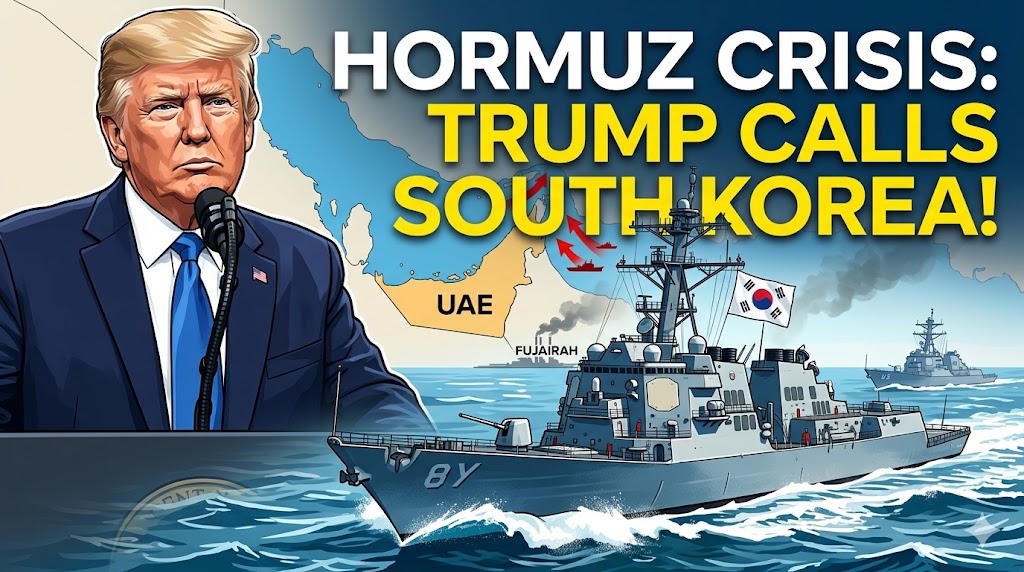
President Donald Trump has publicly called on South Korea to join the United States in naval operations to secure the Strait of Hormuz, describing it as a vital step to counter Iranian aggression following recent missile and drone strikes on the United Arab Emirates. The appeal, made on May 5, 2026, comes amid heightened tensions after the first major breach of the April US-Iran ceasefire.
Trump emphasized the need for a broader international coalition to protect freedom of navigation in one of the world’s most critical energy corridors. South Korea, a major economic power with significant stakes in Gulf oil imports, is seen as a key potential partner due to its advanced navy and shared interest in stable maritime trade routes.
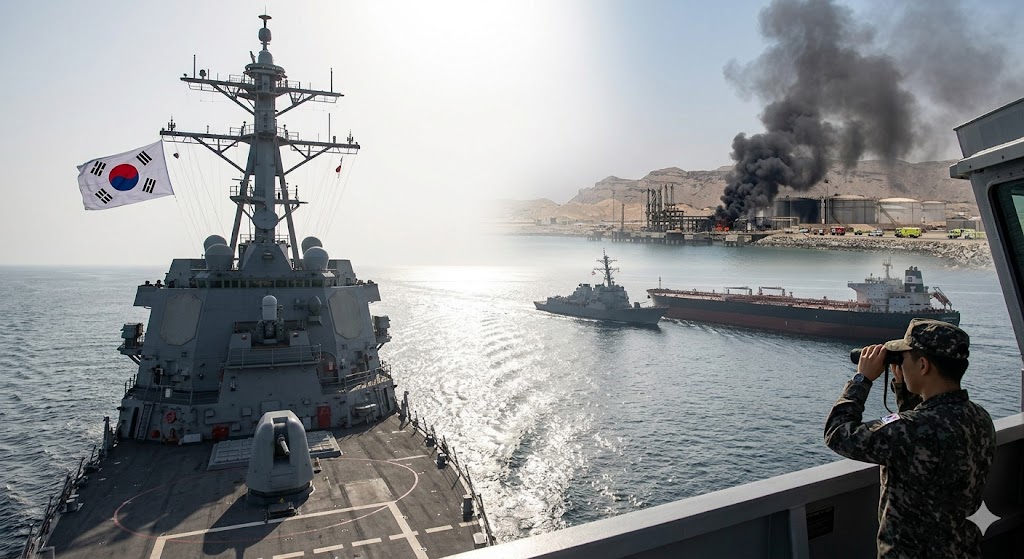
This development builds on ongoing US operations under Project Freedom, which saw American forces sink seven Iranian small boats on May 4 while escorting commercial vessels. Iran’s parallel attacks on UAE targets, including a strike on Fujairah oil facilities, have prompted urgent calls for allied support. This comprehensive article explores Trump’s appeal, the strategic context, potential South Korean response, and broader implications for regional security and global energy markets.
In a direct address, President Trump stated that South Korea possesses “one of the finest navies in the world” and should contribute to the multinational effort in the Strait of Hormuz. He highlighted the shared burden of maintaining open sea lanes, noting that disruptions affect economies far beyond the Middle East, including major Asian importers like South Korea.
The President framed the request within the context of strengthening alliances against what he described as Iranian destabilization efforts. Trump noted that US forces had successfully neutralized threats from Iranian small boats during recent escorts, but sustained operations would benefit from additional capable partners.
White House officials indicated that discussions with Seoul had already begun informally, focusing on possible deployment of South Korean destroyers or support vessels for escort and surveillance duties. The appeal aligns with Trump’s long-standing emphasis on allies sharing defense responsibilities more equitably.
Background: Project Freedom and Recent Escalation
Project Freedom was launched by the United States to restore safe passage through the Strait of Hormuz after Iranian actions allegedly threatened commercial shipping. On May 4, 2026, US naval assets engaged and sank seven Iranian small boats that interfered with escorted merchant vessels.
Simultaneously, Iran launched missiles and drones toward the UAE, resulting in a drone strike on the Fujairah Petroleum Industries Zone that injured three Indian workers. These events marked the first significant violation of the fragile April ceasefire, raising concerns about renewed conflict in the Gulf.
The Strait of Hormuz handles approximately one-fifth of global oil shipments. Any prolonged disruption could trigger sharp increases in energy prices worldwide, affecting economies heavily dependent on imports, including South Korea.
South Korea’s Strategic Interests in the Hormuz Operation
South Korea imports nearly all of its oil, with a substantial portion transiting the Strait of Hormuz. Major South Korean companies maintain significant investments in the UAE and other Gulf states, making stability in the region a direct national interest.
The Republic of Korea Navy (ROKN) has grown into a sophisticated force with modern destroyers, frigates, and logistical capabilities. South Korea has previously participated in international anti-piracy operations in the Gulf of Aden and maintains a naval presence in the region through the Cheonghae Unit.
Joining the Hormuz operation would represent a step up in scope and risk, potentially enhancing Seoul’s global security profile while strengthening its alliance with the United States. However, it would also require careful domestic political consideration given South Korea’s focus on threats closer to home, particularly from North Korea.
Diplomatic and Military Dimensions of the Appeal
Trump’s call reflects a broader US strategy to build a coalition of willing partners for maritime security in the Gulf. Existing participants include the UK and other allies, with potential for expanded involvement from Asia-Pacific nations.
For South Korea, participation could involve intelligence sharing, logistical support, or direct naval escorts. Military analysts suggest that even a modest contribution could provide meaningful burden-sharing and demonstrate interoperability with US forces.
Discussions are expected to address command structures, rules of engagement, and risk mitigation to ensure alignment with South Korea’s defensive posture. Seoul has historically balanced its strong US alliance with careful diplomacy toward regional players, including Iran.
The Diplomatic Balance
International Reactions and Context
The appeal has drawn varied responses. Gulf states, including the UAE and Saudi Arabia, have welcomed greater international involvement to deter further Iranian actions. European allies, such as the UK under Prime Minister Keir Starmer, have condemned the Iranian strikes and expressed support for defensive measures.
Asian nations with similar energy dependencies are watching developments closely. Japan and other importers may consider parallel contributions if South Korea moves forward. China has urged restraint from all sides while protecting its own substantial energy interests in the region.
Iran has criticized the potential expansion of foreign naval presence, describing it as provocative. Tehran continues to maintain that its actions were defensive responses to US operations in the Strait.
Economic and Energy Security Implications
A successful multinational operation in the Hormuz region could help stabilize oil markets rattled by the May 4 incidents. Prices surged following the attacks before partially recovering as containment efforts in Fujairah proved effective.
For South Korea, securing energy routes directly supports its export-driven economy. Participation could also open opportunities for enhanced defense industry cooperation with the US and Gulf partners.
Broader global implications include potential effects on inflation, shipping insurance rates, and supply chain reliability. Analysts emphasize that diversified energy sources and resilient maritime security frameworks are increasingly essential in today’s interconnected world.
Challenges and Considerations for South Korea
Any decision by South Korea to join the Hormuz operation would involve weighing benefits against risks. Domestic public opinion, parliamentary approval, and the ongoing security situation on the Korean Peninsula would factor heavily into deliberations.
Logistical challenges include sustaining operations far from home waters and ensuring force protection in a high-threat environment. South Korean forces would need to operate under rules consistent with international law and national policy.
Experts note that successful participation could elevate South Korea’s standing as a global middle power, contributing to rules-based maritime order beyond its immediate region.
Historical Precedents of Allied Cooperation in the Gulf
The United States and South Korea have a robust alliance history, primarily focused on Northeast Asia but increasingly extending to global missions. Past joint exercises and deployments provide a foundation for potential Hormuz collaboration.
Previous multinational naval efforts in the region, such as Combined Maritime Forces and counter-piracy initiatives, offer models for coordination. Trump’s appeal echoes earlier calls for allied contributions during periods of heightened tension in the late 2010s.
Learning from those experiences, current planning would likely prioritize clear objectives, burden-sharing mechanisms, and exit strategies to maintain operational sustainability.
Expert Analysis and Potential Outcomes
Strategic analysts suggest several possible scenarios. A positive South Korean response could encourage other nations to contribute, creating a more robust coalition and deterring further escalation. Limited or conditional involvement might still provide valuable support while addressing Seoul’s concerns.
Conversely, hesitation or refusal could prompt the US to seek contributions elsewhere or intensify unilateral efforts. Either path carries diplomatic nuances affecting broader US-South Korea relations, including trade and technology cooperation.
Longer-term, sustained stability in the Strait of Hormuz may require addressing underlying issues such as Iran’s nuclear program, ballistic missile capabilities, and regional security architecture through diplomatic channels.
Future Prospects and Strategic Outlook
Trump’s call on South Korea to join the Hormuz operation highlights the evolving nature of international security partnerships. As threats to maritime commons become more complex, coalitions drawing on diverse capabilities will likely play a greater role.
For the immediate crisis, successful de-escalation efforts involving mediators from Pakistan, Oman, and others remain crucial alongside naval measures. The coming weeks will reveal whether diplomatic and military tracks can converge toward renewed stability.
South Korea’s decision will be watched not only in Washington and Tehran but across energy-dependent economies worldwide. It represents an opportunity to translate economic interests into tangible contributions to global commons security.
Conclusion
President Donald Trump’s appeal for South Korea to join the Hormuz operation underscores the urgent need for collective action to safeguard critical shipping lanes following Iran’s recent strikes on the UAE. As Project Freedom continues and ceasefire fragility persists, international partnerships will play a decisive role in shaping outcomes.
The situation demands careful balancing of deterrence, diplomacy, and burden-sharing. South Korea’s potential involvement could strengthen the coalition, enhance its global profile, and contribute to protecting the energy lifelines essential for modern economies.
All stakeholders share an interest in preventing further escalation while pursuing lasting solutions that ensure security and prosperity in the Gulf region. Developments in the coming days will be pivotal in determining the trajectory of this important international effort.