Iran Warns Trump Hormuz Mission Violates Ceasefire
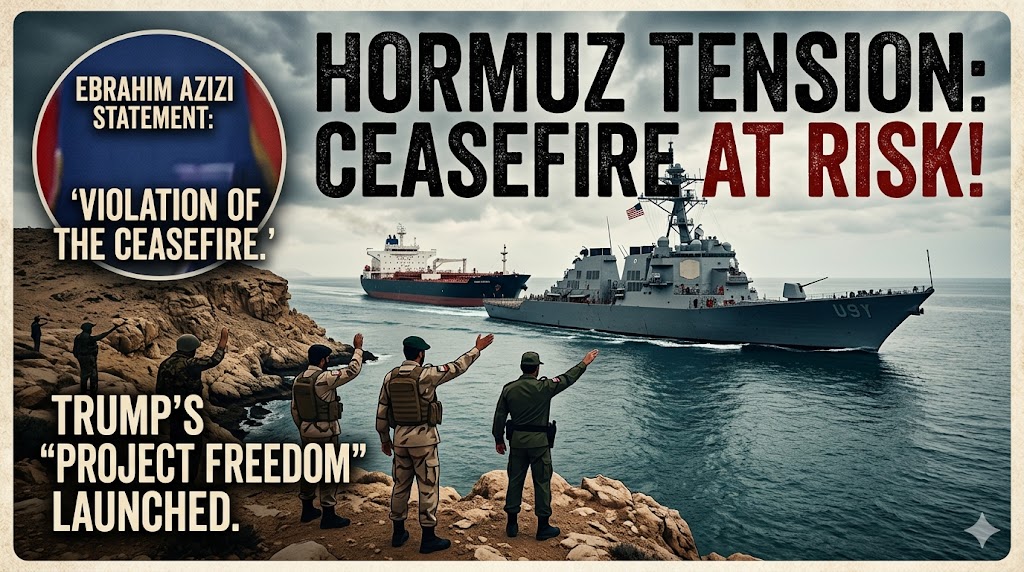
Tensions in the Persian Gulf reached a new peak on May 4, 2026, as Iranian officials issued a stark warning to the United States regarding President Donald Trump’s newly announced naval operation in the Strait of Hormuz. Tehran has described the American plan, dubbed “Project Freedom,” as a direct breach of the fragile ceasefire established in early April following weeks of intense conflict.
The Strait of Hormuz, a narrow waterway connecting the Persian Gulf to the Arabian Sea, remains one of the most strategically significant maritime passages in the world. Nearly one-fifth of global oil and liquefied natural gas transits through this chokepoint daily under normal circumstances. Decades of geopolitical friction have repeatedly turned this vital artery into a flashpoint, and the latest developments threaten to disrupt international energy markets once again.
In a series of statements, Iranian lawmakers and military commanders emphasized that any unauthorized foreign military presence or escort activities in the strait would be met with resistance. This article examines the background, immediate reactions, broader implications, and potential paths forward in this rapidly evolving situation.
The current ceasefire between the United States and Iran took effect on April 8, 2026, after a period of direct confrontations that included strikes and counterstrikes. Both sides had accused the other of escalating hostilities, with shipping in the Strait of Hormuz becoming severely restricted amid the chaos.
Iran had exercised greater control over the waterway during the conflict, citing security concerns and responding to what it called aggressive actions by the US and its allies. Reports emerged of ships being stranded, tankers anchored for extended periods, and significant delays in global energy shipments. Oil prices surged as markets priced in the risk of prolonged disruption.
President Trump, who had taken a firm stance throughout the crisis, announced late on May 3 that the US would begin a humanitarian mission to guide stranded vessels out of the Gulf. In a public statement, he framed the operation as essential for restoring freedom of navigation and supporting international commerce, noting that many ships were reportedly running low on supplies.
The initiative, officially called Project Freedom, involves US naval forces providing escort and guidance to commercial vessels. Trump emphasized that the effort was not aimed at provocation but at resolving a humanitarian and economic bottleneck. However, Iranian responses were swift and unequivocal.
Tehran’s Strong Warning: A Ceasefire Violation?
Ebrahim Azizi, head of the Iranian parliament’s National Security Commission, was among the first to respond publicly. In a post on X (formerly Twitter), Azizi declared that any American interference in the “new maritime regime” of the Strait of Hormuz would be considered a violation of the ceasefire. He further stated that the Persian Gulf would not be managed according to what he termed “Trump’s delusional posts.”
Iran’s military went further, issuing a general warning that any foreign armed forces—particularly those of the “aggressive US army”—approaching or entering the strait would be subject to attack. State media highlighted the IRGC’s determination to maintain control over the waterway in coordination with Iranian naval forces.
Analysts in Tehran, as reported by international correspondents, noted that the recent war had fundamentally altered the dynamics in the region. Iran views its role in securing the strait as non-negotiable, especially in the absence of a comprehensive agreement addressing broader grievances such as sanctions and regional security arrangements.
Reports also surfaced of an alleged incident involving missiles fired at a US frigate near the strait, though US Central Command quickly denied any damage or successful strike. These conflicting claims have only heightened the sense of uncertainty and risk.
Strategic Importance of the Strait of Hormuz
To fully appreciate the stakes, one must understand the geography and economics involved. The Strait of Hormuz is approximately 21 miles wide at its narrowest point, with shipping lanes even more constrained. Tankers and other vessels must navigate carefully, making them vulnerable to disruption.
Historically, Iran has threatened to close the strait during periods of high tension, a move that could send oil prices skyrocketing and trigger global economic repercussions. In the current context, the combination of prior blockades, naval posturing, and now the US escort mission creates a volatile mix.
Major importers such as China, Japan, India, and European nations rely heavily on stable flows through Hormuz. Any sustained interruption could exacerbate inflationary pressures worldwide at a time when many economies are still recovering from previous shocks.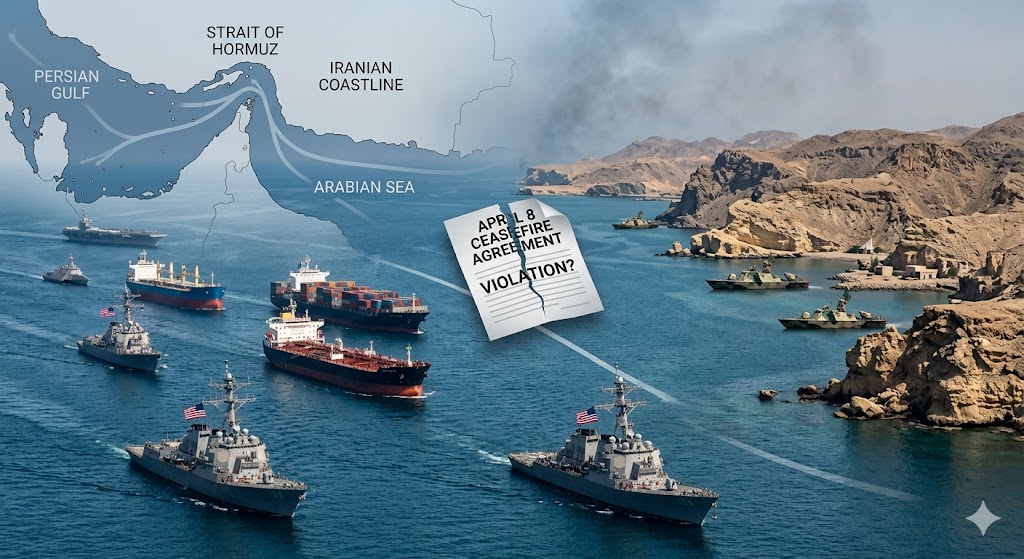
Strait of hormuz
International Reactions and Diplomatic Efforts
The international community has watched developments with concern. Gulf Arab states, while often aligned against Iranian influence, have their own interests in maintaining open shipping lanes. Some have quietly supported efforts to de-escalate, fearing spillover effects.
European leaders and Asian economic powers have called for restraint from both Washington and Tehran. Behind-the-scenes diplomacy, including mediation efforts involving Pakistan and others, continues, with Iran having recently submitted a 14-point proposal that Trump described as unsatisfactory but under review.
NATO allies have shown limited enthusiasm for direct involvement in Hormuz operations, adding another layer of complexity to US strategy. Trump has previously expressed frustration with burden-sharing among partners in such missions.
Potential Scenarios and Risks Ahead
Several paths could unfold in the coming days and weeks:
1. De-escalation through Diplomacy: Both sides might find a face-saving arrangement, perhaps through coordinated passage under monitored conditions or renewed talks in a neutral venue.
2. Limited Confrontation: Isolated incidents could occur without full resumption of hostilities, serving as warnings while negotiations proceed.
3. Escalation: If US vessels proceed with escorts and Iran follows through on threats, a new cycle of violence could erupt, with severe consequences for global energy security.
Military experts caution that miscalculation remains a significant danger in such tightly confined waters, where response times are short and fog of war can obscure intentions.
Economic Implications for Global Markets
Energy analysts predict that prolonged uncertainty could keep oil prices elevated, potentially above $90-100 per barrel depending on the severity of disruptions. Shipping insurance rates for the Gulf have already risen, and companies are exploring alternative—though costlier—routes.
For countries like India and China, securing alternative supplies or diplomatic assurances has become a priority. The ripple effects could influence everything from gasoline prices at pumps to manufacturing costs worldwide.
Historical Context of Hormuz Crises
This is not the first time the strait has been at the center of conflict. During the 1980s Tanker War, Iran and Iraq targeted vessels in the region, prompting international interventions. More recently, incidents involving seizures and attacks have underscored the perennial vulnerabilities.
What distinguishes the current episode is the direct US-Iran military dimension following a period of open conflict, making the ceasefire particularly delicate.
Voices from the Region
Residents and officials in coastal areas near the strait express anxiety about renewed fighting. Fishermen and local maritime workers worry about livelihoods, while broader Iranian public sentiment, as reflected in state media, emphasizes sovereignty and resistance to external pressure.
On the US side, the administration highlights the need to protect free navigation as a core principle of international law, benefiting not just America but trading partners globally.
Analysis: Balancing Security, Diplomacy, and Economics
The situation reflects deeper unresolved issues in US-Iran relations, including nuclear concerns, regional proxy conflicts, and sanctions. While the ceasefire provided a temporary breathing space, underlying mistrust persists.
Successful resolution will likely require creative diplomacy that addresses immediate maritime security while tackling longer-term political questions. Experts suggest confidence-building measures, such as joint monitoring or third-party verification, could help bridge gaps.
Conclusion: A Critical Juncture for Regional Stability
As the US begins its Project Freedom operation and Iran maintains its firm position, the world holds its breath. The Strait of Hormuz has once again become a stage where great power interests collide with the imperatives of global commerce and peace.
Whether this latest confrontation leads to breakthrough negotiations or renewed crisis depends on the choices made in the coming hours and days by leaders in Washington, Tehran, and beyond. For now, the priority remains preventing missteps that could plunge the region—and energy markets—back into turmoil.
The coming developments will undoubtedly shape not only Middle Eastern geopolitics but also the broader international order in an increasingly interconnected world.