Keir Starmer Condemns Iran Strike on UAE, Urges Diplomacy
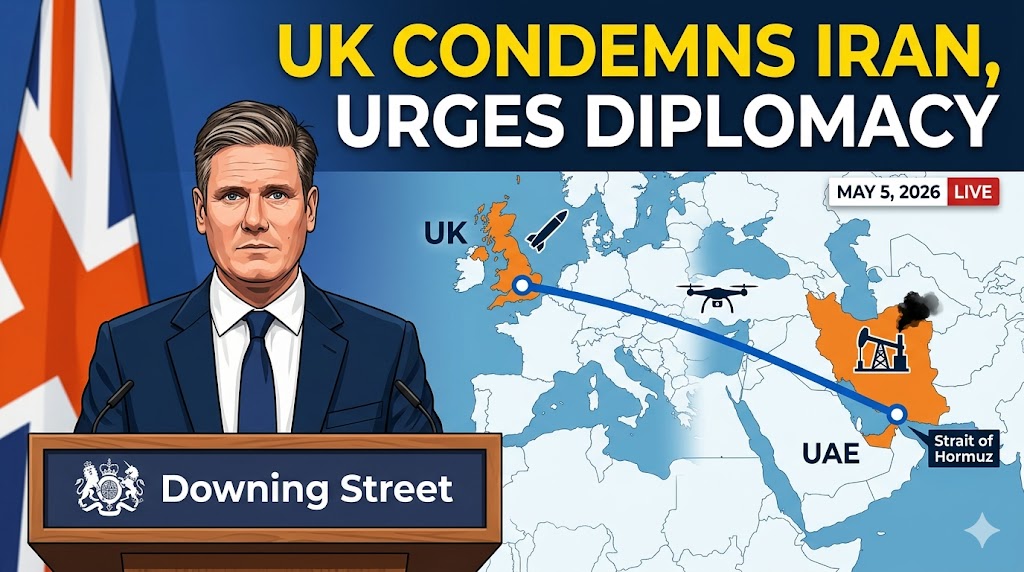
British Prime Minister Keir Starmer has firmly condemned Iran's drone and missile strikes targeting the United Arab Emirates, describing the actions as a dangerous escalation that threatens regional stability. In an official statement issued on May 4, 2026, Starmer expressed the United Kingdom's solidarity with the UAE and emphasized the need for Iran to return to diplomatic negotiations to safeguard the recent ceasefire.
The strikes, which marked the first major breach since the US-Iran ceasefire took hold in early April, involved multiple ballistic missiles, cruise missiles, and drones. UAE air defenses intercepted most threats, but a drone impact sparked a fire at the Fujairah oil facility, injuring three Indian workers. This incident has drawn widespread international attention, coming alongside US naval operations in the Strait of Hormuz.
Starmer's response underscores Britain's longstanding commitment to Gulf security and its role as a key player in efforts to prevent broader conflict. This article examines the Prime Minister's statement in detail, the context of the attacks, international reactions, and the wider implications for global energy security and diplomacy.
In a clear and measured statement, Prime Minister Keir Starmer said: “The UK condemns the drone and missile strikes targeting the United Arab Emirates. We stand in solidarity with the UAE and will continue to support the defence of our partners in the Gulf. This escalation must cease. Iran needs to engage meaningfully in negotiations to ensure the ceasefire in the Middle East endures, and a long-term diplomatic solution is achieved.”
The Prime Minister's office highlighted that stability in the Gulf directly affects the United Kingdom, referencing his recent regional visit where he stressed the importance of secure shipping lanes and partnerships. Starmer's calls for diplomacy reflect the UK's preference for de-escalation while maintaining strong defensive alliances in the area.
UK officials have coordinated closely with allies, including the United States and Gulf Cooperation Council members, to monitor the situation and support defensive measures. The condemnation aligns with Britain's broader foreign policy approach of upholding international norms and protecting economic interests tied to energy flows from the region.
Context of Iran's Strikes on the UAE
The attacks occurred on May 4 as US forces conducted operations under Project Freedom to ensure safe passage through the Strait of Hormuz. Iranian small boats reportedly interfered with commercial shipping, leading to US actions that sank several vessels. In apparent response, Iran launched a barrage of projectiles toward the UAE.
UAE authorities reported engaging around 12 ballistic missiles, three cruise missiles, and four drones. While most were neutralized, the strike on Fujairah's petroleum industries zone caused a major fire and injuries to civilian workers. The UAE has held Iran responsible and reserved the right to respond appropriately.
Iran has offered mixed responses, with some statements denying direct targeting of UAE territory while framing actions as defensive. This latest development tests the fragile April ceasefire, which had aimed to reduce hostilities following months of maritime tensions.
.jpeg)
Analyzing Starmer's Statement (Infographic)
UK's Historical Ties with the Gulf and Strategic Interests
The United Kingdom maintains deep historical and economic connections with the United Arab Emirates and other Gulf states. From security partnerships to substantial trade links, particularly in energy, finance, and defense, these relationships form a cornerstone of UK foreign policy in the Middle East.
Starmer's condemnation builds on this foundation. The UK has deployed assets in the region previously to support freedom of navigation and has participated in international coalitions addressing threats to shipping. The Prime Minister's emphasis on supporting the defense of partners reflects ongoing commitments, including potential contributions to air and maritime security.
Economically, disruptions in the Strait of Hormuz — through which a significant portion of global oil passes — would impact energy prices and supply chains affecting British consumers and businesses. Starmer's statement balances moral and strategic condemnation with pragmatic calls for dialogue.
International Reactions to the Incident
Starmer's position forms part of a broader chorus of international condemnation. Saudi Arabia, other Gulf nations, and Western allies have expressed similar concerns. The United States, under President Donald Trump, has focused on naval operations while issuing warnings to Iran.
European partners are monitoring developments closely, with many urging restraints. Calls for de-escalation have also come from the United Nations and various diplomatic channels, including mediators from Pakistan and Oman who played roles in the original ceasefire.
China and Russia, with their own interests in Iranian energy, have advocated for calm but offered nuanced views on the underlying causes. The incident highlights divisions in the international community while reinforcing shared concerns over energy security and civilian safety.
Analysis of Military and Diplomatic Dimensions
Military experts note that the UAE's air defense systems performed effectively, limiting damage despite the volume of incoming threats. This incident demonstrates advancements in regional defensive capabilities but also the persistent risks posed by drone and missile technologies.
From a diplomatic perspective, Starmer's call for meaningful engagement underscores the challenges of enforcing ceasefires in a region with deep-seated rivalries. The involvement of civilian infrastructure and foreign workers adds a humanitarian imperative to resolution efforts.
The UK, as a permanent member of the UN Security Council, is well-positioned to support multilateral initiatives. Starmer's government has emphasized learning from past conflicts, prioritizing measured responses over escalation.
Economic Implications and Global Energy Concerns
The strikes have already influenced oil markets, with prices rising sharply on fears of supply disruptions. Fujairah's importance as an export terminal bypassing the Strait makes the attack symbolically and practically significant.
For the UK and global economies, sustained instability could lead to higher energy costs, inflationary pressures, and challenges for industries reliant on stable shipping. Analysts suggest that diversification efforts may accelerate, but immediate mitigation depends on restoring confidence in Gulf security.
Starmer's statement implicitly acknowledges these stakes by linking Gulf stability to UK interests, a point likely to resonate with domestic audiences concerned about living costs.
Broader Geopolitical Ramifications
This event places additional strain on the US-Iran ceasefire and could influence dynamics involving Israel, proxy groups in Yemen and Lebanon, and wider Middle East security architecture. The UAE's alignment with Western partners and its role in regional diplomacy make it a sensitive target.
For the United Kingdom, navigating relations with the US under Trump while maintaining European ties and Gulf partnerships requires careful balancing. Starmer's measured tone — firm condemnation paired with diplomatic outreach — reflects this nuanced approach.
Longer-term questions remain about Iran's nuclear program, ballistic missile development, and integration into a stable regional order. Starmer's emphasis on negotiations signals Britain's support for comprehensive solutions addressing multiple grievances.
Expert Perspectives and Potential Next Steps
Analysts suggest several pathways forward. Strengthened diplomatic channels, possibly involving the UK alongside Oman or Pakistan, could help de-escalate. Enhanced security cooperation between the UK, US, and Gulf states may provide reassurance.
Some observers warn of risks if cycles of retaliation emerge, potentially drawing in more actors. Others see an opportunity for renewed talks that tackle root causes, including maritime security protocols and confidence-building measures.
The role of non-state actors and information warfare in shaping narratives around such incidents adds complexity, making transparent verification essential.
Historical Parallels in UK Middle East Policy
Britain has a long record of involvement in Gulf affairs, from protectorate eras to modern security pacts. Responses to previous shipping attacks and regional crises have consistently emphasized defense of allies alongside diplomatic engagement — a pattern evident in Starmer's latest statement.
Learning from interventions in Iraq and elsewhere, the current UK government stresses proportionality and multilateralism, themes likely to guide further actions..jpeg)
Strategic Context of the Attack (Schematic Map)
Conclusion
UK Prime Minister Keir Starmer's condemnation of Iran's strikes on the UAE sends a clear message of solidarity with Gulf partners while advocating urgently for diplomacy to prevent further escalation. As the situation in the Strait of Hormuz and surrounding areas remains fluid, the international community watches closely for signs of restraint or renewed tension.
The coming days will test the resilience of ceasefire arrangements and the effectiveness of diplomatic efforts. Britain's position, articulated firmly yet constructively by Starmer, underscores its commitment to stability, security, and long-term peaceful resolutions in a vital region.
Stakeholders across governments, markets, and civil society share an interest in supporting measures that protect civilians, secure energy flows, and foster meaningful dialogue. The UK stands ready to play its part in these endeavors, consistent with its alliances and values.