National Paranormal Day: Exploring the Unexplained
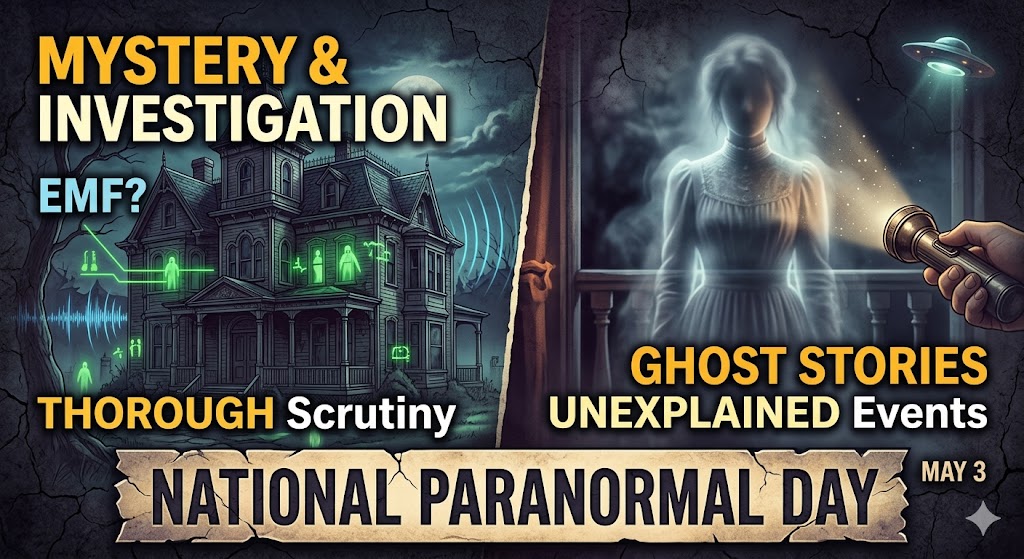
Every year on May 3, enthusiasts and skeptics alike mark National Paranormal Day, a occasion dedicated to the mysterious, the unexplained, and the things that lie just beyond the edge of our understanding. Created around 2013, this day encourages open discussion about experiences that challenge conventional reality. Whether one believes in spirits, extraterrestrial visitors, or otherworldly forces, the day serves as a reminder that curiosity about the unknown has deep roots in human nature.
On National Paranormal Day, people reflect on reports of ghosts, poltergeists, cryptids, and strange aerial phenomena. Yet the day also invites a thoughtful examination of why everyday occurrences sometimes take on a supernatural hue. What makes ordinary events feel magnificent or menacing? Even after thorough investigation, some experiences resist easy classification, leaving room for wonder. This article delves into the history and celebrations of National Paranormal Day, the psychology behind paranormal perceptions, iconic stories, notable locations, and the ongoing dialogue between belief and skepticism.
National Paranormal Day emerged quietly, much like the phenomena it honors. Its exact creator remains unknown, adding an element of mystery fitting for the occasion. Some link the May 3 date to the 1932 death of Charles Fort, the American writer renowned for collecting accounts of anomalous events—from falls of frogs and fish to teleportation and unidentified flying objects. Fort’s work challenged scientific orthodoxy and inspired generations of researchers into the strange.
The day gained traction in the early 2010s as social media amplified personal stories. It provides a platform for believers to share encounters without judgment and for skeptics to explore why such reports persist across cultures and centuries. More than seventy percent of Americans reportedly believe they have had a paranormal or supernatural experience, underscoring the day’s broad appeal.
At its core, National Paranormal Day celebrates open-minded inquiry. It reminds us that the boundary between the normal and the extraordinary often blurs, inviting us to question assumptions about reality itself.
How National Paranormal Day Is Celebrated Worldwide
Celebrations of National Paranormal Day vary widely, reflecting diverse interests and levels of belief. Many gather with friends to exchange personal ghost stories or inexplicable events. Others organize virtual meetups or attend local ghost tours, especially in historically rich areas.
Popular activities include watching classic paranormal films like those in the Paranormal Activity series or documentaries on famous investigations. Reading books by authors who documented strange occurrences, such as Fort’s compilations, remains a favorite pastime. Some enthusiasts visit reputed haunted sites, equipped with recording devices in hopes of capturing evidence.
Parties with themed decor—dim lighting, Ouija boards (used cautiously), and storytelling circles—create immersive experiences. In some communities, experts lead discussions on topics ranging from UFO sightings to psychic phenomena. Social media plays a central role, with the hashtag #NationalParanormalDay trending annually as users post eerie photos, personal accounts, and memes.
Even skeptics participate by examining scientific perspectives on reported events. Educational events at museums or libraries sometimes feature panels balancing believer testimonies with psychological and environmental explanations. This inclusive approach makes the day accessible, fostering dialogue rather than division.
The Human Fascination: Why Normal Things Seem Paranormal
Humans possess a remarkable capacity to find wonder in the mundane, sometimes interpreting it as something negative or supernatural. Evolutionary psychology suggests this tendency helped ancestors stay alert to potential dangers. A shadow in the corner or an unexplained sound could signal real threats in prehistoric environments. In modern times, this wiring persists, turning ordinary stimuli into sources of awe or fear.
Pareidolia, the brain’s habit of seeing patterns like faces in random objects, explains many “ghost” sightings in photos or videos. Infrasound—low-frequency vibrations below human hearing—can induce unease, chills, and visual distortions, often reported in old buildings. Electromagnetic fields, carbon monoxide leaks, sleep paralysis, and even mold have been linked to sensations of presence or hallucinations.
Yet the query remains: why do these explanations not fully satisfy everyone? Some experiences endure scrutiny, with witnesses describing details that defy simple rationalization. This gap between evidence and perception keeps the paranormal compelling. National Paranormal Day highlights this tension, encouraging respect for both scientific rigor and personal testimony. What feels magnificent or terrifying often reveals more about human consciousness than about external forces.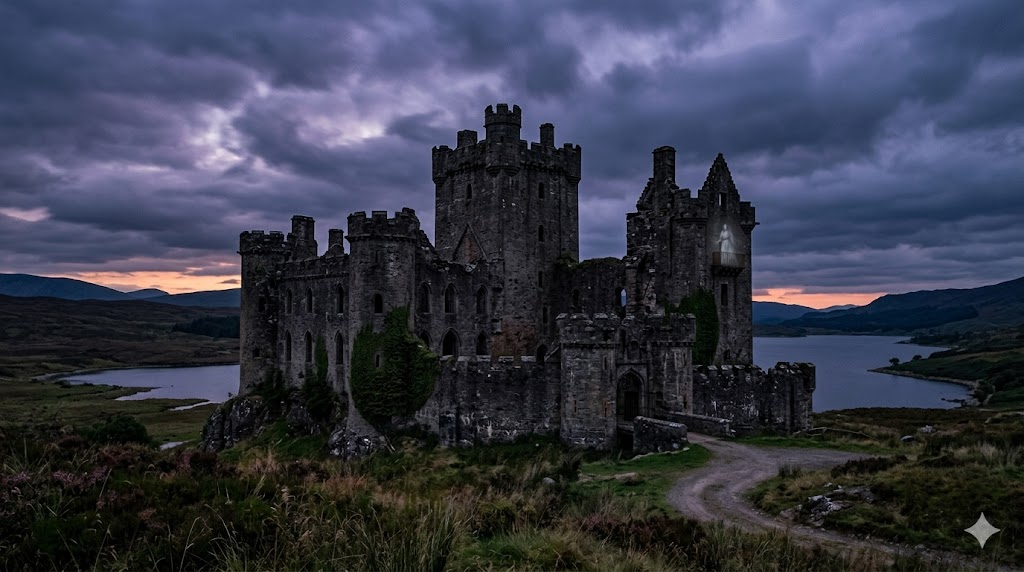
An illustrative visualization of an iconic haunted location on National Paranormal Day. A crumbling Gothic structure (inspired by descriptions like Eastern State Penitentiary or Glamis Castle) is illuminated by moonlight, with a transparent spectral figure appearing on an upper balcony, capturing the eerie fascination with lingering historical spirits.
Famous Paranormal Stories That Continue to Intrigue
Throughout history, certain accounts have captured the public imagination. The Amityville Horror, for instance, involved a family reporting terrifying disturbances in their New York home shortly after a mass murder. While skeptics point to inconsistencies and possible hoaxes, the story inspired books and films that shaped popular views of demonic activity.
The Bell Witch legend from early 19th-century Tennessee describes a spirit that tormented a family, allegedly causing illness and even contributing to a death. Witnesses included future president Andrew Jackson, according to lore. Investigations continue to debate whether natural explanations or collective hysteria account for the events.
UFO-related stories also feature prominently. The 1947 Roswell incident, where debris found in New Mexico sparked alien conspiracy theories, remains a cornerstone of extraterrestrial lore. Declassified documents and eyewitness testimonies fuel ongoing debate, even as official explanations cite weather balloons or secret military projects.
Poltergeist cases, like the Enfield Poltergeist in 1970s Britain, involved objects moving, voices, and levitations captured on recordings. While some footage faced criticism, the sheer volume of reports from multiple witnesses keeps the case alive in paranormal circles.
These stories endure because they blend tragedy, mystery, and the unknown. They illustrate how personal experiences can transcend individual belief systems and enter cultural mythology.
Iconic Haunted Places Around the World
Certain locations consistently rank among the most haunted due to their tragic histories and reported activity. The Stanley Hotel in Estes Park, Colorado, inspired Stephen King’s The Shining. Guests report hearing phantom piano music, children’s laughter, and seeing apparitions. Its remote setting and architectural grandeur amplify the eerie atmosphere.
Eastern State Penitentiary in Philadelphia operated as a solitary confinement facility with a reputation for harsh conditions. Visitors and investigators describe shadowy figures, footsteps, and feelings of being watched. Its crumbling Gothic architecture adds to the sense of lingering unrest.
Across the Atlantic, Glamis Castle in Scotland hosts legends of a secret room, a tongueless woman, and the Grey Lady ghost. Its royal connections and medieval origins provide fertile ground for tales.
Poveglia Island near Venice, Italy, carries a dark legacy as a plague quarantine site and later a psychiatric hospital. Reports of screams, apparitions, and oppressive energy have made it a restricted site for most visitors.
In Australia, the Monte Cristo Homestead stands as one of the country’s most haunted houses. Owners and guests describe a woman in white, cold spots, and unexplained sounds linked to past tragedies.
These places draw tourists and researchers alike, offering tangible connections to stories that might otherwise fade into legend. National Paranormal Day often sees increased visits or virtual tours of such sites.
Scientific Investigations and Enduring Mysteries
Modern paranormal research employs technology like EVP recorders, thermal cameras, and EMF meters. Organizations conduct controlled studies, yet results remain mixed. Some anomalies appear on recordings, while others prove explainable upon closer analysis.
Investigators like those following in the footsteps of Harry Price in the early 20th century emphasized rigorous protocols. Today’s researchers continue this tradition, acknowledging that many claims stem from misperception while remaining open to genuine unknowns.
Sleep paralysis, where the body remains immobile during wakefulness and hallucinations occur, accounts for numerous “entity” encounters. Environmental factors in old structures—drafts, creaking wood, settling foundations—explain others. Still, a small percentage of cases resist full explanation, fueling continued interest.
This balance defines National Paranormal Day: honoring belief while appreciating science’s contributions. The day does not demand acceptance of every claim but encourages critical thinking alongside wonder.
The Role of Media and Popular Culture
Films, television shows like Ghost Hunters, podcasts, and books amplify interest in the paranormal. They dramatize events, sometimes blurring lines between entertainment and evidence. Yet they also introduce broader audiences to investigative methods and historical contexts.
Social media democratizes storytelling. Viral videos of supposed apparitions spark debates, fact-checking, and new investigations. This digital landscape keeps National Paranormal Day vibrant and evolving.
Psychological and Cultural Perspectives
Belief in the paranormal often correlates with intuitive thinking styles and openness to experience. Cultural backgrounds influence interpretations—ancestral spirits in one tradition become ghosts in another. These differences enrich global discussions on the day.
Even after investigations conclude that many events have natural causes, the emotional impact on witnesses remains real. Respecting these experiences without uncritical acceptance strikes a healthy balance.
Why the Paranormal Endures
Despite advances in science, the allure of the unexplained persists. It speaks to fundamental questions about consciousness, mortality, and humanity’s place in the cosmos. National Paranormal Day provides an annual opportunity to explore these questions collectively, blending fear, fascination, and fun.
Some phenomena may eventually yield to scientific understanding. Others might always hover at the edge of knowledge, reminding us of the universe’s vast mysteries.
Conclusion: Embracing the Unknown on National Paranormal Day
As another May 3 passes, National Paranormal Day invites reflection on the magnificent within the mundane and the ordinary within the extraordinary. Whether sharing stories around a table, visiting a historic site, or pondering personal encounters, participants contribute to a living tradition of curiosity.
The day does not resolve debates between believers and skeptics but celebrates the space where they meet. In a world often dominated by the explainable, it carves room for wonder. After all, the truth—whatever form it takes—remains out there, waiting to be explored.