AI and Machine Learning: Revolutionizing Our World
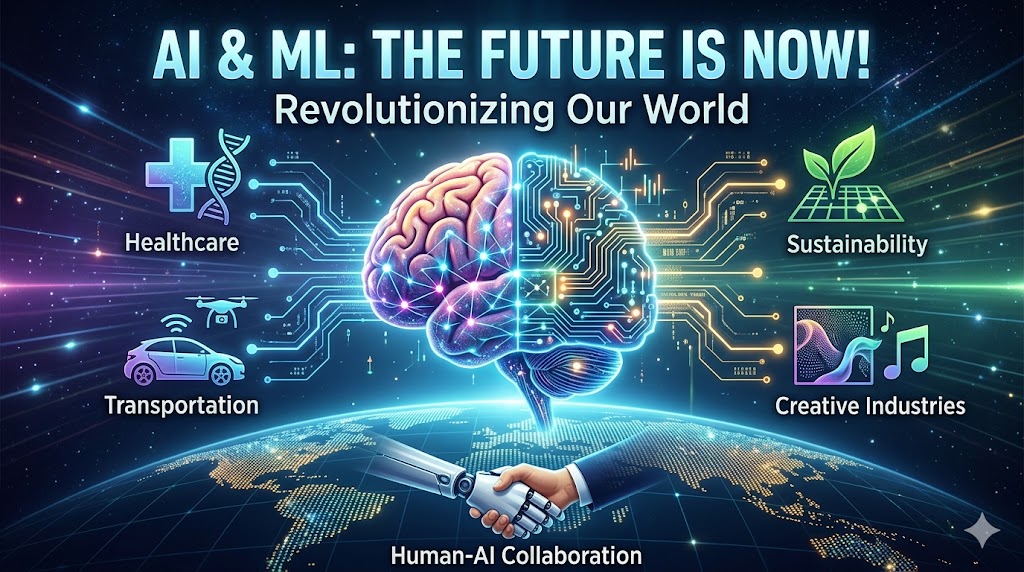
In an era defined by rapid technological progress, AI and machine learning have emerged as transformative forces that are reshaping industries, societies, and daily life. Machine learning, a core subset of artificial intelligence, empowers computers to learn from data, identify patterns, and make decisions with minimal human intervention. Many experts consider it one of the greatest inventions of the new generation because of its ability to solve complex problems that once seemed insurmountable.
From healthcare diagnostics to personalized recommendations on streaming platforms, machine learning is quietly enhancing human capabilities. This article examines the evolution, mechanisms, applications, and profound impact of AI and machine learning on people worldwide. We will also explore future possibilities and the responsible path forward.
Understanding the Foundations of AI and Machine Learning
Artificial intelligence encompasses systems designed to mimic human cognitive functions such as learning, reasoning, and problem-solving. Machine learning takes this further by enabling algorithms to improve automatically through experience. Instead of being explicitly programmed for every task, ML models train on vast datasets, refining their accuracy over time.
There are three primary types of machine learning:
Supervised Learning:Models learn from labeled data, making predictions on new inputs. Common in email spam detection and image classification.
Unsupervised Learning: Algorithms identify hidden patterns in unlabeled data, useful for customer segmentation and anomaly detection.
Reinforcement Learning: Systems learn through trial and error, receiving rewards for desired outcomes. This powers autonomous vehicles and game-playing AI.
Deep learning, a sophisticated branch of machine learning, uses neural networks with multiple layers to process complex data like speech and images. These advancements have accelerated progress in AI technology, making tools more accessible and powerful.
The journey began with early concepts in the 1950s, but breakthroughs in computing power, big data, and algorithms in the 21st century propelled AI and machine learning into mainstream applications.
Why Machine Learning Is One of the Greatest Inventions
Machine learning stands out because it amplifies human potential rather than merely automating tasks. Traditional software follows fixed rules, but ML adapts and evolves. This flexibility drives innovation across sectors.
Consider predictive analytics: machine learning models forecast disease outbreaks, optimize supply chains, and predict financial market trends with remarkable precision. Its iterative nature means performance improves as more data becomes available, creating a virtuous cycle of advancement.
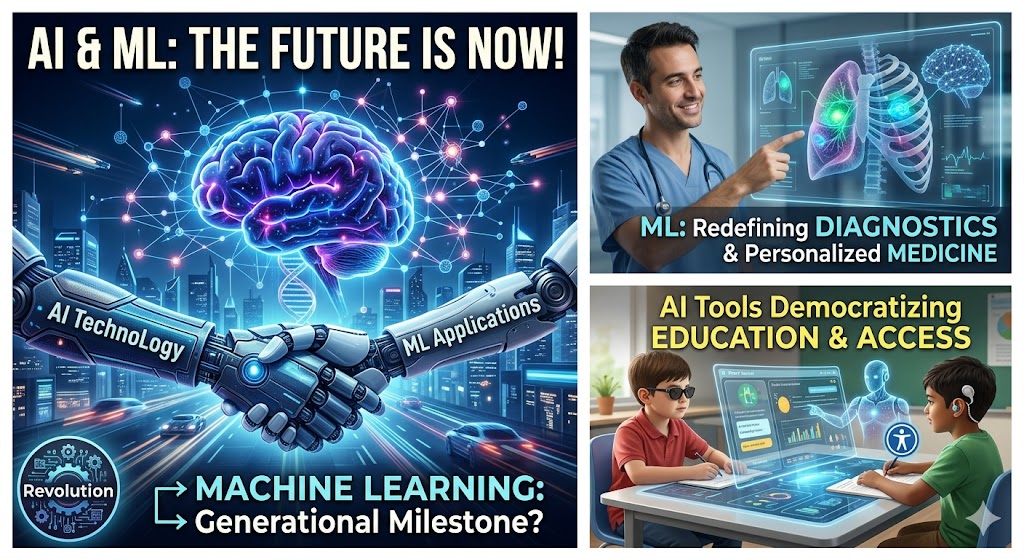
Unlike many inventions limited to specific domains, AI and machine learning offer universal applicability. They democratize knowledge by translating languages in real time, assisting the visually impaired through image recognition, and enabling breakthroughs in scientific research. This broad utility justifies viewing machine learning as a generational milestone comparable to electricity or the internet.
How AI and Machine Learning Are Helping People
The human impact of AI and machine learning is both profound and personal. Here are key areas where benefits are most evident:
Healthcare Revolution: Machine learning algorithms analyze medical images to detect cancers earlier than human radiologists in some cases. Predictive models identify patients at risk of chronic conditions, enabling preventive care. During global health crises, AI helped accelerate vaccine development by modeling protein structures. Personalized medicine tailors treatments to individual genetics, improving outcomes and reducing side effects.
Education Accessibility: Adaptive learning platforms powered by machine learning customize lessons to a student's pace and style. AI tutors provide 24/7 support, bridging gaps in under-resourced areas. Tools for language learning and accessibility features help diverse learners thrive.
AI and ML : The future is Now
Daily Convenience and Productivity: Virtual assistants like Siri or Alexa rely on AI and machine learning for natural language processing. Recommendation engines on e-commerce sites save time and enhance shopping experiences. Smart home systems optimize energy use, lowering costs and environmental impact.
Environmental Sustainability: Machine learning models monitor climate patterns, predict natural disasters, and optimize renewable energy grids. AI analyzes satellite imagery to track deforestation and wildlife populations, supporting conservation efforts.
Economic Empowerment: In agriculture, machine learning-driven precision farming increases yields while reducing water and pesticide use. Financial inclusion tools assess creditworthiness for unbanked populations using alternative data. Job markets benefit from AI matching candidates with opportunities more efficiently.
These applications demonstrate how AI and machine learning address pressing challenges, from inequality to climate change, while improving quality of life.
Real-World Applications and Success Stories
Autonomous Transportation: Companies use machine learning for self-driving technology, promising safer roads and reduced traffic congestion. Computer vision and sensor fusion enable vehicles to navigate complex environments.
Creative Industries Generative AI creates art, music, and literature, augmenting human creativity. Tools assist filmmakers with editing and writers with ideation.
Business Intelligence: Enterprises leverage machine learning for fraud detection, customer sentiment analysis, and operational optimization. Small businesses gain competitive edges through affordable AI tools.
Scientific Discovery: AlphaFold, an AI and machine learning system, solved the protein folding problem that puzzled scientists for decades, accelerating drug discovery and biological research.
These examples illustrate the tangible ways machine learning is embedded in modern life, delivering measurable value to individuals and organizations.
Challenges and Ethical Considerations
Despite its promise, AI and machine learning present challenges. Bias in training data can perpetuate inequalities. Privacy concerns arise from data collection practices. Job displacement in certain sectors requires workforce reskilling.
Energy consumption of large models raises sustainability questions. Ensuring transparency—often called "explainable AI"—builds public trust. Governments and organizations are developing frameworks for responsible AI technology, emphasizing fairness, accountability, and human oversight.
Addressing these issues proactively will determine how equitably the benefits of machine learning are distributed. Collaboration between technologists, policymakers, and communities is essential.
The Future of AI and Machine Learning
Looking ahead, AI and machine learning will likely integrate more deeply with other technologies like quantum computing, IoT, and biotechnology. Multimodal models that process text, images, and audio simultaneously will become standard.
Personalized AI companions could support mental health and lifelong learning. Advances in machine learning may lead to breakthroughs in fusion energy, personalized education at scale, and space exploration.
The focus is shifting toward human-AI collaboration, where machines handle repetitive tasks and humans provide creativity, empathy, and strategic thinking. This synergy promises a future where AI and machine learning amplify human flourishing.
Getting Started with AI and Machine Learning
For individuals and organizations interested in adopting these technologies:
Begin with online courses on platforms covering fundamentals.
Experiment with open-source tools and datasets.
Focus on problem-solving: identify specific challenges where machine learning can add value.
Prioritize ethics and continuous learning.
Businesses should invest in talent development and robust data strategies. The barrier to entry is lower than ever, with cloud services making powerful AI technology accessible.
Conclusion: Embracing the Potential of Machine Learning
AI and machine learning represent more than technological progress—they embody humanity's ingenuity in creating tools that learn and grow alongside us. As one of the greatest inventions of the new generation, machine learning continues to help people by solving complex problems, enhancing creativity, and opening new opportunities.
The journey is ongoing. By approaching AI and machine learning with curiosity, responsibility, and inclusivity, we can harness their full potential to build a better world. The future belongs to those who learn to collaborate with these intelligent systems while staying grounded in human values.