Alexander the Great: The Undefeated Conqueror of the world
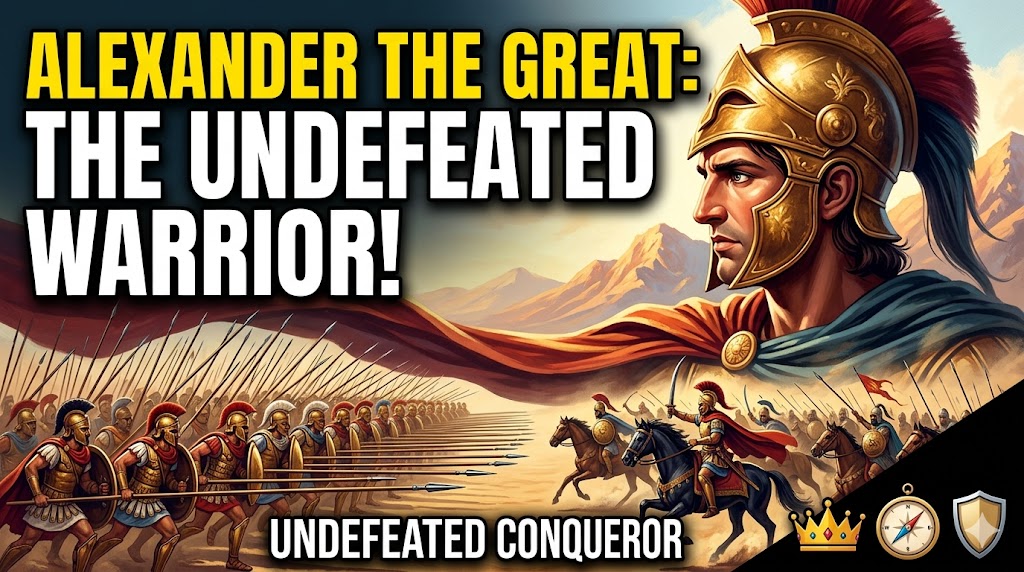
Alexander III of Macedon, known to history as Alexander the Great, stands as one of the most extraordinary figures in human civilization. In just over a decade, this young king forged an empire stretching from the Balkans to the Indus River, defeating vast armies and toppling the mighty Persian Empire without losing a single major battle. His name evokes images of relentless ambition, tactical brilliance, and charismatic leadership that inspired soldiers to march thousands of miles into the unknown.
Born in 356 BCE, Alexander died in 323 BCE at the age of 32, yet his achievements reshaped the ancient world and laid the foundations for the Hellenistic Age. He is celebrated as the greatest undefeated warrior not merely for his victories, but for how he achieved them—through innovation, adaptability, and an unyielding vision. This article delves into his life, strategies, key battles, personal nature, and the poignant irony of his death from a simple fever, offering insights into why he remains a timeless symbol of conquest and human potential.
Early Life and Education: Foundations of Greatness
Alexander was born in Pella, the capital of Macedonia, to King Philip II and Queen Olympias. From a young age, he displayed exceptional courage and intellect. His famous taming of the wild horse Bucephalus at age 12 or 13 showcased his understanding of psychology and determination—qualities that would define his leadership.
Philip II recognized his son's potential and hired the renowned philosopher Aristotle as his tutor when Alexander was about 13. For several years at Mieza, Aristotle imparted knowledge in philosophy, ethics, politics, medicine, science, and literature. Alexander developed a lifelong love for Homer's Iliad, carrying a copy with him and aspiring to emulate heroes like Achilles.
Aristotle's teachings went beyond academics. He encouraged scientific inquiry, which later led Alexander to include scholars, botanists, and engineers in his campaigns. This intellectual foundation helped Alexander administer conquered territories wisely, blending cultures rather than merely dominating them. Though Aristotle held some ethnocentric views, Alexander often surpassed them by integrating local customs and leaders.
By his late teens, Alexander had already proven himself militarily. At the Battle of Chaeronea in 338 BCE, the 18-year-old commanded the left wing, helping secure a decisive Macedonian victory over Greek city-states and breaking the elite Sacred Band of Thebes.
When Philip II was assassinated in 336 BCE, Alexander, aged 20, ascended the throne amid threats. He swiftly eliminated rivals, quelled rebellions in Greece and the Balkans, and razed Thebes as a warning. These early actions consolidated power and prepared his army for greater ambitions: the conquest of Persia.
The Macedonian Military Machine and Alexander's Strategies
Alexander inherited a formidable army from his father, but it was his tactical genius that made it legendary. The core was the Macedonian phalanx—infantry armed with long sarissa spears (up to 6 meters) arranged in dense formations. This created an impenetrable wall of points.
Complementing the phalanx was the elite Companion Cavalry, heavily armed horsemen who delivered decisive charges. Alexander personally led these, often striking at the critical moment. He mastered combined arms warfare, integrating infantry, cavalry, archers, siege engines, and even adapting to new threats like war elephants.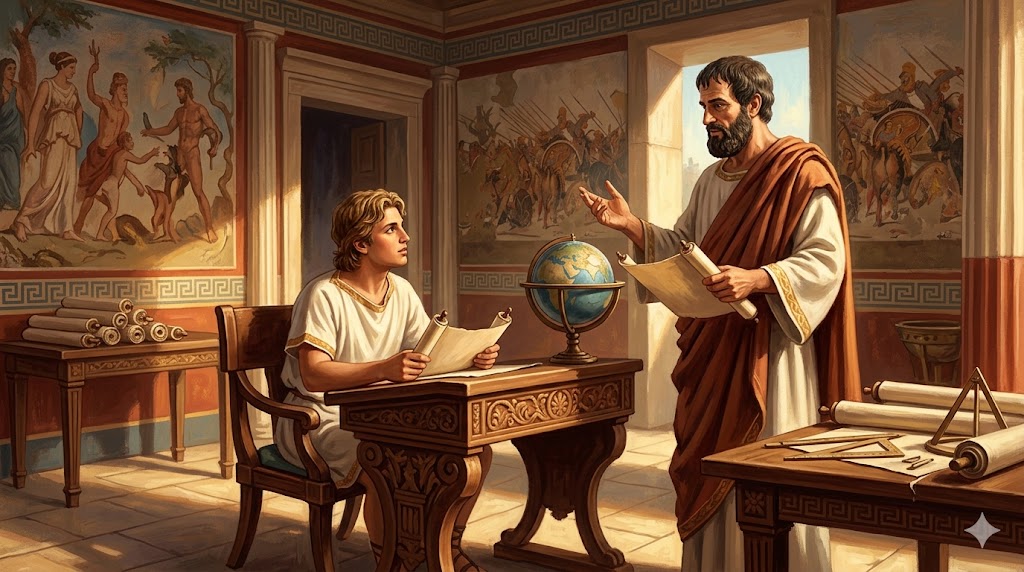
Aristotle's Pupil
Key Elements of His Military Strategies:
Oblique Order/Hammer and Anvil: Alexander would strengthen one wing (often the right, led by himself) to attack at an angle while the phalanx held the center as an "anvil." The cavalry acted as the "hammer." This was used effectively at Granicus and Issus.
Adaptability and Terrain Mastery: He chose battlegrounds carefully or modified them. At Gaugamela, he countered Persian numerical superiority with innovative formations, including a hollow square to protect against encirclement.
Speed and Surprise: Alexander moved armies faster than contemporaries, often striking before enemies were fully prepared. He excelled in sieges, famously building a causeway to capture the island city of Tyre.
Psychological Warfare and Leadership: He led from the front, sharing dangers with his troops, which built fierce loyalty. He motivated men with speeches, rewards, and a sense of destiny. Alexander also used propaganda, presenting himself as a liberator from Persian rule.
Logistics and Intelligence: His campaigns included detailed planning, supply lines, and incorporation of local knowledge. He founded cities like Alexandria to secure territories and promote Greek culture.
These strategies allowed him to defeat larger forces repeatedly through superior coordination, flexibility, and morale rather than brute strength.
Major Campaigns and Undefeated Battles
Alexander's conquests began in 334 BCE with the invasion of Asia Minor. His record: undefeated in battle across diverse terrains and enemies.
Battle of the Granicus (334 BCE): Facing Persian satraps, Alexander led a daring cavalry charge across the river, routing the enemy despite risks. This opened Anatolia.
Battle of Issus (333 BCE): Against Darius III himself, Alexander used the oblique order on a narrow plain, smashing the Persian left and forcing Darius to flee. His army captured Darius's family, showcasing mercy that won some allegiances.
Siege of Tyre (332 BCE): A masterful engineering feat. Alexander's forces built a mole (causeway) under constant attack, then stormed the city. This secured the Phoenician coast.
Conquest of Egypt (332-331 BCE): Welcomed as a liberator, Alexander was crowned Pharaoh and founded Alexandria, which became a great cultural center. He visited the Oracle of Siwa, reinforcing his divine image.
Battle of Gaugamela (331 BCE): Perhaps his masterpiece. Vastly outnumbered by Darius's army with scythed chariots and elephants, Alexander used feints, refused a night attack, and executed a decisive charge that caused the Persian lines to collapse. Darius fled again; the Persian Empire effectively ended.
Alexander pursued Darius, who was later killed by his own men. He then consolidated control over Persia, adopting some customs while founding more cities.
Indian Campaign and Battle of the Hydaspes (326 BCE): Pushing further east, Alexander faced King Porus across the monsoon-swollen Hydaspes River. Despite elephants and numerical challenges, he crossed upstream at night for a surprise flank, using combined tactics to neutralize the elephants. Porus fought bravely and was defeated but respected; Alexander made him an ally.
This was his last major battle. Exhausted troops mutinied at the Hyphasis River, forcing a return. The army marched through harsh deserts, suffering greatly, but Alexander's leadership held them together.
Throughout, he fought against Greeks, Thracians, Illyrians, Persians, Scythians, and Indians—always victorious due to preparation, adaptability, and personal valor. He was wounded multiple times but recovered to fight on.
The Nature of Alexander: Charisma, Ambition, and Complexity
Alexander was a man of contradictions. Fearlessly courageous, he inspired devotion yet could be ruthless, as in the destruction of Thebes or massacres after sieges. He sought *kleos* (glory) like Homeric heroes but also showed vision in cultural fusion—encouraging marriages between Macedonians and Persians, adopting Eastern dress at times, and promoting Hellenistic ideals.
His close companion Hephaestion was like a brother; after Hephaestion's death, Alexander mourned deeply. He drank heavily at times, leading to regrets, but his strategic mind remained sharp. Alexander's drive stemmed from destiny, competition with his father, and a belief in his own greatness—perhaps divinity.
He treated defeated kings with respect when they submitted, integrating them into his administration, which helped stabilize conquests.
The Mysterious Death: A Single Fever Ends an Empire
In 323 BCE, while planning further campaigns (possibly Arabia), Alexander fell ill in Babylon after a banquet. He suffered a high fever for about 10-14 days, with chills, sweats, and progressive weakness. He died on June 10 or 13, 323 BCE, at just 32.
The cause remains debated: likely typhoid fever, malaria, or another infection common in the region. Poisoning theories persist but lack strong evidence. The irony is profound—an undefeated warrior who survived countless battles and wounds succumbed to illness. His empire, without a clear heir, fragmented among generals (the Diadochi wars).
No confirmed tomb has been found, though legends place it in Alexandria, Egypt. Searches continue, adding to his mystique.
Legacy: Why He Remains the Greatest Undefeated Warrior
Alexander's empire facilitated the spread of Greek language, philosophy, art, and science across the known world, influencing Rome, Christianity, and beyond. Cities he founded thrived; cultural exchanges enriched civilizations.
Military academies still study his tactics. Leaders like Julius Caesar and Napoleon admired him. His undefeated record, achieved against superior numbers through intellect rather than luck, cements his status. He embodied the warrior-philosopher ideal.
Yet, his conquests brought destruction alongside progress. Modern views balance his genius with the human cost.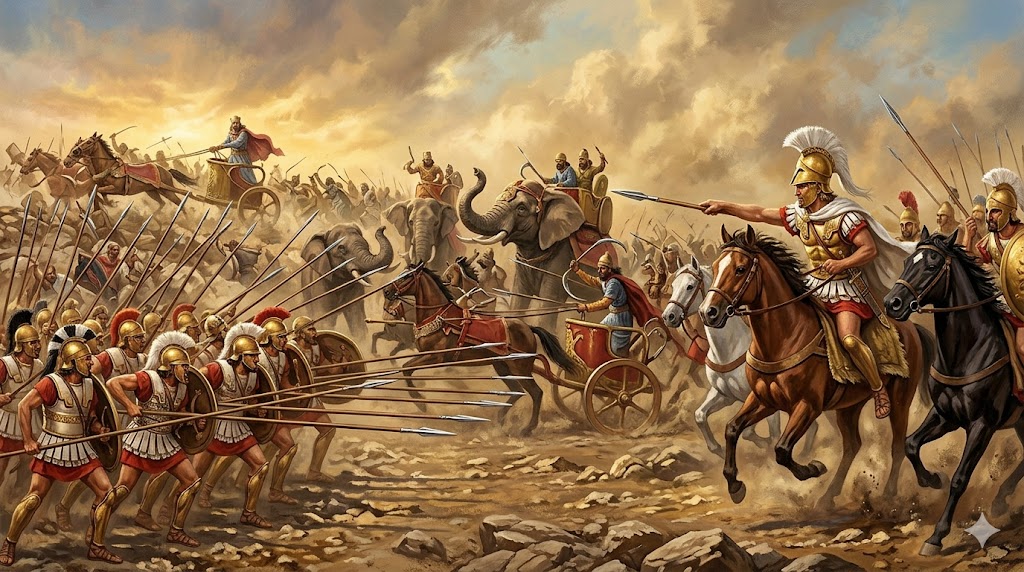
A grand historical painting capturing the chaotic and decisive Battle of Gaugamela, arguably the masterpiece among Alexander the Great’s battles.
Conclusion
Alexander the Great's story is one of unparalleled ambition realized through brilliance and bravery. From Aristotle's pupil to master of the ancient world, he never lost a battle, conquered vast territories, and changed history's course. His death from fever at the height of power reminds us of mortality's fragility. Yet his legacy endures as the ultimate undefeated warrior—a testament to human potential when vision meets action.
His life inspires: strategic thinking, bold leadership, and cultural curiosity can overcome immense odds. For students of history, military strategy, or leadership, Alexander offers timeless lessons.