Israel Supplies Iron Beam Laser Defense to UAE Amid War
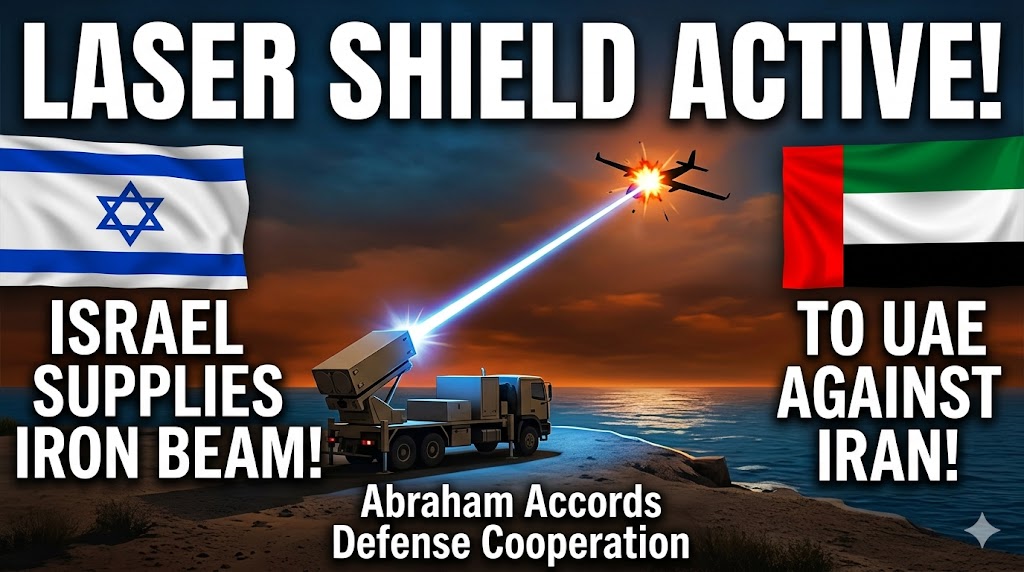
In a notable advancement of regional security cooperation, Israel has provided the United Arab Emirates with a version of its state-of-the-art Iron Beam laser-based air defense system. This development unfolded against the backdrop of heightened tensions during the 2026 US-Israel-Iran conflict, as Gulf states sought robust protection against potential missile and drone assaults.
The transfer, first highlighted in detailed reporting by the Financial Times, illustrates how the Abraham Accords have matured beyond economic and diplomatic normalization into practical military collaboration. As fragile ceasefires hold in the broader conflict, this partnership reflects a proactive stance by regional actors facing shared security challenges from Iranian-backed threats.
This article provides a comprehensive examination of the Iron Beam system, the circumstances surrounding its deployment, strategic ramifications, technical specifications, and the wider geopolitical context shaping Middle East alliances today.
The Iron Beam system stands at the forefront of directed-energy defense technology. Unlike conventional kinetic interceptors that rely on explosive warheads, Iron Beam uses a high-powered laser to heat and destroy incoming targets with precision.
Core Technical Features:
Directed Energy Interception: Capable of neutralizing short-range rockets, unmanned aerial vehicles (UAVs), and drones by focusing intense laser energy to cause structural failure or detonation.
Cost Efficiency: Estimated interception costs are dramatically lower—often cited in the range of a few dollars per engagement compared to tens of thousands for traditional missiles.
High Engagement Rate: Designed to handle saturation attacks where large numbers of low-cost threats are launched simultaneously.
Mobility and Integration: The system can be integrated into existing multi-layered defenses, working alongside Iron Dome for short-range threats, David’s Sling for medium-range, and Arrow systems for ballistic missiles.
Development of Iron Beam began over a decade ago, with initial concepts unveiled in 2014. By December 2025, the first operational unit was handed over to the Israel Defense Forces (IDF), and it saw early use against threats from Hezbollah earlier in 2026. Its rapid fielding to the UAE demonstrates confidence in the technology’s maturity.
Timeline and Details of the Deployment
The decision to supply the system emerged during the intense phases of the 2026 Israel-Iran confrontation, which began with strikes in late February. Iran responded with barrages exceeding 2,500 projectiles targeting Israeli territory and several Gulf states, with the UAE reportedly facing significant exposure.
Following high-level communications, including a direct discussion between Israeli Prime Minister Benjamin Netanyahu and UAE President Mohamed bin Zayed, Israel moved swiftly. The package reportedly included:
A version of the Iron Beam laser system.
Elements of the Iron Dome battery, operated in part by Israeli personnel.
The Spectro lightweight drone-detection and surveillance platform, capable of identifying threats at ranges up to 20 kilometers.
Additional advanced weapons and real-time intelligence support.
This assistance remained largely undisclosed initially, reflecting operational security needs during active hostilities. Israeli troops’ involvement in operating systems on UAE soil marks a historic precedent in Arab-Israeli military coordination.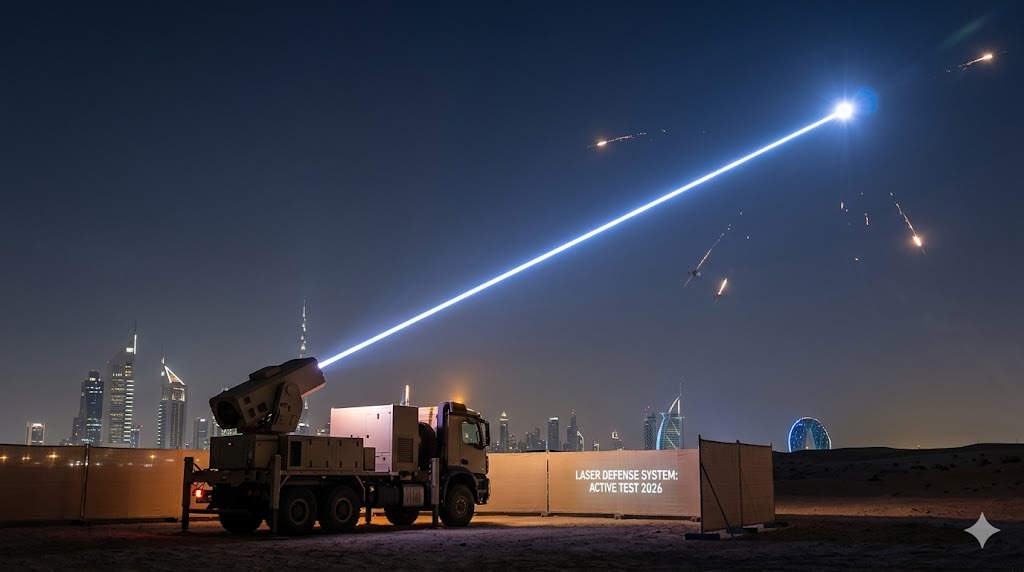
Nighttime Deployment and Interception
Abraham Accords: From Normalization to Defense Partnership
Signed in 2020, the Abraham Accords fundamentally altered regional dynamics by establishing formal ties between Israel and the UAE, Bahrain, Morocco, and Sudan. Early cooperation focused on trade, tourism, technology, and health.
The 2026 conflict has accelerated the security pillar. Joint threat assessments regarding Iran’s nuclear program, ballistic missile capabilities, and proxy networks have fostered deeper trust. The Iron Beam deployment serves as tangible proof that these agreements can deliver concrete protection when tested.
Analysts describe this as the “first real test” of the Accords’ defense dimension. Success in intercepting threats could encourage further integration, such as joint early-warning networks or combined training exercises.
Strategic Implications for Regional Security
The transfer carries multiple layers of significance:
For the UAE: Enhanced layered defenses protect vital economic assets, including oil infrastructure, ports, and population centers. It diversifies defense options beyond traditional suppliers and strengthens deterrence against asymmetric warfare.
For Israel: Extending defensive capabilities to allies distributes the security burden and creates forward buffers. It also provides valuable real-world data on system performance in varied operational environments.
For Iran: The visible alignment between Israel and Gulf states complicates Tehran’s strategy of isolating Israel and pressuring Arab neighbors. It reinforces a de facto anti-Iran axis supported by shared US interests.
Broader Geopolitics: In the context of US involvement in the Iran conflict, this development aligns with efforts to build a resilient regional architecture less dependent on direct American intervention for every contingency.
Challenges in Modern Air Defense
Contemporary conflicts highlight the limitations of relying solely on expensive missile interceptors. Adversaries increasingly employ swarms of inexpensive drones to exhaust defenses—a tactic observed in Ukraine, Yemen, and now the Middle East.
Laser systems like Iron Beam address this asymmetry. However, they are not a panacea. Effectiveness depends on atmospheric conditions, power supply reliability, and integration with robust sensor networks. Maintenance, operator training, and cybersecurity protection for high-tech assets also present ongoing challenges.
The UAE’s experience integrating these systems will likely inform future procurements across the Gulf Cooperation Council (GCC) nations.
Expert Analysis and International Reactions
Defense specialists praise the move as innovative and pragmatic. Retired military officers note that combining kinetic and directed-energy weapons creates a more resilient shield. Economists highlight potential long-term savings for nations facing persistent threats.
International responses have been measured. The United States, a key backer of both Israel and the UAE, has welcomed enhanced partner capabilities. European nations monitor developments with interest in technology proliferation. Predictably, Iranian state media has condemned the cooperation as provocative.
Within Israel and the UAE, domestic reactions emphasize security necessities over political symbolism, though some voices in both countries urge caution regarding escalation risks.
Historical Context of Israel-Gulf Relations
Prior to the Abraham Accords, unofficial security contacts existed, often mediated through the United States. Intelligence sharing on Iranian activities dates back years. The public normalization removed barriers, allowing overt cooperation that has proven vital in 2026.
This evolution mirrors broader shifts: declining reliance on Palestinian issue vetoes in Arab foreign policy and growing focus on economic modernization and counter-extremism.
Potential Future Developments
Looking ahead, several scenarios emerge:
Expanded Technology Sharing: Co-development of next-generation lasers or joint production facilities.
Multinational Defense Framework: Inclusion of additional Abraham Accords partners in integrated air and missile defense.
Diplomatic Ripple Effects: Strengthened ties could facilitate progress on other regional issues, including Yemen stability or economic initiatives.
Technological Diffusion: Success of Iron Beam may spur global interest in directed-energy weapons, influencing arms markets.
Sustained ceasefire in the US-Israel-Iran conflict will determine whether these partnerships focus on deterrence or post-conflict reconstruction.
Economic and Technological Dimensions
Beyond immediate defense, the collaboration opens doors for broader innovation. Israel’s defense industry, known for agility and rapid iteration, complements the UAE’s investment capacity and strategic location. Potential civilian spin-offs include applications in energy, aviation safety, and disaster response.
Global supply chains for advanced electronics and optics may see increased activity as demand for such systems grows.
Maintaining Stability in a Volatile Region
While defensive in nature, these developments occur in a complex environment. Diplomacy remains essential to address root causes of tension, particularly Iran’s nuclear ambitions and proxy support.
The international community continues to watch closely, with hopes that strengthened defenses will promote restraint rather than arms races. Humanitarian and economic impacts of prolonged tensions—rising oil prices, disrupted shipping, and regional instability—underscore the urgency of de-escalation pathways.
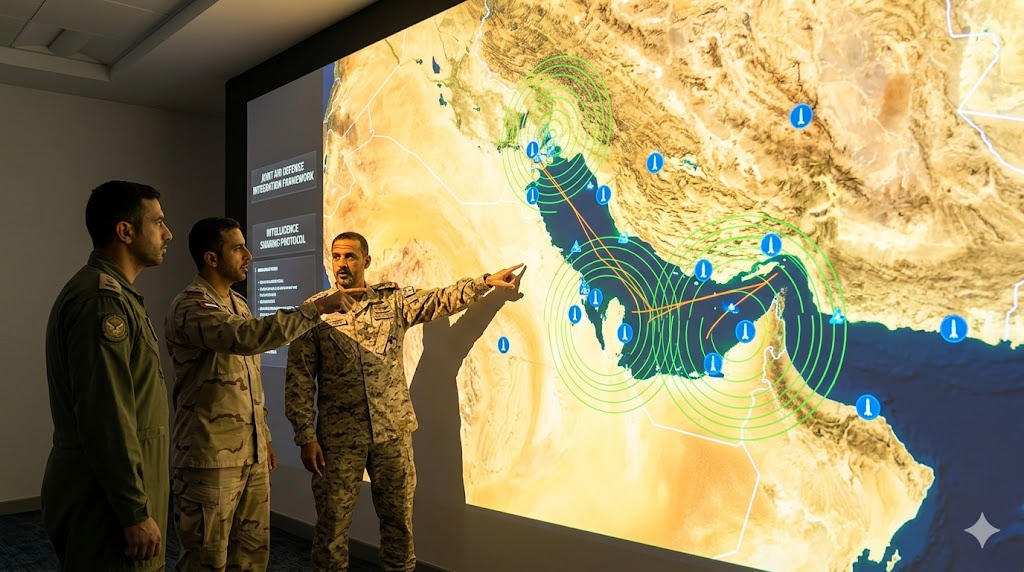
Coordinated Strategic Planning
Conclusion
Israel’s provision of the Iron Beam laser defense system to the United Arab Emirates during the 2026 Iran-related crisis exemplifies adaptive security cooperation in a rapidly changing Middle East. It combines technological innovation with strategic foresight, reinforcing alliances tested by real threats.
As the region assesses the outcomes of recent conflicts and navigates ceasefires, such partnerships may prove instrumental in shaping a more stable future. The Iron Beam’s deployment not only bolsters immediate defenses but also signals a deeper commitment to collective security among forward-looking nations.
This episode reminds observers that in today’s geopolitical landscape, pragmatism and shared interests increasingly drive alliances, offering pathways to security even amid persistent challenges. Continued monitoring of these developments will be essential for understanding the evolving architecture of Middle Eastern stability.