The Padma Purana: Lotus of Hindu Wisdom and sprituality
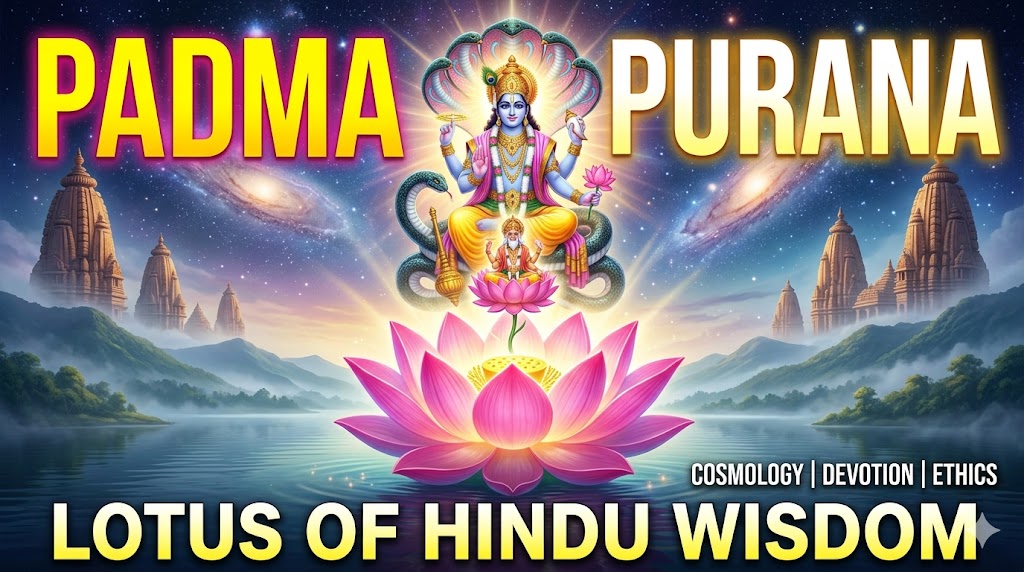
The Padma Purana occupies a prominent place among the eighteen major Mahapuranas, revered as one of the most voluminous and encyclopedic scriptures in Hinduism. Named after the divine lotus (Padma) from which Lord Brahma emerged, this sacred text unfolds a vast panorama of cosmic knowledge, devotional narratives, geographical descriptions, and practical guidance for righteous living. Its traditional claim of containing around 55,000 verses makes it one of the largest Puranas, offering readers a profound journey through creation, dharma, and moksha.
Attributed to the sage Krishna Dvaipayana Vyasa, the Padma Purana is primarily Vaishnava in spirit, with extensive glorification of Lord Vishnu and his avatars, while also incorporating meaningful sections dedicated to Shiva, Shakti, and other deities. This inclusive approach reflects the harmonious ethos of Hindu theology. The text serves multiple purposes: as a mythological treasury, a pilgrimage manual, a philosophical treatise, and a cultural encyclopedia.
This extended article provides an exhaustive exploration of the Padma Purana, examining its historical development, intricate structure, rich content across various sections, philosophical depths, cultural impact, and relevance in contemporary times.
The composition of Puranic literature represents a significant evolution in Hindu thought, bridging the Vedic period with medieval devotional traditions. The Padma Purana likely developed over several centuries, with core material possibly dating back to the early centuries of the Common Era and later interpolations reflecting regional and sectarian influences up to the medieval period.
Like other Puranas, it was transmitted orally before being committed to manuscripts. The framing narrative typically involves Suta Goswami recounting the wisdom to assembled sages in the sacred Naimisha Forest, a setting that lends authenticity and sanctity to the teachings. Different recensions—particularly the Bengal (eastern) and southern (or Devanagari) versions—show variations that highlight how local traditions shaped the text.
Scholars note that the Padma Purana’s classification as a Sattvic Purana in many lists underscores its emphasis on purity, knowledge, and Vishnu bhakti. Its encyclopedic character made it an important vehicle for disseminating complex ideas to the general populace, fulfilling the Puranas’ role as accessible complements to the more esoteric Vedas and Upanishads.
Detailed Structure and Divisions
The Padma Purana’s organization is both systematic and expansive. While verse counts and chapter divisions vary slightly between manuscripts, the text is broadly structured into five or six major Khandas (sections), each addressing distinct themes while maintaining an overarching narrative flow.
Srishti Khanda (Creation Section):This foundational part elaborates on cosmogony with great detail. It describes the primordial state, Vishnu’s cosmic sleep on the serpent Ananta, the emergence of the lotus, and Brahma’s role in manifesting the universe. Discussions include the evolution of the tattvas (fundamental principles), the creation of beings, and the establishment of cosmic order. Philosophical dialogues explore the relationship between Purusha and Prakriti, integrating insights from various darshanas.
Bhumi Khanda (Earth Section): Shifting focus to the terrestrial realm, this Khanda provides genealogies of prominent royal dynasties and rishis. It recounts tales of kings like Prithu, Nahusha, and Yayati, using their stories to illustrate dharma, karma, and the consequences of actions. Geographical descriptions of ancient India, its rivers, mountains, and sacred spots enrich this section, serving as an early form of cultural mapping.
Svarga Khanda (Heaven Section): Dedicated to celestial realms, this part details the abodes of gods, the fruits of meritorious deeds, and the temporary nature of heavenly pleasures. It motivates readers toward higher spiritual goals by contrasting svarga with the ultimate liberation of moksha.
Patala Khanda (Netherworld Section): Exploring subterranean worlds, this section narrates encounters with asuras, nagas, and other beings. Moral lessons abound, highlighting the pitfalls of ego, greed, and ignorance while showcasing divine interventions that restore balance.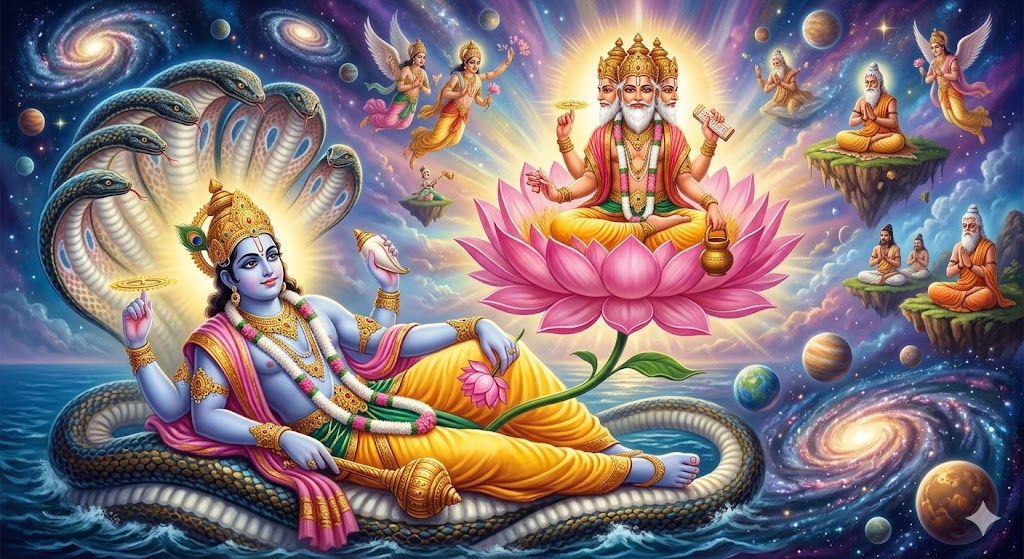
The Srishti Khanda and Cosmic Creation
Uttara Khanda (Concluding Section): Often the most extensive, this Khanda synthesizes previous teachings and delves into advanced topics. It includes detailed mahatmyas of pilgrimage sites, festivals, vratas, yoga practices, and discourses on bhakti, jnana, and karma. Versions of the Ramayana appear here with unique emphases, alongside glorifications of Vishnu’s avatars and discussions on ethics, hospitality, and social responsibilities.
Some recensions include an Adi Khanda or Brahma Khanda, expanding on creation or specific devotional themes. The fluidity across versions demonstrates the living, adaptive nature of Puranic literature.
Cosmology, Mythology, and Core Narratives
The Padma Purana’s cosmological vision is majestic. It portrays the universe as emerging from Vishnu’s will, cycling through creation, preservation, and dissolution across immense timescales. Detailed accounts of the fourteen worlds (lokas), yugas, and manvantaras provide a grand timeline of existence.
Mythological narratives form the heart of the text. Stories of Vishnu’s avatars—especially Rama and Krishna—emphasize ideals of duty, love, and divine play. Expanded or variant episodes from the Ramayana offer alternative perspectives on characters and events. Legends involving Shiva, Durga, and other deities promote sectarian harmony.
Genealogies trace lineages from cosmic origins to historical kings, blending myth with possible historical memory. These stories often carry moral teachings, illustrating virtues like compassion, truthfulness, and devotion.
Sacred Geography and Pilgrimage Traditions
The Purana’s detailed tirtha mahatmyas constitute a significant contribution to Hindu practice. It guides readers on sacred journeys, describing the spiritual benefits of bathing in holy rivers, visiting temples, and performing specific rites. Prominent sites include Pushkar, associated with Brahma’s yajna, and numerous Vishnu and Shiva temples.
These sections preserved knowledge of ancient Indian geography, ecology, and architecture. They encouraged travel, cultural exchange, and the maintenance of sacred sites, influencing temple traditions that thrive today.
Philosophical Depth and Ethical Framework
Beyond stories, the Padma Purana engages deeply with philosophy. It discusses the nature of the soul (Atman), Brahman, maya, and paths to liberation. Advaita concepts appear alongside bhakti-centered devotion, offering readers multiple approaches suited to different temperaments.
Ethical teachings cover varnashrama duties, the importance of grihastha (householder) life, respect for women, environmental care through tree planting and water conservation, and the value of dana (charity). Hospitality toward guests is elevated as a sacred duty.
Rituals, Festivals, and Practical Spirituality
Practical instructions abound on daily worship, seasonal festivals, vratas, and shraddha ceremonies. The text explains mantras, mudras, and the significance of offerings, making spirituality accessible. Discussions on yoga include asanas, pranayama, and meditation techniques for mind control and realization.
Variations and Textual Scholarship
Differences between recensions reflect India’s regional diversity. The Bengal version may emphasize certain eastern sites, while southern editions highlight local traditions. Critical studies compare manuscripts to reconstruct earlier layers, revealing how the text absorbed new ideas over time.
English translations and summaries have made the Padma Purana available to global audiences, aiding academic research in history, religion, and literature.
Cultural Influence and Artistic Legacy
The Purana has inspired countless works of art, dance, drama, and literature. Temple sculptures, miniature paintings, and regional festivals draw from its narratives. Its impact extends to music, with devotional songs based on its verses.
In education and moral instruction, stories from the Padma Purana have shaped generations, promoting values of integrity and faith.
Relevance in the Modern World
Today, the Padma Purana offers valuable perspectives on ecology, social harmony, and personal growth. Its reverence for nature aligns with contemporary environmental concerns. Teachings on unity amid diversity resonate in pluralistic societies. Pilgrimage traditions continue to foster spiritual tourism and cultural preservation.
Scholars find it a rich source for understanding ancient science, astronomy, and sociology. Spiritual seekers appreciate its practical wisdom for navigating modern challenges through timeless principles.
Comparative Perspectives Within Puranic Literature
While the Vishnu Purana focuses intently on Vaishnavism and the Bhagavata Purana emphasizes Krishna bhakti, the Padma Purana provides a wider canvas. Its integration of multiple traditions makes it a bridge between sectarian streams. Compared to Shaiva Puranas, it balances devotion with philosophical inquiry.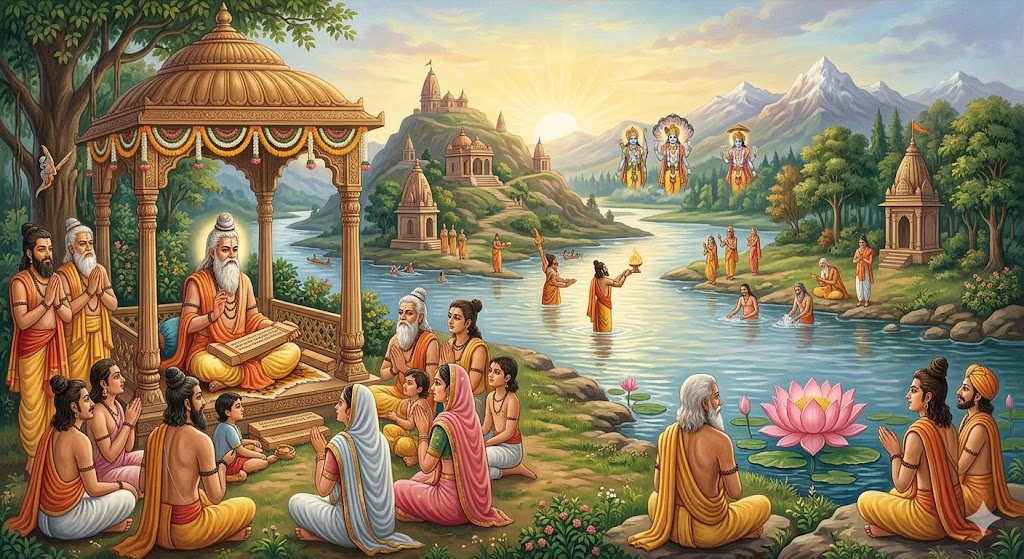
Vishnu Bhakti and Sacred Geography
Challenges in Study and Interpretation
The text’s length and variations require careful study. Some passages reflect historical social norms that invite critical contextual analysis. Modern interpretations often highlight universal messages while acknowledging cultural evolution.
Conclusion
The Padma Purana, with its lotus-like beauty and depth, remains an inexhaustible source of Hindu wisdom. From grand cosmological visions to intimate teachings on devotion and duty, it addresses the entirety of human experience. As part of the sacred Mahapuranas, it continues to guide, inspire, and enlighten those who approach it with sincerity.
Its legacy endures through temples, festivals, and personal faith, inviting each generation to discover the divine lotus blooming within their own hearts. In an age seeking meaning and connection, the Padma Purana offers a profound reminder of the eternal truths underlying existence.