Rishi Vashishta: Vedic Sage and Spiritual Luminary
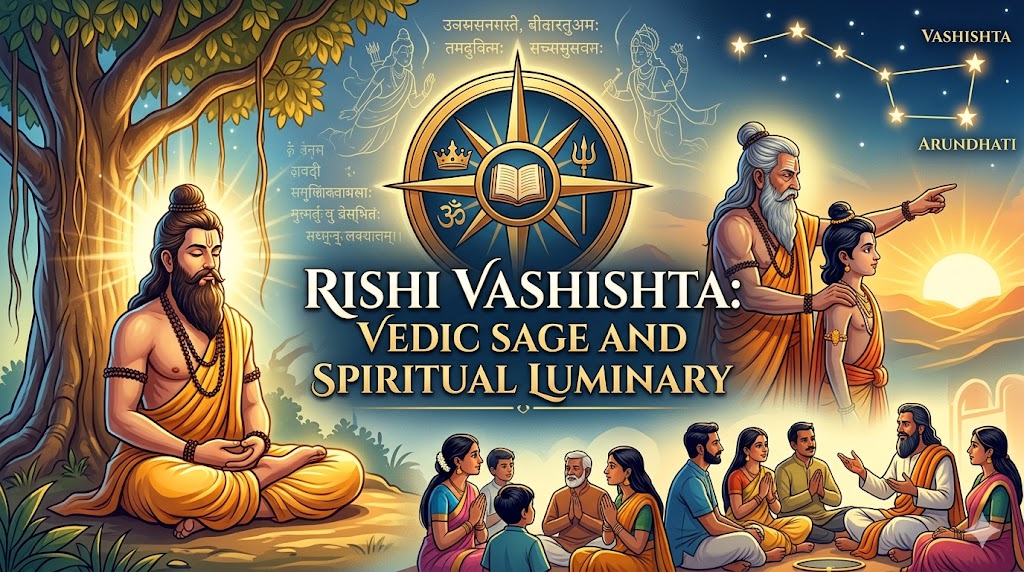
Rishi Vashishta remains one of the most illustrious figures in the rich heritage of Hindu spirituality. As a prominent member of the Saptarishis—the seven great sages who guide humanity across cosmic cycles—he symbolizes the pinnacle of Vedic wisdom, disciplined austerity, and selfless service to dharma. His name, meaning "most excellent," aptly reflects his extraordinary contributions as a seer, poet, preceptor, and philosopher.
Vashishta’s life and teachings bridge the divine and human realms, offering timeless guidance on knowledge, devotion, and righteous living. From his miraculous origins to his pivotal role in guiding legendary kings like Lord Rama, his story continues to inspire seekers across generations. This article provides a comprehensive exploration of Rishi Vashishta, examining his origins, family, contributions, key narratives, and enduring legacy in Hinduism.
Origins and Miraculous Births
The birth stories of Vashishta highlight his transcendent nature. In one prominent tradition, he emerges as a Manasputra—mind-born son—of Lord Brahma, created during the early phases of cosmic manifestation to aid in the establishment of dharma and knowledge. This direct origin from Brahma underscores his innate purity and spiritual authority.
Another significant Vedic and Puranic account describes his birth from the celestial union involving the apsara Urvashi and the gods Mitra and Varuna. Their combined essence, placed in a sacred vessel, gives rise to Vashishta, symbolizing his deep connection to natural and cosmic forces. These multiple birth narratives emphasize that enlightened beings like Vashishta transcend ordinary cycles of birth and death, appearing whenever wisdom is needed to sustain the world.
Such accounts position Vashishta as an eternal sage whose consciousness remains continuous across different manvantaras, reinforcing the idea of an unbroken lineage of spiritual masters.
Vashishta Among the Saptarishis
The Saptarishis form the spiritual backbone of each cosmic era, preserving Vedic knowledge and guiding kings and commoners alike. Vashishta consistently appears in these exalted lists alongside sages such as Atri, Bharadwaja, and Vishwamitra. Their collective role involves maintaining cosmic balance during transitions between yugas and manvantaras.
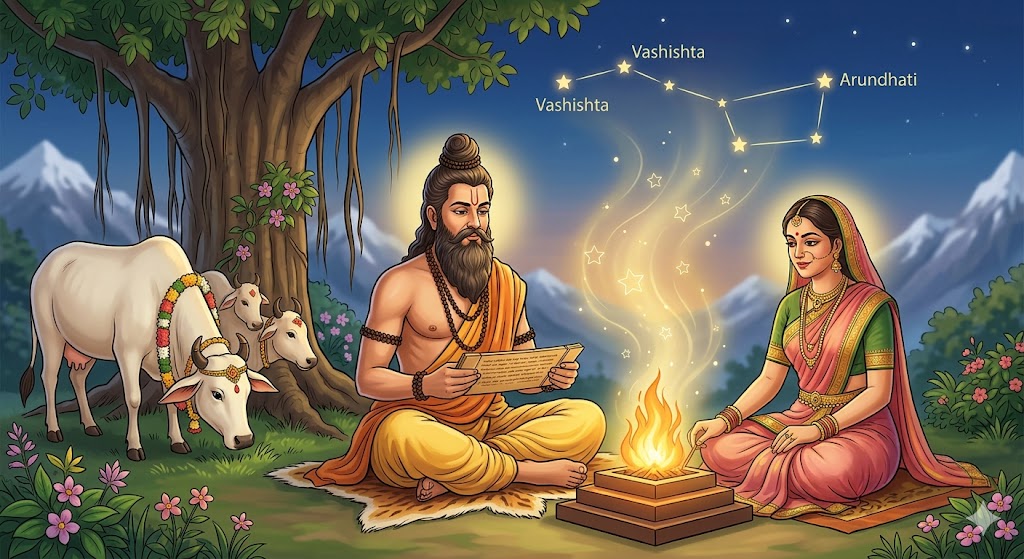
Vashishta’s presence among them reflects his mastery of the Vedas, profound meditative practices, and commitment to teaching. Astronomically, the Saptarishis correspond to the stars of the Big Dipper constellation in Ursa Major. Vashishta is traditionally identified with one of these stars, paired visually with Arundhati (Alcor), his devoted wife—a celestial symbol of ideal companionship frequently referenced in Hindu marriage rituals.
Family Life and the Ideal of Arundhati
Central to Vashishta’s personal life is his marriage to Arundhati, revered as the embodiment of chastity, wisdom, and wifely devotion. Their union is celebrated as the perfect example of marital harmony and mutual spiritual growth. In wedding ceremonies, the couple is shown the Arundhati star, encouraging brides to emulate her virtues of loyalty and inner strength.
Together, Vashishta and Arundhati raised notable sons, including Shakti, whose lineage continued through Parashara to Vyasa, the compiler of the Vedas and author of the Mahabharata. Family life for the sage was not without trials; legendary accounts describe conflicts that tested their resilience, such as the tragic loss of sons due to curses or rivalries. Through these challenges, their unwavering commitment to dharma and tapas shone brightly, serving as an inspiration for householders and ascetics alike.
Contributions to Vedic Literature
Vashishta’s most direct and enduring literary contribution is his authorship of Mandala 7 of the Rigveda. Known as the Vashishta family book, these hymns display exceptional poetic beauty, philosophical depth, and devotional intensity. They invoke deities like Varuna and Indra while exploring themes of cosmic order (rita), truth, and divine grace.
Beyond the Rigveda, several important texts carry Vashishta’s name or attribution. The Vashishta Samhita addresses dharma, rituals, and royal duties, while the renowned Yoga Vasistha presents a profound philosophical dialogue between Vashishta and Prince Rama. This text, exploring the nature of reality, mind, and liberation, has profoundly influenced Vedanta, Yoga, and Advaita traditions. Adi Shankaracharya and later acharyas regarded Vashishta as a foundational figure in Vedantic thought.
Role as Royal Preceptor and Guru
Vashishta served as the kulaguru (family spiritual preceptor) to the illustrious Solar Dynasty (Suryavansha). His guidance shaped kings and princes, most notably in the Ramayana, where he acts as the spiritual mentor to Dasharatha and his sons, including Rama and Lakshmana. He officiated important ceremonies and imparted both worldly knowledge and spiritual wisdom.
His relationship with Vishwamitra, initially marked by rivalry over the divine cow Kamadhenu, evolved into mutual respect. This transformation from conflict to recognition of spiritual merit illustrates core Hindu values: the supremacy of tapas over material power and the possibility of personal evolution through sincere effort. Vishwamitra’s eventual attainment of Brahmarishi status, partly through Vashishta’s influence, stands as a powerful lesson in humility and perseverance.
Key Stories and Legends
The Puranas and epics abound with inspiring tales from Vashishta’s life:
The Kamadhenu Episode: The conflict with Vishwamitra highlights the protective power of divine grace and the limits of royal authority against spiritual strength.
Trials and Equanimity: Accounts of personal losses demonstrate Vashishta’s steadfastness and philosophical acceptance of life’s impermanence.
Teachings to Rama: In the Yoga Vasistha, extended conversations address Rama’s doubts about the world’s illusory nature, offering profound guidance on detachment, self-inquiry, and realization—teachings that remain relevant for modern spiritual aspirants.
These narratives humanize the great sage while elevating his role as a beacon of wisdom.
Philosophical Contributions and Teachings
Vashishta’s philosophy integrates several strands of Hindu thought. He emphasized the realization of Brahman as the ultimate, non-dual reality while acknowledging the practical importance of devotion (bhakti) and righteous action (karma). His teachings stress mind mastery, the illusory yet functional nature of the world (maya), and the pursuit of moksha through balanced living.
The Yoga Vasistha, in particular, presents innovative ideas on consciousness, arguing that the mind shapes experience and that true freedom arises from transcending mental limitations through inquiry and grace.
Vashishta in Epics, Puranas, and Cultural Memory
Vashishta features prominently in the Ramayana as a stabilizing spiritual force, in the Mahabharata through his descendants, and across numerous Puranas that recount his interactions with deities and other sages. These appearances reinforce his status as an eternal guardian of dharma.
His symbolic presence in astronomy and marriage rituals keeps his legacy alive in everyday Hindu practice. Temples and ashrams associated with him, particularly in the Himalayan regions, continue to attract devotees seeking blessings and wisdom.
Enduring Legacy and Modern Relevance
Rishi Vashishta’s influence extends far beyond ancient texts. His hymns enrich Vedic chanting traditions, while his attributed works inspire philosophical study and yoga practice. In contemporary times, his emphasis on inner resilience, ethical leadership, and spiritual inquiry offers valuable perspectives for navigating modern challenges.
Leaders, educators, and spiritual seekers draw from his example of balancing worldly responsibilities with higher knowledge. The Yoga Vasistha, in particular, finds new audiences through translations and commentaries, addressing universal questions about purpose and fulfillment.
.jpg)
Conclusion
Rishi Vashishta exemplifies the ideal Vedic sage—wise, compassionate, resilient, and devoted to the welfare of all beings. From his divine origins and Vedic compositions to his guidance of kings and profound philosophical teachings, his life offers a complete model of enlightened living.
As one of the Saptarishis and a foundational figure in Hindu tradition, Vashishta continues to illuminate the path of knowledge and dharma. His legacy invites us to cultivate inner excellence, uphold truth, and seek the divine within, ensuring that the light of Vedic wisdom shines across ages.