The 18 Puranas: Timeless Sprituality & Wisdom of Hinduism
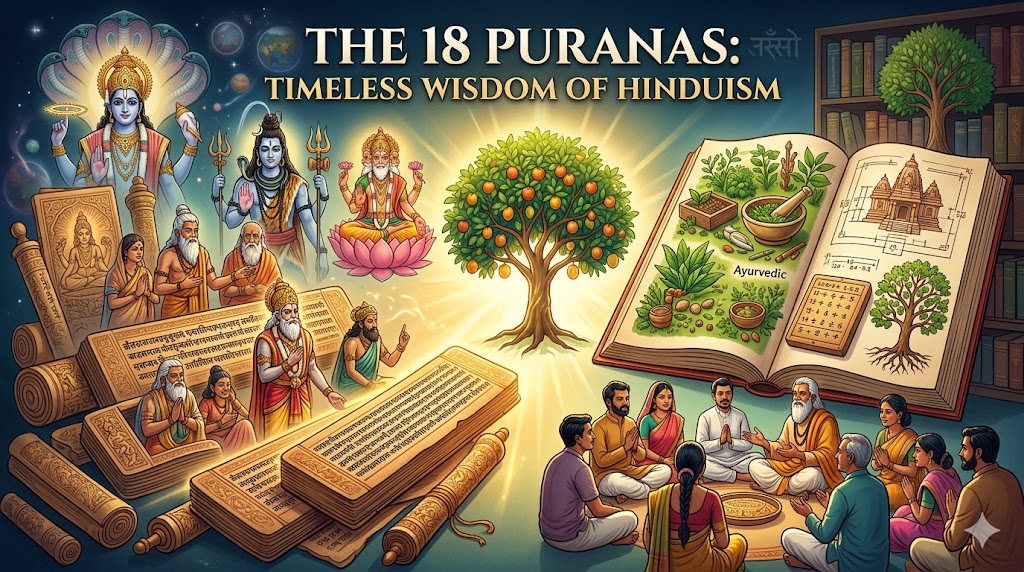
The Puranas stand as magnificent pillars of Hindu civilization, weaving together mythology, philosophy, history, cosmology, and practical guidance for righteous living. Often described as encyclopedias of ancient Indian knowledge, these texts expand upon the philosophical foundations laid in the Vedas. Composed primarily in Sanskrit between the 3rd and 16th centuries CE, though drawing from much older oral traditions, the Puranas make complex spiritual concepts accessible to all sections of society.
Far from mere collections of stories, the Puranas offer profound insights into dharma (duty), karma (action and consequence), bhakti (devotion), and the cycles of creation and dissolution. They address every stage of human existence—from birth and upbringing to worldly responsibilities, old age, and the journey beyond death toward moksha (liberation). In an era of rapid change, the Puranas continue to provide ethical frameworks, cultural identity, and spiritual solace to millions across the globe.
This comprehensive exploration delves into the structure, significance, and enduring relevance of the 18 Mahapuranas, highlighting their role in theology, spirituality, and everyday wisdom.
Understanding the Puranas: Origins and Purpose
The word "Purana" translates to "ancient" or "old," reflecting their role in preserving India's historical and cultural memory. Traditionally attributed to the sage Vyasa, who is also credited with compiling the Vedas and Mahabharata, the Puranas were composed to democratize Vedic knowledge. While the Vedas focused on rituals and philosophy for the initiated, the Puranas used engaging narratives, accessible language, and relatable characters to reach common people, including women and Shudras.
Scholars classify them into 18 major Puranas (Mahapuranas) and several minor ones (Upapuranas). They are grouped into three categories based on the primary deity glorified: Brahma Puranas (Sattva guna, focused on creation and Vishnu/Hari), Vishnu Puranas, and Shiva Puranas (Tamas guna, associated with dissolution and Rudra). This classification, though not rigid, helps understand their devotional emphasis.
Each Purana typically covers five key topics (Panchalakshana): Sarga (creation), Pratisarga (re-creation after dissolution), Vamsa (genealogies of gods and sages), Manvantara (cosmic cycles and reigns of Manus), and Vamsanucharita (histories of royal dynasties). Beyond these, they encompass geography, astronomy, medicine, ethics, temple architecture, pilgrimage, and more—making them holistic repositories of knowledge.
The 18 Mahapuranas: Names and Distinct Characteristics
Hindu tradition recognizes 18 principal Puranas. Here is a structured overview:
1. Brahma Purana — Focuses on creation myths and pilgrimage sites.
2. Padma Purana— Extensive text glorifying Vishnu, with detailed stories and cosmology.
3. Vishnu Purana — One of the most authoritative, emphasizing Vaishnava theology and Vishnu's avatars.
4. Shiva Purana — Centers on Lord Shiva, his family, and Shaivite philosophy.
5. Skanda Purana — The longest, dedicated to Kartikeya (Skanda) and containing vast regional lore.
6. Bhagavata Purana (Srimad Bhagavatam) — Highly revered for Krishna bhakti, philosophy, and the life of Lord Krishna.
7. Narada Purana — Dialogues on devotion, ethics, and Vaishnava traditions.
8. Markandeya Purana — Famous for the Devi Mahatmya (Chandi Path), glorifying the Divine Mother.
9. Agni Purana — Encyclopedic, covering topics from Ayurveda to architecture and warfare.
10. Bhavishya Purana — Contains prophecies and discussions on future events, social customs.
11. Brahmavaivarta Purana — Emphasizes Radha-Krishna worship and creation narratives.
12. Linga Purana — Focused on Shiva Linga worship and cosmology.
13. Varaha Purana — Vishnu's Varaha avatar and related dharmic instructions.
14. Vamana Purana — Stories of Vamana avatar and regional histories.
15. Kurma Purana — Linked to Vishnu's Kurma avatar, with philosophical discourses.
16. Matsya Purana — Begins with the great flood and Matsya avatar, covering diverse subjects.
17. Garuda Purana — Famous for details on death, afterlife, rituals, and gemology.
18. Brahmanda Purana— Describes the cosmic egg (Brahmanda) and includes Lalita Sahasranama.
These texts, though distinct, often overlap in themes, reinforcing core Hindu values while celebrating diverse paths to the divine.
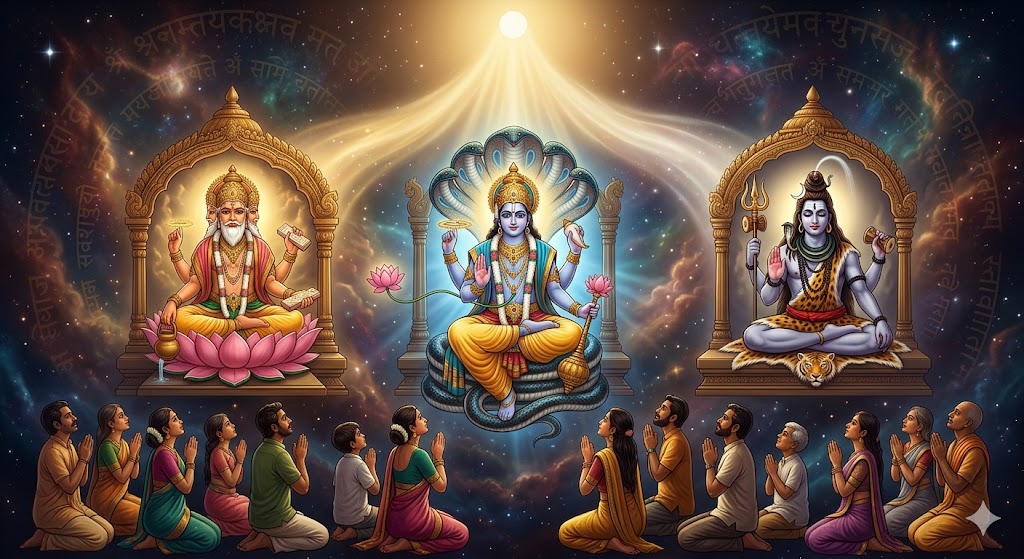
theological synthesis: The Puranas reconcile different schools of thought by presenting the diverse Trimurti (Brahma, Vishnu, and Shiva) as interconnected aspects of a single, unified Divine Light. The bottom half emphasizes bhakti (devotion) as the universal path that connects diverse generic seekers directly to this source
Spiritual and Theological Significance
The Puranas are deeply intertwined with Hindu spirituality and theology. They elaborate on concepts like the Trimurti (Brahma, Vishnu, Shiva), the avatars of Vishnu, and the multifaceted nature of the Divine. Through bhakti narratives, they teach surrender to God as a path accessible to all.
Theologically, they reconcile different schools—advaita (non-dualism), dvaita (dualism), and others—by presenting philosophical ideas through stories. The Bhagavata Purana, for instance, beautifully blends devotion with Vedantic wisdom. They also integrate Shakti worship, elevating the Goddess as the supreme power in texts like the Markandeya Purana.
Spiritually, reading or listening to Puranic stories (kathas) is considered purifying. They inspire virtues like compassion, truthfulness, and resilience while warning against ego, greed, and adharma. Regular engagement is believed to bestow blessings, reduce karmic burdens, and guide the soul toward liberation.
Puranas as Guides for Life: From Birth to Beyond
One of the greatest strengths of the Puranas is their practical relevance across life's journey.
Birth and Childhood: Texts prescribe samskaras (rites of passage) and stories teaching moral values to the young.
Youth and Householder Stage: Guidance on dharma in marriage, parenting, profession, and social responsibilities. Stories of ideal kings and devotees model righteous conduct.
Challenges and Crises: Narratives of warrior queens, resilient sages, and divine interventions offer hope and strategies for overcoming adversity. Concepts of feminism in Hinduism appear through powerful goddesses and female sages.
Old Age and Death: The Garuda Purana details funeral rites, the soul's journey, and what awaits after death, helping families navigate grief with spiritual understanding.
Afterlife and Moksha: Emphasis on karma, reincarnation, and paths to liberation equip individuals for the ultimate journey.
In every situation—joy, sorrow, success, or failure—the Puranas provide perspective, reminding readers of life's transient nature and the eternal soul.
Science, Mathematics, and Knowledge in the Puranas
The Puranas are often hailed as repositories of ancient Indian science. They describe cosmology with remarkable parallels to modern understandings of time cycles (yugas, manvantaras), geography (detailed descriptions of continents and oceans), and astronomy. Concepts of atomic theory, embryology, and herbal medicine appear in various sections.
Mathematics and metrics find mention in architectural guidelines and astronomical calculations. Some scholars view the Puranas as "zoology" or encyclopedias of living knowledge—covering flora, fauna, and natural phenomena. Their interdisciplinary approach—blending observation, myth, and philosophy—represents a holistic worldview where science and spirituality coexist harmoniously.
While not laboratory texts, they encode empirical knowledge accumulated over centuries, influencing fields from Ayurveda to town planning.
The Role of Puranas in Modern Hinduism and Society
In contemporary times, the Puranas remain incredibly relevant. Television serials, podcasts, and online discourses popularize stories from the Bhagavata and Shiva Puranas. Scholars study them for historical insights, while devotees find spiritual nourishment.
For UPSC aspirants and students, Puranic literature offers perspectives on ancient Indian polity, society, and culture. Translations in Hindi, English, Telugu, and other languages have broadened access, fostering cultural pride among the diaspora.
The Puranas also promote inclusivity. By glorifying devotion over ritual rigidity, they align with Hinduism's pluralistic ethos. Discussions on warrior queens and empowered female figures inspire modern conversations on gender roles within tradition.
Reading the Puranas: Practical Advice
Approaching the Puranas requires an open mind. Start with accessible ones like the Bhagavata Purana or summaries. Many are available as PDFs, online resources, or printed volumes with commentaries. Listening to scholarly narrations enhances understanding.
Regular reading cultivates wisdom, emotional resilience, and ethical clarity. Families often organize Purana kathas during festivals or life events for collective benefit.
Challenges and Scholarly Perspectives
Scholars note that Puranas evolved over time, incorporating regional variations and responding to social changes. Some passages reflect historical contexts that require critical interpretation. Nevertheless, their core message of dharma and divine grace transcends eras.
Comparative studies with the Vedas reveal continuity and elaboration—Vedas as seeds, Puranas as flourishing trees bearing fruit for all.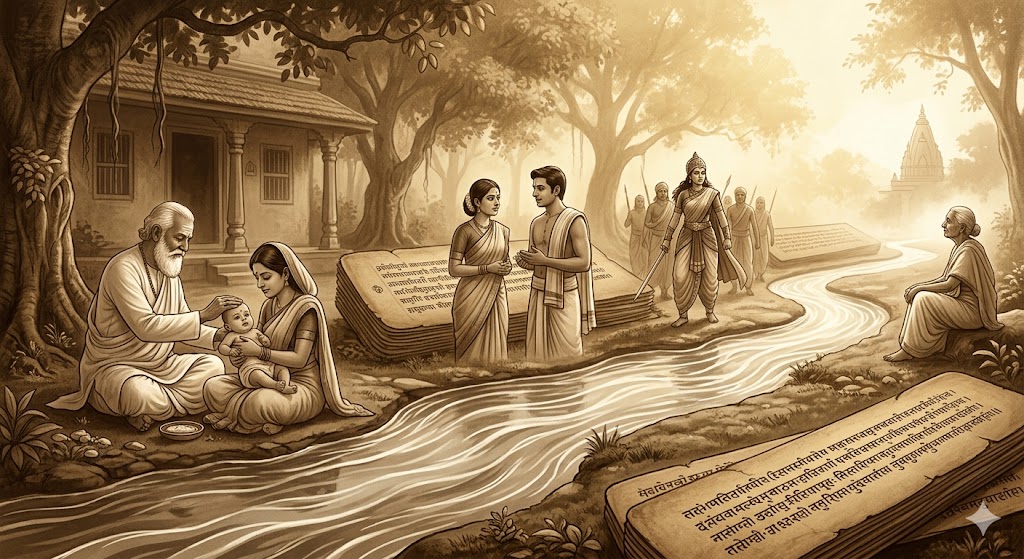
The Guide for Life (Birth to Beyond)
The 18 Puranas of Hinduism represent one of humanity's greatest literary and spiritual achievements. They encapsulate profound theology, practical life guidance, scientific observations, and inspiring narratives that address every facet of existence—from the moment of birth to the mysteries beyond death. Their emphasis on bhakti, karma, and dharma offers timeless tools for navigating life's complexities with grace and purpose.
In a world seeking meaning amid uncertainty, the Puranas invite readers to explore India's rich heritage of wisdom. Whether through stories of gods and goddesses, insights into cosmology, or lessons in righteous living, these texts continue to illuminate paths toward inner peace and ultimate liberation.
By engaging with the Puranas, individuals connect not only with ancient sages but with the living tradition of Hinduism—a tradition that values knowledge, devotion, and ethical living above all. Their vitality endures because they speak directly to the human condition, offering hope, clarity, and inspiration across generations.
As Vyasa and subsequent scholars intended, the Puranas remain open invitations to wisdom for every seeker, regardless of background. Embracing them enriches life, deepens faith, and contributes to a more harmonious world grounded in eternal truths.