Spirituality vs Religion: Understanding the Core Difference
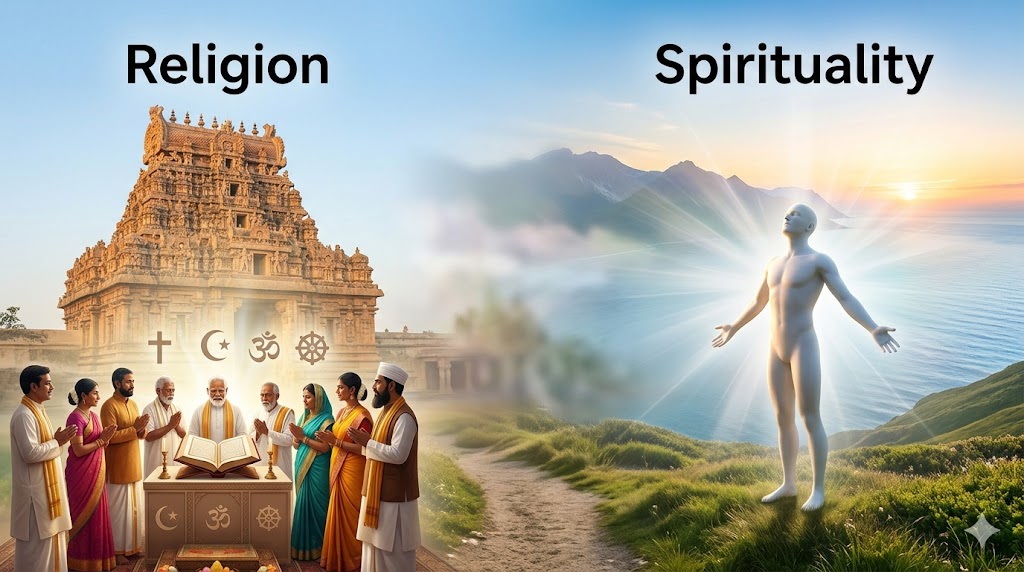
In an increasingly interconnected yet divided world, the distinction between spirituality and religion has never been more relevant. While often used interchangeably, these concepts represent fundamentally different approaches to the search for meaning, purpose, and connection with the divine or higher reality. Religion typically refers to organized systems of beliefs, rituals, and institutions, whereas spirituality emphasizes personal experience, inner transformation, and direct connection with the transcendent.
This article examines the nuanced differences between spirituality and religion, beginning with clear definitions, exploring perspectives from Sanatan Dharma (eternal tradition), and analyzing their roles in contemporary society. It highlights how spirituality offers a universal path that transcends divisions of creed, gender, caste, or nationality, promoting equality and inner freedom. By understanding these distinctions, individuals can navigate their personal journeys with greater clarity and inclusiveness.
Spirituality is the innate human quest for meaning, purpose, and connection to something greater than oneself. It is fundamentally personal and experiential, focusing on inner growth, self-awareness, and the realization of one's true nature.
At its core, spirituality involves:
Inner Exploration: Practices like meditation, mindfulness, contemplation, and self-inquiry that cultivate awareness of the present moment and the deeper self.
Universal Values: Emphasis on love, compassion, integrity, gratitude, and service to others without rigid dogma.
Direct Experience: Seeking personal communion with the divine, universal consciousness, or higher truth rather than relying solely on intermediaries or scriptures.
Flexibility: Adapting to individual needs and evolving with personal insight, free from institutional constraints.
Spirituality recognizes the sacred in everyday life—nature, relationships, art, and challenges—as opportunities for growth. It is not bound by time, culture, or geography. Many traditions, including mystics across faiths, describe spirituality as the essence or heart of religious experience, stripped of external formalities.
In today’s context, spirituality appeals to those seeking authenticity amid organized religion’s perceived rigidities or scandals. It aligns with psychological well-being, emotional intelligence, and holistic health, as evidenced by widespread interest in mindfulness and yoga globally.
What is Religion?
Religion refers to organized systems of beliefs, practices, rituals, and institutions that provide a structured framework for understanding the divine, morality, and community life. It often includes sacred texts, prophets or founders, clergy, places of worship, and prescribed doctrines.
Key characteristics of religion include:
Collective Framework: Shared beliefs and practices that foster community identity and social cohesion.
Rituals and Traditions: Ceremonies, festivals, prayers, and sacraments that mark life events and seasonal cycles.
Authority Structures: Interpretations by religious leaders, scriptures, or councils that guide followers.
Moral Codes: Ethical guidelines often presented as divine commandments.
Religion has played a vital role in human civilization, preserving cultural heritage, providing moral education, and offering comfort during crises. Major world religions—Hinduism, Christianity, Islam, Buddhism, Judaism, and others—have inspired art, philosophy, charity, and social reform.
However, organized religion can sometimes become entangled with power, politics, and exclusivity, leading to divisions, conflicts, or rigid interpretations that overshadow its spiritual core.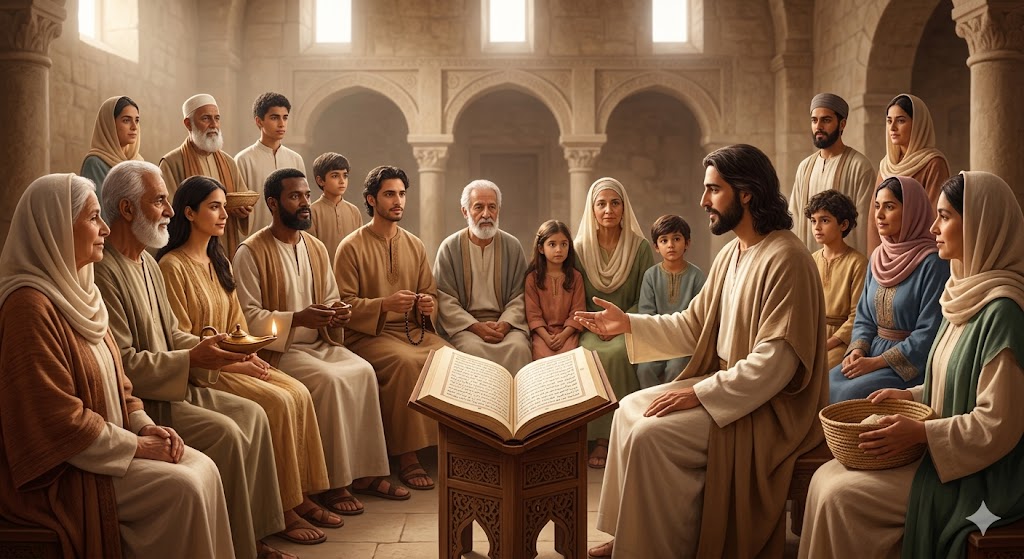
Community and Tradition (The Religious Framework)
Perspectives from Sanatan Dharma
Sanatan Dharma, often called Hinduism, offers a unique lens on spirituality and religion. The term "Sanatan" means eternal, suggesting a timeless way of life rather than a rigid faith. In this tradition, dharma (righteous living) encompasses both structured practices (religion-like aspects) and personal realization (spirituality).
Ancient texts like the Vedas, Upanishads, and Puranas distinguish between karma kanda (ritualistic practices) and jnana kanda (path of knowledge). Rituals and traditions provide discipline and community, while spirituality—through yoga, meditation, and self-realization—leads to moksha (liberation).
Sanatan Dharma is inherently pluralistic, recognizing multiple paths (margs) to the divine: bhakti (devotion), jnana (knowledge), karma (selfless action), and raja yoga. This accommodates diverse temperaments without insisting on uniformity. The Bhagavad Gita, a cornerstone text, teaches that the divine is one, though called by many names, emphasizing unity beneath apparent diversity.
In Sanatan tradition, spirituality is the essence that transcends formal religion. A true seeker may engage in rituals mindfully while understanding their symbolic purpose, ultimately aiming for direct experience of Brahman (ultimate reality). This framework naturally supports equality, as the Atman (soul) is identical in all beings regardless of caste, gender, or background.
Spirituality and Religion in Today’s World
In modern society, the line between spirituality and religion often blurs, yet distinctions remain significant. Many people identify as "spiritual but not religious" (SBNR), seeking personal growth without institutional affiliation. This trend reflects disillusionment with dogma, scandals, or exclusivity in some religious institutions, alongside a desire for inclusive, experience-based paths.
Globalization and technology have democratized spiritual knowledge. Practices like meditation, once confined to specific traditions, are now mainstream. Figures like Sadhguru have popularized the idea that spirituality is about enhancing human consciousness and well-being, independent of religious labels.
Religion continues to provide strong community support, cultural identity, and moral frameworks, playing crucial roles in social justice movements and charitable work. However, when religion becomes overly identified with politics or fundamentalism, it risks promoting division.
Spirituality, by contrast, emphasizes universal human qualities—compassion, mindfulness, and ethical living—that transcend boundaries. It fosters interfaith dialogue and harmony by focusing on shared human experiences rather than doctrinal differences.
Transcending Divisions: Equality in Spirituality
One of spirituality’s greatest strengths is its inclusive nature. Unlike certain interpretations of religion that may emphasize creed, gender roles, or chosenness, authentic spirituality recognizes the inherent divinity in every being.
Beyond Creed and Religion: Spirituality does not require conversion or exclusive allegiance. A Christian, Muslim, Hindu, atheist, or agnostic can all pursue spiritual growth through self-awareness and ethical living.
Gender Neutrality: True spirituality sees no hierarchy based on gender. Practices like meditation or contemplation are equally accessible. Many traditions feature enlightened women and emphasize the divine feminine alongside the masculine.
No Discrimination by Caste, Race, or Nationality: The focus remains on the inner self, which is universal. This aligns with Sanatan principles where the soul is eternal and unbound by physical identities.
Equality as Core Quality: Spirituality promotes the realization that all life is interconnected. This understanding naturally dissolves discrimination, fostering empathy and service.
In recovery programs, for instance, spirituality (often distinguished from religion) helps individuals find strength through higher power concepts tailored to personal beliefs, proving its adaptable and healing nature.
Spirituality vs Religion Debate: Key Comparisons
| Aspect | Religion | Spirituality |
| Focus | External rituals, doctrines | Internal experience, awareness |
| Authority | Scriptures, clergy | Personal insight, intuition |
| Structure | Organized institutions | Flexible, individual |
| Goal | Salvation through faith/works | Self-realization, liberation|
| Approach to Others | Can be exclusive | Inherently inclusive |
| Adaptability | Slower to change | Highly adaptable |
This comparison highlights complementarity rather than opposition. Many find religion as a vehicle for spirituality, while others thrive outside formal structures. The ideal approach often integrates both: using religious traditions for community and guidance while cultivating personal spiritual depth.
Why Spirituality Deserves Greater Emphasis Today
In a polarized world, spirituality’s emphasis on inner peace, universal love, and equality offers a unifying force. It encourages critical thinking, personal responsibility, and respect for diversity without diluting ethical foundations.
Practicing spirituality does not require abandoning religious heritage. Instead, it invites deeper engagement with tradition—understanding the "why" behind rituals and moving toward direct experience. This balanced approach enriches both individual lives and societies.
Leaders across traditions, from ancient rishis to modern voices, have emphasized that the essence of religion is spirituality. When this essence is prioritized, divisions diminish, and humanity’s common aspirations shine brighter.
Practical Ways to Cultivate Spirituality
Daily mindfulness or meditation practices.
Self-reflection through journaling or contemplation.
Acts of selfless service and compassion.
Connecting with nature and appreciating its sacredness.
Studying wisdom texts with an open, inquiring mind.
Cultivating gratitude and presence in daily activities.
These practices are accessible to all, regardless of background, reinforcing spirituality’s universal appeal.
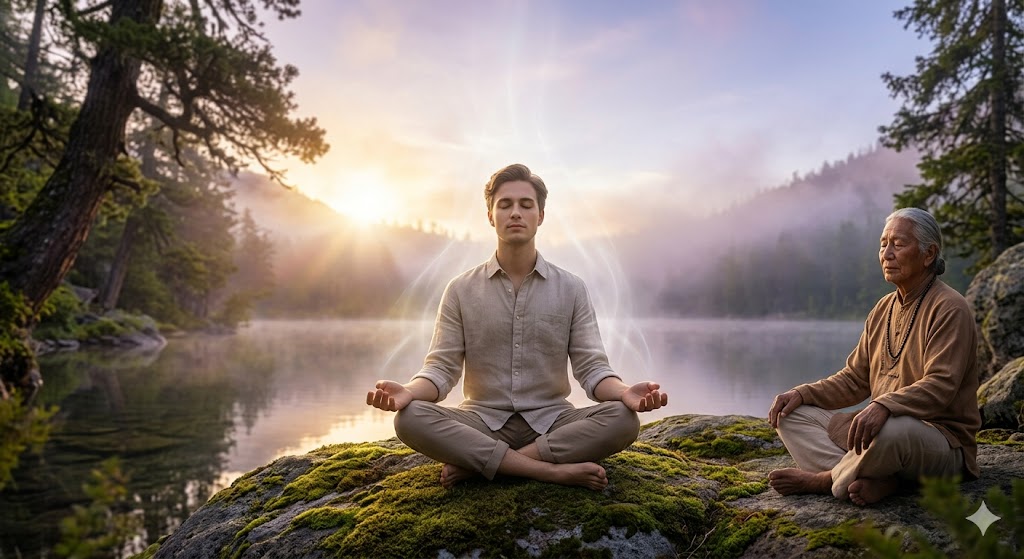
The Universal Path (Transcendence through Spirituality)
Conclusion
The difference between spirituality and religion lies not in opposition but in emphasis: religion provides structure and community, while spirituality nurtures personal awakening and universal connection. Drawing from Sanatan Dharma’s eternal wisdom and contemporary insights, we see that true spirituality transcends barriers of creed, gender, caste, and nationality, offering a path of equality, freedom, and inner peace.
In today’s world, embracing spirituality alongside respectful engagement with religious traditions can foster greater harmony, understanding, and human flourishing. By prioritizing inner qualities over external divisions, individuals and societies move closer to realizing our shared divine potential.
Ultimately, whether one walks a religious path or a purely spiritual one, the journey inward reveals the same truth: we are all interconnected expressions of the same infinite reality. This understanding is the timeless gift that spirituality offers humanity.