Tata Group Legacy: History, Leadership, and Enduring Impac
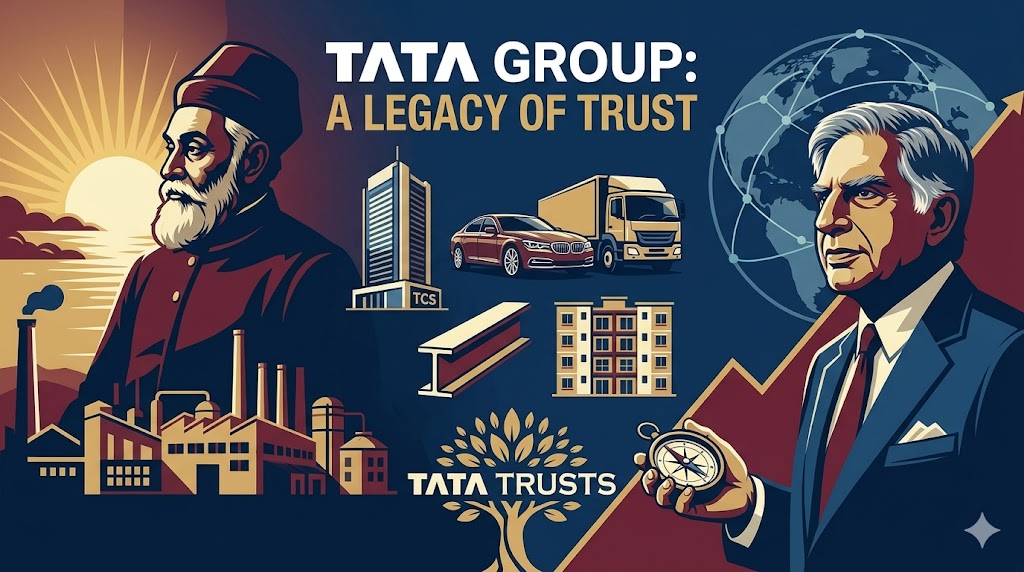
Few business houses in the world command the respect and emotional connect that the Tata Group enjoys in India and beyond. For over 158 years, this conglomerate has embodied the highest standards of ethical business, nation-building, and philanthropic commitment. From laying the foundations of modern Indian industry in the 19th century to navigating the complexities of a globalized 21st-century economy, the Tata story is one of resilience, innovation, and unwavering values.
Today, the Tata Group operates as a diversified multinational with interests ranging from steel and automobiles to information technology, hospitality, aviation, and real estate. It employs over a million people worldwide and touches the lives of millions more through its products, services, and social initiatives. This expanded article provides a comprehensive examination of its history, iconic leaders including a detailed look at Ratan Tata’s life and contributions, key business verticals with special focus on real estate, recent developments, challenges, and strategic outlook.
Jamsetji Tata: The Visionary Founder
The Tata saga begins with Jamsetji Nusserwanji Tata, born on March 3, 1839, in Navsari, Gujarat, into a Parsi priestly family. After early education and a stint in his father’s trading business, Jamsetji established a trading company in Bombay in 1868 with a modest capital of ₹21,000. This humble beginning laid the cornerstone for what would evolve into India’s most respected business empire.
Jamsetji’s genius lay in his ability to foresee India’s industrial needs. He pioneered the textile industry with Empress Mills in Nagpur in 1877, introducing progressive labour practices such as shorter working hours, provident funds, and recreational facilities—decades before they became statutory. His dream projects included an iron and steel plant, a hydroelectric power facility, a world-class hotel, and a research institute.
Though Jamsetji passed away in 1904 before many dreams materialized, his vision and philanthropy set an enduring template. He believed wealth creation must serve society, a principle enshrined in the group’s structure where Tata Trusts hold majority ownership in Tata Sons, directing profits toward education, health, and rural upliftment.
Jamsetji’s life exemplified the Parsi community’s contribution to India’s modernization while remaining deeply rooted in values of integrity and service.
The Formative Years and Expansion Under Successors
Following Jamsetji, his sons Dorabji and Ratanji Tata steered the group through turbulent times, including World War I. The establishment of Tata Iron and Steel Company (TISCO) in 1907 at Jamshedpur was a landmark achievement, symbolizing India’s quest for self-reliance. Tata Power and the Taj Mahal Palace Hotel (completed in 1903 as a response to racial discrimination faced by Indians) further expanded the footprint.
J.R.D. Tata, who became chairman in 1938 at age 34, provided legendary leadership for over five decades. Under him, the group ventured into aviation with Tata Airlines in 1932 (later nationalized as Air India). J.R.D. championed professional management, meritocracy, and employee welfare. His tenure saw the creation of iconic institutions like the Tata Institute of Fundamental Research and the National Centre for the Performing Arts.
The post-independence era brought both opportunities and regulatory challenges. The group navigated the License Raj while maintaining its reputation for ethical conduct.
Ratan Tata: Life, Leadership, and Transformative Legacy
Ratan Naval Tata (December 28, 1937 – October 9, 2024) remains one of the most admired business leaders globally. Born in Mumbai into the Tata family, he was raised by his grandmother after his parents’ separation. Educated at Cornell University (architecture and structural engineering) and briefly at Harvard Business School, Ratan Tata joined the family business in 1962, starting on the shop floor at Tata Steel in Jamshedpur.
His early career involved hands-on roles across various companies, giving him deep operational insight. In 1991, he succeeded J.R.D. Tata as chairman of Tata Sons amid skepticism about his ability to lead the sprawling group. Ratan Tata proved critics wrong through decisive action and strategic foresight.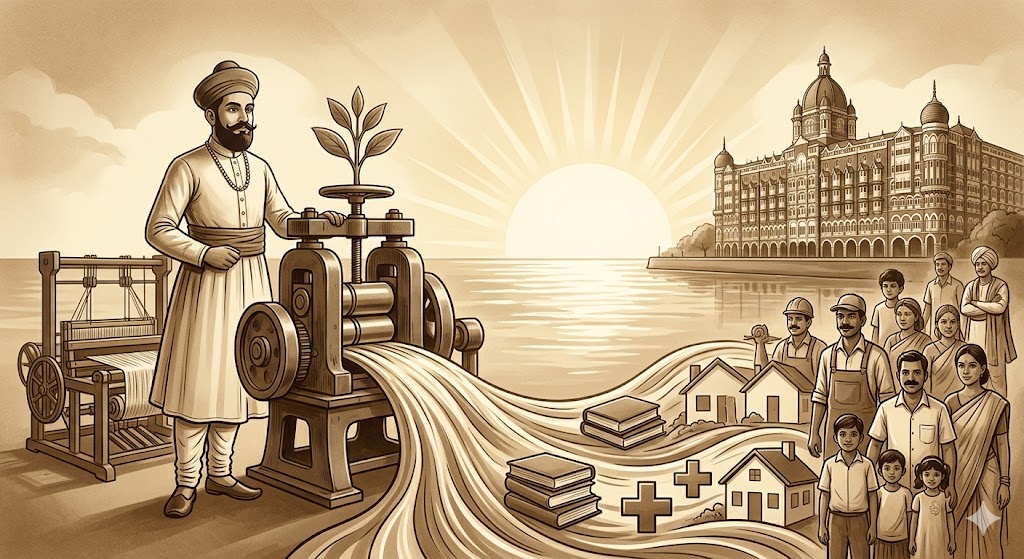
The Industrial & Philanthropic Foundation (Jamsetji’s Vision)
Key Achievements Under Ratan Tata:
Globalization: He transformed the Tata Group into a multinational powerhouse. Landmark acquisitions included Tetley Tea (2000), Corus Steel (2007), and Jaguar Land Rover (2008). These moves not only expanded market reach but also brought world-class technologies and brands to the group.
Innovation and Social Impact: The launch of the Tata Nano in 2008 aimed to provide safe, affordable mobility to millions. He strengthened the group’s commitment to corporate social responsibility, ensuring that community development remained integral to business strategy.
Governance Reforms: Ratan Tata professionalized management, introduced group-wide policies, and navigated complex internal dynamics to create a more cohesive structure.
Crisis Leadership: During the 2008 Mumbai terror attacks, his calm handling of the Taj Hotel tragedy and support for employees and victims exemplified compassionate leadership.
Ratan Tata’s personal life was marked by simplicity and dignity. A bachelor, he was known for his love of dogs, flying (he held a pilot’s license), and architectural interests. His philanthropy through Tata Trusts focused on education, healthcare, and rural development. Even after stepping down as chairman in 2012, he remained Chairman Emeritus and continued guiding strategic initiatives.
His passing in October 2024 evoked nationwide grief, with tributes highlighting his integrity, humility, and contribution to nation-building. Ratan Tata elevated the Tata brand to global prominence while preserving its soul—ethical, compassionate, and forward-looking. His life stands as a testament that business success and human values can coexist harmoniously.
N Chandrasekaran and Contemporary Leadership
Natarajan Chandrasekaran took over as Chairman of Tata Sons in 2017, becoming the first non-Tata family member in the role. A veteran of TCS, where he served as CEO, Chandra (as he is popularly known) has emphasized digital transformation, sustainability, and operational excellence. Under his leadership, the group has invested heavily in new-age sectors while strengthening core businesses. Recent focus areas include AI, semiconductors, and green initiatives.
Tata Group’s Diversified Business Portfolio
The Tata Group’s strength lies in its balanced portfolio:
IT and Digital: TCS is a global IT services giant.
Automotive and Mobility: Tata Motors and Jaguar Land Rover lead in commercial vehicles and luxury EVs.
Metals: Tata Steel pioneers sustainable steelmaking.
Energy and Power: Significant renewable energy push.
Consumer and Retail:Titan, Trent, and Indian Hotels (Taj).
Aviation:Air India’s revival remains a key focus despite current challenges.
Chemicals, Infrastructure, and Others.
This diversification provides stability and cross-learning opportunities.
Tata Group’s Foray into Real Estate and Infrastructure
Real estate has emerged as a dynamic growth vertical. Tata Housing Development Company, founded in 1984, has developed landmark residential projects emphasizing quality, sustainability, and customer-centric design. It serves multiple segments, from affordable to luxury housing, across key urban centers.
Tata Realty and Infrastructure Limited (TRIL) focuses on commercial real estate, infrastructure projects, and urban solutions. With millions of square feet in its portfolio, TRIL prioritizes green buildings, smart infrastructure, and mixed-use developments. The division aligns with national goals of planned urbanization and sustainable growth, contributing to smart cities and economic corridors.
The group’s real estate business benefits from the Tata brand’s trust, ensuring high standards in execution, transparency, and after-sales service. In India’s rapidly urbanizing economy, this sector holds immense potential for value creation while addressing housing and infrastructure needs.
Financial Performance, Revenue, and Profits
The Tata Group reports robust consolidated figures, with revenue often exceeding several lakh crore rupees annually. Strong performers like TCS and Tata Steel drive profitability, while investments in Air India and emerging businesses reflect long-term strategic bets. The group’s market capitalization across listed entities underscores investor confidence in its governance and growth prospects.
Challenges and Strategic Responses
The group has faced headwinds, notably in turning around Air India, where integration, fleet modernization, and operational efficiencies remain works in progress amid industry pressures. New ventures in electronics and digital have incurred initial losses but are positioned for future scalability. Leadership transitions and governance matters are managed with transparency, reinforcing stakeholder trust.
The Road Ahead: Tata Group’s Future
The Tata Group is poised for significant growth through sustainability, innovation in AI and mobility, and expansion in high-potential sectors. Strategic priorities include decarbonization, digital ecosystems, and enhancing global competitiveness. With India’s economic trajectory, the group’s nation-building legacy positions it as a key player in Viksit Bharat.
Enduring Legacy and Cultural Impact
Beyond balance sheets, the Tata Group symbolizes trust, excellence, and social responsibility. Its contributions to education, healthcare, and disaster relief have benefited millions. The “Tata” name evokes pride and reliability across India.
Ratan Tata’s life and the collective efforts of leaders and employees have cemented a legacy that transcends generations. As the group navigates the future, its foundational values—integrity, empathy, and excellence—will continue guiding its journey.

Globalization and the Move into Modern Verticals (The Ratan Tata Era)
Conclusion
The Tata Group’s story is one of remarkable evolution—from Jamsetji Tata’s pioneering spirit to Ratan Tata’s global vision and the current focus on sustainable innovation. Its involvement in real estate, aviation, technology, and core industries reflects a commitment to holistic national development.
As India progresses, the Tata Group remains a trusted partner in this journey. Its legacy reminds us that businesses can—and should—serve a higher purpose. With strong leadership, ethical foundations, and adaptive strategies, the coming decades promise even greater achievements for this iconic institution.