International Labour Day May 1st 2026: Honouring Workers
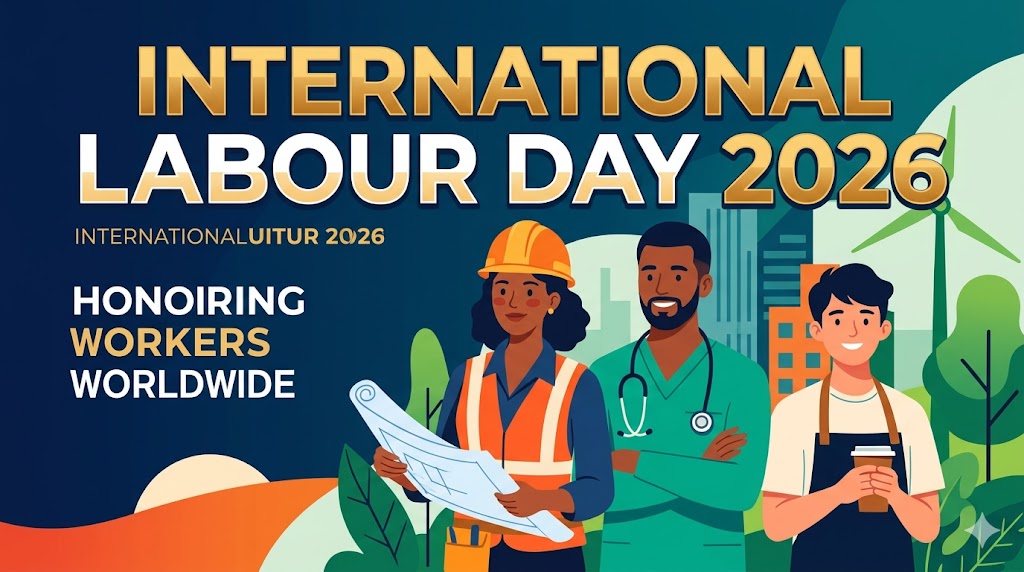
Every year on the first of May, millions around the world pause to reflect on the contributions, struggles, and resilience of working people. International Labour Day, also widely known as International Workers' Day or May Day, stands as a powerful reminder of the hard-fought battles for fair wages, safe conditions, and human dignity in the workplace.
In 2026, as we observe this significant day on Friday, May 1, the focus sharpens on contemporary realities. Rapid technological changes, climate impacts, and evolving work structures continue to reshape labour landscapes. Yet the core message remains unchanged: work is not merely an economic activity—it is the foundation of societies and a matter of fundamental rights.
This comprehensive guide explores the rich history of International Labour Day, its global significance in 2026, key celebrations, and the pressing challenges facing workers today. Whether you are a student, professional, or policymaker, understanding this day offers valuable perspective on the value of labour and the path toward more equitable workplaces.
The origins of International Labour Day trace back to the turbulent labour movements of the late 19th century. During the Industrial Revolution, workers faced grueling conditions—long hours, low pay, unsafe factories, and little regard for their well-being. In the United States, the demand for an eight-hour workday gained momentum.
On May 1, 1886, hundreds of thousands of American workers staged a general strike, demanding "eight hours for work, eight hours for rest, and eight hours for what we will." The movement culminated in the tragic Haymarket Affair in Chicago on May 4, where a peaceful rally turned violent after a bomb was thrown, resulting in deaths and injuries on both sides. Several labour activists were later executed, becoming symbols of the struggle.
In 1889, the Second International—a coalition of socialist and labour organizations—met in Paris and designated May 1 as International Workers' Day. The date was chosen deliberately to honour the American eight-hour movement and foster global solidarity among workers. The first May Day celebrations took place in 1890, with parades and rallies across Europe and beyond.
Over the decades, International Labour Day evolved from a day of protest into an official public holiday in more than 80 countries. It serves both as a celebration of past victories and a call to address unfinished work in labour rights.
It is important to distinguish International Labour Day (May 1) from Labor Day in the United States and Canada, observed on the first Monday of September. While both honour workers, the May 1 observance carries a stronger emphasis on international solidarity and historical struggles, whereas the September date focuses more on general appreciation of labour contributions.
In India, the first Labour Day was celebrated in 1923 in Madras (now Chennai), organized by the Madras Labour Union. Since then, May 1 has become a public holiday in several states, including Tamil Nadu, Kerala, West Bengal, and others, where trade unions organize rallies, cultural programs, and discussions on workers' issues.
Significance of International Labour Day in 2026
In 2026, International Labour Day holds renewed relevance amid rapid global transformations. The day reminds us that behind every product, service, and innovation are real people whose efforts sustain economies and communities.
The International Labour Organization (ILO) and various labour bodies emphasize themes addressing modern workplace realities. For 2026, prominent focuses include ensuring a healthy psychosocial working environment, workplace safety amid climate change, mental health support, women’s empowerment in labour, and just transitions in the green economy. These themes highlight how stress, job insecurity, digital burnout, and environmental factors increasingly affect worker well-being.
The significance extends beyond commemoration. International Labour Day 2026 serves as a platform to:
Recognize the contributions of both formal and informal sector workers.
Advocate for fair wages, social security, and safe conditions.
Address emerging issues such as the gig economy, artificial intelligence’s impact on jobs, and climate-induced labour challenges.
Promote international solidarity in an interconnected world.
For countries like India, where a large workforce operates in the informal sector, the day underscores the need for stronger social protections, skill development, and inclusive growth. In Rajasthan and cities like Jodhpur, local unions and organizations often hold meetings to discuss regional labour concerns, from construction safety to agricultural workers' rights.
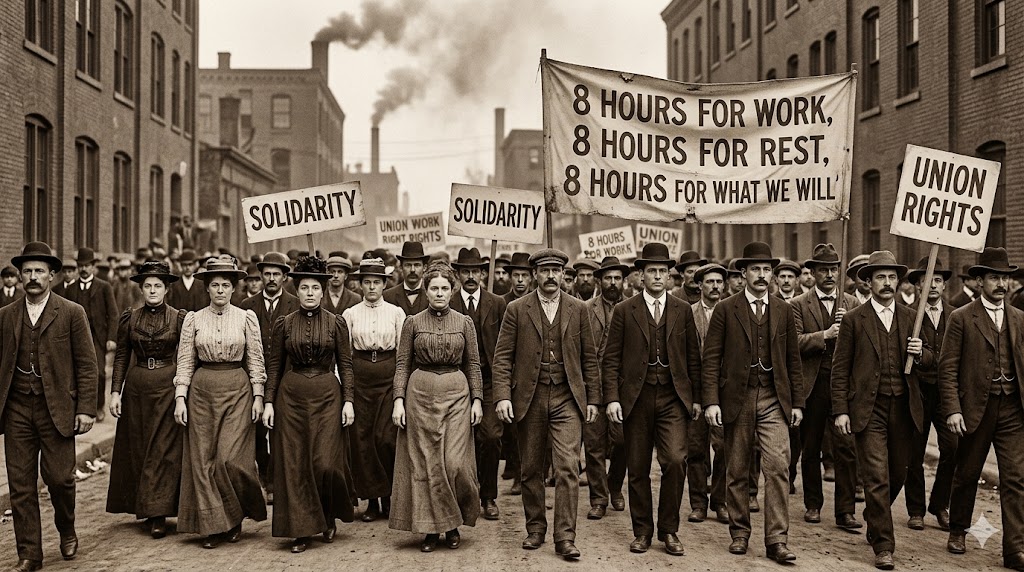
A historical illustration of workers marching in the late 19th century, demanding the standardized eight-hour workday. Banners carrying the slogan '8 Hours for Work, 8 Hours for Rest, 8 Hours for What We Will' symbolize the origins of the May Day movement.
How International Labour Day Is Celebrated Worldwide
Celebrations of International Labour Day vary by country, reflecting local cultures and political contexts, yet they share common threads of solidarity and reflection.
Global Observances:
In many European and Latin American nations, large parades, marches, and political rallies take place. Workers and unions gather to demand better rights and highlight current issues.
Cuba and other countries host mass rallies and cultural events.
In parts of Asia, including the Philippines and Turkey, demonstrations sometimes address economic inequality and policy concerns.
In India: Labour Day often features processions by trade unions, speeches by leaders, and cultural performances. In states like Tamil Nadu and Kerala, vibrant events include awareness campaigns on occupational safety and workers' welfare schemes. Some organizations distribute awards to outstanding workers or organize blood donation camps and health check-ups as gestures of appreciation.
Many people share International Labour Day wishes, quotes, and statuses on WhatsApp and social media to honour colleagues, family members, or essential workers. Simple messages like “Salute to every hand that builds our nation” resonate widely.
Educational institutions and corporates increasingly use the day for panel discussions, webinars on future of work, and employee appreciation programs. Drawings, posters, and school competitions on labour themes help younger generations understand the value of work.
The 2026 Theme: Focusing on Psychosocial Health and Safety
The central theme for International Labour Day 2026 revolves around creating healthy psychosocial working environments. This includes addressing mental health challenges such as workplace stress, burnout, harassment, and job insecurity—issues amplified by technological disruption and economic uncertainties.
Related discussions also touch on ensuring safety and health at work amid a changing climate. Rising temperatures, extreme weather, and green transitions affect sectors like agriculture, construction, and manufacturing, demanding adaptive policies and protections.
These themes reflect a broader shift: labour rights today encompass not only physical safety but also psychological well-being and long-term sustainability. The ILO continues to stress that decent work is integral to sustainable development goals.
Modern Challenges Facing Workers in 2026
While much progress has been made since the Haymarket era, new challenges test the labour movement in 2026.
The rise of the gig economy has created flexibility for some but left many without traditional protections such as health insurance, paid leave, or retirement benefits. Platform workers often face algorithmic management, unstable earnings, and limited recourse for grievances.
Artificial intelligence and automation are reshaping job markets. While AI augments many roles and creates new opportunities in tech and data fields, it also displaces or transforms tasks in manufacturing, content creation, customer service, and administrative work. Estimates suggest significant portions of jobs will be reshaped rather than entirely eliminated, requiring widespread reskilling and lifelong learning.
Climate change adds another layer. Workers in vulnerable sectors face heat stress, disrupted supply chains, and the need for just transitions to low-carbon economies. Ensuring that green jobs are also decent jobs remains a priority.
Gender disparities persist, with women workers often concentrated in lower-paid or precarious roles. Empowering women through equal pay, safe workplaces, and supportive policies forms a key part of contemporary labour agendas.
In India, issues such as informal employment, migrant worker vulnerabilities, and bridging urban-rural divides continue to demand attention. Government schemes for social security and skill development play vital roles, yet implementation gaps remain.
The Role of Trade Unions and Policy Makers
Trade unions have been instrumental in advancing labour rights historically and continue to advocate for fair policies. On International Labour Day, unions organize events to mobilize members and engage with governments on reforms.
Policymakers face the task of updating labour laws for the digital age—balancing flexibility with protection, promoting social dialogue, and investing in education and training.
International cooperation through bodies like the ILO helps set standards that countries can adapt locally. Ratifying and effectively implementing conventions on occupational safety, child labour elimination, and freedom of association remains crucial.
Practical Ways to Observe International Labour Day
Individuals and organizations can honour the day meaningfully:
Reflect and Appreciate: Take time to thank workers in essential services—delivery personnel, sanitation staff, healthcare workers, farmers, and teachers.
Educate: Share accurate information about labour history and current issues with family or colleagues.
Advocate: Support policies that promote decent work. Engage in discussions on mental health at work or fair gig economy regulations.
Participate Locally: Join or follow community events, webinars, or virtual rallies.
Promote Well-being: In workplaces, initiate conversations on reducing burnout and fostering inclusive cultures.
Create Awareness: Use drawings, posters, or short videos to highlight labour themes, especially in schools and colleges.
Even small gestures—such as fair treatment of domestic help or supporting ethical businesses—contribute to a culture that values labour.
Looking Ahead: Building a Dignified Future of Work
As we mark International Labour Day 2026, the day calls for renewed commitment. Technological progress should serve workers, not sideline them. Economic growth must be paired with social justice.
The future of work will likely feature more hybrid models, lifelong learning, and emphasis on human skills like creativity, empathy, and complex problem-solving—areas where humans retain an edge.
Achieving decent work for all requires collaboration among governments, employers, workers, and civil society. Investments in education, healthcare, social protection, and green infrastructure can create resilient labour markets.
In the end, International Labour Day is more than a holiday. It is a yearly invitation to reaffirm that every worker deserves respect, safety, fair compensation, and opportunities for growth. The hands that build our homes, grow our food, drive our progress, and care for our loved ones form the backbone of civilization.
A 2026 visualization of a gig worker facing modern challenges. The illustration highlights issues like mental stress, isolation, and the lack of traditional protections, which are key themes of the 2026 International Labour Day focus on psychosocial well-being.
Conclusion: A Day of Gratitude and Resolve
On this International Labour Day 2026, let us celebrate the spirit of resilience and solidarity that has defined the labour movement for over a century. From the streets of 19th-century Chicago to modern rallies addressing psychosocial health and climate resilience, the journey continues.
Whether through grand parades or quiet moments of appreciation, the day encourages us to recognize labour not as a commodity but as an expression of human dignity. As we navigate the complexities of the 21st century, may we work collectively toward workplaces that are safer, fairer, and more fulfilling for all.
Let this May 1 serve as both a tribute to past sacrifices and a catalyst for future progress. Every worker, regardless of sector or status, contributes to the shared story of human advancement. Honouring them is honouring the very foundation of our societies.