"Trump Rejects Iran 10 Point Proposal May 2026"
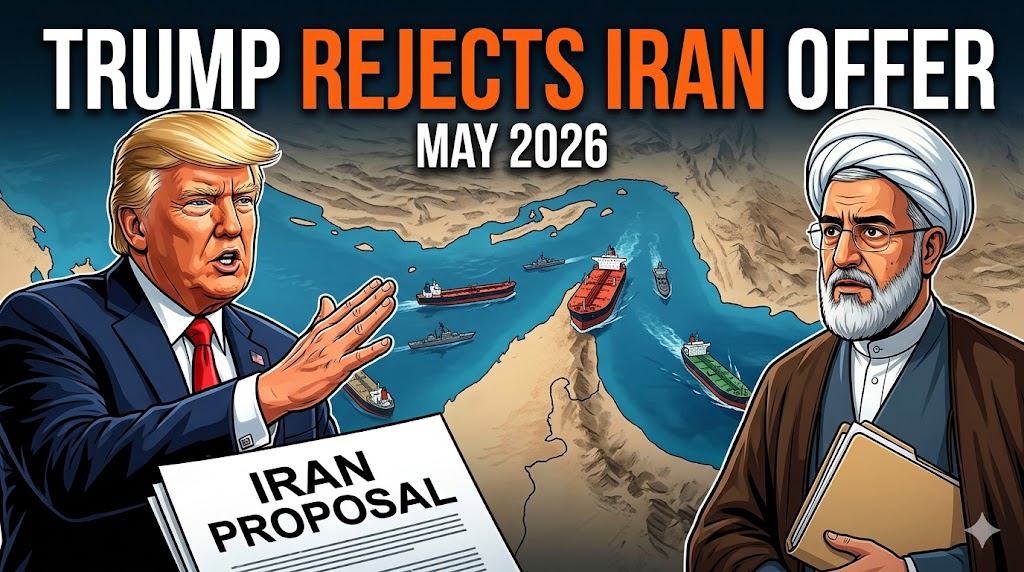
As the calendar turned to May 1, 2026, global attention remained fixed on the fragile state of US Iran negotiations. President Donald Trump publicly stated he was not satisfied with the latest peace proposal submitted by Tehran, casting fresh doubt on efforts to end the ongoing conflict that has disrupted energy markets and heightened geopolitical risks.
Iran delivered its revised offer through Pakistani mediators late on Thursday, following an earlier version that focused on reopening the Strait of Hormuz while postponing deeper discussions on its nuclear program. Trump’s response was characteristically direct: Iran has “made strides, but not enough,” and he remains unconvinced the proposal meets core American security concerns.
This development comes amid a delicate ceasefire that has held unevenly since early April, mediated by Pakistan. While direct military exchanges have largely paused, the underlying issues—particularly Iran’s nuclear ambitions, regional influence, and the US naval presence—continue to complicate any path to a lasting agreement.
In the same period, President Trump announced plans to raise tariffs on European Union cars and trucks to 25%, citing non-compliance with a previous trade deal. The dual announcements underscore a broader pattern: a firm negotiating stance across both security and economic fronts.
This in-depth analysis examines the latest developments in US Iran negotiations, the content and shortcomings of Iran’s proposal as viewed by Washington, the role of mediators, economic ripple effects, and what the coming weeks may hold.
Background: From Ceasefire to Stalled Talks
The current round of tensions escalated significantly in early 2026, leading to direct US and Israeli strikes on Iranian targets starting in late February. A two-week ceasefire was announced on April 8, facilitated by Pakistani diplomacy. Both sides described Iran’s initial 10-point proposal as providing a “workable basis” for further discussions, yet subsequent talks in Islamabad failed to produce a breakthrough.
Pakistan has played a central mediating role, shuttling proposals between Washington and Tehran. Iranian Foreign Minister Abbas Araghchi has been active in regional diplomacy, including visits that underscored Tehran’s efforts to build support while engaging indirectly with the United States.
The fragile truce has allowed a temporary easing of immediate hostilities, but the US maintains its naval blockade in the Strait of Hormuz—a critical chokepoint responsible for roughly one-fifth of global oil transit. Disruptions here have driven up energy prices worldwide, contributing to higher gasoline costs in the United States and supply concerns elsewhere.
Details of Iran’s Latest Proposal
According to reports, Iran’s revised submission seeks to address the immediate humanitarian and economic pressures caused by the conflict. Key elements reportedly include:
Steps toward reopening the Strait of Hormuz to commercial shipping.
An end to the US naval blockade.
Postponement of comprehensive talks on Iran’s nuclear program until after a broader cessation of hostilities.
Possible commitments on regional de-escalation, though details remain limited in public disclosures.
Iranian officials have framed the offer as a pragmatic step to reduce tensions and restore stability in the Gulf. However, US officials quickly signaled dissatisfaction, noting that any viable deal must tackle the nuclear question upfront rather than defer it.
President Trump, speaking to reporters, acknowledged that Iran “wants to make a deal” but emphasized that the current terms fall short. “I’m not satisfied with it, so we’ll see what happens,” he remarked, while adding that Tehran has shown some progress without reaching a sufficient threshold.
This stance aligns with longstanding US positions under the Trump administration: preventing Iran from acquiring nuclear weapons capability remains a non-negotiable priority. Previous American proposals reportedly included strict limits on enrichment, enhanced inspections, and curbs on ballistic missiles and support for regional proxies.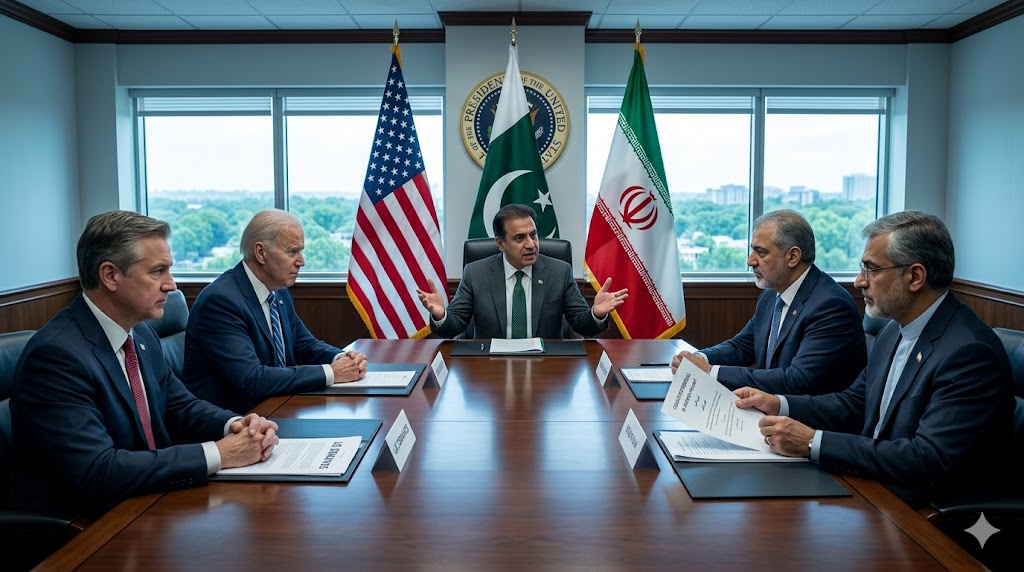
This May 2026 scene in Islamabad captures a critical juncture in the US Iran negotiations mediated by Pakistan
Why the US Remains Unsatisfied
Several factors explain Washington’s cautious, if not outright dismissive, reaction to the latest Iranian overture:
1. Nuclear Program Concerns: The proposal’s apparent willingness to set aside nuclear discussions is viewed as a fundamental flaw. US intelligence and policymakers insist that any durable agreement must include verifiable dismantlement or severe restrictions on Iran’s enrichment activities, stockpile reductions, and intrusive monitoring.
2. Verification and Trust Issues: Decades of strained US Iran relations have left deep skepticism on both sides. American negotiators demand robust mechanisms to ensure compliance, fearing that delays could allow Tehran to advance its program covertly.
3. Regional Stability: Beyond the nuclear file, the United States seeks commitments from Iran to reduce support for armed groups across the Middle East, which Washington sees as destabilizing.
4. Leverage Dynamics: With the naval blockade still in place and economic pressure mounting on Iran, the administration believes it holds strong cards. Trump has repeatedly signaled that maximum pressure remains a viable tool until a comprehensive deal materializes.
These points reflect a consistent “America First” approach that prioritizes tangible security gains over temporary de-escalation measures.
The Role of Pakistan in Mediation
Pakistan’s involvement highlights the importance of backchannel diplomacy in complex conflicts. As a nation with historical ties to both Washington and Tehran, Islamabad has positioned itself as a credible intermediary. Pakistani officials have described their efforts as constructive, though they acknowledge the significant gaps that remain between the two primary parties.
The use of third-party mediators allows both sides to explore ideas without immediate public commitments, reducing the risk of domestic political backlash. However, the repeated failure of direct or mediated rounds in Islamabad also illustrates the limits of such facilitation when core interests diverge sharply.
Economic Dimensions and the EU Tariff Announcement
On the same day Trump commented on the Iranian proposal, he announced plans to increase tariffs on cars and trucks imported from the European Union to 25%. The move, set to take effect next week, stems from accusations that the EU has not fully complied with a prior trade agreement.
This decision adds another layer of complexity to global markets already strained by the US Iran conflict. Higher energy costs from Hormuz disruptions, combined with new automotive tariffs, could exacerbate inflationary pressures and affect supply chains across continents.
Trump framed the tariff hike as necessary to protect American manufacturing and jobs, noting ongoing investments in US auto and truck plants. He emphasized that vehicles produced domestically would face no such duties. The timing, whether coincidental or strategic, underscores the administration’s willingness to wield economic tools alongside diplomatic and military ones.
Broader Implications for Regional and Global Security
The current impasse in US Iran negotiations carries significant stakes:
Energy Markets: Prolonged uncertainty around the Strait of Hormuz threatens oil flows and contributes to volatility in global prices.
Nuclear Non-Proliferation: Failure to reach a deal risks further advancement of Iran’s program, potentially triggering a regional arms race.
Humanitarian Impact: Extended conflict or sanctions exact a heavy toll on Iranian civilians while complicating humanitarian access.
Allied Coordination: The situation tests relationships with partners in Europe, Israel, and Gulf states, each with distinct threat perceptions and economic interests.
Public opinion in the United States appears divided, with some polls indicating fatigue over prolonged military engagements and concerns about rising costs at the pump.
Challenges and Potential Paths Forward
Reaching a breakthrough will require compromises that neither side has yet signaled willingness to make. For the US, this means balancing maximum pressure with credible incentives. For Iran, it involves demonstrating verifiable restraint on sensitive programs in exchange for sanctions relief and security guarantees.
Possible next steps include:
Further refinement of proposals through Pakistani or other backchannels.
Involvement of additional international actors, though trust in multilateral formats remains low.
Incremental confidence-building measures, such as limited humanitarian gestures or phased de-escalation in the Gulf.
Domestic political considerations in both capitals that could either accelerate or hinder progress.
Experts caution that while diplomacy remains preferable to renewed escalation, the window for meaningful negotiations can close quickly if mistrust deepens or external events intervene.
Historical Context of US-Iran Relations
The present difficulties fit within a long pattern of confrontation and sporadic engagement dating back to the 1979 Iranian Revolution. Past efforts, including the 2015 Joint Comprehensive Plan of Action (JCPOA) from which Trump withdrew during his first term, illustrate how fragile such agreements can be when political winds shift.
The current administration has favored bilateral pressure combined with targeted diplomacy, a strategy that has yielded mixed results across different files. Whether it can produce a more durable outcome in 2026 remains an open question.
Looking Ahead: Risks and Opportunities on May 1, 2026
As of today, the ceasefire continues to hold in its basic form, but the absence of a comprehensive resolution leaves the situation inherently unstable. Trump’s rejection of the latest Iranian offer does not necessarily signal the end of talks; rather, it reflects a negotiating style that tests limits before seeking common ground.
Observers will watch closely for any signals from Tehran or further statements from the White House. The involvement of senior advisers and the role of Congress—particularly regarding war powers and sanctions—will also shape developments.
In the meantime, the economic consequences of the standoff, including potential secondary effects from new EU tariffs, will test the resilience of global markets.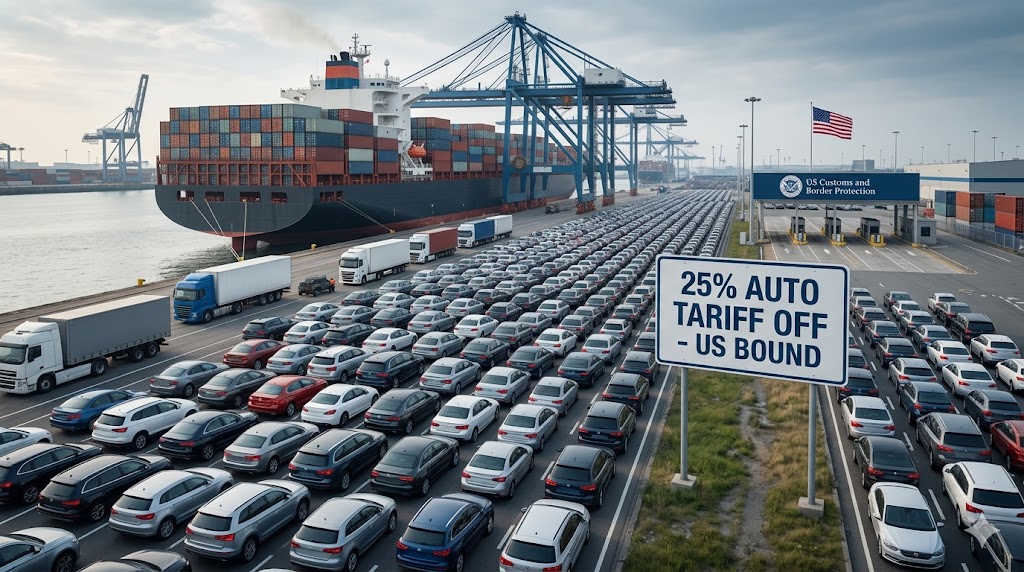
Concurrent with the friction in US Iran negotiations, economic levers are active. In May 2026, President Trump announced a new 25% tariff on European cars and trucks, illustrated here by lines of export-ready vehicles facing new US bound duties at a major European port.
Conclusion: A Critical Juncture in US Iran Negotiations
The events of May 1, 2026, encapsulate the complexities of contemporary US Iran negotiations. President Trump’s clear dissatisfaction with Iran’s proposal, delivered via Pakistani mediators, highlights persistent gaps on the nuclear issue and other core concerns. At the same time, his announcement of higher tariffs on European vehicles demonstrates the interconnected nature of security and trade policy under his leadership.
While a return to open conflict is undesirable for all parties, achieving a sustainable agreement demands difficult concessions and robust verification mechanisms. The coming days and weeks will determine whether the current stalemate evolves into renewed diplomacy or prolonged uncertainty.
For now, cautious realism appears to be the prevailing mood in Washington. Iran has shown interest in dialogue, yet the distance between the two sides remains substantial. As history reminds us, in matters of war and peace, patience paired with firmness often defines the difference between temporary truces and enduring resolutions.
The world will continue to watch closely as US Iran negotiations unfold, hopeful that diplomatic persistence can eventually overcome deep-seated mistrust and deliver a measure of stability to one of the most volatile regions on the planet.