MS Dhoni: Captain Cool's Enduring Legacy in Indian Cricket
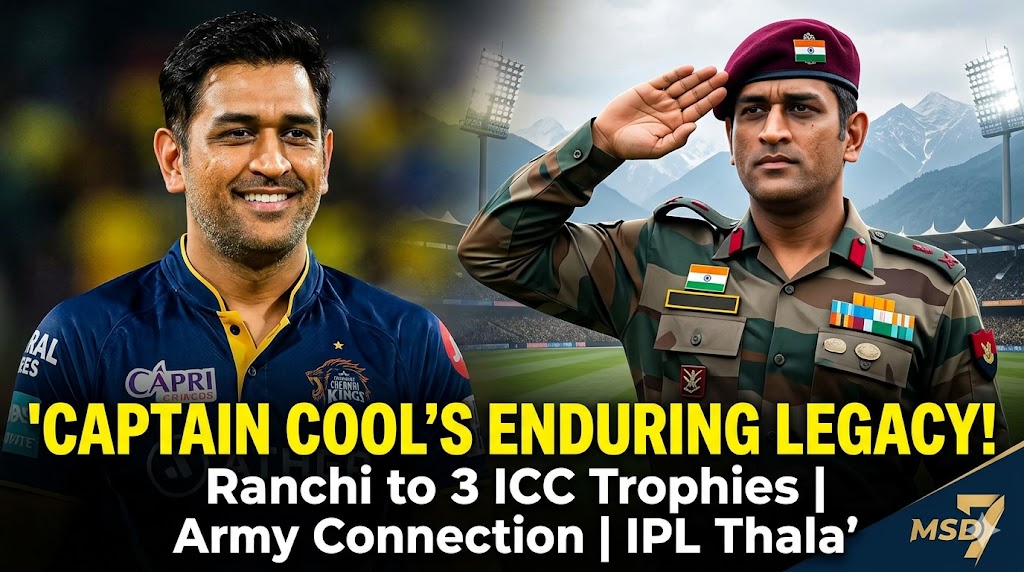
MS Dhoni: The Phenomenon Called Captain Cool
In the rich tapestry of Indian cricket, few names evoke as much admiration, emotion, and respect as Mahendra Singh Dhoni. Affectionately known as "Captain Cool" or "Thala" (leader in Tamil), MS Dhoni transformed from a small-town boy in Ranchi into one of the most iconic figures in world cricket. His calm demeanor under pressure, sharp cricketing acumen, and ability to finish matches with flair made him a role model for millions.
Dhoni's story is not merely about personal success but about redefining leadership in Indian cricket. He captained the team during a transformative era, guiding it to unprecedented heights across formats. Even years after stepping away from international cricket in 2020, his influence continues to resonate, whether through his continued association with Chennai Super Kings in the IPL or his broader legacy as a mentor and inspiration.
This article delves into the history of the Indian cricket team, Dhoni's remarkable rise, his unparalleled captaincy record, major titles and achievements, his unique connection with the Indian Army, and the immense contributions that have cemented his status among the greatest in the sport.
A Brief History of Indian Cricket: From Humble Beginnings to Global Dominance
Indian cricket has evolved dramatically over the decades. The sport arrived on Indian shores during British colonial rule, with the first recorded match played in 1721. The Board of Control for Cricket in India (BCCI) was formed in 1928, and India gained Test status in 1932. Early years were marked by occasional brilliance but limited success on the international stage.
The post-independence period saw gradual progress. Under captains like Vijay Hazare, Polly Umrigar, and later Mansoor Ali Khan Pataudi, India began building competitive teams. The 1970s and 1980s brought iconic wins, including the 1983 Cricket World Cup triumph under Kapil Dev, which ignited widespread passion for the game.
The 1990s and early 2000s, dominated by stars like Sachin Tendulkar, Sourav Ganguly, Rahul Dravid, and Anil Kumble, marked India's emergence as a formidable force. Ganguly's aggressive leadership laid the foundation for a more confident Indian side. Yet, consistent success in ICC tournaments remained elusive until a new generation, led by a young wicketkeeper-batsman from Jharkhand, took charge.
MS Dhoni entered this evolving landscape at a crucial juncture. His arrival coincided with the rise of T20 cricket and the launch of the Indian Premier League (IPL) in 2008, which further globalized the sport in India. Dhoni's leadership bridged traditional Test cricket with the explosive demands of limited-overs formats, helping India achieve supremacy across all forms of the game.
The Rise of MS Dhoni: From Ranchi to International Stardom
Born on July 7, 1981, in Ranchi (then part of Bihar, now Jharkhand), Mahendra Singh Dhoni grew up in a modest Rajput family. His father worked with MECON, a public sector company, while young Dhoni showed early talent not just in cricket but also in football and badminton. He initially played as a goalkeeper before switching focus to cricket.
Dhoni's domestic career began with Bihar and later Jharkhand. His big break came during a Deodhar Trophy match in 2003-04, where his explosive batting caught selectors' attention. He made his ODI debut against Bangladesh in December 2004 and quickly announced himself with a blistering 148 against Pakistan in his fifth international match.
His Test debut followed in 2005 against Sri Lanka. What set Dhoni apart was his aggressive batting style from the lower order, coupled with exceptional wicketkeeping skills. He became known for his helicopter shot, powerful striking, and lightning-quick stumpings. By 2006-07, he had established himself as one of the most dynamic wicketkeeper-batsmen in the world.
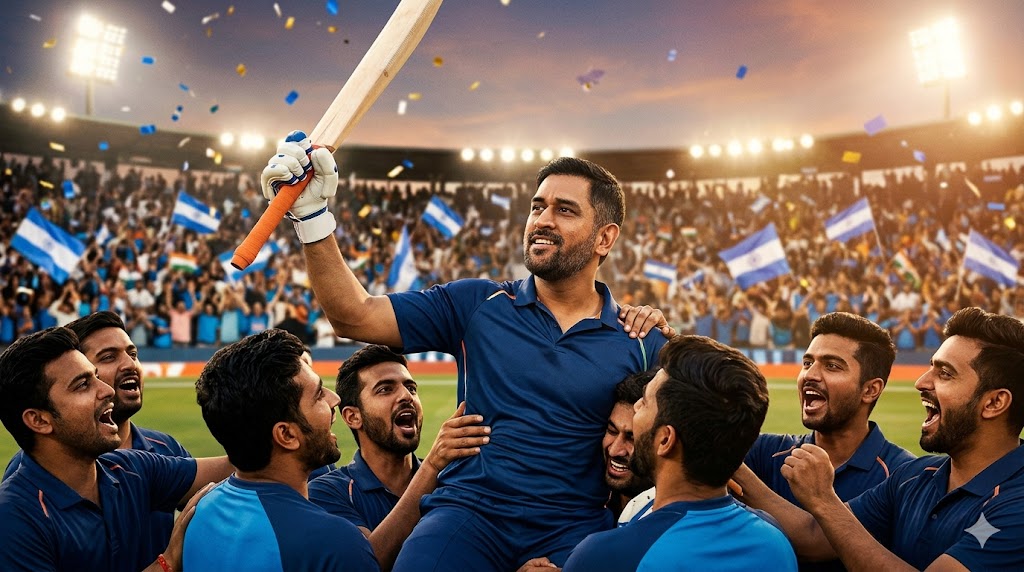
MS Dhoni : Redefining the leadership and victories in indian cricket
MS Dhoni as Captain: Redefining Leadership in Indian Cricket
Dhoni was appointed captain of the Indian T20 team for the inaugural ICC World Twenty20 in 2007. Few expected much from the relatively inexperienced side, yet under his cool-headed leadership, India defeated Pakistan in a thrilling final to claim the title. This victory marked the beginning of Dhoni's captaincy saga and sparked the T20 revolution in India.
He took over full captaincy across formats in 2008. From 2007 to 2017 in limited-overs and 2008 to 2014 in Tests, Dhoni captained India in a record 332 international matches—the highest by any Indian skipper. His captaincy statistics reflect consistency and success: he led the team to the top of the ICC Test rankings for the first time in 2009 and maintained a strong win record, particularly in ODIs and T20Is.
What made Dhoni special was his unique leadership style. Nicknamed "Captain Cool," he remained composed in high-pressure situations, trusted his instincts, and backed his players fearlessly. He revolutionized team selection by promoting youth and fostering a culture of fitness and professionalism. His ability to read the game, make bold decisions—like promoting himself up the order or unconventional field placements—often turned matches in India's favor.
Dhoni's captaincy record includes leading India to victory in the Border-Gavaskar Trophy with historic whitewashes against Australia. He also guided the side through challenging overseas tours, emphasizing mental toughness and adaptability.
Major Titles and Achievements: The Unparalleled Trophy Cabinet
MS Dhoni's greatest claim to fame lies in his ICC triumphs, making him the only captain in cricket history to win all three major white-ball trophies:
2007 ICC World Twenty20: As captain in his first major tournament, Dhoni led a young Indian team to glory in South Africa.
2011 ICC Cricket World Cup: The pinnacle of his career. On home soil, Dhoni's unbeaten 91 in the final against Sri Lanka in Mumbai helped India secure its second ODI World Cup after 28 years. His calm six off the penultimate ball remains one of the most iconic moments in Indian sports history.
2013 ICC Champions Trophy: India defeated England in the final, with Dhoni becoming the first (and still only) captain to win all three ICC limited-overs titles.
Beyond ICC events, Dhoni lifted the Asia Cup multiple times (2010, 2016, and contributed to 2018 success). Under his leadership, India enjoyed sustained success in bilateral series across formats.
In the IPL, Dhoni's association with Chennai Super Kings (CSK) is legendary. He has led the franchise to five titles (2010, 2011, 2018, 2021, 2023), reaching the finals a record ten times. Fans fondly call him "Thala," and his loyalty to CSK even during the team's two-year suspension highlighted his character.
Individually, Dhoni amassed impressive numbers: over 17,000 international runs, including centuries in all formats, and thousands of dismissals as a wicketkeeper. He received numerous accolades, including the ICC ODI Player of the Year (2008 and 2009), India's highest sporting honors like the Rajiv Gandhi Khel Ratna (2007), Padma Shri (2009), and Padma Bhushan (2018). In 2025, he was inducted into the ICC Hall of Fame, a fitting recognition of his contributions.
Dhoni's Connection with the Indian Army: A True Patriot
Beyond cricket, MS Dhoni shares a deep bond with the Indian Armed Forces. In 2011, he was granted an honorary rank of Lieutenant Colonel in the Territorial Army's Parachute Regiment (106 Para TA Battalion). He underwent rigorous training, including parachute jumps, earning his maroon beret and wings.
Dhoni has often spoken about his respect for the discipline and sacrifice of soldiers. His visits to military installations and support for armed forces welfare reflect a genuine commitment. This association adds another layer to his public image—he is not just a sportsman but someone who values duty, resilience, and service to the nation. Fans admire how he balanced the glamour of cricket with this grounded connection to India's defenders.
Immense Contributions to Indian Cricket and Lasting Legacy
Dhoni gave far more to Indian cricket than trophies alone. He mentored a new generation of players, many of whom went on to achieve greatness under his guidance. His emphasis on fitness transformed the team's athletic standards. As a finisher, he redefined lower-order batting, teaching players to handle pressure with composure.
Off the field, Dhoni's humility and low-profile lifestyle—despite massive fame and brand value—set an example. He built a strong fan base across demographics, from urban centers to small towns like his native Ranchi. The BCCI retired his No. 7 jersey in his honor, a rare gesture.
Even after retiring from international cricket on August 15, 2020, with the simple message "consider me as retired," Dhoni continues to inspire through the IPL. As of 2026, he remains actively associated with CSK, though speculation about full retirement persists as he approaches his mid-40s.
His legacy includes popularizing cricket in smaller towns, boosting women's cricket indirectly through increased interest, and demonstrating that success stems from hard work, self-belief, and teamwork rather than privilege.
Conclusion: Why MS Dhoni Remains an Eternal Icon
MS Dhoni's journey from a railway ticket collector's son in Ranchi to captaining India to glory embodies the spirit of determination and excellence. He captained with wisdom beyond his years, won where it mattered most, and gave Indian cricket a winning mentality that endures today.
Whether it is the thrill of the 2011 World Cup victory, his record number of matches as captain, or his quiet service to the nation through the Army, Dhoni has earned countless titles—Captain Cool, World Cup winner, IPL legend, and national hero. His contributions have shaped modern Indian cricket, inspiring future generations to dream big while staying grounded.
In the annals of the game, MS Dhoni will forever be remembered not just for the silverware but for the calm confidence he brought to the crease and the dressing room. Indian cricket owes him a debt of gratitude for elevating the team to new heights and leaving behind a legacy that transcends statistics.