RCB's Bowling Masterclass vs DC: How IPL 2026 Redefines T20
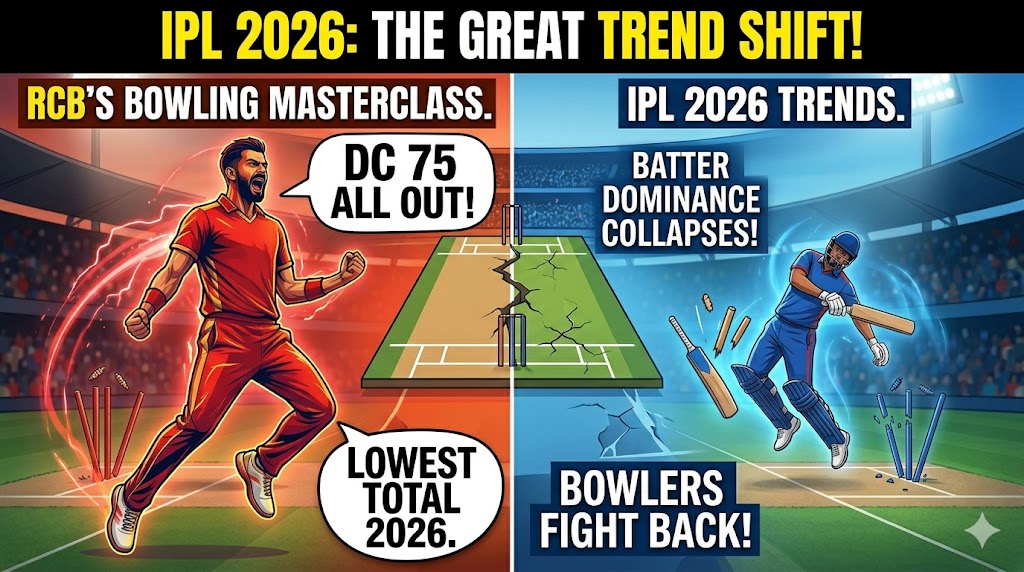
The 39th match of the Indian Premier League 2026 between Delhi Capitals and Royal Challengers Bengaluru at the Arun Jaitley Stadium in Delhi delivered a stark reminder that T20 cricket remains unpredictable. On April 27, 2026, RCB produced a clinical bowling performance that restricted DC to a mere 75 runs – one of the lowest totals in recent IPL history. Chasing the modest target, RCB cruised to victory by nine wickets in just 6.3 overs.
This encounter stands out not merely as a one-sided result but as a case study in how the current IPL season is evolving differently from previous editions. While early seasons and even recent years often featured high-scoring thrillers with totals routinely crossing 180 or 200, IPL 2026 has witnessed moments of genuine bowler resurgence on certain pitches. Such performances highlight the growing importance of seam movement, swing, and disciplined line-and-length bowling in an era dominated by power-hitting.
For cricket enthusiasts, analysts, and aspiring players, this match offers valuable lessons on adaptation, strategy, and the delicate balance between bat and ball in modern T20 cricket.
Opting to bowl first after winning the toss, RCB's decision proved masterful. Delhi Capitals' batting lineup, boasting experienced names like KL Rahul, Tristan Stubbs, and Axar Patel, crumbled under sustained pressure. The collapse began early and never allowed recovery.
Bhuvneshwar Kumar set the tone with exceptional swing bowling, claiming three wickets for just five runs in his opening spell. His ability to move the ball both ways troubled even settled batters. Josh Hazlewood complemented this with raw pace and accuracy, finishing with four wickets for 12 runs, including a searing yorker to end the innings.
Supporting cast members like Rasikh Salam and Suyash Sharma chipped in with economical spells and crucial breakthroughs. The collective effort ensured DC could not even reach the 100-run mark, folding in 15.4 overs. RCB's chase was a formality, with Virat Kohli and others wrapping up proceedings efficiently.
This result propelled RCB further up the points table, underscoring their strong season form, while DC faced another setback in their campaign.
Breaking Down RCB's Bowling Strategy
What made RCB's bowling so effective? Several factors converged:
Early Swing and Seam Movement: The Delhi pitch offered enough assistance for the new ball to swing. Bhuvneshwar exploited this with precise lengths, inducing edges and bowled dismissals. His economy rate hovered around 1.66 in key overs, demonstrating control under pressure.
Pace Variations: Hazlewood mixed short-pitched deliveries with fuller ones, disrupting batting rhythm. His 141+ kph deliveries forced mistakes, as seen in the dismissals of Rahul and Nitish Rana.
Field Placements and Captaincy: Smart positioning, including slips and short covers, capitalized on edges. RCB avoided over-attacking, focusing instead on building pressure through dot balls.
Death Overs Discipline: Even as the innings progressed, bowlers maintained tight lines, preventing any momentum shift.
These elements contrast sharply with many past IPL matches where batters dictated terms through aggressive powerplay scoring and innovative shot-making. In this game, disciplined execution turned potential batting firepower into vulnerability.
For young bowlers watching, the takeaway is clear: success in T20s comes from mastering fundamentals – swing, seam, and variations – rather than relying solely on pace or mystery spin.
IPL 2026 Trends: A Departure from Past Seasons
Historically, the IPL has trended toward batting-friendly conditions. From 2008 onward, par scores rose steadily. Powerplays often yielded 50-60 runs, and totals of 180+ became the norm, with successful chases of 200+ increasingly common in later seasons.
Early IPL 2026 followed this pattern in several matches, with scoring rates touching record highs around 9.68 runs per over in the initial phase. Teams posted 200-plus totals frequently, and batters explored new boundaries with innovative strokes. Spinners, once pivotal, saw reduced usage, accounting for only about a third of balls bowled – a noticeable drop compared to 2025.
However, matches like DC vs RCB reveal a more nuanced picture. Certain venues and conditions still favor bowlers, especially when dew is managed or pitches offer early assistance. The introduction of rules allowing a ball change after the 10th over in evening games aims to counter dew's impact, giving bowlers a fairer chance in the second innings.
This season shows greater variety:
Bowler Resurgence on Helpful Pitches: Uncapped Indian pacers and experienced seamers have shone when conditions assist movement.
Strategic Adaptations: Teams load up on quicks rather than spinners in some lineups, prioritizing pace over spin on flatter tracks.
Impact of Rules and Technology: Enhanced scrutiny on pitch preparation and impact player strategies influence team compositions, sometimes tilting balance toward depth in bowling.
Unlike previous years where batting depth often overwhelmed attacks, IPL 2026 demonstrates that well-executed bowling plans can still dominate. This balance makes the league more educational for viewers, teaching that T20 success requires adaptability across conditions rather than one-dimensional aggression.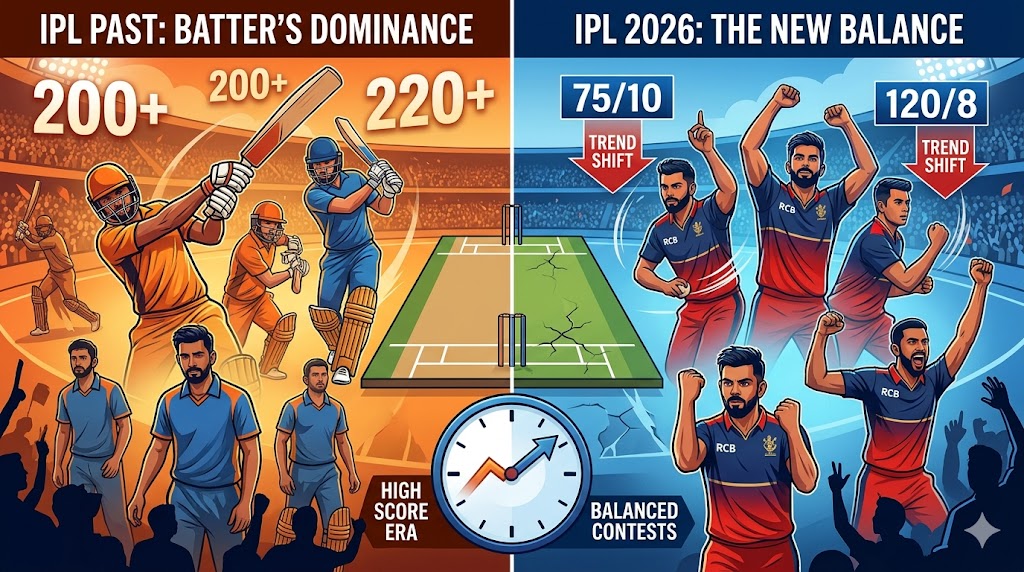
RCB's Dominance vs DC's Collapse
Factors Driving Change in Modern IPL
Several elements contribute to why IPL 2026 feels different:
1. Pitch and Venue Variations: While some grounds remain batting paradises, others like Delhi on this occasion provided seam movement. Groundsmen’s efforts to maintain balance, combined with weather, create diverse challenges.
2. Player Skill Evolution: Batters have improved power and range, but bowlers counter with better variations – wide yorkers, slower balls, and precise execution. Uncapped quicks bring fresh energy and hunger.
3. Rule Adjustments: The ball-change provision in dew-prone evening games helps maintain grip for bowlers. Impact Player rules add tactical depth but also demand smarter bowling rotations.
4. Data and Analytics Influence: Teams analyze match-ups more deeply, preparing specific plans against opposition strengths. This leads to tighter contests when plans click.
5. Psychological Shift: Low-scoring games remind players and fans that cricket's essence lies in competition, not just entertainment through sixes. Bowlers gain confidence seeing rewards for accuracy.
These shifts educate stakeholders – from franchise owners to grassroots coaches – on building balanced squads. Rather than stacking batting lineups, investing in versatile bowlers capable of exploiting conditions proves crucial.
In past seasons, a total below 150 often signaled a mismatch. Today, 75 remains exceptional, yet it underscores that no score is safe without disciplined bowling.
Lessons for Aspiring Cricketers and Fans
This match serves as an excellent educational tool:
For Bowlers: Focus on consistency and exploiting conditions. Learn swing techniques, practice yorkers, and develop courage to bowl attacking lines even against star batters.
For Batters: Respect the new ball. Footwork against swing, shot selection under pressure, and building partnerships matter more than individual fireworks on tricky surfaces.
For Coaches and Analysts: Emphasize scenario-based training. Simulate low-scoring pressure situations to build mental resilience.
For Fans: Appreciate the tactical battle. T20 cricket offers more than boundaries; strategic depth and bowler triumphs add richness to the spectacle.
Viewing such games helps understand T20 evolution – from slam-bang entertainment to a sport rewarding all-round skills and adaptability.
Broader Implications for IPL 2026 Season
As the league progresses, performances like RCB's bowling display could influence playoff strategies. Teams may prioritize bowling depth and multi-skilled all-rounders. Net run rate calculations gain importance in closely contested tables, where one dominant bowling show can swing standings dramatically.
RCB's position in the upper half of the points table reflects consistent contributions across departments. For DC, this loss highlights areas needing attention, particularly top-order stability against quality seam attacks.
Overall, IPL 2026 appears headed toward greater competitiveness. While high-scoring games will continue thrilling audiences, occasional low totals restore balance, making every match strategically significant.
This evolution keeps the tournament fresh, preventing predictability and encouraging innovation in training, selection, and on-field tactics.
Conclusion: The Enduring Appeal of Balanced Cricket
The DC vs RCB encounter on April 27, 2026, will be remembered for RCB's clinical dismantling of a strong batting side. Bhuvneshwar Kumar and Josh Hazlewood's heroics not only secured a comprehensive win but also illustrated how IPL 2026 diverges from past seasons by showcasing bowler effectiveness amid batting-friendly trends.
As the season unfolds, fans and analysts alike can expect a mix of explosive totals and hard-fought low-scoring battles. This variety enriches the league, offering educational value on cricket's timeless principles: technique, strategy, and adaptability.
Whether you are a budding player analyzing techniques or a fan enjoying the drama, matches like this reinforce why the IPL remains the pinnacle of T20 cricket – a platform where innovation meets tradition, and balance ultimately prevails.