UAE Announces OPEC Exit: Strategic Shift in Oil Politics
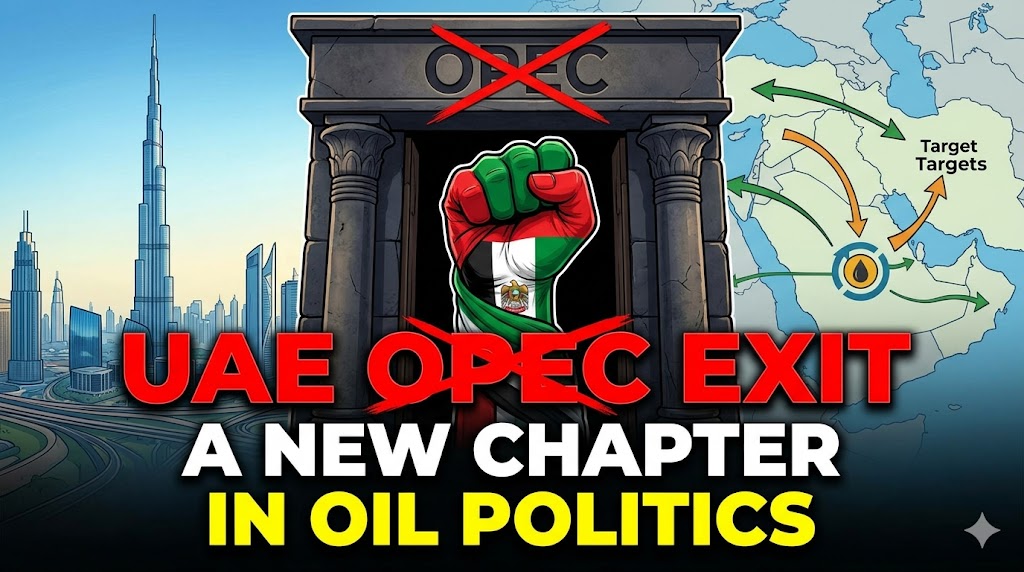
In a move that has sent ripples through global energy markets, the United Arab Emirates (UAE) announced its decision to withdraw from the Organization of the Petroleum Exporting Countries (OPEC) and the broader OPEC+ alliance, effective May 1, 2026. After nearly six decades of membership, this strategic departure marks a significant turning point for one of the world’s most influential oil-producing nations and the cartel itself.
The announcement, made on April 28, 2026, comes at a time of heightened geopolitical tension in West Asia, exacerbated by the ongoing US-Iran conflict and disruptions in the Strait of Hormuz. UAE officials framed the exit as a forward-looking step aligned with national interests, emphasizing the need for greater flexibility in production decisions to meet growing global energy demand.
This development not only highlights shifting priorities within Gulf cooperation but also raises important questions about the future cohesion and influence of OPEC in an era of energy transition, rising non-OPEC production, and volatile geopolitics. As one of OPEC’s largest producers, the UAE’s exit is expected to reduce the group’s collective leverage over global oil supply and pricing.
This article provides a comprehensive analysis of the UAE OPEC exit, its underlying motivations, immediate market reactions, broader implications for the global oil industry, and what it means for regional and international energy dynamics.
Background of UAE’s Membership in OPEC
The UAE joined OPEC in 1967, shortly after its formation as a federation. Abu Dhabi, the largest emirate and the driving force behind the country’s oil sector, became the primary representative. Over the decades, the UAE has played a constructive role within the organization, contributing to efforts to stabilize oil markets through production quotas and coordinated policies.
As a founding member of the expanded OPEC+ framework (which includes non-OPEC producers like Russia), the UAE consistently supported efforts to balance supply and demand. However, periodic disagreements over quota allocations have surfaced, particularly as the UAE invested heavily in expanding its production capacity.
In recent years, the UAE has pursued an ambitious economic diversification agenda under its “Vision 2031” and net-zero ambitions, while simultaneously enhancing its oil and gas infrastructure. The country has developed significant spare capacity, aiming to increase output toward 5 million barrels per day in the coming years. These ambitions increasingly clashed with the restrictive production ceilings imposed by OPEC+ agreements.
Reasons Behind the UAE OPEC Exit
UAE Energy Minister Suhail Mohamed al-Mazrouei described the decision as the outcome of a thorough strategic review of the country’s current and future production capacity. The core motivation centers on the desire for greater policy flexibility.
Key factors include:
Production Flexibility: OPEC+ quotas have limited the UAE’s ability to fully utilize its expanded infrastructure and spare capacity. By exiting, Abu Dhabi can independently adjust output in response to market conditions and long-term demand forecasts.
Global Energy Demand: Officials emphasize that the world “needs more energy.” With growing consumption in Asia and other emerging markets, the UAE sees itself as a responsible producer capable of contributing additional supply without artificial constraints.
Geopolitical Context: The announcement coincides with the ongoing Iran war and associated energy disruptions. Diverging foreign policy perspectives within the Gulf—particularly differing approaches toward Iran and Yemen—have strained traditional solidarity. The UAE has shown willingness to adopt more assertive stances on regional security issues.
Economic Diversification and National Interest: The move aligns with the UAE’s broader goal of maximizing economic returns from its hydrocarbon resources while transitioning toward a more sustainable and diversified economy. Greater control over production supports revenue generation needed for investments in renewable energy, technology, and tourism.
The exit applies to both OPEC and the wider OPEC+ coalition, freeing the UAE from collective decision-making processes that have sometimes led to internal tensions, especially with de facto leader Saudi Arabia.
It visualizes the internal strategic review, with UAE Energy Minister Suhail Mohamed al-Mazrouei reviewing advanced energy data.
Immediate Market Reactions and Oil Price Impact
The announcement initially caused volatility in international oil markets. While oil prices had been elevated due to supply concerns from the Iran conflict and Hormuz disruptions, the news of the UAE’s departure trimmed some gains as traders assessed the potential for increased future supply.
Analysts suggest that in the short term, the impact may be limited since the UAE is expected to maintain responsible production levels. However, over the medium to long term, the exit could exert downward pressure on prices by adding more non-OPEC-controlled supply to the market.
Global markets are already navigating multiple challenges: the US naval blockade of Iranian ports, restricted shipping through the Strait of Hormuz, record-high US oil exports, and shifting demand patterns. The UAE’s decision adds another layer of uncertainty at a critical juncture.
Implications for OPEC and Global Oil Markets
The departure of the UAE, OPEC’s third-largest producer (behind Saudi Arabia and Iraq), represents a notable blow to the cartel’s cohesion and market influence. OPEC will be left with 11 members after the exit, further diminishing its share of global oil production as non-OPEC producers like the United States continue to expand output.
This development exacerbates existing fractures within the group. Differences in economic models, fiscal needs, and foreign policy priorities among members have grown more pronounced in recent years. Saudi Arabia, as the traditional swing producer, now faces a more fragmented alliance.
For global oil markets, the UAE OPEC exit could lead to:
Increased supply flexibility and potentially more volatile pricing.
Greater competition among producers.
Accelerated shifts in market share toward more agile, non-cartel players.
Challenges to OPEC+’s ability to implement coordinated production cuts during periods of oversupply.
Experts caution that while the immediate effects may be contained, a domino effect—where other members reconsider their commitments—cannot be ruled out if internal disagreements intensify.
Shifting Gulf Dynamics and Regional Geopolitics
The decision also reflects evolving relationships within the Gulf Cooperation Council (GCC). Long-standing alignment between the UAE and Saudi Arabia on oil policy has shown signs of strain, influenced by differing views on regional conflicts, including Yemen and the current Iran situation.
The UAE’s more independent foreign policy posture, including stronger stances on certain security issues, appears to extend into energy strategy. This realignment highlights how traditional Gulf solidarity is adapting to new realities, including great-power competition, energy transition pressures, and changing global demand centers.
At the same time, the UAE has reiterated its commitment to being a “responsible producer,” signaling that the exit is not intended to destabilize markets but rather to allow more responsive and sustainable management of its resources.
Future Outlook for UAE Energy Strategy
Post-exit, the UAE is expected to ramp up production toward its target of 5 million barrels per day. Investments in upstream capacity, including advanced extraction technologies and infrastructure like the Habshan-Fujairah pipeline (which bypasses the Strait of Hormuz), will support this expansion.
The country will continue balancing hydrocarbon revenues with its ambitious diversification goals, including substantial investments in renewable energy, hydrogen, and climate initiatives. This dual-track approach positions the UAE as both a major traditional energy player and a leader in the energy transition.
For international partners, the move may open new opportunities for bilateral energy cooperation outside multilateral frameworks.
Challenges and Risks Ahead
While the UAE OPEC exit offers strategic advantages, it also carries risks. Operating independently means bearing full responsibility for market fluctuations without the safety net of collective decisions. Geopolitical tensions in the region could still disrupt exports, regardless of cartel membership.
Furthermore, the energy transition poses long-term challenges to all fossil fuel producers. The UAE’s success will depend on prudent investment, technological innovation, and adaptability to changing global demand.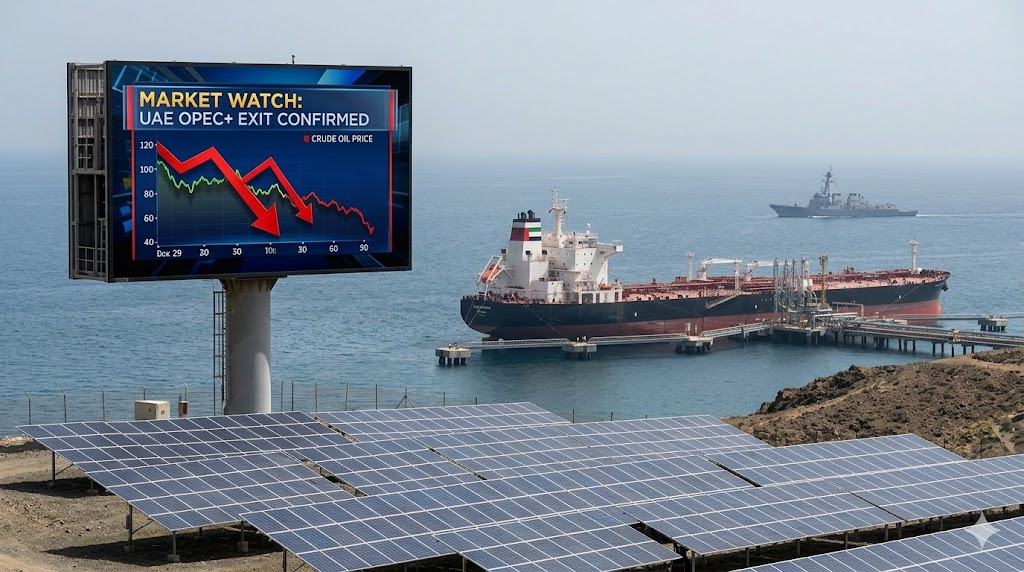
Market Volatility and New Realities
Conclusion: A New Chapter in Global Energy Politics
The United Arab Emirates’ announcement to exit OPEC and OPEC+ effective May 1, 2026, represents a bold strategic recalibration. Driven by the pursuit of production flexibility, national economic interests, and evolving regional realities, this decision weakens the traditional oil cartel while highlighting the UAE’s confidence in charting its own course.
As global energy markets navigate the complexities of the ongoing West Asia tensions, supply disruptions, and the broader energy transition, the UAE’s move adds a significant new variable. Its long-term impact will depend on how the country manages increased output, how remaining OPEC members respond, and how markets adapt to a less centralized system of production coordination.
For now, the UAE OPEC exit serves as a powerful reminder that even longstanding institutions must evolve in response to changing economic, political, and environmental realities. The coming months will reveal whether this marks the beginning of a more fragmented era in global oil governance or simply a pragmatic adjustment by a forward-thinking producer.