Jaishankar Iran Talks: India's West Asia Diplomacy 2026
Recent Diplomatic Engagement
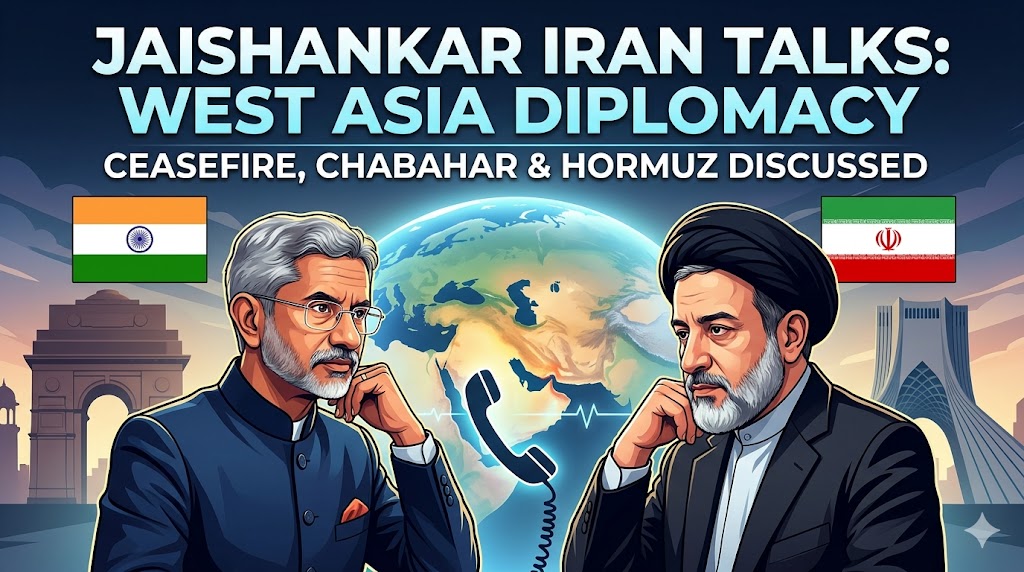
In the midst of ongoing uncertainties in West Asia, External Affairs Minister Dr. S Jaishankar engaged in a detailed telephone conversation with his Iranian counterpart, Seyed Abbas Araghchi, on April 29-30, 2026. This marks the sixth or seventh high-level contact between the two ministers since the escalation of the US-Iran conflict on February 28, 2026.
The discussion covered various aspects of the current regional situation, including the fragile ceasefire between the United States and Iran, bilateral relations between India and Iran, and broader regional and international issues. Both sides agreed to remain in close touch as developments unfold. This exchange reflects India’s proactive diplomatic outreach to key stakeholders amid rising tensions that threaten energy security, trade routes, and regional stability.
India has consistently advocated for restraint, dialogue, and de-escalation in West Asia. As a nation with substantial stakes in the region — including energy imports, the safety of its large diaspora, and strategic projects like Chabahar Port — New Delhi carefully balances its relationships while prioritizing peace and stability.
This article examines the details of the Jaishankar-Araghchi talks, the broader context of the West Asia crisis, and India’s nuanced position on the evolving situation.
Details of the Jaishankar-Araghchi Conversation
According to statements from the Ministry of External Affairs and the Iranian Embassy in New Delhi, Iranian Foreign Minister Seyed Abbas Araghchi initiated the call. The two leaders held a comprehensive discussion on multiple fronts.
Key topics included:
Latest developments related to the US-Iran ceasefire and efforts toward a more durable peace.
Bilateral relations between India and Iran, including trade, connectivity projects, and people-to-people ties.
Broader regional security concerns, particularly threats to freedom of navigation in the Strait of Hormuz.
International implications of the ongoing tensions.
Jaishankar shared on social media that he received the call and had a “detailed conversation about various aspects of the current situation.” Both ministers agreed to maintain close contact moving forward.
This conversation occurs against the backdrop of stalled nuclear negotiations, the US naval blockade affecting Iranian ports, restricted shipping through the Strait of Hormuz, and fluctuating global oil prices. It underscores the importance both nations attach to sustained diplomatic channels even during periods of heightened uncertainty.
The call is part of a pattern of regular high-level engagement. Since the conflict intensified in late February 2026, Jaishankar and Araghchi have spoken multiple times, reflecting the depth of India-Iran diplomatic ties despite external pressures.
Context of the West Asia Crisis in 2026
The current tensions stem from long-standing differences over Iran’s nuclear program, regional influence, and maritime security. Direct military exchanges began on February 28, 2026, involving strikes on Iranian targets, followed by retaliatory actions and disruptions in the Persian Gulf.
A conditional ceasefire was later established, but it has remained fragile due to disagreements on sequencing issues such as nuclear verification versus immediate economic relief. Restrictions on shipping through the Strait of Hormuz — a critical artery carrying roughly one-fifth of global oil trade — have caused significant economic ripple effects worldwide, including higher energy prices impacting import-dependent economies like India.
India has welcomed the ceasefire and repeatedly called for its consolidation into a lasting peace. The government has emphasized the need for all parties to exercise restraint, prioritize civilian safety, and pursue dialogue as the only sustainable path forward.
India’s Current Stance on the West Asia Situation
India’s approach to the West Asia crisis is guided by its core foreign policy principles: strategic autonomy, multi-alignment, and a focus on national interests balanced with global responsibility.
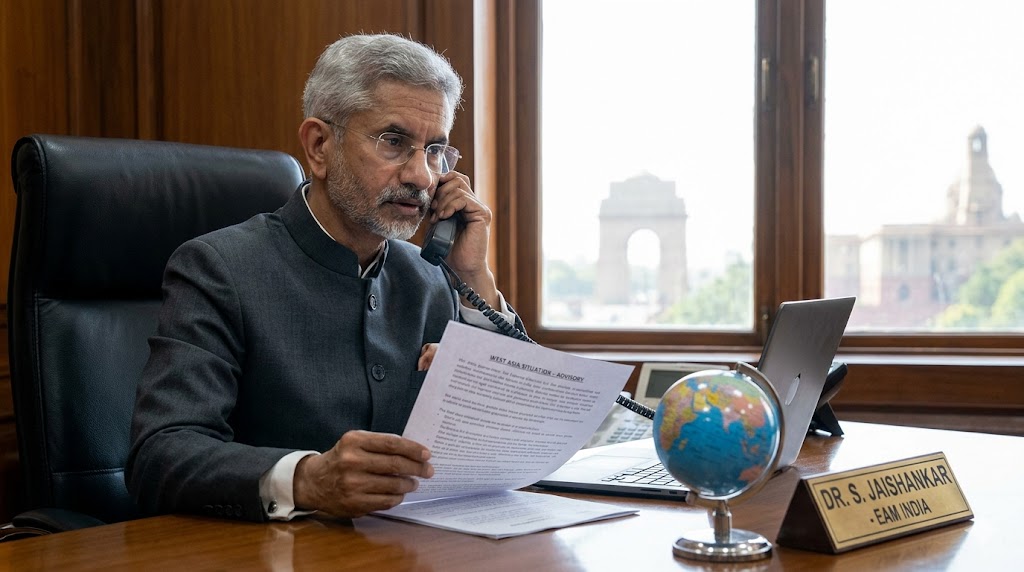
External Affairs Minister Dr. S. Jaishankar holds detailed telephone talks from his office in New Delhi on the evolving West Asia situation, emphasizing India's focus on de-escalation and diplomacy.
Key elements of India’s position include:
1. Strong Advocacy for De-escalation and Dialogue: India has consistently urged all parties to avoid further escalation and resolve differences through diplomacy. In official statements, the Ministry of External Affairs has highlighted that “de-escalation, dialogue, and diplomacy are essential” to end the conflict and achieve lasting peace.
2. Emphasis on Freedom of Navigation: As a major importer of energy from the Gulf region, India places high importance on the uninterrupted flow of commerce through the Strait of Hormuz. Any disruption affects not only oil supplies but also the broader global economy. New Delhi has stressed the need for safe and secure maritime routes.
3. Protection of Indian Interests: With nearly nine million Indian nationals working in Gulf countries, their safety and welfare remain a top priority. The government has closely monitored the situation and taken steps, including facilitating the return of citizens when necessary. Additionally, India is diversifying energy sources and building strategic reserves to mitigate short- and medium-term risks.
4. Balanced Engagement with All Stakeholders: India maintains cordial relations with Iran, Israel, the United States, and Arab Gulf nations. This balanced posture allows New Delhi to act as a credible voice for peace without being drawn into adversarial camps. India has welcomed ceasefire efforts while engaging bilaterally with multiple players.
5. Support for Sovereignty and Territorial Integrity: India respects the sovereignty of all nations in the region and opposes actions that could lead to wider instability. It has expressed concern over the humanitarian and economic consequences of prolonged conflict.
6. Economic and Strategic Pragmatism: The crisis has prompted India to accelerate diversification of oil imports, strengthen domestic production where possible, and explore alternative trade corridors. Projects like the India-Middle East-Europe Economic Corridor (IMEC) and continued development of Chabahar Port reflect long-term strategic thinking, even amid current challenges.
India has also used multilateral platforms, including BRICS (where it held the chair in 2026), to express deep concern over the conflict, though achieving full consensus has proven difficult due to differing views among member states.
Strategic Importance of India-Iran Relations
Despite external pressures, India and Iran share historical and civilizational ties. Bilateral cooperation spans energy, connectivity (via Chabahar Port as a gateway to Central Asia), trade, and cultural exchanges. The recent conversation between Jaishankar and Araghchi reaffirms the resilience of these ties and the mutual desire to keep communication channels open.
For India, Iran remains an important partner for energy security and regional connectivity. For Iran, engagement with India provides a vital link to the Global South and an alternative diplomatic avenue during difficult times.
Broader Implications and the Road Ahead
The Jaishankar-Araghchi talks highlight India’s role as a responsible and influential player in West Asia. By maintaining open lines with Iran while upholding its broader strategic partnerships, India contributes to regional stability without compromising its interests.
Looking forward, several factors will shape developments:
Progress on nuclear negotiations and sanctions relief.
Restoration of full freedom of navigation in the Strait of Hormuz.
Humanitarian conditions and economic recovery in the region.
Safety and security of Indian nationals and assets.
India is likely to continue its diplomatic efforts, engaging with all concerned parties while prioritizing de-escalation. As a nation with deep economic stakes and a long tradition of peaceful resolution of disputes, India’s voice carries weight in calls for dialogue.
The government has also focused domestically on mitigating impacts through diversification, strategic reserves, and support for affected sectors. Long-term lessons from the crisis are driving policy adjustments in defence preparedness, supply chain resilience, and energy security.
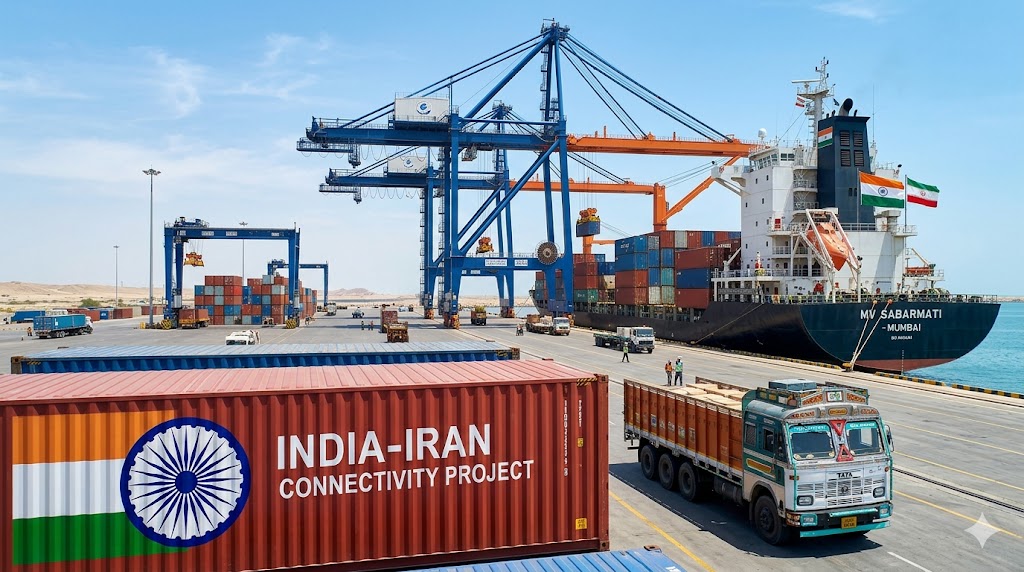
India - Iran connectivity Project.
Conclusion: India’s Mature and Balanced Approach
The recent phone conversation between External Affairs Minister S Jaishankar and Iranian Foreign Minister Seyed Abbas Araghchi exemplifies India’s steady and constructive diplomacy amid the complex West Asia situation. By discussing ceasefire developments, bilateral ties, and regional concerns, both sides have reinforced the value of sustained engagement.
India’s current take on West Asia remains clear and consistent: support for de-escalation, dialogue, and diplomacy; protection of national interests including energy security and citizen safety; and advocacy for freedom of navigation and regional stability. This balanced stance allows India to navigate a challenging geopolitical landscape while upholding its commitment to peace and multilateral cooperation.
As the situation evolves, India’s proactive diplomacy — rooted in strategic autonomy and pragmatism — will continue to play a positive role in encouraging restraint and fostering conditions for lasting peace in West Asia.