Trump Briefed on Iran Strike Options Amid Tensions
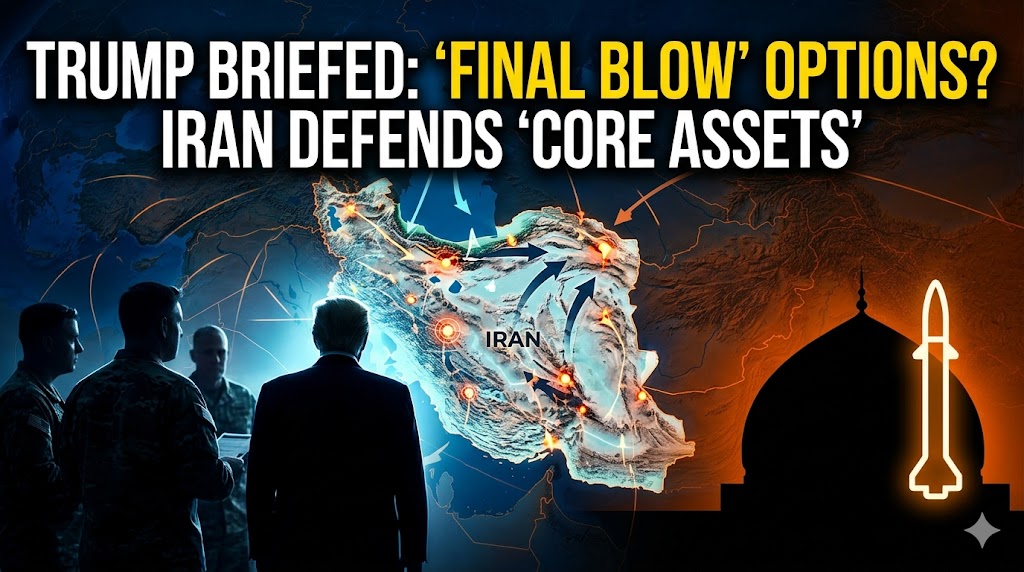
As of early May 2026, the fragile ceasefire between the United States and Iran remains under significant strain following months of direct conflict that began earlier in the year. President Donald Trump has been briefed by senior military commanders on a range of potential “final blow” strike options against Iranian targets. In response, Iran’s Supreme Leader has issued a defiant statement vowing to safeguard the nation’s nuclear and missile programs as core national assets.
This latest development underscores the delicate balance between diplomatic efforts and military posturing in one of the world’s most volatile regions. While both sides have expressed interest in reaching a broader agreement, fundamental disagreements—particularly over Iran’s nuclear ambitions and control of the Strait of Hormuz—continue to hinder progress. The situation carries serious implications for global energy markets, regional stability, and international security.
This article examines the details of President Trump’s recent briefing, the Iranian leadership’s firm stance, the broader context of the 2026 US-Iran conflict, and potential pathways forward.
The current tensions trace back to escalating disagreements over Iran’s nuclear program, its regional influence, and freedom of navigation in the Persian Gulf. After a period of heightened rhetoric and failed negotiations, direct military exchanges erupted in February 2026, involving US and Israeli strikes on Iranian facilities, followed by Iranian retaliation.
A ceasefire was eventually established, mediated in part through regional actors, but it has remained tenuous. Key sticking points include the reopening of the Strait of Hormuz—a critical chokepoint for global oil shipments—and verifiable limits on Iran’s nuclear enrichment activities. The United States has maintained a naval blockade of Iranian ports as leverage, contributing to economic pressure on Tehran while disrupting international shipping and driving up energy prices.
Amid this backdrop, diplomatic channels have continued intermittently, yet progress has been slow. Iran has proposed separating immediate maritime issues from longer-term nuclear discussions, an approach the US has viewed skeptically, insisting on comprehensive commitments.
Trump’s Briefing on “Final Blow” Strike Options
On April 30, 2026, President Trump received a detailed briefing from senior US military leaders, including CENTCOM Commander Admiral Brad Cooper and Chairman of the Joint Chiefs of Staff General Dan Caine. According to multiple reports, the session focused on new military options should the president decide to resume active combat operations.
The plans reportedly include a “short and powerful” wave of strikes targeting remaining Iranian military infrastructure, leadership assets, and other strategic sites. Additional concepts under discussion involve operations to secure portions of the Strait of Hormuz to restore commercial shipping and even potential special forces missions aimed at securing Iran’s stockpile of highly enriched uranium.
These options appear designed either to break the current negotiating deadlock or to deliver a decisive blow before winding down the conflict on more favorable terms. President Trump has publicly stated that the US has “already won” aspects of the confrontation but seeks to conclude it with a stronger margin of advantage. He has emphasized maintaining maximum pressure through the ongoing blockade while keeping all military options available.
The briefing reflects a calculated approach: using the threat of renewed strikes to encourage Tehran to return to substantive talks with meaningful concessions on its nuclear program. However, any resumption of large-scale operations risks further escalation, regional spillover, and significant humanitarian and economic costs.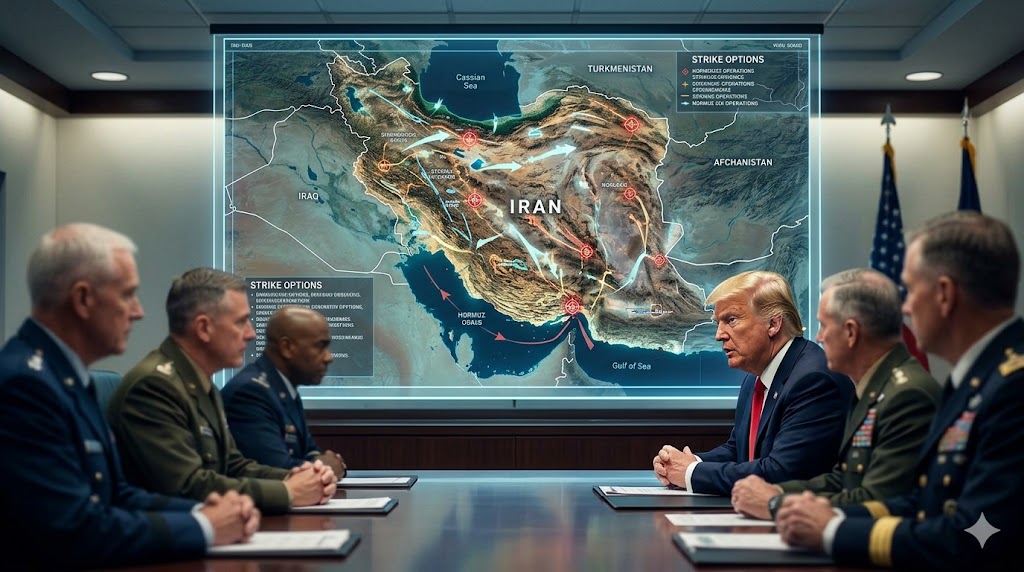
President Donald Trump receives a detailed briefing on potential "final blow" military strike options against Iran from senior military commanders, gathered around a large, transparent tactical display map of Iran.
Iran’s Supreme Leader Vows to Protect Nuclear and Missile Capabilities
In a strong public statement released on April 30, 2026, Iran’s Supreme Leader Ayatollah Mojtaba Khamenei (or attributed to the leadership) declared that the Islamic Republic would firmly protect its nuclear and missile capabilities as essential national assets. Speaking in the context of Persian Gulf Day, the message emphasized that Iran’s scientific, technological, and defensive advancements—including nuclear technology and missile systems—are integral to national identity and sovereignty.
The statement asserted that 90 million proud Iranians, both inside and outside the country, view these capabilities as non-negotiable and will defend them with the same resolve used to protect the nation’s land, waters, and airspace. It also carried a defiant tone regarding foreign involvement in the Persian Gulf, suggesting that external powers have no rightful place interfering in the region.
This vow comes as a direct response to US demands for curbs on Iran’s nuclear program and missile development. By framing these capabilities as national treasures rather than negotiable bargaining chips, Iranian leadership aims to rally domestic support and signal to Washington that any deal must respect Iran’s core security interests. The statement reinforces Tehran’s long-standing position that its nuclear activities are peaceful while maintaining strategic ambiguity and deterrence.
Strategic Context and Potential Implications
The simultaneous developments—Trump’s review of strike options and Iran’s hardening stance—highlight the high-stakes nature of the current impasse. The Strait of Hormuz remains a focal point: its restricted access has already caused spikes in global oil prices, affecting economies worldwide. Any military operation in or near the strait would carry risks of broader disruption to energy supplies.
For the United States, the goal appears twofold: preventing Iran from advancing toward a nuclear weapons capability and restoring stable maritime commerce. President Trump’s administration has signaled willingness to negotiate but insists on verifiable, enforceable limits rather than partial or delayed agreements.
For Iran, the priority is economic relief from sanctions and the blockade while preserving strategic deterrence tools. Internal political dynamics, including hardline elements within the Revolutionary Guard, likely influence the leadership’s firm rhetoric.
The situation also involves regional actors. Israel continues to monitor Iranian capabilities closely, while Gulf states balance security concerns with economic interests. Proxy groups and potential spillover into neighboring countries add layers of complexity.
Risks of Escalation and Paths to De-escalation
Renewed military action could lead to unpredictable consequences, including higher casualties, further environmental damage, and challenges to global supply chains. Conversely, prolonged stalemate sustains economic pain for all parties and increases the chance of miscalculation.
Diplomatic off-ramps remain possible through back-channel talks or third-party mediation. Creative sequencing—such as initial confidence-building measures on maritime security paired with a clear timetable for nuclear verification—could help bridge differences. However, deep mutual distrust, shaped by decades of confrontation and the recent direct conflict, complicates efforts.
International observers emphasize the need for restraint and dialogue to prevent the fragile ceasefire from collapsing entirely. The coming weeks will prove critical in determining whether pressure tactics yield concessions or push the region toward renewed open conflict.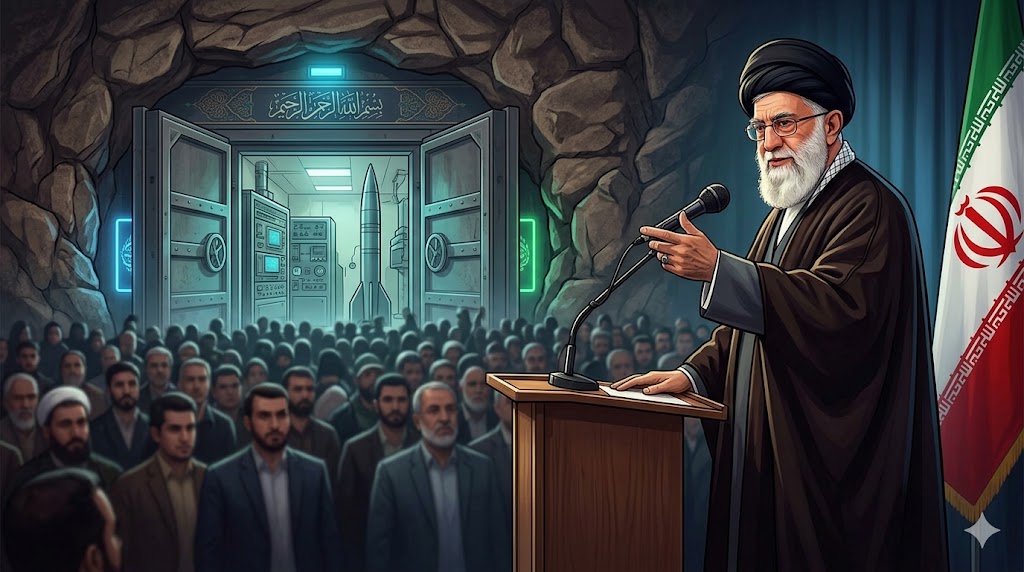
It visualizes Iran's Supreme Leader (or leadership) issuing the firm public statement vowing to protect the country's nuclear and missile capabilities as sacred national assets.
Conclusion: A Precarious Crossroads
As President Trump weighs “final blow” strike options following his recent military briefing, Iran’s Supreme Leader has drawn a firm line by vowing to defend the country’s nuclear and missile capabilities as sacred national assets. These parallel positions reflect the deep challenges in resolving the US-Iran standoff.
The situation in May 2026 remains fluid, with significant risks attached to both escalation and continued impasse. Ultimately, a sustainable resolution will require difficult compromises that address core security concerns on both sides while minimizing broader regional fallout.
The world watches closely as diplomacy and military posturing intersect. Any decision made in the coming days could shape not only bilateral relations but also the future stability of the Middle East and global energy security for years to come.