Iran's "New Weapon" Threat : After Hormuz Rejection
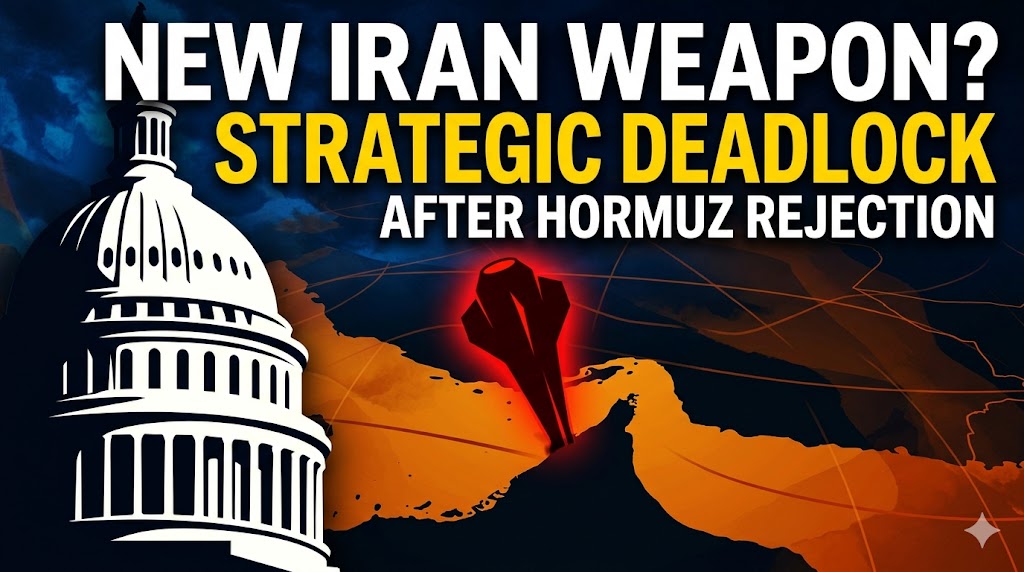
In a sharp escalation of rhetoric amid the ongoing US-Iran standoff, Iran has signaled the imminent unveiling of a “new weapon” shortly after the United States rejected its latest proposal regarding the Strait of Hormuz. Iranian Navy Commander Rear Admiral Shahram Irani stated that Iranian forces will soon confront adversary forces with a capability that enemies are “deeply afraid of,” warning it could even cause a “heart attack” due to its potency.
The timing of this announcement is significant. It follows the Trump administration’s decision not to accept Iran’s offer to reopen the strategically vital Strait of Hormuz in exchange for lifting the US naval blockade and ending the war, while deferring nuclear negotiations to a later stage. This rejection has deepened the deadlock in the fragile ceasefire that has been in place since early April 2026.
This article provides a detailed examination of the context surrounding Iran’s new weapon announcement, the rejected Hormuz proposal, the current state of US-Iran relations, and the potential strategic and regional implications of these developments.
The Rejected Hormuz Proposal
In late April 2026, Iran transmitted a proposal through mediators, including Pakistan, offering to ease its restrictions on shipping through the Strait of Hormuz. The key conditions included the United States lifting its naval blockade on Iranian ports and formally ending the conflict that began with strikes on February 28, 2026.
Crucially, the proposal sought to separate immediate maritime and ceasefire issues from longer-term negotiations on Iran’s nuclear program. Tehran suggested postponing detailed discussions on enrichment activities and its stockpile of highly enriched uranium.
The Trump administration, however, expressed strong dissatisfaction with this approach. President Trump and senior officials, including Secretary of State Marco Rubio, indicated that any sustainable agreement must address the nuclear issue upfront rather than defer it. The US has maintained that preventing Iran from developing nuclear weapons remains the core objective of its policy and military actions.
This rejection has left the dual restrictions in place — Iran’s limitations on Hormuz traffic and the US blockade of Iranian ports — continuing to disrupt global energy flows and exert economic pressure on both sides.
Iran’s Announcement of a New Weapon
Following the apparent rejection of its Hormuz proposal, Iranian military leadership responded with a pointed warning. Rear Admiral Shahram Irani, Commander of the Iranian Navy, stated that Iran is preparing to introduce a new weapon system that will soon be deployed against enemy forces in the region.
According to state media reports, Irani described the weapon as one that adversaries are “deeply afraid of,” suggesting it possesses capabilities capable of delivering a significant psychological and operational shock. While specific technical details were not disclosed — as is typical for sensitive military programs — the language used implies an advanced capability, possibly in the domains of naval, missile, or asymmetric warfare technologies where Iran has invested heavily.
This announcement fits into a pattern of Iranian responses during periods of heightened tension, where Tehran often highlights its defensive and deterrent capabilities to project strength and discourage further pressure.
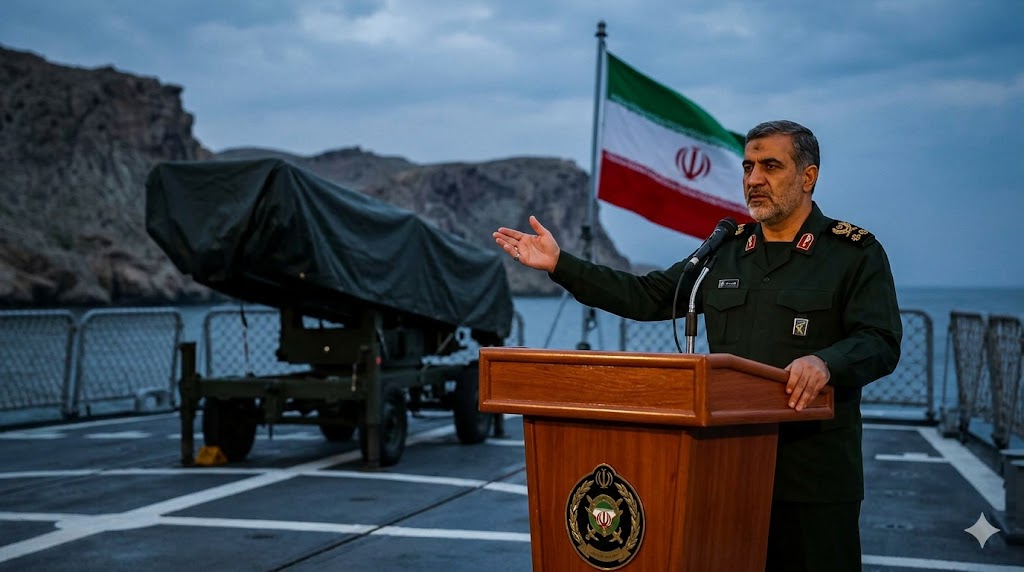
Iranian Navy Commander Rear Admiral Shahram Irani delivers a resolute speech on the deck of a naval vessel at twilight, referencing the imminent introduction of a "new weapon" that adversaries are "deeply afraid of."
Strategic Context and Possible Nature of the Weapon
Iran has developed a range of asymmetric military capabilities designed to offset conventional disadvantages, particularly in the maritime domain around the Persian Gulf and Strait of Hormuz. These include anti-ship missiles, fast-attack boats, underwater systems, and increasingly sophisticated drones.
The timing of the “new weapon” reference suggests it may be an evolution or unveiling of systems already in development, possibly involving hypersonic technology, advanced swarm capabilities, improved mine-laying systems, or next-generation anti-ship ballistic or cruise missiles. Iranian officials have previously claimed breakthroughs in areas such as stealth technology, electronic warfare, and long-range precision strike systems.
By framing the weapon as something that could cause adversaries significant alarm, Iran aims to reinforce deterrence and signal that it retains options for escalation if diplomatic efforts remain stalled.
Current State of US-Iran Tensions (May 2026)
The broader context remains one of cautious standoff. The ceasefire has prevented full-scale resumption of hostilities, yet underlying issues — Iran’s nuclear program, regional proxy activities, and maritime security — continue to fuel mistrust.
The US maintains its naval presence and economic pressure, while Iran has demonstrated resilience through its control over key chokepoints and continued development of military capabilities. Both sides have engaged in indirect talks, but core differences on sequencing and substance have hindered breakthroughs.
President Trump has emphasized that the naval blockade has proven effective and that Iran must show greater flexibility on the nuclear file. Iranian leaders, meanwhile, have framed external pressure as an attempt to weaken the country internally.
Regional and Global Implications
The introduction of new Iranian military capabilities, whether real or rhetorical, carries several implications:
Deterrence Dynamically: It adds another layer to the complex deterrence equation in the Gulf, where multiple actors maintain significant military assets.
Energy Market Volatility: Any perception of increased risk in the Strait of Hormuz tends to influence oil prices and shipping insurance costs.
Diplomatic Pressure: Heightened rhetoric can complicate ongoing mediation efforts and influence the calculations of regional states and global powers.
Risk of Miscalculation: In an already tense environment, announcements of advanced weaponry increase the chance of unintended escalation if either side interprets actions as provocative.
Neighboring Gulf states, including the UAE which recently issued travel advisories for Iran, continue to monitor developments closely while balancing security concerns with economic interests.
Challenges for De-escalation
Achieving a more stable resolution will require addressing fundamental concerns on both sides. For the United States and its partners, verifiable constraints on Iran’s nuclear program remain non-negotiable. For Iran, relief from economic pressure and recognition of its regional security interests are key priorities.
Creative diplomatic approaches — such as phased agreements that deliver incremental confidence-building measures while tackling core issues — may offer the best path forward. However, deep-seated mistrust built over decades makes progress slow and fragile.
The Role of International Actors
Major powers, including Russia and China, have expressed interest in regional stability while maintaining their own relationships with Iran. European nations and other stakeholders also have significant interests in secure energy flows and non-proliferation.
The involvement of mediators has proven valuable in the past, but sustained high-level engagement will be necessary to bridge remaining gaps.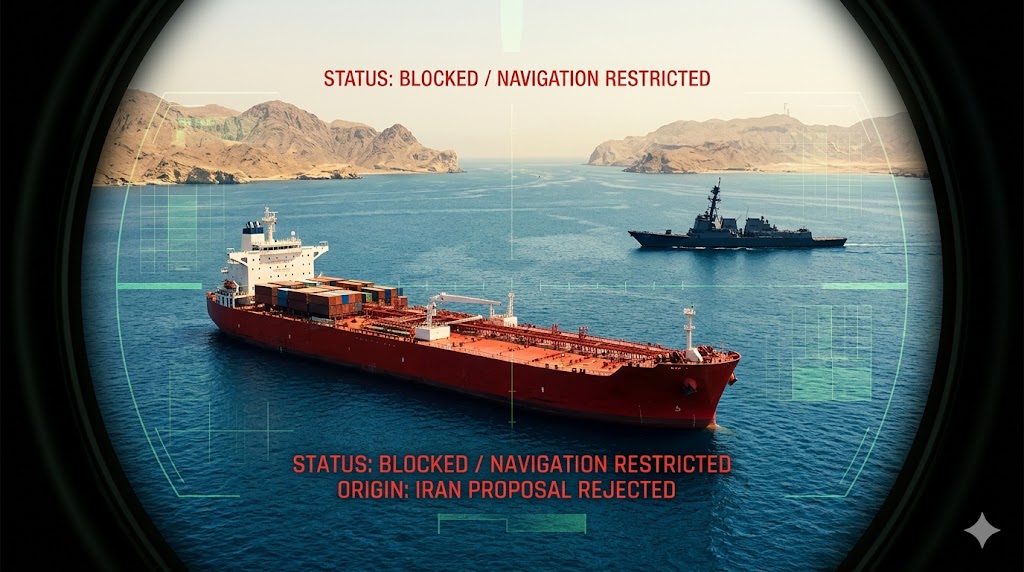
Deadlock at the Chokepoint
Conclusion: Rhetoric and Reality in a Tense Standoff
Iran’s announcement of a forthcoming “new weapon” following the rejection of its Hormuz proposal highlights the continued volatility in US-Iran relations as of May 2026. While the specific capabilities remain undisclosed, the statement serves both as a deterrent signal and a political message of resilience.
As both sides navigate the delicate balance between pressure and negotiation, the risk of miscalculation remains present. The coming weeks will test whether diplomacy can overcome deep differences or whether further escalation — rhetorical or military — will define the next phase of this protracted confrontation.
For the international community, the priority remains encouraging restraint and supporting efforts toward a negotiated outcome that addresses legitimate security concerns while restoring stability to one of the world’s most critical energy corridors.